
PFAS
Overview
On April 10, 2024, for the first time ever, the EPA issued limits for per- and polyfluoroalkyl substances (PFAS), the “forever chemicals,” in drinking water, and shortly after, designated select PFAS compounds as hazardous substances. Public systems have until 2027 to finish initial monitoring; however, under a 2026 proposal, systems can request an extension until 2031 to meet PFOA and PFOS limits. Note that the current administration has kept strict limits in place for the two most common compounds of PFAS. Adherence to these guidelines will provide unique and timely investment opportunities for several select water and soil treatment suppliers and publicly traded water utilities. To reflect current developments, we are taking this opportunity to provide the 3rd update to our 2023 whitepaper “PFAS- An Overview of the “Forever Chemicals.” We will also be holding our 4th PFAS Symposium on September 24, 2026 in New York City.
PFAS have become an increasingly significant environmental and public health concern due to their persistence and inability to naturally degrade. To meet the final EPA regulations of 4 parts per trillion (ppt) for Perfluorooctanoic acid, or PFOA, and perfluorooctane sulfonic acid, or PFOS, the two most common PFAS found in drinking water, the nation’s water and wastewater utilities will require as much as $50 billion of capital investment over the next five years and up to an additional $3.5 billion of annual operating expense.
Enforcement of the regulations will lead to increased demand for treatment equipment and capacity restraints on the available engineers, contractors, and suppliers to build the required treatment systems. We expect the suppliers of the three most recognized effective treatment technologies (activated carbon, anion exchange, and membrane filtration) as well as the suppliers of novel remediation technologies to be beneficiaries given the anticipated significant increase in demand. We also expect the nation’s water utilities to benefit from the enhanced rate base growth and increased acquisition opportunities.
According to the EPA, PFAS are a group of around 15,000 environmentally persistent, man-made chemicals used in industrial and commercial applications for firefighting activities, grease resistance, water repellents, and non-stick cookware, among others. Currently there are over 600 PFAS compounds which are EPA-approved for sale or importation into the United States. These molecules, with a chain of linked carbon and fluorine atoms, are valued for their high resistance to oil, water and heat. Due to their widespread use, PFAS are found at low, ambient levels in the environment.
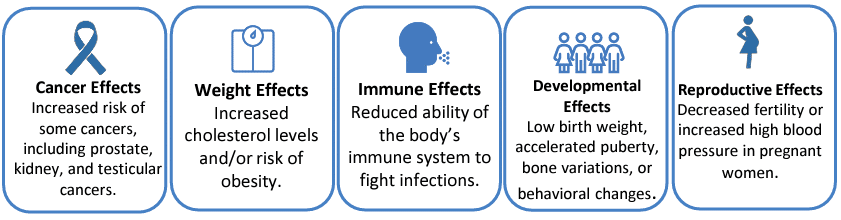
PFOA and PFOS are two of the PFAS molecules often found in drinking water. These two legacy compounds are either phased out or no longer manufactured in the U.S. and Europe; however, they remain present in the environment. The presence of PFAS compounds in several water sources, including drinking water, is of increasing public concern due to their environmental persistence and perceived health concerns. As per the National Center for Biotechnology Information, PFOAs are estimated to be detectable in the blood of more than 98% of the U.S. population. Research shows that they increase cholesterol level, affect the immune system, affect fertility and child development, and increase the risk of prostate, kidney, and testicular cancers. As more research is being done on PFAS, it indicates that it can cause health risks even at very low levels, which is why regulations to reduce exposure have become a large focus for the EPA in the US and around the world.
Exhibit 1 – PFAS Potential Risks
Source: EPA
Routes of Contamination
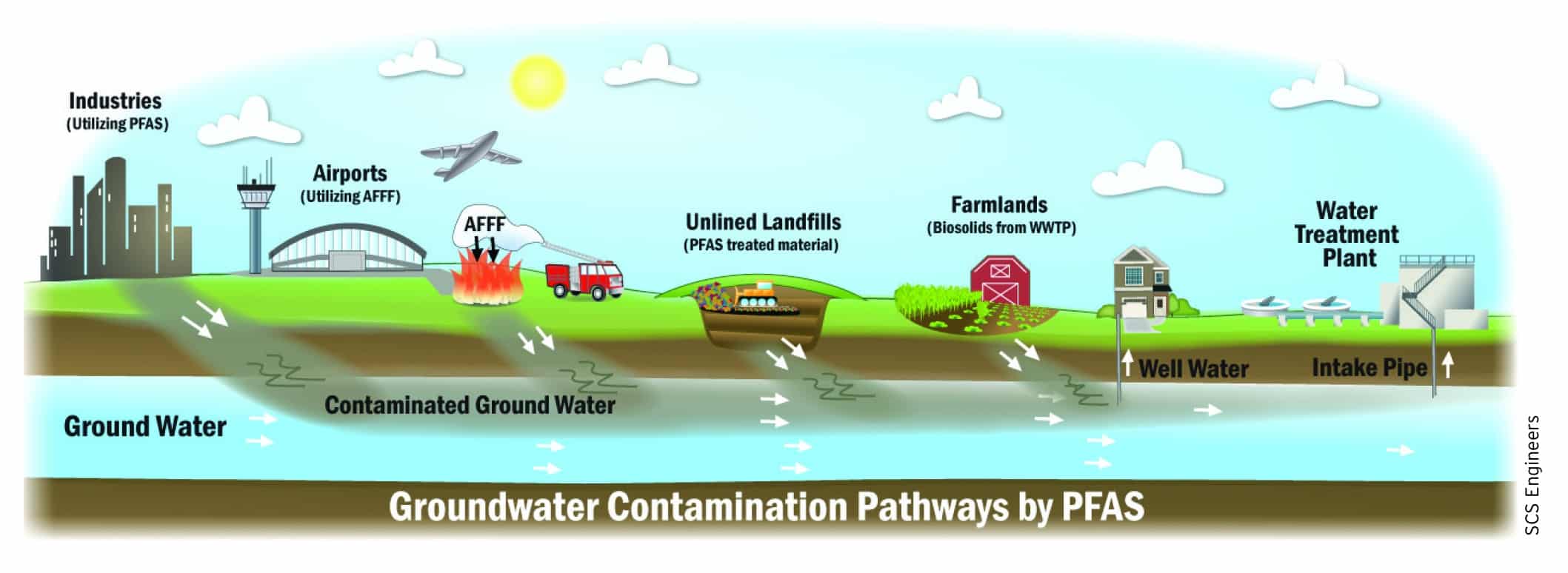
PFAS contaminates groundwater through various pathways including industrial discharges during the manufacturing process, firefighting foams, landfills and waste sites, farmlands, and accidental spills (Exhibit 2). Most PFAS concentration is found in the environment around military bases, firefighting training locations, commercial airports, and former manufacturing facilities where they seeped into the local water supplies. The above occurs due to leakage, irresponsible disposition of waste, products dumped into rivers, and/or their presence in firefighting foams, which either seep into the ground, or are carried to surface water by rain.
Exhibit 2 PFAS Groundwater Contamination Pathways
Source: Bluetoad.com
Uses of PFAS and their Derivatives
The first PFAS were invented in the 1930s as the main ingredients in nonstick and waterproof coatings according to the Interstate Technology & Regulatory Council; they were initially used to protect military equipment from damage by the environment. The development of these chemicals increased in the late 1960s after a deadly fire aboard a US Navy aircraft carrier, the USS Forrestal in 1967. Soon after the accident, manufacturers and scientists developed PFAS-containing aqueous film-forming foam (AFFF): a mixture that rapidly extinguishes fires and is highly effective against petroleum fires and other flammable-liquid fires when mixed with water. AFFFs containing PFAS were subsequently installed on military and civilian ships, airplanes, and at airports.
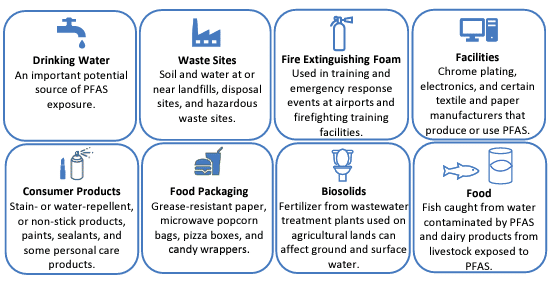
The compounds have wide-ranging applications and are highly utilized due to their ability to repel oil and water as well as they heat resistance. They are found in many products such as the following, among others:
- Teflon non-stick cookware
- Carpeting as stain-resistant
- Upholstery
- Leather
- Paints
- Paper & packaging (food packaging such as pizza boxes)
- Apparel/textiles (weather repellent; waterproof clothing)
- Floor wax
- Firefighting foams
- Sealants
- Chrome plating/electronics manufacturing/oil recovery
Exhibit 3 Where are PFAS Found?
Source: EPA
Regulations
On April 10, 2024, the EPA issued its long-awaited first ever national standards for PFAS in drinking water. The “final” regulation (originally proposed in March 2023) established 4 parts per trillion (ppt) as the legally enforceable level for PFOA and PFOS. Notably, 4 ppt is the lowest level that current technology can detect. In addition, it outlined limits of 10 ppt for Perfluorohexane Sulfonic Acid (PFHxS), Perfluorononanoic acid (PFNA), and Hexafluoropropylene oxide-dimer acid (HFPO-DA, commonly known as GenX chemicals), as well as limits of 1.0 (unitless) hazardous index for mixtures containing two or more of PFHxS, PFNA, HFPO-DA, and PFBS. The hazard index is a calculation based on the amount of each compound detected weighted by its associated risk factor. Following this ruling, water utilities in the US initially had three years to implement testing/detection measures (April 2027), and two years following those initial steps to implement remediation/treatment equipment if they are out of compliance with the limits (April 2029).
With the change in administration, the new EPA led by Administrator Lee Zeldin, reviewed these regulations. On May 18, 2026, the EPA announced that it will keep the current regulations of 4 ppt for PFOA and PFOS, while extending the compliance guidelines by two years to 2031 to allow more time for water systems to develop plans, and to reduce the regulatory burden on smaller systems. The EPA also announced it was rescinding the regulations for other PFAS compounds and mixtures, and it is reconsidering them under the legal process laid out in the Safe Water Drinking Act. We would note that in discussions with companies, remediation systems that would comply with PFOA and PFOS regulations would likely remediate the other PFAS compounds as well.
Exhibit 4 EPA Limits for PFAS in Drinking Water
| Current Limits | “Final” Limits 4/10/24 | Revised Rule 5/18/26 | |
| PFOA | None | 4.0 ppt | 4.0 ppt |
| PFOS | None | 4.0 ppt | 4.0 ppt |
| PFHxS | None | 1.0 (unitless) Hazard Index | Rescinded |
| PFNA | None | 1.0 (unitless) Hazard Index | Rescinded |
| HFPO-DA (commonly known as GenX Chemicals) | None | 1.0 (unitless) Hazard Index* | Rescinded |
| Mixtures containing two or more of PFHxS, PFNA, HFPO-DA, and PFBS | None | None | Rescinded |
* The Hazard Index is a tool used to evaluate potential health risks from exposure to chemical mixtures
Source: EPA, Gabelli Funds
Also in focus is the EPA’s designation of PFAS as hazardous materials under the Comprehensive Environmental Response, Compensation, and Liability Act (CERCLA), and under the Resource Conservation and Recovery Act (RCRA). CERCLA authorizes the President to respond to releases or potential releases of hazardous materials into the environment, and RCRA gives the EPA the authority to control hazardous waste from cradle to grave.
In February 2024, the EPA proposed rules to designate 9 PFAS compounds as hazardous waste under RCRA, which would automatically classify them as hazardous substances under CERCLA. On April 19, 2024, the EPA officially designated PFOA and PFOS as hazardous substances, meaning any entity that handles the materials will become liable for the recovery and remediation costs of potential environmental releases. This will require additional actions from waste management companies to avoid seepage from landfills and the subsequent contamination of ground water, and from any user of PFAS materials to employ services for hazardous waste and internal controls.
How Much Will It Cost?
The significant cost to comply with the EPA’s PFAS drinking-water standards will further increase the already heavy capital budgets and rate base growth opportunity for the water utility industry. The American Water Works Association (AWWA) estimates that more than 7,000 drinking-water entry points will require PFAS treatment, resulting in approximately $37.1–$48.3 billion of capital investment over five years. Including operations, maintenance and monitoring, AWWA estimates annualized costs of $2.7–$3.5 billion, roughly twice the EPA’s original estimate.
In May 2026, the EPA proposed retaining the 4 parts per trillion Maximum Contaminant Levels for PFOA and PFOS, while allowing eligible water systems to apply for up to a two-year compliance extension, from 2029 to 2031. Importantly, the extension would not be automatic; systems that do not qualify or apply would remain subject to the 2029 deadline.
We believe the additional time could spread the PFAS capital cycle over a longer period but is unlikely to materially diminish the need for investment. The EPA itself noted that additional time could allow treatment costs to decline as technologies improve and production efficiencies develop. The agency also announced close to $1 billion in additional funding to states for eliminating PFAS in drinking water.
For publicly traded water utilities, PFAS represents both a compliance obligation and a potentially significant rate-based investment opportunity. The key investment consideration is not simply the amount spent, but the timing and certainty of regulatory recovery. Investments deemed prudent by state regulators are generally added to the rate base, allowing the utility to recover depreciation and operating expenses, and earn an authorized return on invested capital. In other words, the investment leads to higher EPS growth.
American Water Works (AWK)
American Water Works currently estimates approximately $2 billion of PFAS-related capital investment within its $19–$20 billion 2026–2030 capital plan, roughly double the more than $1 billion previous estimate. Approximately 75% of AWK’s overall capital program benefits from relatively timely recovery mechanisms. The company has also received approximately $185 million of PFAS settlement proceeds from 3M, DuPont and Tyco, which it intends to use for the benefit of customers.
Regulatory recovery is becoming increasingly important. In Pennsylvania, 40% of AWK’s capital currently qualifies for the Distribution System Improvement Charge (DSIC). Treatment facilities, storage tanks and PFAS-related investments generally fall outside the existing mechanism. On its second-quarter earnings call, management indicated that it is pursuing broader DSIC eligibility, which could accelerate capital recovery, reduce regulatory lag and potentially lengthen the period between general rate cases.
PFAS therefore represents a meaningful component of AWK’s long-term investment opportunity. The company’s scale, access to capital, regulatory diversity and settlement proceeds should help finance the investment while supporting its targeted 8–9% rate-base growth and 7–9% EPS growth.
H2O America (HTO)
H2O America has increased its expected PFAS investment to approximately $400 million, from $300 million previously, within its $2.7 billion 2026–2030 capital plan. PFAS alone therefore represents nearly 15% of HTO’s five-year capital program and is becoming a meaningful contributor to the company’s expected rate-base growth.
The largest project is San Jose Water’s proposed $176 million Williams Station ion-exchange PFAS treatment facility. In April 2026, HTO requested approval from the California Public Utilities Commission to recover the project outside of its normal general rate case. Management reiterated on its July earnings call that it expects a CPUC decision before year-end 2026. If approved, San Jose Water would adjust rates through annual rate-base filing offsets as the capital is invested, reducing regulatory lag between investment and recovery.
HTO also benefits from a PFAS-specific recovery mechanism in Connecticut. The state’s Water Quality and Treatment Adjustment (WQTA) allows interim recovery of eligible water-quality investments, including PFAS-related capital expenditures. We believe these mechanisms improve the economics and cash-flow profile of federally mandated PFAS investment and help support HTO’s projected 13% rate-base CAGR through 2030.
Essential Utilities (WTRG)
Essential Utilities’ Aqua water operations plan approximately $450 million of PFAS investment to treat roughly 300 facilities across its service territories. Aqua has also developed a proprietary modular PFAS treatment system that could improve deployment efficiency across its own operations and potentially be marketed to other utilities.
Approximately 55% of Essential’s 2026 Pennsylvania capital spending qualifies for DSIC recovery, but PFAS treatment investment generally does not. On its second-quarter 2026 earnings call, management said it intends to continue seeking an expansion of DSIC eligibility to include additional capital categories. Broader eligibility could accelerate recovery while reducing the frequency and magnitude of general rate cases.
How to Fund Capital and Ongoing Operating Expense?
The PFAS investment requirement raises an important question: Who ultimately pays? We expect funding to come from several sources, including utility customers through regulated rates, manufacturer settlements, federal and state programs and, potentially, additional recoveries from companies responsible for producing PFAS.
The National Association of Water Companies (NAWC) maintains that water and wastewater utilities are passive receivers of PFAS rather than the source of the contamination. NAWC supports the “polluter pays” principle and has advocated for legislation protecting compliant water and wastewater utilities from CERCLA liability. Without such protection, utilities that remove PFAS from drinking water could potentially face liability associated with the subsequent disposal of PFAS-containing treatment residuals, effectively imposing additional costs on customers for contamination the utilities did not create.
This issue is particularly important because treatment does not necessarily destroy PFAS. Technologies such as granular activated carbon and ion exchange typically remove PFAS from water and concentrate it in another waste stream, creating additional disposal and potentially destruction costs. Thus, the PFAS investment cycle extends beyond construction of treatment facilities to testing, replacement of treatment media, handling, transportation, disposal and ultimately destruction.
Federal funding will offset a portion of these costs. The Infrastructure Investment and Jobs Act provided $10 billion for PFAS and other emerging contaminants, and EPA announced nearly another $1 billion for PFAS drinking-water needs in May 2026. However, these amounts remain relatively small compared with AWWA’s estimated $37–$48 billion capital requirement.
Manufacturer settlements should provide another source of funding. AWK’s receipt of approximately $185 million illustrates how settlement proceeds can reduce the amount ultimately borne by customers. Nevertheless, settlement proceeds and government assistance are unlikely to fund the entire investment requirement. As a result, a substantial portion of PFAS investment will ultimately need to be incorporated into regulated utility rates.
Collectively, AWK, HTO and WTRG have identified approximately $2.85 billion of PFAS-related capital investment. We believe that demonstrates how PFAS is evolving from primarily an environmental liability into a significant regulated infrastructure investment opportunity for the publicly traded water utilities. Further, PFAS could provide publicly-traded water utilities an additional longer-term opportunity through water-system consolidation. Smaller municipal systems may lack the capital, technical expertise and operating scale necessary to meet increasingly complex water-quality requirements economically. This could encourage municipalities to sell systems to larger operators such as Aqua that can spread treatment, testing and compliance costs over a broader customer base.
We believe PFAS should increasingly be viewed as part of the broader water infrastructure investment cycle. The regulatory requirement creates a largely nondiscretionary need for capital, while the regulated utility model provides a mechanism for prudent investment to be incorporated into rate base and earn an authorized return.
Forever Chemicals’ Manufacturers Settlements
On June 2, 2023, it was announced that DuPont (DD) and spin-offs Chemours (CC) and Corteva (CTVA) reached a comprehensive settlement in principle of $1.185 billion to resolve PFAS claims with respect to U.S. water systems over the contamination of drinking water supplies. Under the agreement, Chemours will pay $592 million, DuPont around $400 million, and Corteva $193 million to resolve the claims related to public water systems that serve most of the U.S. population and would cover an estimated 88% of water utilities. The settlement received final approval in February 2024. Qnity (Q) was spun off from DuPont in late 2025 and now shares proportionally in DuPont’s portion of the PFAS liabilities under the Memorandum of Understanding with Chemours and Corteva.
There are also smaller natural resource lawsuits from individual state claims which have been settled by these companies: a $110 million settlement from the three companies with the State of Ohio in November 2023, a settlement of up to $2 billion in August 2025 with the State of New Jersey to be paid over 25 years, and on September 10th, 2026, the companies announced a settlement with North Carolina for $455 million over 15 years.
In April 2024, 3M (MMM) finalized a $10.3 billion in a settlement for its part in the manufacture of PFAS impact on U.S. water systems. This settlement received final approval in March 2025, and requires 3M to pay the settlement over 13 years, with a cap of $12.5 billion if additional significant contamination is found.
The $11.5 billion combined water systems settlements would cover roughly 15 years of the projected costs of complying with EPA’s proposed drinking water regulations, which the EPA estimates would cost utilities $772 million annually. However, as noted, cost estimates by the utility industry are substantially higher. The National Association of Water Companies (NAWC) believes this is a step in the right direction, and it will continue to monitor the ongoing discussions around PFAS. Concerns over the disproportionate impacts on smaller municipal water utilities in rural communities remain, and there are sure to be continued legal challenges.
Remediation and Treatment
There are currently three recognized effective treatment technologies for PFAS removal from contaminated water: activated carbon, ion exchange, and membrane filtration. Removal efficiency depends on the properties of the influent being treated but each of these treatment methods has demonstrated removal efficiencies of up to 99%.
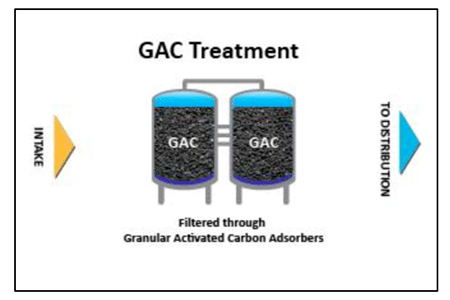
- Activated carbon technologies include both granular activated carbon (GAC) and powdered activated carbon (PAC). GAC and PAC rely on the adsorptive properties of the activated carbon media: contaminants are adsorbed into the pores and held onto the surface of the carbon. PAC is typically utilized in scenarios where contaminant removal must be implemented quickly. It is typically added in the rapid mix tanks of a water treatment plant or as a separate material to allow a contact period for adsorption as part of existing unit processes. The principal design factor for GAC reactor contactors is the empty bed contact time (EBCT), which is the residence time of the water in contact with the media. Typical GAC EBCT for PFAS treatment ranges from 10 to 20 minutes, depending on the targeted PFAS. The EPA indicates that GAC filtration can remove 99% of PFOA and PFOS. The cost of GAC treatment can range from thousands to millions of dollars depending on the size of the treatment system, the flow rate of water, the concentration of PFAS, and the desired level of treatment. Costs include the purchase and replacement of GAC media, system installation, operation, and maintenance.
Exhibit 5 Granular Activated Carbon Treatment
Source: Calgon Carbon
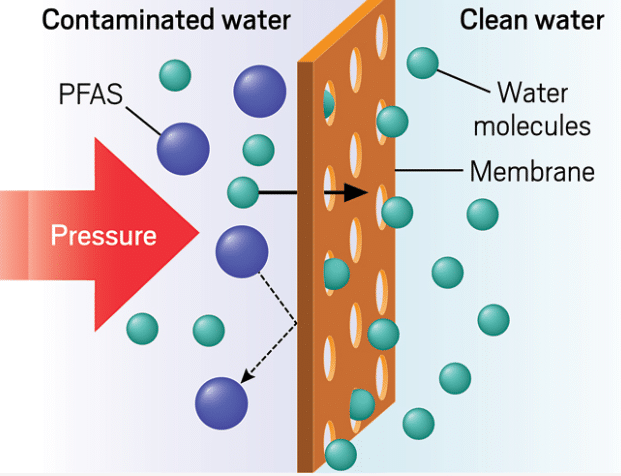
- Membrane filtration treatment of PFAS can be accomplished using either nanofiltration and/or reverse osmosis (RO) membranes. The process of membrane filtration involves passing pressurizing influent in contact with membranes with small pores. The semi-permeable membrane is only permeable to water molecules, so PFAS will be restricted and concentrated in the rejected stream. The treatment flow rate of the process is limited by the pressure and level of dissolved solids. In contrast to GAC/PAC and IX, membrane filtration has demonstrated PFOA and PFOS removals of greater than 99%. Removal of other PFAS varied from 84% up to 99% removal but was typically above 98%. Reverse osmosis uses energy to push water through a membrane with tiny pores. The membrane stops many contaminants while allowing water to pass through. Reverse osmosis is more practical as a point-of-use treatment option (not at point-of-entry). These systems are effective for PFAS removal, but they tend to be more expensive to operate compared to other treatment methods. Costs depend on the system size, water flow rate, and PFAS concentration. Capital costs for RO systems can range from tens of thousands to hundreds of thousands of dollars, and ongoing expenses include energy, membrane replacement, and maintenance.
Exhibit 6 Membrane Filtration Diagram
Source: Quench
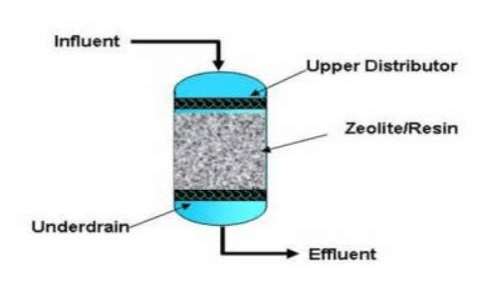
- Anion exchange, typically called ion exchange, or IX, operates in the following manner: negatively charged ions in the water are exchanged with negatively charged ions on the resin surface – typically chloride. Like GAC treatment, the IX process must be designed based on EBCT. The typical IX EBCT for PFAS treatment ranges from 2 to 5 minutes. As the IX media removes PFAS, the media’s negative ions will eventually be exhausted and will need to be regenerated or replaced after safe disposal of the exhausted media. Costs can range from tens of thousands to hundreds of thousands of dollars. Additionally, expenses for resin replacement, operation, and maintenance should be considered.
Exhibit 7 Anion Exchange Diagram
Source: GZ Industrial Supplies
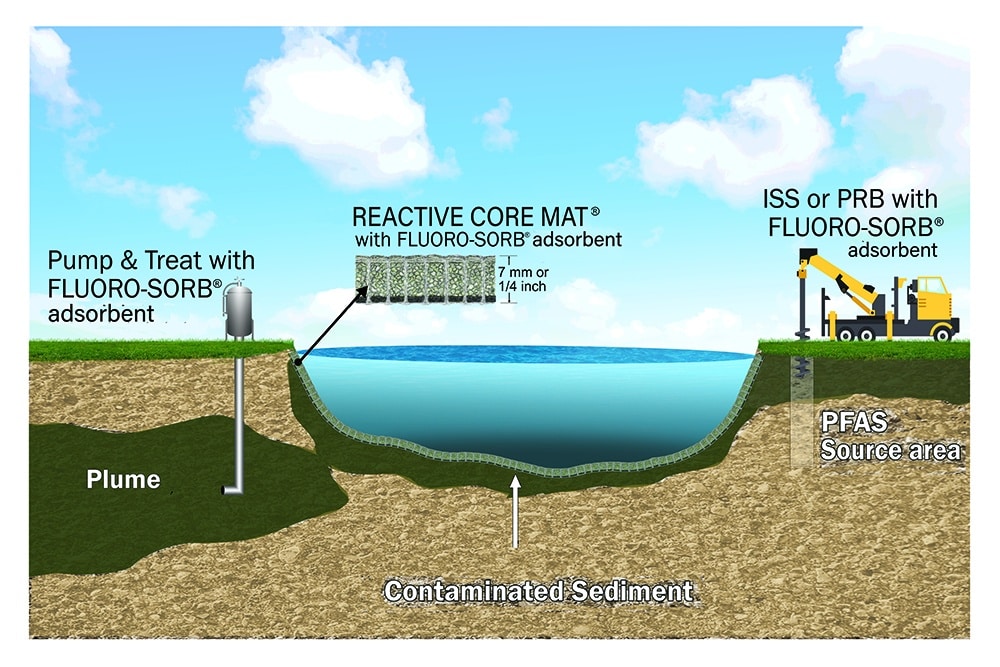
- FLUORO-SORB® – A more recent technology is being introduced by CETCO, a division of Minerals Technologies (MTX). Similar to the process for activated carbon technologies, but using a proprietary NSF-certified material, Minerals Technologies estimates FLUORO-SORB® is 3-4x more effective and more economical than activated carbon. Based on groundwater studies and vetted by research universities and the EPA, FLUORO-SORB® can be used in existing filtration systems for both drinking and ground water, and with empty bed contact time as low as three minutes. In addition, it can be used as a permeable reactive barrier for groundwater and source control, for in-situ stabilization and solidification, and as a sediment cap for soil/sediment remediation. Furthermore, CETCO has 100+ successful field trials under way at utility and waste companies’ sites both in the U.S. and internationally.
Exhibit 8 Minerals Technologies (MTX) FLUORO-SORB Remediation
Source: Minerals Technologies
- Supercritical Water Oxidation (SCWO) – SCWO is an example of a destruction technology that can treat PFAS containing water, waste, and other liquid materials including landfill leachate and AFFFs. At high temperatures (>374 °C), a level at which water is considered supercritical, organic solubility is increased and the oxidation processes are accelerated. This method has been previously used to destroy other hazardous substances in water. According to the EPA, tests done have shown a greater than 99% reduction in PFAS using this destruction method.
Public companies which would benefit by offering PFAS remediation services include:
- 374Water Inc. (SCWO): 374Water is a global cleantech technology provider which addresses environmental pollution challenges. As noted by its ticker and name, it developed AirSCWO, a waste stream treatment system based on supercritical water oxidation technology. 374Water, Inc. transforms wet wastes, including sewage sludge, biosolids, food waste, hazardous and non-hazardous waste, and forever chemicals, into recoverable resources in the United States.
- Aduro Clean Technologies (ADUR): Aduro is a developer of water-based technologies aiming to chemically recycle waste plastics. It is developing its Hydrochemolytic™ Technology (HCT) that has potential applications for destroying PFAS.
- AECOM (ACM): AECOM is an infrastructure consulting company providing professional engineering and design for construction projects. The company is focused on PFAS remediation solutions for projects. It will recommend and/or install the best solution available based on specific sites and requirements, including its proprietary DE-FLUOROTM PFAS destruction technology, which uses electrochemical oxidization to break up the molecules.
- Arq, Inc. (ARQ): Arq, Inc. is principally engaged in the sale of consumable activated carbon (AC) for air and water treatment. Through the acquisition and its rebranding as Arq, the company is focused on transforming its business from Powdered AC to Granular AC for water remediation of pollutants materials such as PFAS. Despite recent setbacks in its launch of GAC production, the company sees large potential for GAC expansion and has also recently announced PAC for PFAS focused on customers who are near, but not at, PFAS regulatory compliance.
- BioLargo (BLGO): BioLargo is a cleantech and life sciences innovator that develops platform technologies including its Aqueous Electrostatic Concentrator, a novel technology for PFAS remediation, which uses less material and results in less waste than activated carbon.
- Birchtech Corp (BCHT): Birchtech develops and provides patented activated carbon technologies for air and water purification, with specialization in PFAS removal from water. Its technologies include its proprietary Rapid-Small-Scale Column Testing (RSSCT) equipment which can help water utilities in achieving PFAS compliance.
- Clean Harbors, Inc. (CLH): Clean Harbors is a leading provider of environmental, energy, and industrial services. They offer PFAS remediation services, including soil and groundwater treatment.
- DuPont (DD): Since its spinoff of Qnity Electronics (Q), roughly 22% of DuPont’s remaining portfolio’s sales are in Water Technologies, including a broad range of technologies suitable for PFAS removal. DuPont offers ion exchange resin, reverse osmosis and nanofiltration membranes, and closed-circuit reverse osmosis systems.
- Ecolab (ECL): Ecolab is a world leader in cleaning and hygiene solutions. The company acquired Purolite in 2021 which has designed and developed a specialty ion exchange resin with dual removal mechanisms of ion exchange and adsorption technology for maximum uptake of PFAS.
- Kuraray Co. (3405-TO): Following its purchase of Calgon Carbon in 2018, Kuraray provides activated carbon and other technologies for water and air purification as well as PFAS removal.
- Kurita Water Industries Ltd (6370-TO): Kurita is a global water treatment company providing various solutions for water and wastewater treatment, including PFAS removal technologies.
- Minerals Technologies (MTX): MTX is a vertically integrated specialty minerals company. Through its CETCO subsidiary, it developed and launched FLUORO-SORB® adsorbent in 2019, a proprietary, NSF-certified product. Based on multiple tests, it has been found to be more effective than activated carbon and can be used as both a pre- or post-treatment medium for PFAS remediation, or in combination with GAC systems.
- Perma-Fix Environmental Services (PESI): PESI is an environmental technology company that provides treatment solutions and services. It has a proprietary PFAS solution for complete destruction of the fluorocarbon chain with a non-incineration, chemical-based process.
- Tetra Tech, Inc. (TTEK): Tetra Tech is a consulting and engineering company that provides environmental services, including PFAS remediation solutions.
- Veolia Environment S.A. (VIE-FR): Veolia is a multinational company which specializes in environmental services and solutions. They offer various technologies and services for water treatment, including PFAS remediation.
- Xylem (XYL): Xylem designs and manufactures engineered technologies for the water industry. Primarily through its 2023 acquisition of Evoqua, it offers a variety of PFAS remediation equipment and services.
PFAS Detection
Laboratory-based mass spectrometry remains the principal method for quantitative PFAS analysis and regulatory compliance. For drinking water, EPA Methods 533 and 537.1 use solid-phase extraction followed by liquid chromatography-tandem mass spectrometry (LC-MS/MS) and together can measure 29 PFAS compounds. EPA Method 1633A extends LC-MS/MS analysis to 40 PFAS across a broader range of environmental matrices, including wastewater, groundwater, soil, biosolids, sediment and landfill leachate. The increasingly stringent detection limits and broader range of regulated matrices are increasing the analytical complexity of PFAS testing and supporting demand for high-sensitivity LC-MS/MS instrumentation, sample-preparation products, consumables, software and laboratory services.
The following are several existing methods used for detection of PFAS in water:
- Laboratory analysis: Laboratory-based liquid chromatography-tandem mass spectrometry (LC-MS/MS) is the primary analytical method used for quantitative PFAS testing. For drinking water, EPA Methods 533 and 537.1 use LC-MS/MS and together can measure 29 PFAS compounds. EPA Method 1633A also uses LC-MS/MS to measure 40 PFAS across a broader range of environmental samples, including wastewater, groundwater, soil, biosolids, sediment, and landfill leachate. As PFAS regulations expand and detection limits become increasingly stringent, demand for high-sensitivity LC-MS/MS instruments, sample preparation products, consumables, software, and laboratory testing services is expected to increase.
- Screening/Monitoring Technologies: Field test kits and other portable screening technologies are being developed to provide faster and potentially lower-cost indications of PFAS contamination outside of a laboratory setting. These tools may be useful for preliminary screening, identifying areas that warrant further investigation, or prioritizing samples for laboratory analysis. However, they are generally not substitutes for EPA-approved LC-MS/MS methods used for regulatory compliance testing.
- Passive samplers: These are devices which can be placed in water bodies where they collect water samples over a period of time. They work by allowing water to pass through a material that can absorb PFAS, which can then be analyzed in a laboratory. The cost of passive samplers varies depending on the type of sampler and the manufacturer. Some passive samplers are relatively inexpensive, with costs ranging from a few hundred to a few thousand dollars per unit. However, the cost increases if more extensive testing is required, such as a larger number of required samplers or need for longer sampling periods.
- Online sensors: These are real-time monitoring systems that can detect the presence of PFAS in water as it flows through a system. They use a variety of detection techniques, such as fluorescence or electrochemical sensors, to provide continuous monitoring of water quality. The cost of online sensors varies depending on the type of sensor and the manufacturer. Some sensors are relatively inexpensive, with costs ranging from a few hundred to a few thousand dollars per unit. However, the cost can increase if more extensive monitoring is required, such as for a larger water system or for multiple monitoring locations.
Several publicly traded companies provide LC-MS/MS instruments, sample preparation products, consumables, software, and laboratory services used in PFAS analysis, including:
- Agilent Technologies (A): Agilent Technologies offers analytical instruments and software for PFAS testing, including LC-MS and GC-MS systems. They also provide training and support services for PFAS analysis.
- Agiltech SA (AGIL): Agiltech is a Swiss company which offers laboratory analysis for PFAS in water, soil, and other environmental samples using LC-MS/MS and GC-MS/MS techniques.
- Bureau Veritas SA (BVI-FR): Bureau Veritas is a French multinational company which offers testing, inspection, and certification services, including PFAS analysis of environmental samples.
- Danaher Corporation (DHR): Through SCIEX, Danaher offers LC-MS/MS instruments and software for PFAS analysis in drinking water and other environmental samples. SCIEX systems support EPA methods including 533, 537.1, and 1633 for trace-level PFAS detection and quantification.
- Eurofins (EUFI-PA): Eurofins offers laboratory analysis for PFAS in water, soil, and other environmental samples using LC-MS/MS and GC-MS/MS techniques. They also offer field test kits for PFAS detection, as well as consulting services for PFAS remediation.
- IDEXX Laboratories, Inc. (IDXX): IDEXX Laboratories offers testing services for PFAS in water samples using LC-MS/MS techniques.
- Merck (MRK): Merck subsidiaries Sigma-Aldrich and MilliporeSigma offer analytical standards and reagents for PFAS analysis, including certified reference materials and quality control standards for LC-MS/MS and GC-MS/MS methods.
- Thermo Fisher Scientific (TMO): Thermo Fisher Scientific offers analytical instruments and software for PFAS testing, including LC-MS and GC-MS systems. They also provide laboratory analysis services for PFAS in water, soil, and other environmental samples.
- Waters Corporation (WAT): Waters offers analytical instruments, sample preparation products, software, and consumables for PFAS testing, including UPLC-MS/MS systems. Its solutions support PFAS analysis in drinking water and other environmental samples, including EPA Methods 533, 537.1, and 1633.
Impact on Waste Management
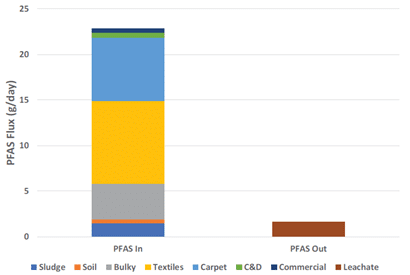
Landfills continue to serve as the primary destination for PFAS-containing materials already in circulation, but the assumption that landfilling alone is an adequate long-term containment solution is becoming increasingly difficult to support. Recent studies suggest that PFAS is escaping from all types of landfills, including lined MSW facilities, through both leachate and landfill gas. Approximately 84% of PFAS entering MSW landfills is estimated to remain in the waste, while roughly 11% exits through leachate and another 5% through landfill gas. Given that U.S. landfills generate an estimated 15–20 billion gallons of leachate each year, tighter regulation could create a significant incremental cost for the industry.
Exhibit 9 Estimated PFAS Mass Flux In and Out of Landfills
Source: Sanborn, Head & Associates, Casella Waste Systems
As regulators impose stricter requirements, landfill operators are increasingly being forced to address PFAS before leachate can be discharged. New York’s proposed July 2026 Parts 360/363 amendments would require 99.9% removal of specified contaminants, including PFAS, before leachate leaves a landfill, with estimated compliance costs of approximately $0.18-$0.42 per gallon over 20 years. At the same time, POTWs are becoming less willing to accept untreated landfill leachate. NWRA estimates that requiring PFOA/PFOS removal from MSW leachate could increase industry costs by 400-800%, or approximately $1-8 billion annually. Ultimately, these additional expenses are likely to be passed on to landfill customers through higher disposal prices.
Once PFAS is removed from leachate, it still needs to be dealt with through either secure containment, preferably at Subtitle C facilities, or destruction. Heritage-Crystal Clean / Revive remains a leading commercial platform for Battelle’s PFAS Annihilator supercritical water oxidation technology through its 4never offering. The process first concentrates PFAS and then destroys the concentrated material using SCWO. Its Grand Rapids / Wyoming, MI facility has deployed multiple mobile units capable of treating approximately 160,000-300,000 gallons per day of raw leachate-equivalent wastewater and has treated leachate transported from third-party landfills. However, the opportunity is better viewed as a market for treating concentrated PFAS streams rather than treating every gallon of U.S. landfill leachate, with on-site fractionation, recirculation, and incineration serving as competing approaches.
These dynamics should benefit hazardous-waste operators with Subtitle C capacity and PFAS destruction capabilities, while integrated MSW operators with pricing power should be better positioned to pass higher treatment costs through to customers. Pure-play MSW landfill owners without treatment infrastructure face greater exposure to rising compliance costs and the risk of POTWs rejecting their leachate. Rather than disappearing, the PFAS problem is increasingly becoming an embedded cost within the landfill system.
Conclusion
The focus on PFAS is increasing as environmental and health concerns become better known because these “forever chemicals” are present in our environment and bodies. Given the recent EPA regulations for drinking water and its designation of certain compounds as hazardous substances, with more potential regulations and implementation on the horizon, we expect to see water providers, utilities, and other industries move to comply. This should lead to the development and adoption of new testing and remediation systems not only for water providers, but also for the waste companies which are taking the necessary steps to comply with the new regulations. We remain focused on the impact of these regulations on both the companies who contributed to environmental issues and, importantly, on the companies which will benefit from the regulations by providing solutions to this significant issue.
©Gabelli Funds 2026
249 Royal Palm Way. Suite 503. Palm Beach, FL 33480 Gabelli Funds TEL (914) 921-5000
This whitepaper was prepared by Rosemarie Morbelli, CFA, Wayne Pinsent, CFA, and Tim Winter, CFA. The examples cited herein are based on public information and we make no representations regarding their accuracy or usefulness as precedent. The Research Analyst’s views are subject to change at any time based on market and other conditions. The information in this report represent the opinions of the individual Research Analyst’s as of the date hereof and is not intended to be a forecast of future events, a guarantee of future results, or investments advice. The views expressed may differ from other Research Analyst or of the Firm as a whole.
As of June 30, 2026, affiliates of GAMCO Investors owned 1.1% of Minerals Technologies and less than 1% of all other companies mentioned.
This whitepaper is not an offer to sell any security nor is it a solicitation of an offer to buy any security.
Investors should consider the investment objectives, risks, sales charges and expense of the fund carefully before investing.
For more information, visit our website at: www.gabelli.com or call: 800-GABELLI
800-422-3554 • 914-921-5000 • Fax 914-921-5098 • info@gabelli.com