Five Questions about possible ME LNG supply disruptions of EU power prices
1) How much of EU gas supply goes through the Strait of Hormuz? Of the world’s 20% global LNG supply, which is moving through the Strait of Hormuz (9.3 Bcf/d from Qatar and 0.7 Bcf/d from the UAE), the vast majority of 83% is going to Asian markets. In Q4 2025, only about 10% of European gas demand was met from LNG imports, which had to pass through the Strait of Hormuz, while 27% of total EU gas was supplied by US LNG imports. Thus, LNG imports (predominantly from the USA) have quickly replaced cheap Russian pipeline gas, which stopped flowing in 2022 with the start of the Ukraine war (except for some Russian LNG, see Exhibit 1).
2) How dependent is Europe currently on Middle East LNG? Over the course of a colder-than-normal winter across Europe this year, EU gas storage has now fallen to the same critical storage levels as in crisis year 2022, when Russian pipeline gas stopped flowing. Currently at the start of March, EU gas storage is only 30% full, as gas inventories have fallen to the lowest levels last seen during 2022 at this time of the year (see Exhibit 2). As the gas withdrawal season lasts until the end of April, a sudden disruption of that 10% LNG supply coming from the Middle East could push EU gas storage below the 2022 levels and would delay the refilling of European gas storage through the upcoming summer months. Similar to crisis year 2022 (when US LNG came to the rescue and supported the quick refilling of depleted EU gas storage), Europe will now be even more dependent on US LNG to refill storage this summer and would have to compete with Asian LNG buyers if ME LNG cannot move through the Strait of Hormuz for an extended period of time.
Exhibit 1: EU gas imports by source (in BCM) Exhibit 2: EU gas storage (% full)
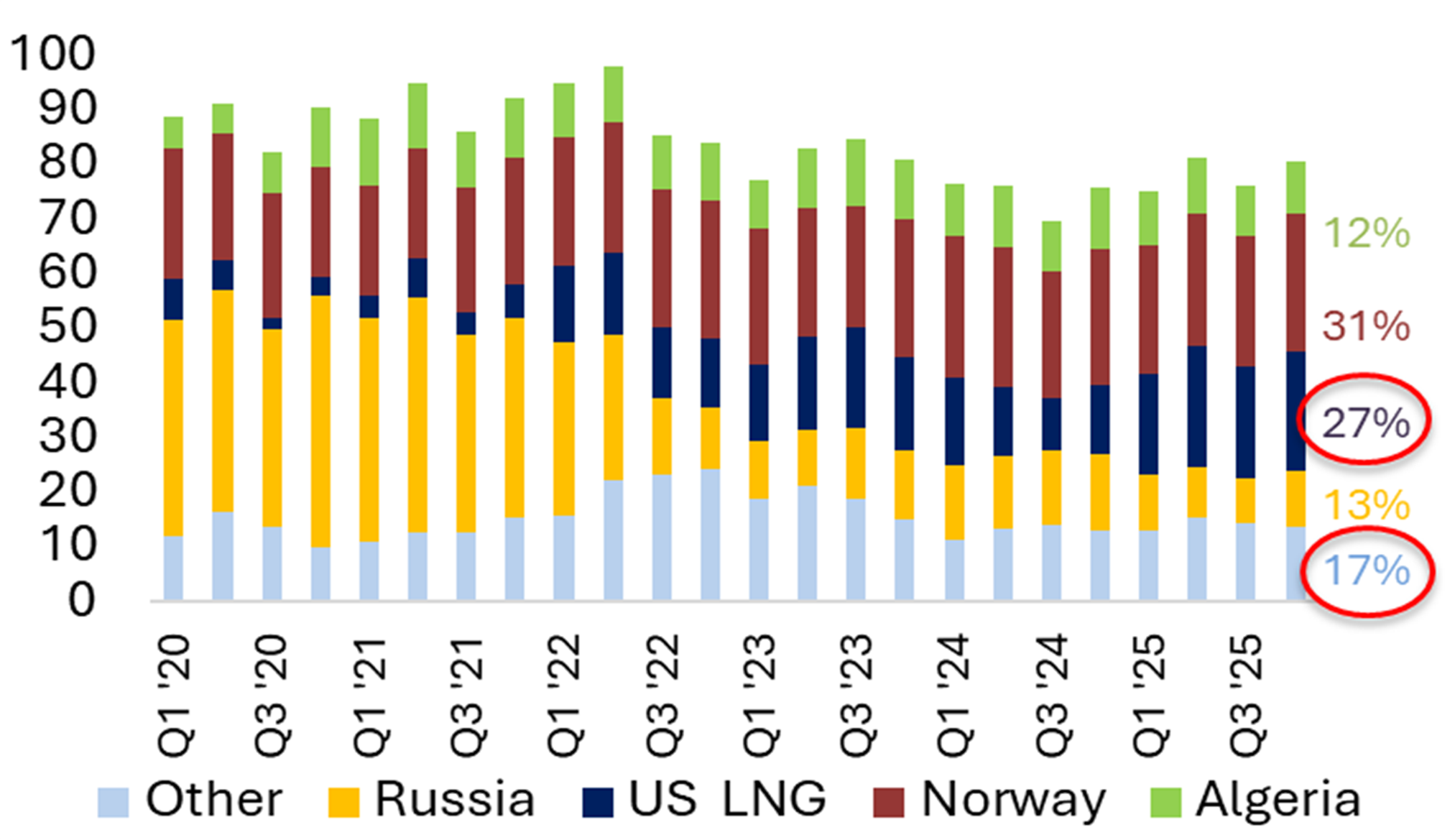
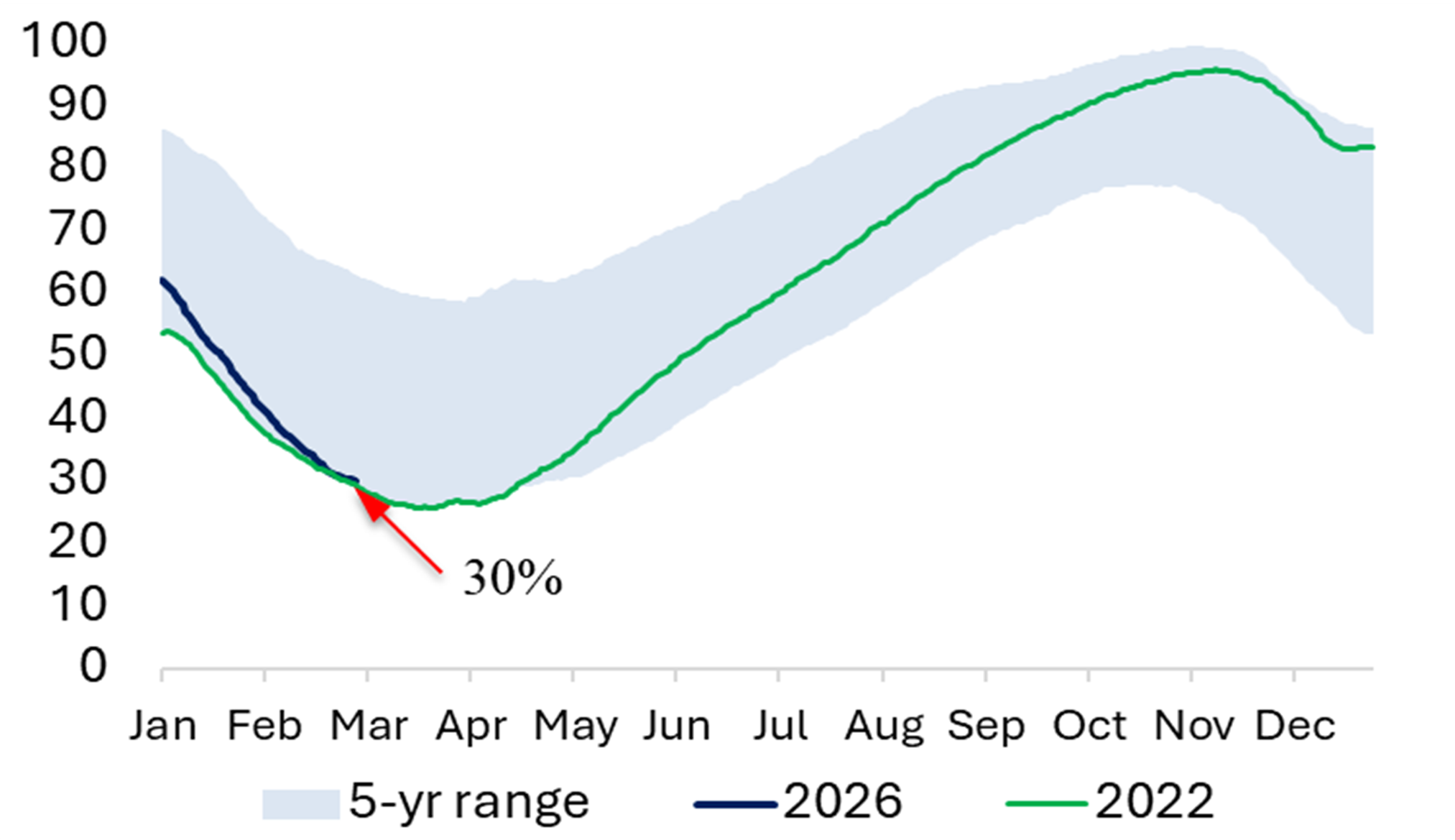
Source: Bruegel Source: GIE (Gas Infrastructure Europe)
3) What is driving EU gas prices? Since Europe has replaced most Russian gas imports with LNG imports since 2022, LNG cargoes in international spot markets have become the marginal supplier to meet European gas demand. As a result, international LNG prices (the Japan/Korea Marker or JKM LNG price) for LNG cargoes in international spot markets has become the price setter for European gas prices. Accordingly, there is a high correlation between JKM LNG prices and European reference gas prices (TTF or Title Transfer Facility), which means that international LNG prices de facto set European TTF gas prices (see Exhibit 3).
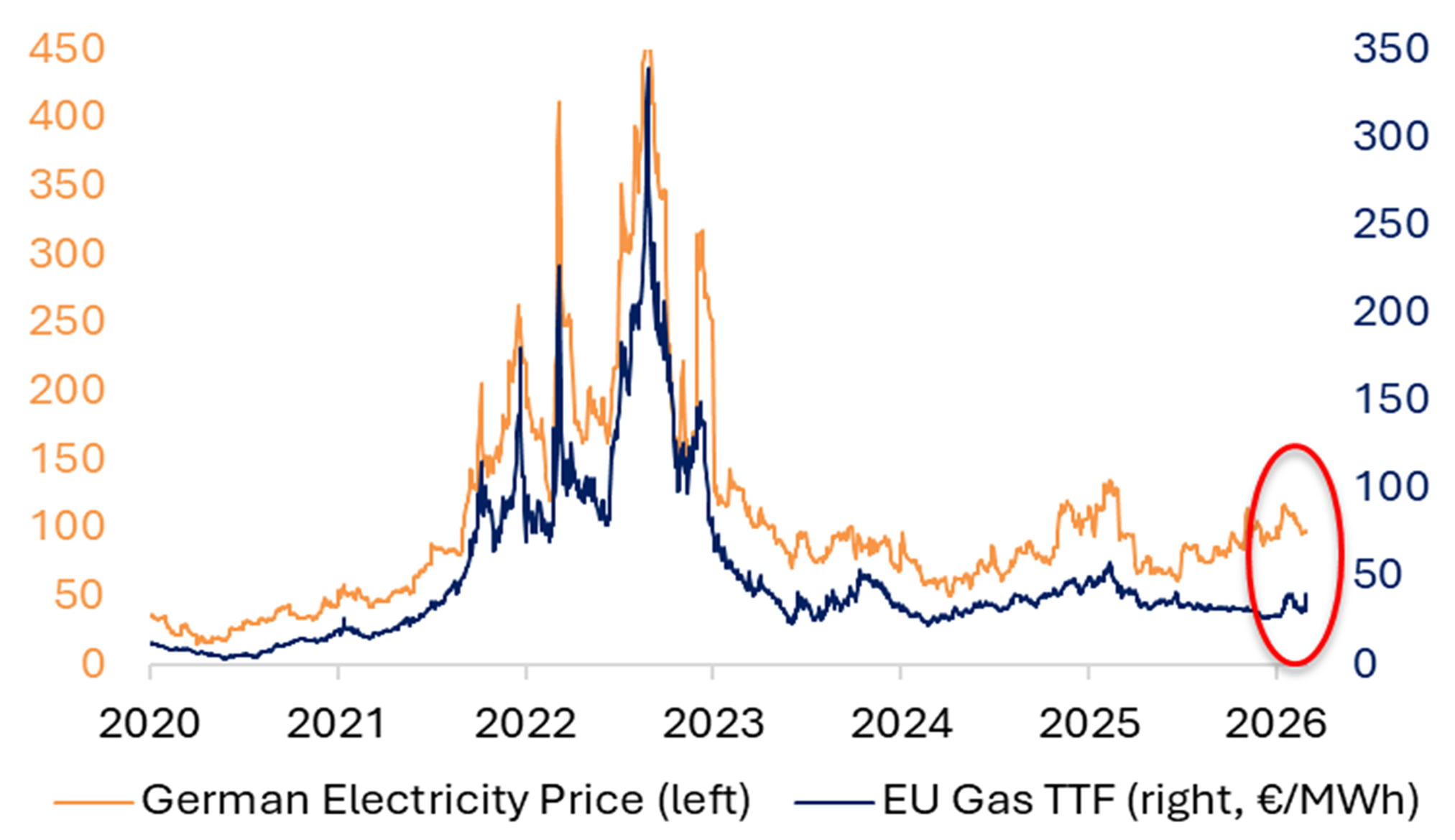
4) How do European gas prices influence European power prices? European short-term power prices are currently set by “marginal pricing”, which means that electricity prices are set by the variable cost of the marginal power plant, i.e. the electricity generated by the most expensive plant required to clear the market, which is gas-fired generation in Europe. As the gas price needed to produce the last MWh sets the electricity price in Europe, gas prices and electricity prices are highly correlated in Europe (see Exhibit 4), especially in those countries, in which gas-fired generation accounts for a larger share of its power generation (such as Germany and Italy).
Exhibit 3: LNG JKM vs. EU Gas Exhibit 4: German electricity vs. EU gas
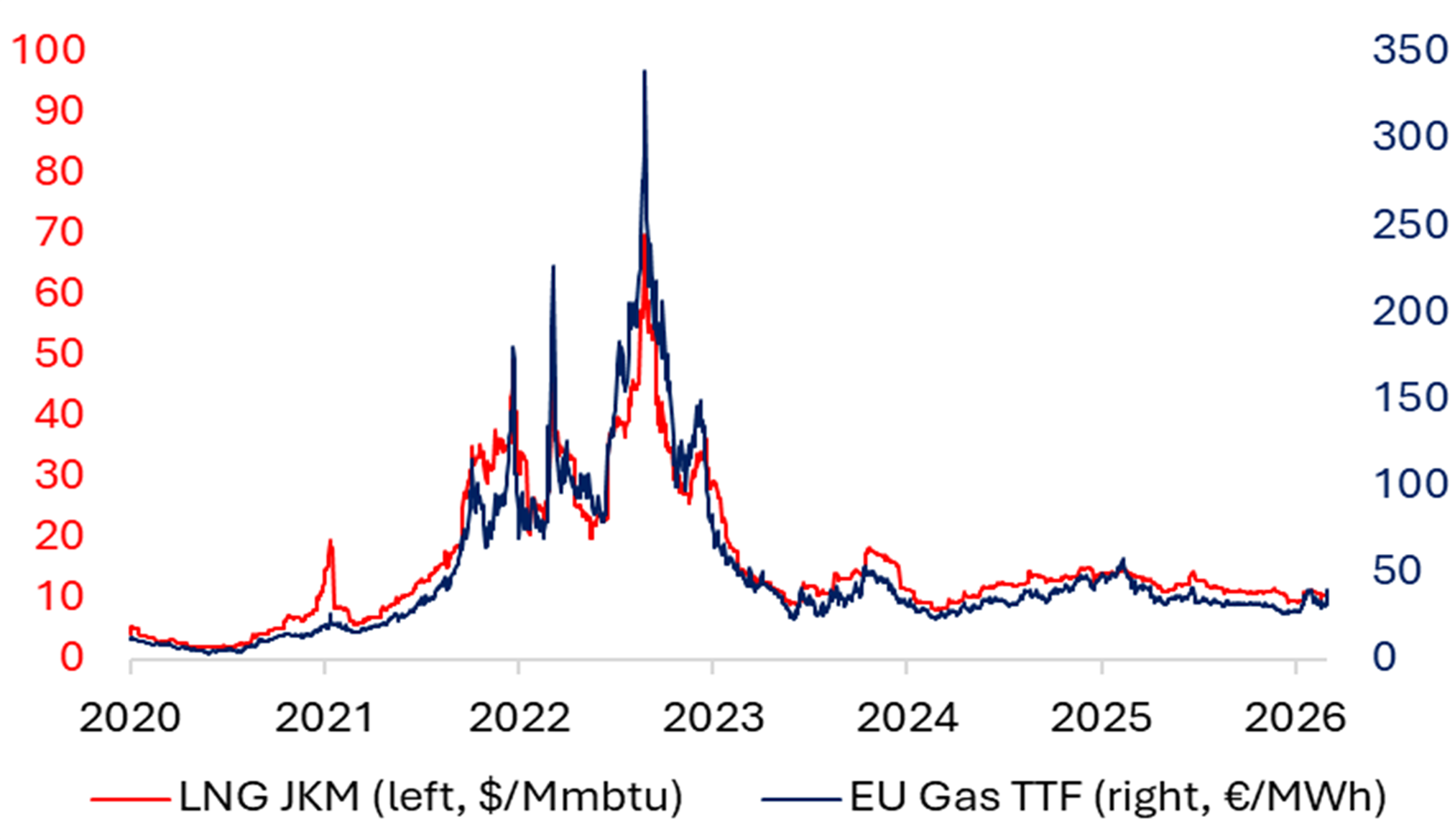
Source: LSEG Source: LSEG
(last data point: 27 February 2026) (last data point: 27 February 2026)
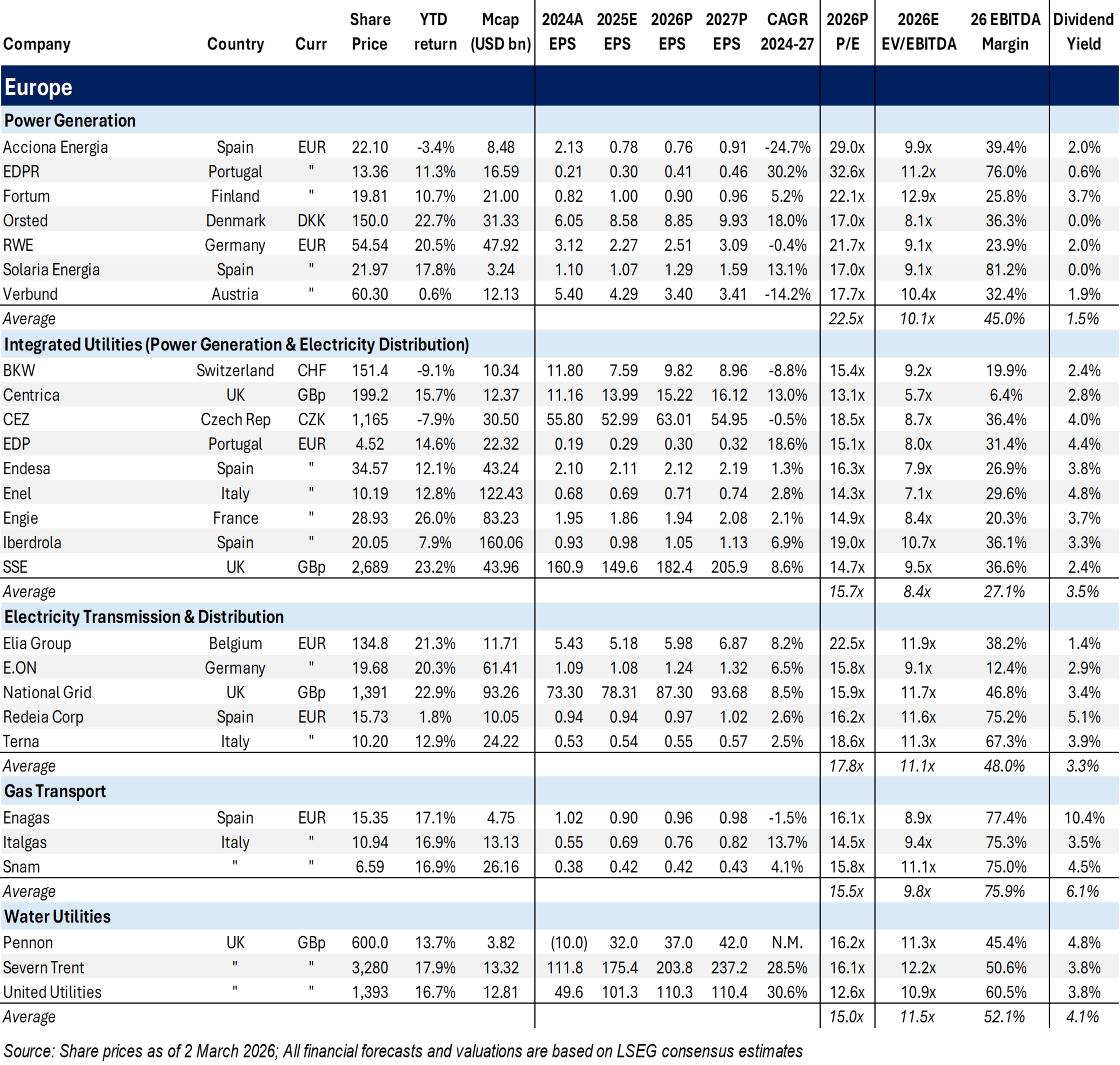
5) Which European utilities could benefit from Middle East supply disruptions? As we described above, the link between LNG supply disruptions from the Middle East and European utilities companies is the increase in European gas prices because they also lift European electricity prices. Accordingly, the European power generators listed in Table 1, which sell a large portion of the produced electricity into forward power markets, would be the main beneficiaries. Conversely, regulated electricity network businesses are not affected by rising electricity prices; therefore, integrated utilities, which operate both power generation and regulated electricity network businesses would benefit less, while the electricity transmission & network companies listed in Table 1 would be the utilities subsector, which does not benefit at all from an increase in European power prices (and thereby from Middle East supply disruptions).
Finally, it is worth mentioning that any gas price-induced jump in electricity prices (similar to 2022, when European gas and power prices surged during the energy crisis, see Exhibit 4 above), will invariably support new calls from EU politicians for a EU power market reform in another attempt to break the link between gas and power prices. However, it remains to be seen how successful these renewed efforts can be this time because similar attempts to dismantle Europe’s merit order principle were already unsuccessful in 2022 and 2023.
Table 1 Performance and Valuation Comps Table
191 MASON STREET, GREENWICH, CT 06830 Gabelli Funds TEL (914) 921-5100
This whitepaper was prepared by Jens Zimmermann, CFA. The examples cited herein are based on public information and we make no representations regarding their accuracy or usefulness as precedent. The Research Analysts’ views are subject to change at any time based on market and other conditions. The information in this report represent the opinions of the individual Research Analysts’ as of the date hereof and is not intended to be a forecast of future events, a guarantee of future results, or investments advice. The views expressed may differ from other Research Analyst or of the Firm as a whole.
As of December 31, 2025, affiliates of GAMCO Investors, Inc. beneficially owned less than 1% of all companies mentioned.
Funds investing in a single sector, such as utilities, may be subject to more volatility than funds that invest more broadly. The utilities industry can be significantly affected by government regulation, financing difficulties, supply or demand of services or fuel and natural resources conservation. The value of utility stocks changes as long-term interest rates change
Investors should carefully consider the investment objectives, risks, charges and expenses of the Fund before investing. The prospectus, which contains more complete information about this and other matters, should be read carefully before investing. To obtain a prospectus, please call 800 GABELLI or visit www.gabelli.com
Returns represent past performance and do not guarantee future results. Current performance may be lower or higher than the performance data quoted. Investment return and principal value will fluctuate so, upon redemption, shares may be worth more or less than their original cost. To obtain the most recent month end performance information and a prospectus, please call 800-GABELLI or visit www.gabelli.com
Distributed by G.distributors, LLC., a registered broker dealer and member of FINRA.
This whitepaper is not an offer to sell any security nor is it a solicitation of an offer to buy any security.
For more information, visit our website at: www.gabelli.com or call: 800-GABELLI
800-422-3554 • 914-921-5000 • Fax 914-921-5098 • info@gabelli.com
Gabelli Funds, LLC is a registered investment adviser with the Securities and Exchange Commission and is a wholly owned subsidiary of GAMCO Investors, Inc. (OTCQX: GAMI).