Introduction
Our approach to “green” investing is guided by our PMV with a Catalyst ™ philosophy and underpinned by fundamental research. As with all our investments, we emphasize free cash flow over fads. While not allergic to companies with ambitious visions, that growth must be priced appropriately.
In general, our investment universe includes: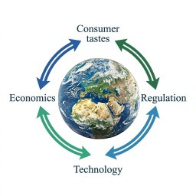
- Companies “born green” that provide products or services that address environmental needs
- Established companies that are pivoting some or all their business toward green outcomes
- Established companies embracing environmentally friendly practices, processes and formulations that increase their own efficiency and reduce the environmental footprint of their businesses, products or services
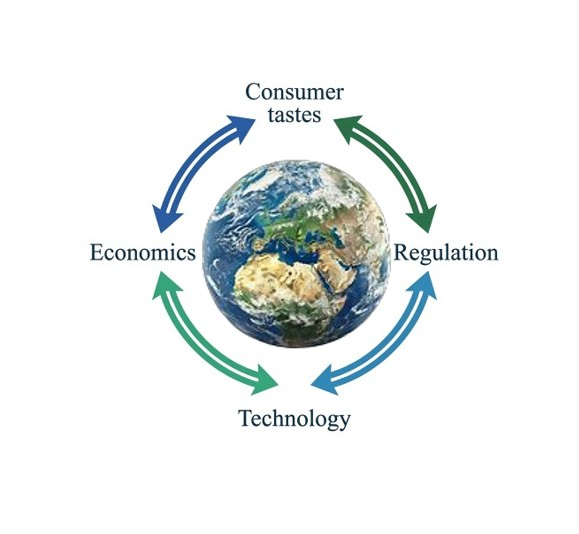
An exciting element of green investing is the richness of catalysts in the area. This is an area of swift technological innovation, strong secular shifts driven by changes in consumer and corporate preferences and ever-evolving regulatory and legislative change. As a result, we expect a robust set of new product introductions, infrastructure investment and ultimately consolidation.
Themes
While we are company-by-company bottom-up investors, several threads run through our sustainable investments. We call the most important the “Clean Five”:
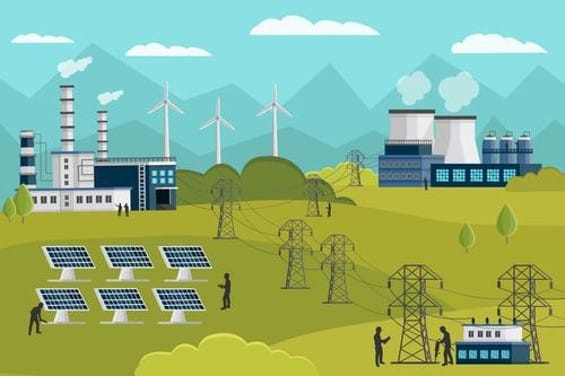
- Clean Power: The economy of the future will run on electricity governed primarily from clean sources including solar, wind, and nuclear
- Clean Mobility: Electric vs Internal Combustion Engine (ICE) Vehicles are less beholden to the geopolitically-driven price of oil and ultimately necessary for the future fleet of autonomous vehicles
- Clean Water: The molecule that sustains life, increasingly scarce in a world of growing demand and continuing contamination by microplastics and agricultural an industrial runoff
- Clean Packaging: Reduce, Reuse, Recycle eases strain on resources and landfill space. Elimination of plastic = less water contamination
- Clean Food: An idea that predated and will likely outlive the MAHA movement as consumers move away from processed food laden with artificial flavors and colors and foot often sourced in ways deemed unsustainable
Clean Power
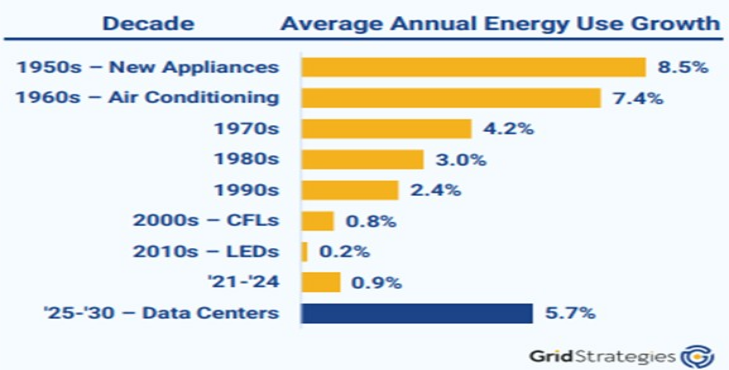
Investing in clean power provides exposure to a long-term shift in electrical demand. Decarbonization and energy security are important aspects of this shift, partially caused by the increased demand in energy for data centers. Data center growth has reached 60 GW of electric demand in 2025 and will hit an estimated 180 GW by 2030. Due to the overwhelming electrical demand and the concern that gas production has on the environment, companies are investing in more solar, water, and nuclear power. Data center growth reached 5.7% in average annual energy use, the highest level since the 1970s.
Exhibit 1 Average Annual Energy Use Growth
Source: Grid Strategies
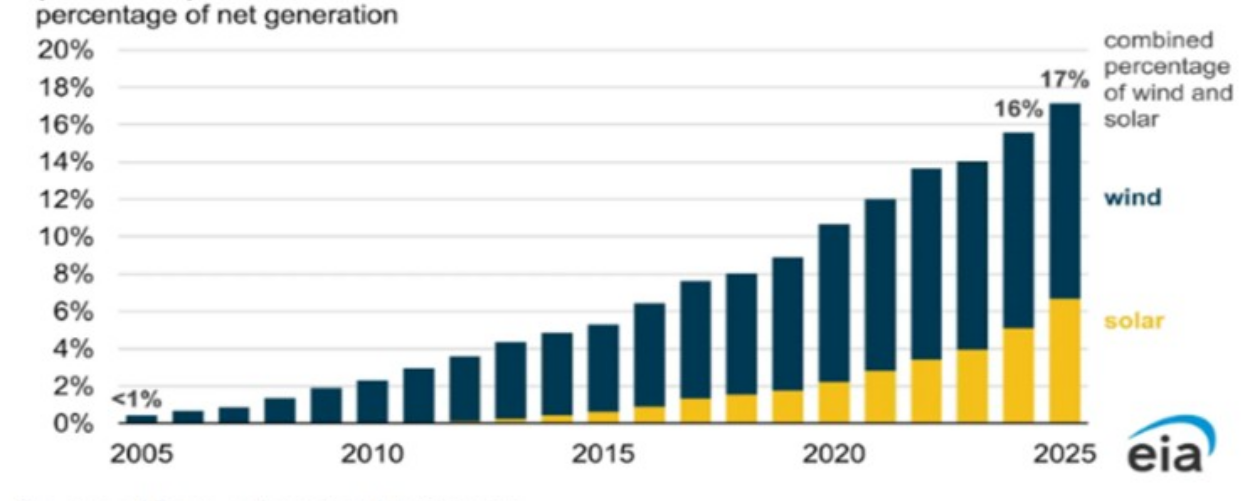
This shift towards sustainable sources of power has been prominent in the past few years. In 2026, the EIA/FERC expects ongoing structural shifts, with the use of coal declining to 14% and renewables rising to ~27% driven by solar capacity additions and steady wind growth. Since 2010, the U.S. has retired about 100 GW of coal-fired power generation, with 80 more GW by 2030.
(2005-2025)
Exhibit 2 Annuel Percentage of US Utility-Scale Electricity Net Generation from Wind and Solar
Source: Energy Information Administration
Clean Mobility
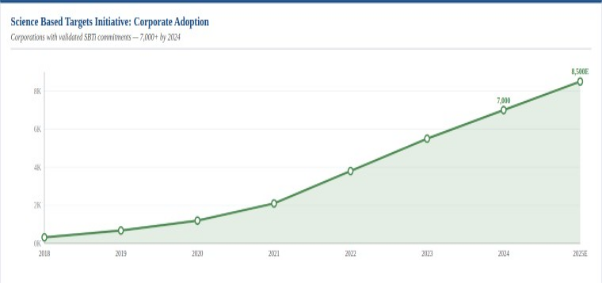
Clean mobility includes automation and industrial manufacturing to create more efficient processes while reducing carbon emissions and energy use. More manufacturing contracts include verified emissions reduction requirements for supply chain renewals. Some of these requirements include mandates from the DOE Electric Motor Efficiency Mandates, EU Carbon Border Adjustment Mechanism for high-carbon industrial products, and SBTi Corporate Commitment Checkpoints. There are over 7,000 corporations committed to Science Based targets Initiative to validate emissions reductions.
Exhibit 3 Science Based Targets Initiative: Corporate Adoption
Source: Science Based Targets Initiative Annual Report 2024; CDP
Compliance regarding Scope 3, a company’s value-chain emissions, affects 98% of the industrial industry. In many cases, just cutting direct emissions and electricity use isn’t enough. A company committing to validating SBTi targets must implement structural changes into their operations to meet new standards. Scope 3 is part of the Greenhouse Gas Protocol framework. For auto makers, Scope 3 can include emission from making steel and batteries, making circularity (battery recycling) more popular. Auto and industrial companies are focused on supply chain decarbonization and product lifestyle efficiency to meet these standards.
One of the main ways to reduce emissions is through electric vehicles (EVs). EVs use rechargeable batteries to drive electric motors, where internal combustion engines (ICE vehicles) burn gas or diesel, which directly contributes to fossil fuel. EVs batteries can even be recycled, creating less mining demand for the lithium or cobalt used in the batteries themselves. EVs convert 85% of their battery energy into motion, compared to ICE’s 20-30% efficiency.
Clean Water
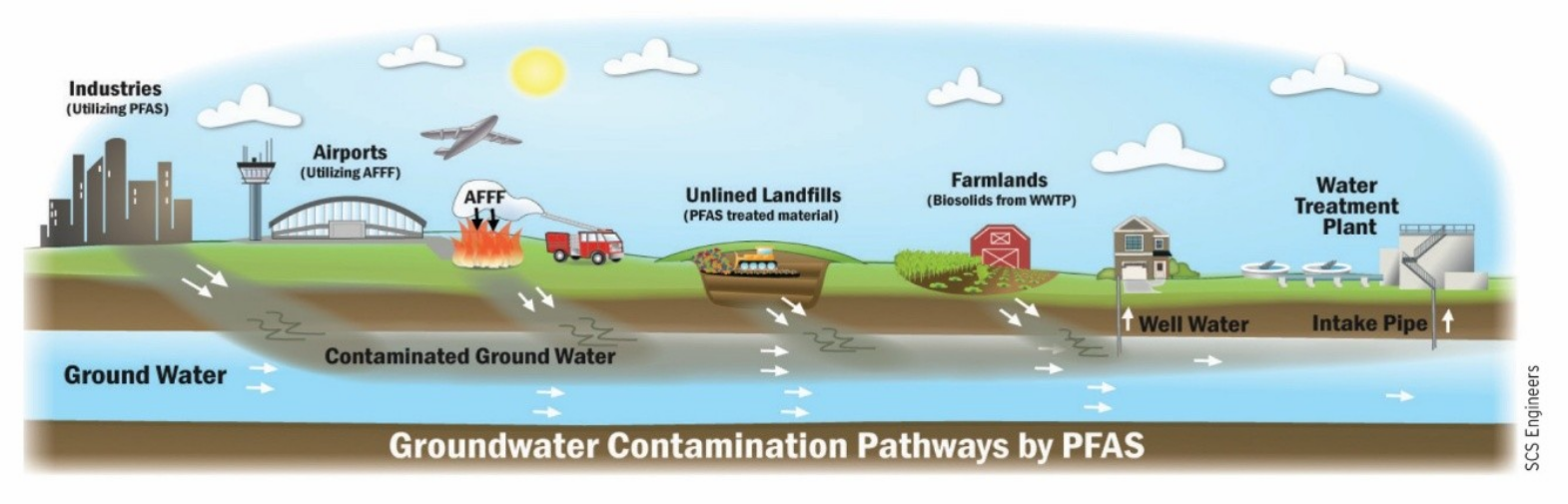
Per- and polyfluoroalkyl substances (PFAS), also known as forever chemicals, are hazardous substances found in drinking water. They are both an environmental and public health concern, as they are environmentally persistent, man-made chemicals used in industrial and commercial applications. PFAS contaminate ground water through industrial discharge, firefighting foams, landfills, waste sites, farmlands, and accidental spills. Removal of PFAS can be very costly, and there are over 600 PFAS compounds that are EPA-approved for sale in the United States. PFAS are detectable in the blood of more than 98% of the US population and are shown to increase cholesterol levels, affect immune systems, fertility and child development, and increase the risks of certain cancers.
Exhibit 4 PFAS Groundwater Contamination Pathways
Source: Bluetoad.com
In addition to PFAS, there is high demand for microplastic removal in municipal drinking water and wastewater utilities, as well as growing awareness of microplastics found in bottled water. The American Society of Civil Engineers graded the U.S. drinking water a C- and the wastewater a D+. According to an EPA 2023 assessment, over $625B is needed to fund improvements across the distribution channels, treatment, storage, and sourcing of water in the U.S. alone. The Drinking Water and Wastewater Infrastructure Act of 2021 aimed to upgrade the U.S. water systems, focusing on aging infrastructure, new technology, and underserved communities. The goal of this bill was to improve drinking water and wastewater reliability and reduce public health risks. Over $50B was allocated to the EPA from the broader Infrastructure and Jobs Act for drinking water, wastewater, and stormwater infrastructure, including $15B which was allocated to lead pipe replacement.
Exhibit 5 PFAS Found in Bottled Water
Source: Water Research
Clean Packaging
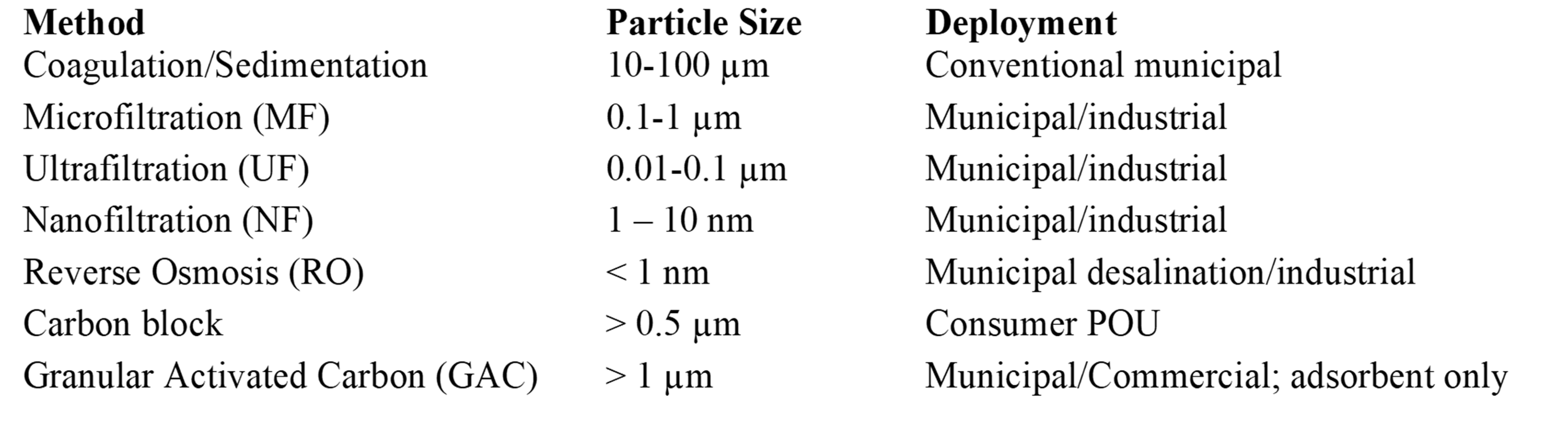
Microplastics are a growing concern as a contaminant of food and water, with new restrictions in the U.S. and existing restrictions in the EU. Mandates require monitoring of intentionally added microplastics during manufacturing. Exposure to microplastics is widespread, with research linking exposure to various negative health effects and even reporting microplastics and nanoplastics found in human blood, lungs, and placental tissue. Opportunities to invest in this space arise in measurement and removal methods. The methods are shown in table 1.
Table 1 Leading Microplastics Removal Technologies
Source: Gabelli Funds
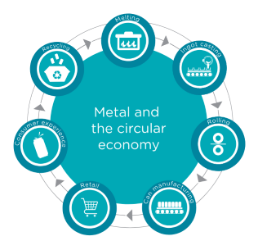
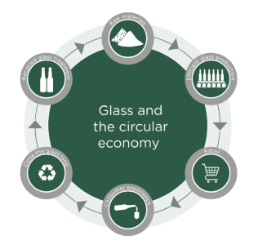
Recycling eases the strain on resources and landfill space, which can reduce the amount of microplastics that end up in water. We look at aluminum and glass packaging to reduce plastic use. Companies can utilize recycled aluminum materials rather than starting fresh, which reduces energy consumption by over 90%. It takes only 60 days to convert recycled aluminum to useable cans returned to retail shelves. Glass can go through a similar process to be reused as new containers.
Exhibit 6 The Metal and Glass Circular Economy
Source: Ardagh metal Packaging website
Clean Food
Finally, clean food is a growing focus within the U.S. Ultra processed food has been at the forefront of consumers’ minds when it comes to food safety, ingredient transparency, and sustainable sourcing. There has been increased focus on additives and labeling, as well as organic and “clean label” rules. Changes within the industry show in product reformulation, local sourcing and regenerative agriculture, and waste reduction. Opportunities are shown in natural food vendors and color/flavor substitutes.
According to Sensient’s 2025 Consumer Research, 77% of U.S. consumers are concerned about synthetic dyes in their food and beverages. When it comes to artificial dyes, the first ban in schools took effect in West Virginia in 2025. In 2026, Delaware, Arizona, and Utah will follow, as well as California, Virginia, and Tennessee in 2027. On a federal level, the FDA is encouraging brands to out phase all petroleum-based synthetic dyes from the nation’s food supply by the end of 2026.
Conclusion
We believe sustainable investing is a great place for active investing. Sustainability is difficult to measure, let alone aggregate in an index. Avoiding green washing necessitates the deep research we conduct at Gabelli. Finally, investing sustainably should not mean forgoing profitable investments. In fact, we think secular forces at play make this a relatively attractive area for investment.
If you are interested in the double bottom line of investing while doing good for the planet, we would love to speak with you about our capabilities in the form of a dedicated separately managed account or the purchase of our Love Your Planet & People ETF (LOPP – NYSE).
Please call (914) 921-5103 or email gkirby@gabelli.com for more information
249 ROYAL PALM WAY, PALM BEACH, FL33480 Gabelli Funds TEL (561) 671-2100
This whitepaper was prepared by Gwyneth Kirby. The examples cited herein are based on public information and we make no representations regarding their accuracy or usefulness as precedent. The Research Analyst’s views are subject to change at any time based on market and other conditions. The information in this report represents the opinions of the individual Research Analyst’s as of the date hereof and is not intended to be a forecast of future events, a guarantee of future results, or investments advice. The views expressed may differ from other Research Analyst or of the Firm as a whole.
As of March 31, 2026, affiliates of GAMCO Investors, Inc. beneficially owned 1.12% of Sensient Technologies and less than 1% of all other companies mentioned.
Important Disclosures
- Shares of this ETF are bought and sold at market price (not NAV) and are not individually redeemed from the fund.
- Buying or selling ETF shares may require additional fees such as brokerage commissions, which will reduce returns.
- These additional risks may be even greater in bad or uncertain market conditions.
You should consider the ETFs’ investment objectives, risks, charges and expenses carefully before you invest. The ETF’s’ Prospectus is available from G.distributors, LLC, a registered broker-dealer and FINRA member firm, and contains this and other information about the ETF, and should be read carefully before investing.
Distributed by G.distributors, LLC, a registered broker dealer and member of FINRA.
This whitepaper is not an offer to sell any security nor is it a solicitation of an offer to buy any security.
Investors should consider the investment objectives, risks, sales charges and expense of the fund carefully before investing.
For more information, visit our website at: www.gabelli.com or call: 800-GABELLI
800-422-3554 • 914-921-5000 • Fax 914-921-5098 • info@gabelli.com