Reflections from the Gabelli Funds 12th Annual Environmental Services, Recycling, & Sustainability Symposium
Gabelli Funds was pleased to host its 12th Annual Environmental Services, Recycling, & Sustainability Symposium on Thursday, April 9th, 2026. The symposium included company presentations, fireside chats and one-on-one meetings with public companies operating in both the $85 billion solid waste and non-traditional environmental services industries as well as those focused on sustainable packaging offerings and other innovative solutions aimed at addressing today’s plastic pollution crisis.
Key Themes: Trade Policy and Tariffs
- Trade policy and tariffs are a non-core consideration for the waste management industry in 2026. The sector remains fundamentally insulated due to its domestic, infrastructure-heavy, and service-based operating model, with limited sensitivity to global trade flows.
- The waste management industry is structurally domestic in nature, with revenue generated primarily through localized collection, hauling, transfer, recycling, and landfill operations. Because services are delivered within regional geographies, the industry has minimal dependence on international trade or imported end products. As a result, changes in tariff policy have little direct impact on core revenue streams or service demand.
- While tariffs can affect certain inputs such as collection vehicles, heavy equipment, or niche recycling technology components, these items represent a relatively small portion of total cost structures. Most large operators have already localized supply chains and standardized fleet procurement across North America. Any cost pressure from trade policy is typically marginal and absorbed through annual pricing programs and operational efficiencies.
- The industry’s long-term investment cycle has already shifted toward domestic infrastructure expansion, including landfills, recycling facilities, and transfer stations. This reduces exposure to global supply chain volatility and reinforces regional operating density as the primary competitive advantage. Over time, this has structurally weakened any meaningful link between waste operations and international trade policy shifts.
- Demand drivers are overwhelmingly domestic and structural, including population growth, housing activity, industrial production, and regulatory requirements for waste diversion and recycling. These drivers operate independently of trade policy and continue to support steady pricing and volume growth across cycles. As a result, sustainability initiatives and circular economy trends are far more relevant than tariff dynamics.
- Recycling supply chains have also adjusted over time to reflect more localized processing and reduced reliance on cross-border commodity flows. This evolution has further reduced sensitivity to trade-related disruptions compared with prior cycles. Most operators now view recycling and recovery businesses as domestic processing industries rather than globally exposed commodity businesses.
Overall, tariffs and trade policy are now secondary or tertiary consideration for the sector. The waste management industry remains primarily driven by local infrastructure, pricing discipline, and regulatory-supported demand rather than global trade dynamics, making it one of the more insulated industrial sectors in the economy.
The War on Plastics: Background & Overview
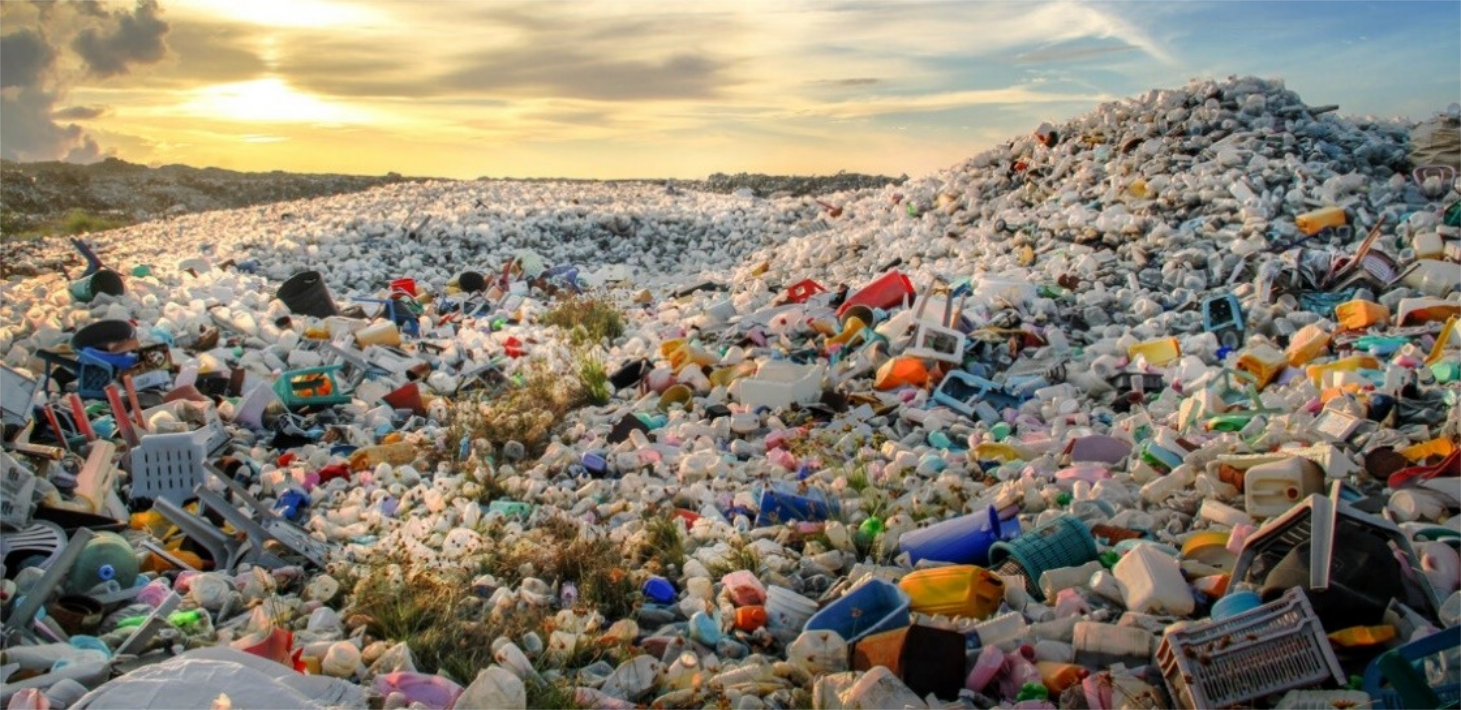
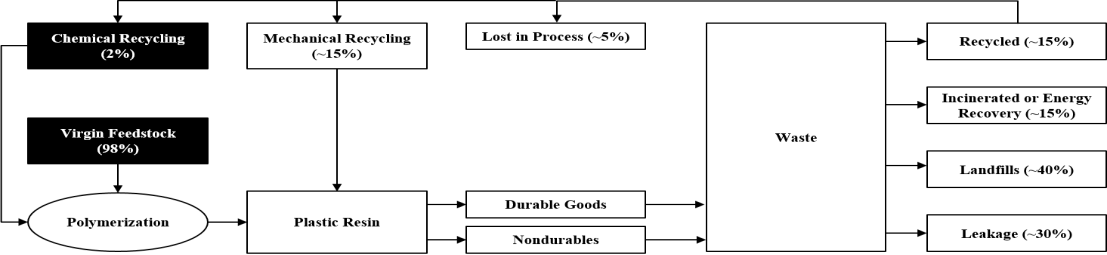
In addition to being readily available and cost-effective, PET plastic is also lightweight, durable, malleable, transparent, and has proven barrier properties. While these characteristics have contributed to the material’s commercial success, they have also created major challenges related from a waste management perspective. Plastic does not degrade naturally or maintain its inherent properties when recycled, so the increased use of plastics has also led to increased plastic waste. In the past 40 years, less than 10% of all plastic waste has been recycled given the very low cost of virgin materials and the inefficient and high cost to recycle most plastics. Resource efficiency, material sustainability, product recyclability, and carbon footprint across the full product lifecycle all contribute to the overall environmental impact of various substrates and packaging formats. Materials that cannot be recycled require addition of virgin material or other additives to function after being recycled, or are too complicated to recycle (i.e., mixed plastics) prohibit a fully circular economy.
Primary Approaches to Addressing the Plastic Waste Crisis
In response to perceived sustainability issues with plastics, brand owners are increasingly focused on reducing the environmental impact of their products, without sacrificing performance or significantly increasing costs. Both established and emerging businesses are investing in a variety of more sustainable solutions and offerings, which in general aim to either reduce the amount of virgin PET plastic utilized or improve plastics recycling downstream. Waste management strategies are moving towards recycling and recovery as opposed to disposal. We see a continued shift towards container and packaging options that utilize more recycled content, have higher recycling rates, and generate less waste in an effort to differentiate products as more sustainable.
Efforts such as material lightweighting, increased use of recycled resins, and switching to more environmentally friendly alternatives are underway. However, low PET recycling rates have historically limited the supply of recycled resins available. The National Association for PET Container Resources has warned that, even with substantial increases in PET recycling rates, the U.S. does not have the recycled PET supply or processing capacity to meet current recycled content commitments from large consumer packaged goods companies. The bio-based alternatives (polyethylene terephthalate or PET, plant-based, compostable, etc.) available today rarely measure up to PET in terms of performance, remain largely unproven, and are significantly more expensive to produce.
Exhibit 2 Circular Life of Plastic Packaging
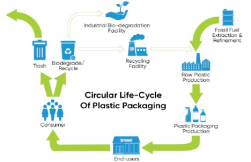
Source: Ranpak Investor Presentation, 2022
Advanced plastic recycling and recovery technologies including chemical recycling, a process that reduces a polymer to its original monomer form so that it can be processed and remade into new materials, look to overcome the limits of traditional recycling. However, most of these efforts remain in early stages and have yet to prove their ability to scale.
Exhibit 3 End of Life Alternatives for Plastic
Source: HIS, Ellen MacArthur Foundation, Gabelli Funds estimates
Key Themes: Environmental Services Industry
Overall, the solid waste industry has benefited from the reopening of the economy with organic growth expected to outpace inflation in 2026.
- Pricing. Pricing continues to be the primary lever of organic growth across the industry, supported by the essential nature of waste services and low customer price sensitivity. Contracts are typically structured so waste costs remain a small portion of total customer spend, enabling consistent price increases above inflation. The industry has also shifted toward more disciplined annual price escalators and tighter contract structures. This pricing discipline remains the most important offset to wage and maintenance inflation.
- Inflation. Cost inflation has broadly normalized compared with prior years, particularly in labor stabilization, maintenance, and disposal costs. A meaningful portion of industry revenue (roughly 40–50%) is still tied to index-based pricing, which typically lags costs by 6–12 months, creating a natural margin tailwind during periods of moderating inflation. Operators continue to refine CPI linkages, increasingly shifting toward indices that better reflect actual cost structures. This has improved margin predictability and reduced downside volatility versus prior cycles.
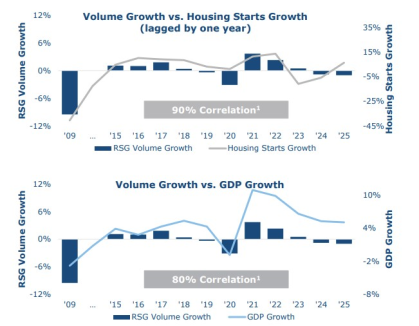
- Volume Growth. Underlying volumes remain steady and generally track ~0.5–0.75x GDP, with residential construction and industrial production as the key drivers. While volumes are not a primary growth lever, they provide a stable base that compounds pricing and margin expansion. Recent demand trends have been relatively flat, with modest cyclical sensitivity in construction and industrial waste streams. Long-term volume growth remains modest but durable rather than cyclical.
- Recycling. Recycling markets have stabilized following prior commodity volatility, with less reliance on commodity-linked revenue and more emphasis on processing fees. This structural shift has improved earnings quality by reducing exposure to commodity price swings. Operators increasingly focus on contamination management, processing efficiency, and contract-based revenue models. Recycling is now viewed more as a steady margin contributor rather than a cyclical earnings driver.
Exhibit 4
Source: Republic Services Investor Presentation
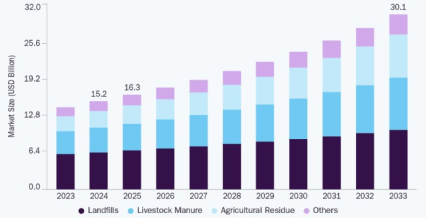
- Landfill Gas Projects. Landfill capacity constraints remain a structural advantage across North American operators, supporting mid-single-digit annual pricing power in many markets. Landfill gas and renewable natural gas (RNG) projects continue to be an important capital deployment avenue, often structured with partners to reduce risk while preserving returns. These projects provide incremental monetization of existing assets rather than requiring large greenfield expansion. Scarcity of permitted disposal capacity remains one of the strongest long-term moats in the industry.
Exhibit 5
Source: Grand View Research
- Fleet transitions toward compressed natural gas (CNG) and electric vehicles continue, but economics remain marginal and primarily driven by replacement cycles and regulatory optics rather than step-change emissions benefits. CNG provides limited emissions improvement versus diesel but remains widely adopted due to infrastructure availability. Electric collection trucks are still in early adoption due to high upfront costs and operational constraints. Overall, sustainability initiatives are additive but not a primary driver of near-term earnings power.
- Automation of residential collection routes is now largely in a mature adoption phase, with most large operators having converted most fleets to automated single-driver systems. These systems significantly improve route density, reduce labor requirements, and lower injury-related costs. Additional gains are increasingly coming from software, AI route optimization, and dispatch efficiency rather than hardware conversion alone. Automation has transitioned from a growth capex theme to a steady-state productivity enhancer.
- M&A. M&A continues to be one of the most important drivers of long-term growth, particularly in fragmented local markets where small operators face rising labor and compliance costs. The pipeline remains robust, supported by generational ownership transitions and operational complexity among smaller haulers. Larger platforms benefit from scale, pricing power, and density synergies, allowing them to consistently acquire and integrate assets at attractive returns. Deal activity is expected to remain steady rather than cyclical, with tuck-in acquisitions as the dominant format.
Aduro Clean Technologies (ADUR – $11.32 – NASDAQ)
Company Overview
Aduro Clean Technologies Inc. is a Canada-based clean technology company. The company is a developer of water-based technologies to chemically recycle waste plastics; convert heavy crude and bitumen into lighter, more valuable oil, and transform renewable oils into higher-value fuels or renewable chemicals. Its chemical recycling platform features three water-based technologies, such as Hydrochemolytic Plastics Upcycling (HPU), Hydrochemolytic Renewables Upgrading (HRU) and Hydrochemolytic Bitumen Upgrading (HBU). Its Plastics Upcycling application converts waste plastics into feedstocks for producing new plastics or hydrocarbon fuels. Its HRU transform renewable oils into renewable motor fuels, sustainable aviation fuel (SAF), and specialty chemicals in scalable formats that can be integrated straightforwardly into existing operations.
Reason For Comment
The following are key takeaways from Aduro’s CEO Ofer Vicus at our 12th Annual Waste & Environmental Services Symposium:
Differentiated Hydrochemolytic Technology
- The company described its process as using water-driven pyrolysis and chemical-assisted hydrogenation to break down heavy oil and plastic feedstocks without traditional hydrogen management. Management emphasized the use of low-value catalysts and simplified operating conditions compared with legacy chemical recycling technologies. The modular design allows smaller, repeatable units that can be scaled without large, centralized infrastructure. These factors are intended to lower capital intensity and improve flexibility relative to incumbent approaches.
High Yield and Conversion Efficiency Advantage
- Management indicated the process can generate roughly 95% fungible liquid or gas output, minimizing low-value byproducts. They contrasted this with competing technologies that produce a larger portion of unusable material that does not qualify for circular markets. The company believes its conversion efficiency can nearly double usable output versus peers on a comparable feedstock basis. This yield advantage is positioned as a key driver of project economics and customer adoption.
Growth Strategy Centered on Chemical Recycling Expansion
- The company expects chemical recycling of plastic waste to be the primary growth driver over the next five years. Heavy oil remains under development, with potential updates in 2026 but currently a secondary priority. Management is targeting capacity expansion through new locations in North America and Mexico to support commercialization. The focus remains on scaling revenue-generating projects and increasing processing capacity.
Commercialization Model, IP, and Geographic Expansion
- Management highlighted a growing patent portfolio and expressed confidence in their intellectual property position. They plan to initially own and operate units before transitioning to licensing after performance is demonstrated. The Netherlands site was chosen due to favorable regulations and existing relationships supporting early deployment. Future expansion is expected in the U.S. and Canada as the company focuses on execution and scaling the technology.
Casella Waste Systems (CWST – $79.64 – NASDAQ)
Company Overview
Casella Waste Systems Inc. is a regional, vertically integrated solid waste services company. The company provides resource management and services to residential, commercial, municipal, institutional, and industrial customers, primarily in the areas of solid waste collection and disposal, transfer, recycling, and organics services. It also holds collection operations across eastern Pennsylvania and western New Jersey. It manages its solid waste operations on a geographic basis through three regional operating segments: the Eastern, Western and Mid-Atlantic regions, each of which provides a comprehensive range of non-hazardous solid waste services. It manages its resource renewal operations through the Resource Solutions operating segment, which leverages its core competencies in materials processing, industrial recycling, organics and resource management service offerings to deliver comprehensive solutions for its commercial, municipal, institutional and industrial customers.
Reason For Comment
The following are key takeaways from Casella’s CFO Brad Helgeson and SVP Finance & Treasurer Jason Mead at our 12th Annual Waste & Environmental Services Symposium:
Northeast Disposal Scarcity Driving Pricing Power
- Management highlighted a structural imbalance in the Northeast with roughly 30 million tons of waste generated versus about 20 million tons of disposal capacity. This shortfall supports strong pricing, with approximately one-third of regional waste exported by rail to other markets. Capacity is expected to continue tightening, increasing the value of owned disposal assets over time. The company indicated it has more than 25 years of internal capacity, including long-lived landfill assets that support long-term visibility.
M&A-Led Growth with Disciplined Geographic Expansion
- Casella has significantly expanded its footprint through acquisitions, including large deals and tuck-ins that leverage existing infrastructure. The company currently sees an active pipeline of roughly $500 million in potential transactions within its integration bandwidth. Management remains focused on the Northeast and Mid-Atlantic with logical adjacency expansion rather than entering distant markets. Typical targets are $50–100 million revenue companies where operational synergies can drive margin expansion.
Labor Strategy, Automation, and Internal Driver Pipeline
- The company’s internal CDL school has graduated roughly 400 drivers, creating a proprietary pipeline for labor. Driver and mechanic labor conditions have eased, with turnover in the mid-20% range, which management views as favorable. Casella is also replacing rear-load trucks with automated side-load vehicles, allowing helpers to transition into driver roles. Recruiting efforts have expanded to high schools and trade schools to position waste management as an attractive long-term career path.
Technology Investment and Capital Allocation Discipline
- Casella is deploying technology across operations, including RouteWare systems, in-cab safety AI, and new customer-facing digital platforms. Recycling facility upgrades using AI-enabled sorting have generated approximately 20% IRRs and reduced labor requirements. Capital allocation is evaluated using unlevered after-tax IRR, with internal investments prioritized ahead of acquisitions. Leverage is maintained around 2.5–3.0x, with growth increasingly funded through cash flow and modest incremental debt.
CECO Environmental (CECO – $66.01 – NASDAQ)
Company Overview
CECO Environmental Corp. is an environmentally focused, diversified industrial company. The company serves a broad landscape of industrial air, industrial water and energy transition markets globally, providing solutions and application expertise. Its Engineered System segment serves the power generation, hydrocarbon processing, water/wastewater treatment, oily water separation and treatment, marine and naval vessels, and midstream oil and gas sectors. The segment seeks to address the global demand for environmental and equipment protection solutions with its engineered platforms, including emissions management, fluid bed cyclones, thermal acoustics, separation and filtration, and dampers and expansion joints. Its Industrial Process Solutions segment serves the industrial sector with solutions for air pollution and contamination control, and process filtration in applications, such as aluminum beverage can production, automobile production, electronics production, and other markets.
Reason For Comment
The following are key takeaways from CECO’s CFO Peter Johnansson at our 12th Annual Waste & Environmental Services Symposium:
End Market Exposure and Geographic Footprint
- The company operates primarily in North America, with the U.S. representing the core market and limited exposure to Canada, Europe, Africa, and no presence in South America. Key end markets include air, automotive, and water, with food and beverage serving as a major vertical within the water business. Automotive demand is currently weak and represents a near-term headwind. Outside of Europe, management is not seeing customers pull back on planned investments.
Semiconductor Opportunity as a Key Growth Driver
- The company highlighted semiconductor customers including Samsung, Texas Instruments, and Micron as important growth opportunities. Their systems recover and destroy gases and acids emitted during semiconductor manufacturing processes. Management noted they are one of only three companies with the required technology, creating a favorable competitive position. The semiconductor market is expected to be a meaningful contributor to future growth.
Competitive Positioning and Operational Transformation
- The company described the competitive landscape as fragmented but believes its scale and balance sheet provide an advantage. Significant growth since 2021 was attributed to leadership changes under the new CEO and a restructuring initiated during COVID. Management eliminated non-core segments, reduced overhead, and reorganized around operating platforms. These actions improved focus, efficiency, and the company’s ability to compete for larger opportunities.
Acquisition Strategy and Post-Deal Positioning
- Following the Thermon Solutions acquisition, management expects to reposition the company as more of an industrial solutions provider. Capital allocation priorities include capturing synergies, reducing leverage toward roughly 2x, and maintaining liquidity. Management acknowledged mixed investor reaction to the deal, citing confusion from announcing alongside earnings and concerns around leverage. Once integration progresses, the company plans to pursue additional growth opportunities.
Greif (GEF/GEF’B – $70.25/$86.59 – NYSE)
Company Overview
Greif, Inc. specializes in industrial packaging products and services. Its Customized Polymer Solutions segment is involved in the production and sale of a comprehensive line of polymer-based packaging products, such as plastic drums, rigid intermediate bulk containers and small plastics. The Durable Metal Solutions segment is involved in the production and sale of metal-based packaging products, including a variety of steel drums. The Sustainable Fiber Solutions segment is engaged in the production and sale of fiber-based packaging products, including fiber drums, corrugated sheets, corrugated containers, uncoated recycled board, coated recycled board, uncoated recycled board and coated recycled board. The Integrated Solutions segment is engaged in the production and sale of complimentary packaging products, such as paints, linings and closure systems for industrial packaging products and related services.
Reason For Comment
The following are key takeaways from Greif’s CFO Larry Hilsheimer at our 12th Annual Waste & Environmental Services Symposium:
Steel Drums as Core Cash Flow with Deep Chemical and Pharma Relationships
- The company highlighted steel drums as its largest revenue and cash flow contributor, with major chemical and pharmaceutical companies representing key customers. These long-standing relationships support recurring demand and stable volumes across industrial packaging needs. Management emphasized maintaining close engagement, including executive-level relationships and biweekly customer calls. This customer proximity is intended to reinforce retention and support incremental growth opportunities.
“Built to Last” Strategy Focused on Portfolio Simplification
- Management described a multi-year effort to improve margins by cutting costs and exiting underperforming operations. Plants generating less than roughly 5% EBITDA margins were closed, and the containerboard business was divested to focus on higher-return packaging segments. The strategy also emphasizes reducing cyclicality and concentrating on core industrial packaging products. As part of this shift, the company has built a stronger position in jerry cans alongside its steel drum franchise.
Disciplined M&A Focused on Smaller Tuck-Ins
- The company noted that higher interest rates reduced private equity competition, creating opportunities for smaller acquisitions. Management is targeting tuck-in deals that complement existing operations rather than pursuing large-scale transactions. They indicated deal sizes are expected to remain below roughly $500 million, avoiding “big game” acquisitions. This approach is designed to enhance scale while maintaining balance sheet discipline.
Geographic Growth Trends and End Market Performance
- The United States has been the weakest-performing region, while Asia and China have shown strong growth. Latin America and Southeast Asia were also highlighted as attractive markets with favorable demand trends. The Middle East had been performing well prior to recent geopolitical disruptions. Overall growth is being driven more by international markets than domestic demand.
Lightbridge Corp. (LTBR – $12.76 – NASDAQ)
Company Overview
Lightbridge Corporation is a nuclear fuel technology development company. The company is developing Lightbridge Fuel, a proprietary nuclear fuel technology for existing light water reactors and pressurized heavy water reactors, which is expected to significantly enhance reactor safety, economics, and proliferation resistance. The company is also developing Lightbridge Fuel for new small modular reactors (SMRs) to bring the same benefits plus load-following with renewables on a zero-carbon electric grid. It also develops new nuclear power plants, large and small, and enhances proliferation resistance of spent nuclear fuel while supplying clean energy to the electric grid. The company develops proprietary next-generation nuclear fuel technologies for current and future reactors, which significantly enhances the economics and safety of nuclear power, operating about 1000° C cooler than standard fuel.
Reason For Comment
The following are key takeaways from Lightbridge’s CEO Seth Grae at our 12th Annual Waste & Environmental Services Symposium:
Fuel Redesign to Increase Output from Existing Nuclear Reactors
- The company is focused on redesigning nuclear fuel to improve performance of existing pressurized water reactors rather than building new reactors. Management indicated the fuel could enable roughly 10% power increase without major plant modifications and potentially up to one-third more output with certain upgrades. The opportunity is concentrated on large, pressurized water reactors, which represent the majority of the global installed base. This strategy targets incremental capacity additions at lower cost compared with constructing new nuclear facilities.
Nuclear Demand Tailwinds Driven by Data Centers and Grid Reliability
- Management highlighted growing electricity demand from AI and data centers as a major driver for nuclear expansion. Utilities are under pressure to increase reliable baseload power supply without materially raising costs, which supports nuclear solutions. They pointed to long-term premium power contracts, including agreements supporting data center loads, as evidence of rising demand for dependable generation. The company believes enhanced fuel performance can help utilities unlock additional capacity from existing assets.
Testing Program and Path to Commercialization
- The company is conducting fuel material testing at Idaho National Laboratory using higher enrichment uranium to accelerate validation. Testing is focused on thermophysical properties, microstructure, and thermal hydraulic performance under reactor conditions. Results are expected at the beginning of the fall, with data intended to support regulatory licensing and commercial deployment. Management is also planning a pilot fuel manufacturing facility that could expand into a full commercial production site.
Adoption Strategy Targeting Large Installed Base
The company emphasized the installed base of existing reactors as the primary commercialization opportunity. Utilities evaluating ways to increase output at lower cost are viewed as the key initial customers. Management expects adoption to begin with demonstrations and pilot deployments before broader rollout. Over the next five years, priorities include completing testing, securing partnerships, selecting a pilot plant location, and advancing toward commercial production.
Loop Industries (LOOP – $1.32 – NASDAQ)
Company Overview
Loop Industries, Inc. is a technology company. The Company owns patented and proprietary technology that depolymerizes no and low-value waste PET plastic and polyester fiber, including plastic bottles and packaging, and textiles such as carpets and clothing into its base building block monomers DMT and MEG. The monomers are separated, purified and polymerized to create virgin-quality Loop branded PET resin suitable for use in food-grade packaging and polyester fiber, thus enabling its customers to meet their sustainability objectives. Loop PET plastic and polyester fiber can be recycled infinitely without degradation of quality, helping to close the plastic loop. Its depolymerization operates at low temperature with no added pressure, which enables a wider range of PET and polyester fiber to be recycled. Its technology can recycle a wide range of waste PET plastic bottles and packaging of any color, transparency or condition, as well as polyester textiles, such as carpet and clothing.
Reason For Comment
The following are key takeaways from Loop’s CFO Spencer Hart at our 12th Annual Waste & Environmental Services Symposium:
Transition to Global Commercial Circular PET Producer via JV/Licensing Model
- Loop Industries is shifting from a research-focused organization to a commercial-scale producer of circular PET through joint ventures and licensing agreements. The company partners with established industrial players such as SK Geo Centric, which provide capital and operational execution while Loop contributes proprietary technology. The first major commercial facility is a 70,000-ton plant in India, followed by a planned facility in Germany at a BASF site. This model is intended to enable rapid global scaling without requiring Loop to fully fund or operate assets directly.
Regulatory and Brand-Driven Demand as Core Growth Tailwinds
- Management highlighted strong global regulatory momentum shifting recycled content requirements from voluntary to mandatory. India has implemented a 40% recycled content mandate for plastic bottles, while Europe is introducing similar requirements alongside penalties for virgin PET usage. Major brand partnerships, including Nike, validate demand for high-quality recycled PET that can be used in premium applications. These tailwinds are expected to structurally increase demand for Loop’s virgin-quality recycled output.
Differentiated Low-Temperature Chemical Recycling Technology
- The company’s process operates at approximately 85°C without added pressure, significantly reducing energy requirements and operational complexity versus traditional chemical recycling. It breaks PET down into its base monomers (DMT and MEG), enabling infinite recycling without quality degradation. The process is feedstock agnostic and can handle lower-quality inputs such as colored plastics, textiles, and ocean waste. Management positions this as a key advantage versus competitors relying on higher-temperature or less flexible systems.
Scalable Modular Buildout with Off-the-Shelf Equipment
- Loop’s commercialization strategy relies on standard industrial equipment and modular scaling rather than bespoke manufacturing systems. The transition from pilot to full-scale facilities involves manageable scale increases and the ability to add parallel reactor units. Detailed engineering is being completed with Toyo Engineering to move projects toward construction-ready design. Revenue is expected to be initially lumpy through licensing fees and engineering services before transitioning to recurring cash flows as plants become operational.
One and One Green Tech (YDDL – $4.72 – NASDAQ)
Company Overview
One and one Green Technologies. INC is engaged in recycling, production, and trading of recycled scrap metals. The company’s subsidiary is One and one International HK Limited.
Reason For Comment
The following are key takeaways from One and One’s CEO Caifen (Tina) Yan, and CFO, Chun Kit at our 12th Annual Waste & Environmental Services Symposium:
Licensed Monopoly Position in Philippines Copper Recycling Market
- YDDL operates as a pure-play Asia Pacific waste metal recycler focused primarily on copper, with approximately 25,000 tons per year of processing capacity. The company holds a unique licensed position in the Philippines, having spent five years securing regulatory approval as the only licensed recycling operator in the country. This regulatory barrier creates a significant moat and limits competitive entry due to strict government oversight and capital-intensive requirements. Management views this licensing advantage as foundational to long-term dominance in domestic metal recycling.
Strong Financial Profile with Zero-Leverage Expansion Capacity
- The company reported approximately 51% year-over-year revenue growth, reflecting strong underlying demand for recycled metals. YDDL operates with zero interest-bearing debt, providing significant financial flexibility for future organic and inorganic expansion. Management highlighted this balance sheet strength as a key enabler for scaling operations across Asia Pacific markets. The business is positioned as a high-margin, cash-generative recycler benefiting from structural industry tailwinds.
Infrastructure and AI-Driven Copper Demand Tailwinds
- Demand growth is being driven by infrastructure expansion and rising requirements for copper in AI-related applications such as data centers, power grids, and liquid cooling systems. Management emphasized that YDDL sits early in the supply chain for critical metals used in these applications. The Philippines and broader Asia Pacific region are experiencing infrastructure investment cycles that support sustained demand for recycled copper. These trends are expected to expand the company’s customer base and throughput needs.
High Barriers to Entry and Trust-Based Customer Relationships
- The company highlighted that regulatory complexity, long licensing timelines, and technical requirements create substantial barriers to entry in its market. Customer relationships are built on a decade-long operating history and proven execution rather than new market entrants. Trust and reliability in supply chain fulfillment are key competitive advantages, particularly for large industrial customers. YDDL’s established infrastructure and compliance record reinforce its role as a critical supplier in regional metal recycling networks.
Perma-Fix Environmental (PESI – $12.84 – NYSE)
Company Overview
Perma-Fix Environmental Services, Inc. is a nuclear services company and a provider of environmental remediation and mixed waste management services. Its segments include Treatment and Services. The Treatment segment includes nuclear, low-level radioactive, mixed waste, hazardous and non-hazardous waste treatment, processing, and disposal; and research and development activities to identify, develop and implement innovative waste processing techniques for problematic waste streams. The Services segment includes technical services, nuclear services and the company-owned equipment calibration and maintenance laboratory that services, maintains, calibrates, and sources health physics, industrial hygiene (IH) and customized nuclear, environmental, and occupational safety and health (NEOSH) instrumentation. Its technical services include professional radiological measurement and site survey of large government and commercial installations using advanced methods, technology and engineering.
Reason For Comment
The following are key takeaways from Perma-Fix’s CEO Mark Duff and CFO Ben Naccarato at our 12th Annual Waste & Environmental Services Symposium:
DOE-Led Nuclear Cleanup as Core Revenue Base with Hanford as Key Growth Driver
- Perma-Fix generates most of its revenue from U.S. Department of Energy programs, particularly legacy nuclear cleanup tied to the Manhattan Project and Cold War infrastructure. The Hanford site is the company’s most important asset adjacency, with management highlighting increasing waste inflows from DFLAW commissioning. Revenue at Hanford is expected to ramp from roughly $3 million per quarter toward $7–8 million as capacity scales. The company benefits from proximity to the site and positioning as a lower-logistics alternative to long-haul disposal.
High-Margin Treatment Segment Supported by Specialized Permitting Barriers
- The company operates four specialized treatment facilities that handle complex radioactive and hazardous waste streams, generating incremental margins of approximately 70% once fixed costs are absorbed. These facilities require highly specific permitting, creating significant barriers to entry for competitors. The treatment segment is complemented by on-site services including decontamination, decommissioning, and emergency spill response. This combination provides both recurring base load work and project-based upside.
Emerging PFAS Destruction Market as a Near-Term Growth Catalyst
- Perma-Fix is positioning itself early in the PFAS (forever chemicals) destruction market, which remains lightly regulated but increasingly active through pilot contracts. The company is already executing projects at airports and expects near-term revenue to reach roughly $400,000 per month by year-end. Its lower-temperature chemical destruction process is positioned as more energy-efficient and deployable in field applications versus high-temperature alternatives. Management expects regulatory classification of PFAS as hazardous waste to significantly expand the addressable market.
Technology Expansion and Diversification into Critical Minerals and Global Nuclear Markets
- The company is leveraging its waste characterization and soil sorting technology to expand into critical minerals recovery applications, including a pilot with a major rare earth company. International expansion is also a strategic priority, with active pursuits in Europe and Asia leveraging U.S. operational credibility. Perma-Fix is additionally positioning for small modular reactor (SMR) and advanced nuclear waste streams, though management expects limited waste volume from these next-generation reactors. These initiatives are intended to diversify revenue beyond traditional DOE cleanup work while maintaining core regulatory advantages.
Republic Services (RSG – $207.52 – NYSE)
Company Overview
Republic Services, Inc. provides environmental services in the United States. It provides recycling, solid waste, special waste, hazardous waste and field services. Its segments include Group 1, Group 2 and Group 3. Group 1 is its recycling and waste business operating primarily in geographic areas located in the western United States. Group 2 is its recycling and waste business operating primarily in geographic areas located in the southeastern and mid-western United States, the eastern seaboard of the United States, and Canada. Group 3 is its environmental solutions business operating primarily in geographic areas located across the United States and Canada. It operates across the United States and Canada through 367 collection operations, 248 transfer stations, 75 recycling centers, 208 active landfills, two treatment, recovery and disposal facilities, 23 treatment, storage and disposal facilities, five saltwater disposal wells, 14 deep injection wells and one polymer center.
Reason For Comment
The following are key takeaways from Republic’s CFO Brian DelGhiaccio and VP IR, Aaron Evans at our 12th Annual Waste & Environmental Services Symposium:
Price-Led Growth Driving Margin Expansion
- Management emphasized that growth remains primarily price-driven in what is fundamentally a low-volume-growth industry. The company targets pricing roughly 75 basis points above inflation to drive steady margin expansion. This pricing discipline allows EBITDA growth to outpace revenue growth over time. The strategy reinforces operating leverage even in periods of muted volume growth.
Environmental Solutions Outgrowing Core Waste with Cross-Sell Opportunity
- Core waste and recycling businesses are expected to grow roughly in line with population at around 4% organic growth. The environmental solutions segment is growing faster, at approximately 7% organically, supported by remediation and specialty services demand. Management highlighted meaningful cross-selling opportunities between the environmental and core waste platforms. This mix shift toward higher-growth environmental services is expected to support long-term margin expansion.
Construction Volumes Tied to Housing with Near-Term Softness
- Construction services volumes remain correlated with single-family housing starts on roughly a one-year lag. Management noted a single-digit year-over-year decline due to suppressed housing activity. Despite near-term softness, volumes are generally predictable and seasonal, with improvement typically beginning in the second quarter. The business is viewed as cyclical but stable over time.
Fuel Recovery Mechanisms and EV Fleet Transition
- The company passes through fuel costs using recovery fees with roughly a one-month lag, limiting direct margin exposure. Higher fuel prices may modestly dampen customer demand but do not materially impact profitability. The fleet currently includes approximately 18,000 vehicles, with a target of 50% of new truck purchases being electric within three years. EV adoption is expected to lower maintenance costs over time while requiring minimal changes to maintenance workforce training.
SECURE Waste Infrastructure (SES – C$22.55 – TSX)
Company Overview
SECURE Waste Infrastructure Corp. is a Canada-based company that operates a waste management and energy infrastructure business. Its Waste Management segment includes a network of waste processing facilities, produced water pipelines, industrial landfills, waste transfer stations, metal recycling facilities, and specialty chemicals. Through this infrastructure network, it carries out business operations, including the collection, processing, recovery, recycling and disposal of waste streams generated by its energy and industrial customers. Its services include product and wastewater disposal, hazardous and non-hazardous waste collection, processing and transfer, treatment of crude oil emulsions, metal recycling, drilling waste management and specialty chemicals. Its Energy Infrastructure segment includes a network of crude oil gathering pipelines, terminals and storage facilities. It engages in the transportation, optimization, terminalling and storage of crude oil.
Reason For Comment
The following are key takeaways from SECURE’s CEO Alan Gransch at our 12th Annual Waste & Environmental Services Symposium:
Acquisition Activity and Continued Platform Consolidation (Including GFL Transaction)
- Notably, shortly after the conference, SECURE agreed to be acquired by GFL Environmental, marking a major consolidation event in the North American waste and environmental services space. Management had emphasized an active M&A pipeline prior to the deal, including multiple metal recycling acquisitions and continued interest in expanding into the U.S. market. The company focused on strategic, IRR-based acquisitions rather than purely EBITDA-driven deals. The transaction highlights the strategic value of SECURE’s infrastructure footprint and recycling platform.
Cyclical Waste and Recycling Platform with Strong Pricing Power and Oil-Linked Volumes
- SECURE operates as a leading industrial waste management and infrastructure platform, with roughly 75% of the business in waste and 25% in infrastructure services. Management described 2025 as a trough year driven by customers operating near break-even levels tied to WTI oil prices. Despite softer volumes, performance remained resilient, with only a modest miss versus guidance in a challenging demand environment. Activity is expected to seasonally improve in the second half of the year alongside higher oil-linked industrial activity.
Integrated Rail and Recycling Logistics Driving Tariff Mitigation and Cross-Border Optionality
- The company has built a logistics advantage through a fleet of over 300 railcars, with plans to add approximately 50 more to improve cycle times and reduce inventory buildup. This rail network enables efficient movement of scrap and recycled materials from Canada into U.S. markets. Management has actively mitigated tariff impacts by redirecting flows and optimizing cross-border trade routes. These actions help reduce commodity exposure while improving operational flexibility in a volatile tariff environment.
Capital Allocation Discipline Supporting Returns Through Buybacks and Dividends
- Management emphasized a disciplined capital allocation framework centered on after-tax IRR comparisons across organic projects, acquisitions, and shareholder returns. The company has returned capital through share buybacks at perceived discounts to intrinsic value, alongside a recently increased dividend. Investments are evaluated over long-term horizons (approximately 10 years) to ensure returns exceed hurdle rates. This approach balances reinvestment in infrastructure with direct shareholder distributions.
Waste Connections (WCN – $160.27 – NYSE)
Company Overview
Waste Connections, Inc., is an integrated solid waste services company. It provides non-hazardous waste collection, transfer and disposal services, including by rail, along with resource recovery primarily through recycling and renewable fuels generation. Its segments include Western, Southern, Eastern, Central, Canada and MidSouth. It serves approximately nine million residential, commercial and industrial customers in secondary markets across 46 states in the U.S. and six provinces in Canada. It also provides non-hazardous oilfield waste treatment, recovery and disposal services in several basins across the U.S. and Canada, as well as intermodal services for the movement of cargo and solid waste containers in the Pacific Northwest. Its residential services include garbage pickup, yard waste, recycling, dumpster rental, bulk pickup, and portable toilets. Its commercial services include business waste collection, commercial recycling, shredding, roll off dumpster rental, and others.
Reason For Comment
The following are key takeaways from Waste Connection’s IR Joe Box at our 12th Annual Waste & Environmental Services Symposium:
Margin Expansion Driven by Turnover Reduction and Operating Leverage
- Management emphasized that margin expansion is primarily being driven by sustained improvements in labor efficiency, particularly through reducing voluntary turnover. Turnover has declined more than 55% from peak levels and is now below the long-term target range of 10–12%. Lower turnover reduces costs associated with hiring, training, and safety incidents, while improving workforce productivity and retention. These structural improvements have already contributed meaningfully to margin expansion and are expected to continue supporting gains into 2026.
M&A-Led Growth Strategy with Large Addressable Pipeline in Core Waste
- Waste Connections highlighted a large and stable acquisition pipeline of approximately $5 billion, almost entirely concentrated in the solid waste sector. The company expects to deploy roughly $200 million or more in acquired revenue annually, with bolt-on acquisitions remaining the core strategy. Management noted that deal availability and valuation multiples have remained relatively stable. This consistent pipeline supports a long-term compounding growth model through disciplined, recurring M&A.
Stable Pricing Power Supported by Contract Structure and Local Market Dominance
- The company maintains pricing discipline through a hybrid model where approximately 40% of revenue is tied to long-term contracts while the remaining business benefits from localized market dominance. Management described its approach as being the “big fish in a small pond,” which reinforces pricing power in fragmented local markets. This structure allows the company to maintain price-cost spreads even during inflationary periods. Solid waste is viewed internally as a quasi-commodity, but with strong local pricing control.
Inflation, Fuel Recovery, and Operating Environment Supporting Resilient Margins
- Labor costs represent roughly 30% of the cost structure and are expected to rise in line with inflation at approximately 3–3.5% annually. The company operates in a largely localized business model, limiting exposure to tariffs and global supply chain disruptions. Fuel costs represent 3–4% of revenue and are partially hedged with recovery mechanisms that introduce a lag but ultimately offset inflation. Overall, inflationary pressure remains manageable and are not expected to derail margin expansion trends.
249 Royal Palm Beach Way, Palm Beach, FL 33480 Gabelli Funds TEL (561) 671-2100
This whitepaper was prepared by Tony Bancroft and Michael Burgio. The examples cited herein are based on public information and we make no representations regarding their accuracy or usefulness as precedent. The analysts’ views are subject to change at any time based on market and other conditions. The information in this report represent the opinions of the individual analysts as of the date hereof and is not intended to be a forecast of future events, a guarantee of future results, or investments advice. The views expressed may differ from other analysts or of the Firm as a whole.
As of March 31, 2026, affiliates of GAMCO Investors, Inc. beneficially owned less than 1% of all companies mentioned.
This whitepaper is not an offer to sell any security nor is it a solicitation of an offer to buy any security.
Investors should consider the investment objectives, risks, sales charges and expense of the fund carefully before investing.
Gabelli Funds, LLC is a registered investment adviser with the Securities and Exchange Commission and is a wholly owned subsidiary of GAMCO Investors, Inc. (OTC: GAMI).
For more information, visit our website at: www.gabelli.com or call: 800-GABELLI
800-422-3554 • 914-921-5000 • Fax 914-921-5098 • info@gabelli.com