
The AI Blood Revolution for Cancer Detection
Industry Overview
Cancer remains one of the leading causes of mortality in the United States, with an estimated 2 million new cases and over 618,000 deaths projected in 2025. This translates to nearly 1,700 deaths per day and reflects the persistent challenge of detecting cancer at earlier, more treatable stages. Despite major advances in targeted therapy and immuno-oncology, outcomes remain highly stage-dependent – five-year survival rates exceed 80–95% for localized (early-stage) cancers but fall below 20% for distant (metastatic) disease, on average.
Exhibit 1 Estimated 2,041,910 New U.S. Cancer Cases in 2025
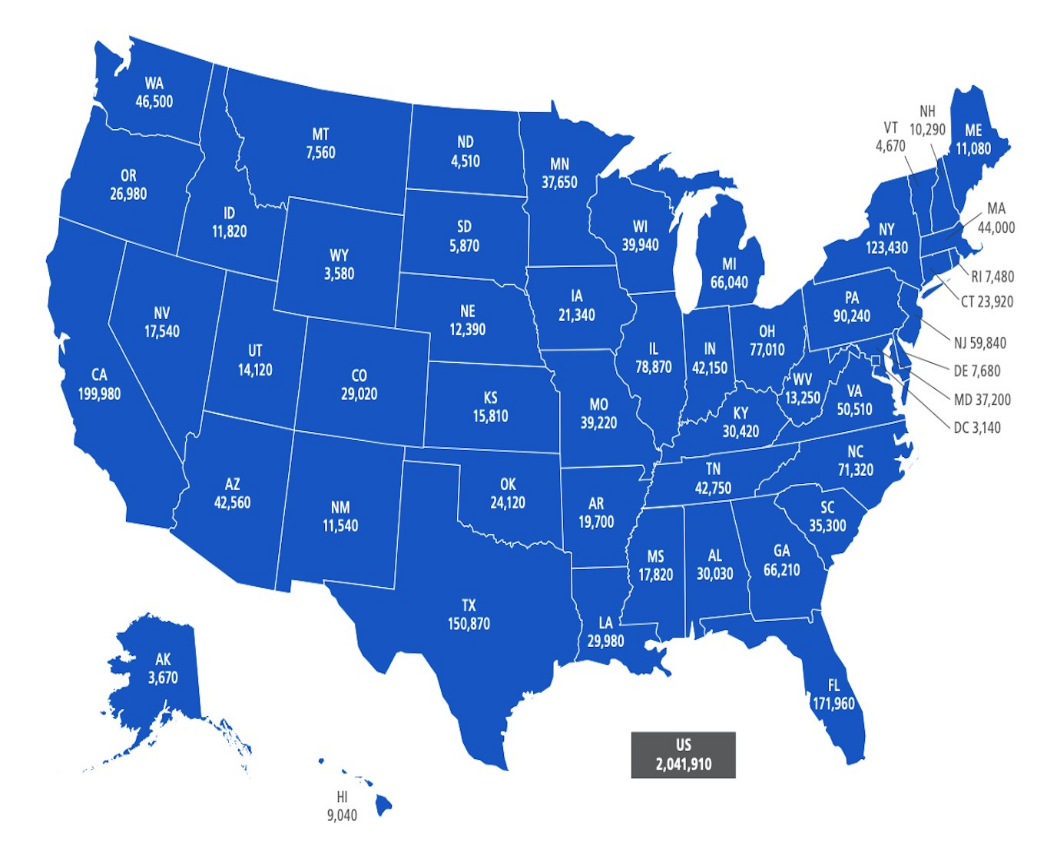
Source: American Cancer Society, Inc. Surveillance and Health Equity Science, 2025.
Cancers with the highest mortality burdens – such as pancreatic, liver, ovarian, and gastric cancers – typically lack routine screening and are often discovered late. In fact, nearly 70% of U.S. cancer deaths arise from tumor types with no recommended screening programs (e.g. pancreatic, ovarian, liver). Today, only five malignancies – breast, cervical, colorectal, prostate, and (for high-risk individuals) lung – have established screening guidelines in the U.S., leaving the majority of cancer-related mortality unaddressed.
Multi-Cancer Early Detection (MCED) technologies aim to close this gap in cancer screening. Using a single blood draw, MCED assays analyze molecular biomarkers shed by tumors into the bloodstream – including circulating tumor DNA (ctDNA), cell-free DNA (cfDNA) fragmentation patterns, tumor-derived DNA methylation markers, and tumor-associated proteins. Advanced artificial intelligence (AI) and machine learning models then interpret these complex signals to identify a cancer “fingerprint” and often predict its tissue of origin. MCED represents a shift from organ-specific diagnostics to data-driven, pan-cancer screening. It transforms the humble blood test into a high-dimensional sensor of early malignancy, integrating detection for dozens of cancers (and even post-treatment monitoring for recurrence) into one liquid biopsy platform. In essence, MCED aspires to catch cancers earlier in asymptomatic patients, when intervention is far more likely to be curative and less costly.
Exhibit 2 Tumors Shed Nucleic Acids (cfDNA) Carrying Cancer-Specific Information Into Blood
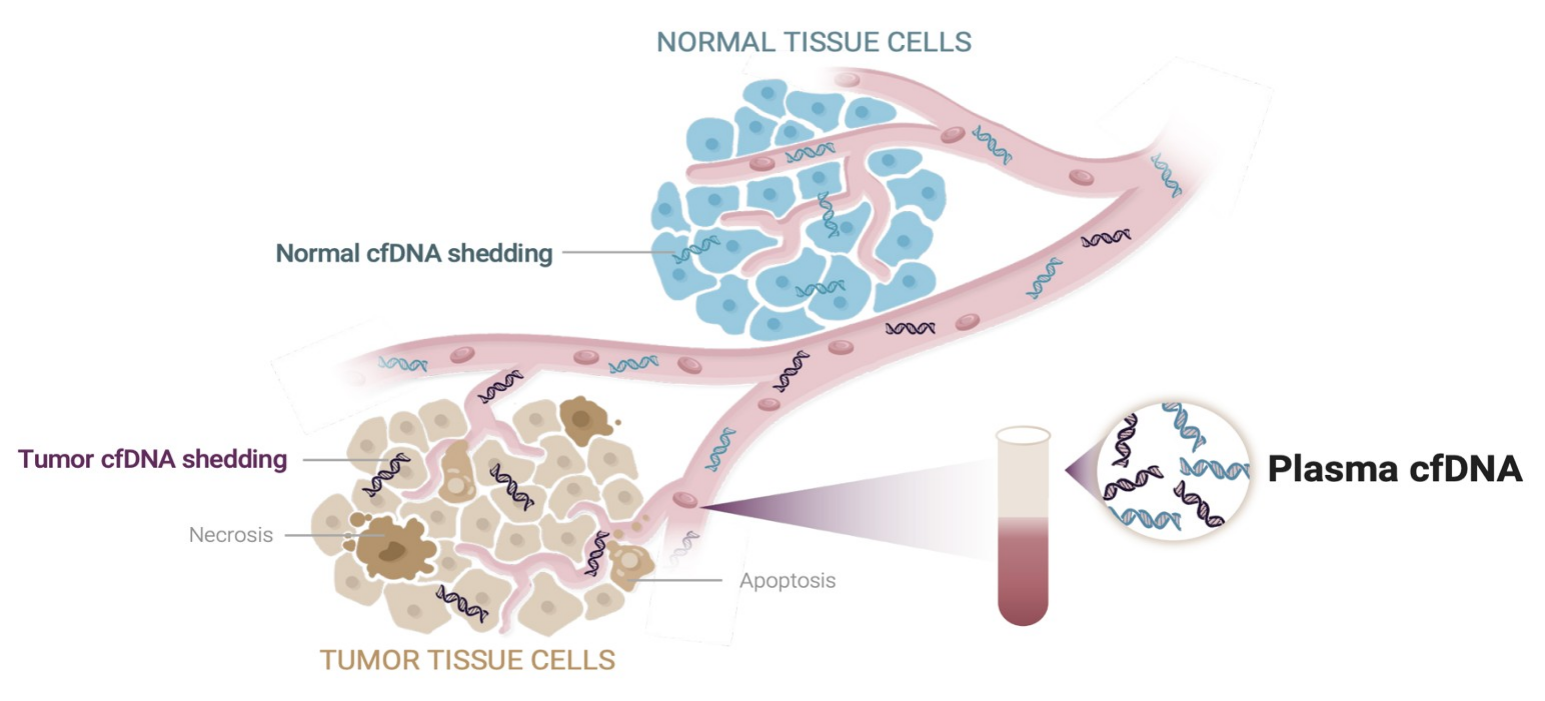
Source: Grail, Inc. Investor Presentation
Why Early Detection Matters
The clinical rationale for early detection is compelling. The overall five-year relative survival rate for all cancers combined is now about 69%, reflecting substantial progress since the 1970s. However, earlier diagnosis yields dramatically better outcomes: survival exceeds 90% for many localized cancers, drops to ~70% for regionally spread disease, and plummets below 20% for most cancers once they have metastasized. This survival gradient is especially stark in cancers like lung, pancreatic, or ovarian cancer, where late-stage diagnosis often means a five-year survival in the single digits. Unfortunately, these are the very cancers that lack effective screening in the status quo. By moving the point of diagnosis from late-stage to early-stage, MCED testing could save lives on a significant scale. For example, modeling by Exact Sciences suggests that integrating MCED with current screenings could reduce stage IV (metastatic) cancer diagnoses by ~42% over ten years, lowering overall cancer mortality by an estimated 18%.
Beyond the human impact, early detection has economic benefits. Late-stage cancer treatments (extended chemotherapy, immunotherapy, hospitalizations, etc.) are enormously expensive. Detecting cancer earlier not only improves survival but can avert these high downstream costs. AI-driven blood tests that detect cancer before symptoms arise could thus help bend the cost curve of oncology by preventing advanced disease. In summary, early detection is a “win-win”: better patient outcomes and potential healthcare
Exhibit 3 United States, Five-Year Relative Survival Rate by Stage at Diagnosis (2014-2020)

Source: Surveillance, Epidemiology, and End Results (SEER) Program, National Cancer Institute, 2024.
Market Opportunity and TAM
Total Addressable Market (TAM) for multi-cancer early detection can be viewed in two phases – a near-term emerging market that is largely self-pay, and a long-term covered market once MCED is integrated into standard preventive care:
- Near-Term (2023–2028, Self-Pay/Concierge Market) In the absence of formal guideline recommendations or widespread insurance coverage, MCED adoption is initially limited to out-of-pocket payers – typically higher-income individuals, executive health programs, and self-insured employers. Tests like GRAIL’s Galleri and others today carry hefty price tags (around $800–1,000 per test) and are not yet routinely reimbursed by Medicare or major insurers. Based on current pricing (~$949 per test) and expected early uptake (on the order of a few million tests annually by 2028), the near-term addressable market is estimated around $2–3 billion globally by 2028. This assumes perhaps 2–3 million people worldwide (a tiny fraction of the eligible population) opting to pay out-of-pocket for MCED screening in the next 3–5 years. In this phase, MCED companies compete for early adopters – health-conscious consumers and innovative care providers willing to pilot the technology. Growth will depend on continued generation of clinical evidence and aggressive education of physicians and patients.
Exhibit 4 Global MCED TAM Projection
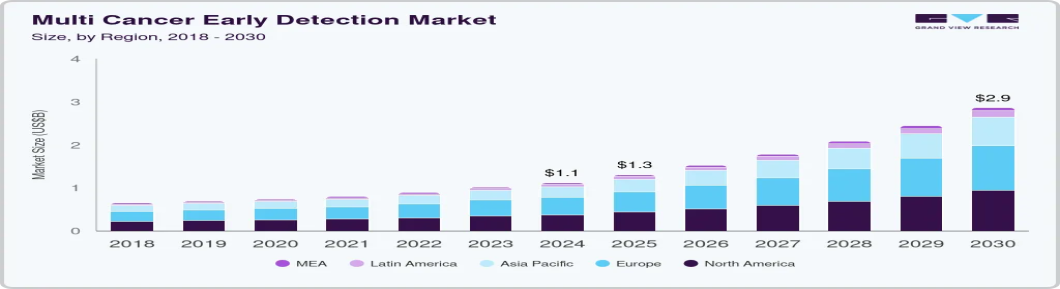
Source: Grand View Research
- Long-Term (2030 and beyond, Guideline-Driven Market): If and when MCED tests achieve regulatory approval, inclusion in U.S. Preventive Services Task Force (USPSTF) guidelines, and insurance reimbursement, the market could expand to population-scale screening. In the U.S. alone, there are over 120 million adults over age 45 – the core demographic for multi-cancer screening. At an average selling price (ASP) potentially around $500 (assuming economies of scale and payer pressure to reduce costs), a fully penetrated U.S. market (100% uptake in the eligible population) represents ~$60 billion in annual TAM. Even a more conservative scenario of 30–50% adoption over a 5–10 year period post-approval would imply $15–25 billion in annual revenue – well above today’s niche market. In other words, if MCED becomes a routine part of annual physicals for middle-aged and older adults, it could rival or exceed the scale of today’s largest diagnostic testing markets.
- Global Expansion: The opportunity extends further when considering other developed healthcare markets. Western Europe, the UK, Japan, and other advanced economies have aging populations like the U.S. Expanding MCED to these markets could increase the screening pool to 300+ million adults, yielding a global TAM on the order of $150 billion (again assuming roughly $500/test). While pricing and reimbursement will vary by country, this illustrates the vast revenue potential if MCED is adopted worldwide. Emerging markets could add further upside in the distant future, though factors like healthcare infrastructure and cost will influence adoption there.
It’s important to note that realizing the long-term TAM is contingent on several factors: clinical evidence of benefit (improved outcomes), regulatory approvals, coverage and reimbursement decisions, physician acceptance, and public awareness. These will determine the pace at which the theoretical TAM translates into actual demand.
Economic and Policy Rationale
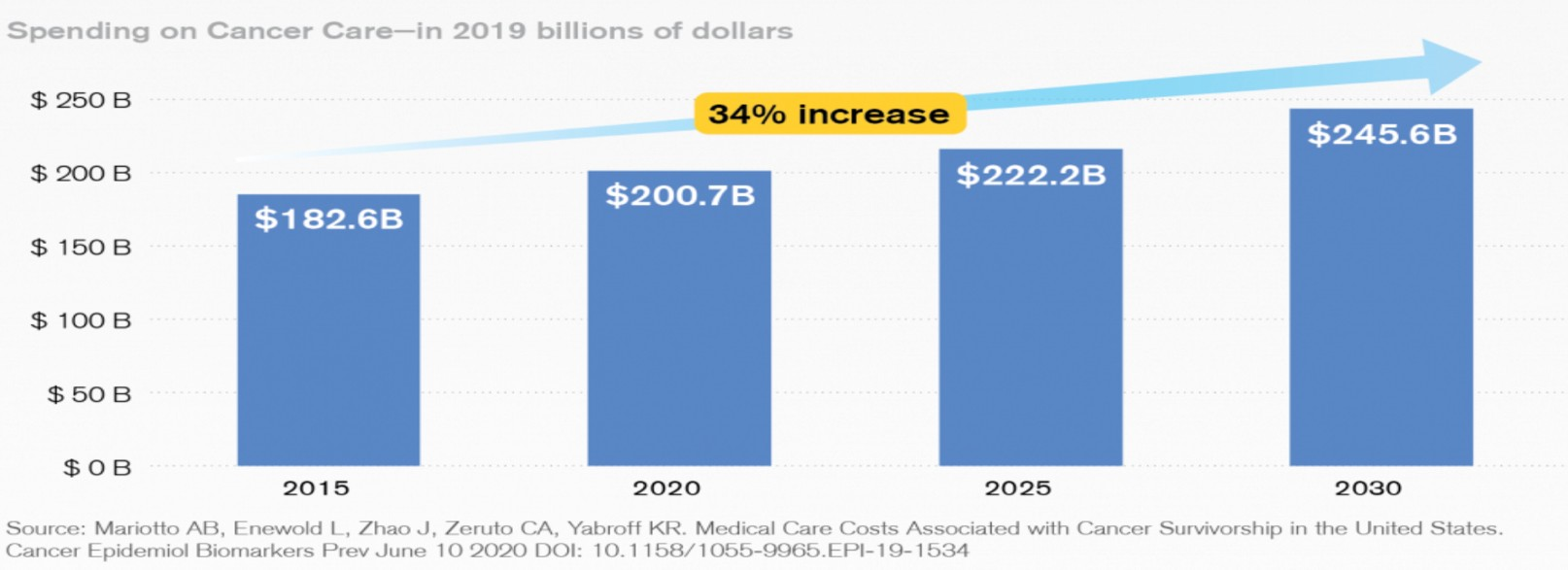
The ACS and National Cancer Institute estimate U.S. cancer-care spending at $209 billion (2020), projected to surpass $246 billion by 2030. Late-stage cancers drive a disproportionate share of this cost. Shifting even a small percentage of diagnoses to earlier stages can yield substantial financial savings:
- Treatment-cost differential: Stage I cancer averages ~$45k in lifetime cost vs. Stage IV > $180k.
- Potential savings: Every 1% stage-shift could save >$2 billion annually in U.S. direct costs.
- Health impact: Earlier detection improves five-year survival by 20–60 % depending on tumor type.
Exhibit 5 U.S. Cancer Care Spending Expected to Exceed $246B by 2030
Regulatory and Reimbursement Outlook
Regulatory agencies and payers are beginning to lay the groundwork for MCED integration. In the U.S., the Food and Drug Administration (FDA) has signaled that it will require formal approval for multi-cancer tests before they are marketed broadly, akin to the approval process for new drugs or vaccines. This represents a higher bar than the current laboratory-developed test (LDT) route being used for initial offerings like Galleri. The FDA’s stance is driven by the need to ensure these tests are accurate and clinically actionable at scale – i.e. they truly improve health outcomes and don’t just generate anxiety or unnecessary procedures. Consequently, the leading MCED companies are running large pivotal studies to prove their tests’ performance in intended-use populations.
- GRAIL and Guardant Health are each sponsoring prospective trials with tens of thousands of participants and plan to file for FDA approval (PMA – pre-market approval) around 2026–2027, assuming positive data.
- Exact Sciences is also enrolling a major prospective study (the FALCON trial) to validate its blood test in a real-world screening setting.
- In the meantime, these tests remain available as LDTs, but FDA approval will be a key inflection point to unlock mainstream adoption.
On the reimbursement front, bipartisan legislation is paving the way for Medicare to cover MCED once approved.
- The Nancy Gardner Sewell Medicare Multi-Cancer Early Detection Screening Coverage Act (H.R. 842 / S. 339) has gained broad support – as of June 4, 2025, it boasted 231 co-sponsors in the House and 51 in the Senate, a rare bicameral majority.
- This bill, if passed, mandates that Medicare cover FDA-approved MCED tests for beneficiaries, as long as the tests demonstrate clinical benefit (e.g. improvement in early detection or outcomes).
- The current expectation is that by 2026–2028, as the first MCED tests achieve FDA approval, Medicare coverage will swiftly follow.
- Private insurers often echo Medicare’s lead, so broad coverage in the commercial insurance market is likely to track the public payers once efficacy is established.
In short, the regulatory and reimbursement landscape for MCED is turning from speculative to actionable. Within the next few years, we anticipate a transition from the current cash-pay paradigm to insurance-covered testing for at least one or two MCED products, which would dramatically expand access.
Public Market Opportunities:
- Exact Sciences(NASDAQ: EXAS) offers a mix of stable revenue from existing products and the upside of MCED, making it somewhat less risky and a diversified bet on early detection.
- GRAIL(NASDAQ: GRAL) is a focused MCED pure-play with leading technology but will require successful execution of its regulatory and reimbursement roadmap to justify its lofty valuation – a high-risk, high-reward scenario.
- Guardant Health(NASDAQ: GH) straddles both the therapy selection and screening worlds, giving it multiple shots on goal; its screening success with Shield CRC provides early validation, but it faces stiff competition in multi-cancer and must manage its spending.
- Quest Diagnostics(NYSE: DGX) is a conservative play that could benefit from MCED growth regardless of whose test “wins”, due to its partnerships and distribution power; it’s less likely to see a huge upside swing, but also less likely to suffer a downside blow from MCED not panning out.
Investment Thesis & Summary
The convergence of AI, genomics, and precision diagnostics represents one of the most profound shifts in healthcare today. By transforming a routine blood draw into a multi-omic, AI-powered screening tool, MCED tests compress the time between a cancer’s emergence and its detection. This creates a new paradigm of “intercepting” cancer at its inception. The trajectory for MCED commercialization is often analogized to prior innovations like non-invasive prenatal testing (NIPT) for fetal genetics and liquid biopsy for minimal residual disease (MRD) in cancer – both started as novel blood tests, gained rapid adoption after coverage, and scaled to multi-billion-dollar markets within ~5 years of reimbursement. MCED is now at the cusp of moving from promising research to real-world implementation.
- Compelling long-term growth story tempered by shorter-term uncertainties: The addressable market is enormous (tens of billions of dollars, as described above), and the value proposition – saving lives and healthcare costs – is attracting support from policymakers and clinicians. If MCED achieves even a fraction of its potential penetration, the revenue expansion for successful players will be substantial. Moreover, because MCED could become a recurring annual test for millions of people, it implies a high-margin, high-volume diagnostics business with recurring revenue streams, akin to routine cholesterol or glucose testing but at a higher price point.
- Risks: Companies need to navigate FDA approvals, scale up laboratory operations, convince physicians to adopt a new testing paradigm, and educate patients. Near-term revenues are modest (as we will see in company profiles) and profitability is generally negative, as firms invest heavily in R&D and clinical trials. It’s likely we’ll see winners and losers – not every test will have equal performance or commercial traction. The competitive landscape is thus critical to understanding the investment thesis: different companies are pursuing distinct technological approaches and go-to-market strategies, which will influence their probability of success.
- Favorable secular trends: We are witnessing an age of rapid improvements in sequencing technology, AI algorithms, and big data from large clinical studies – all key enablers for MCED. Each new dataset helps refine the algorithms (the tests essentially learn and improve over time), meaning early movers with large trials have an advantage in training their AI on rare cancer signals. Additionally, the healthcare system’s push towards preventive care and “value-based” models aligns with MCED’s promise to avoid costly late-stage treatments.
In summary, MCED is poised to become a transformative new category in diagnostics – analogous to how colonoscopy or mammography once created new prevention markets – and the leading companies in this space could experience significant growth as the market matures. The next 1–3 years will be pivotal: look for regulatory approvals (PMA filings around 2026), coverage decisions (the MCED Coverage Act progress), and clinical guideline updates as major catalysts. Investors with a multi-year horizon should focus on which companies demonstrate the best data and execution, as these are likely to secure outsized shares of the long-term market.
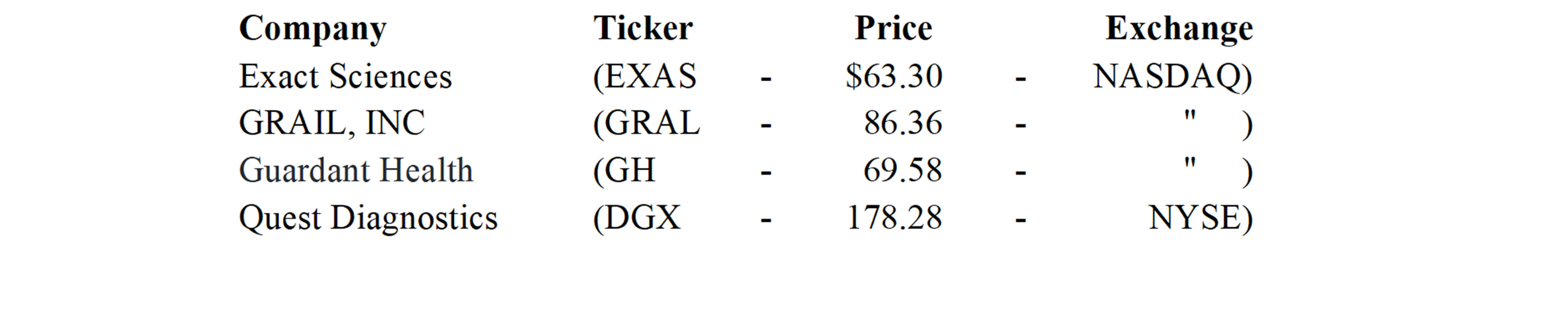
Exact Sciences (EXAS – $63.30 – NASDAQ) Expanding Early Detection Through Multi-Analyte Innovation

Source: Consensus estimates
COMPANY OVERVIEW
Exact Sciences Corporation (NASDAQ: EXAS), headquartered in Madison, Wisconsin, is a molecular-diagnostics company focused on the early detection, prevention and guidance of cancer through advanced screening and diagnostic tests based on DNA, RNA and protein biomarkers. The company develops and commercializes screening tests (notably Cologuard®, an FDA-approved non-invasive stool-DNA test for colorectal cancer) and precision oncology assays (under the Oncotype DX® platform) that support treatment decisions in breast, colon and prostate cancers. Cologuard is among the USPSTF-recommended stool DNA screening options for average-risk adults ages 45–75. Exact Sciences is also advancing a next-generation Cologuard Plus test (recently launched) and is building a pipeline of blood-based colorectal cancer screening assays and multi-cancer early detection (MCED) programs, supporting its strategy to scale evidence-based cancer screening at the population level.
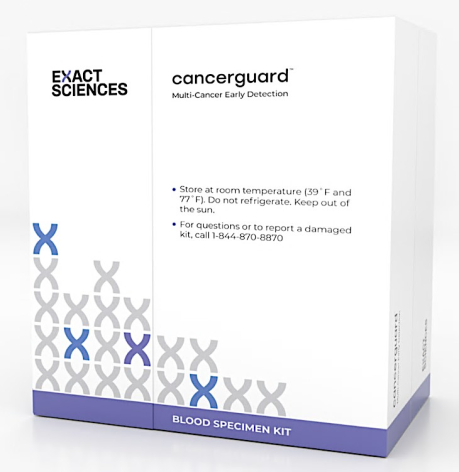
Exhibit 1 Exact Sciences Cancerguard™
Source: Company presentation
Exact Sciences — Cancerguard™
- Technology: Cancerguard is a multi-analyte liquid biopsy integrating methylated cell-free DNA (cfDNA) profiling (via real-time PCR following bisulfite conversion) with tumor-associated protein biomarkers. A proprietary machine-learning classifier generates a binary “cancer signal detected” result, optimized to balance sensitivity and specificity across diverse tumor types.
- Clinical Performance: Two case-control studies support Cancerguard’s validation. In the development cohort (n = 590 cancer, 2,434 non-cancer), sensitivity was 64.1% and specificity 97.4%; in the validation cohort (n = 223 cancer, 800 non-cancer), sensitivity 55.6% at 97.4% specificity. Per-cancer sensitivities ranged 16.7–91.7%, highest in GI, liver, and thoracic tumors. Exact Sciences also reports 68% sensitivity for six high-mortality cancers (pancreatic, lung, liver, esophageal, stomach, ovarian). As these are case-control data, real-world sensitivity is likely lower; prospective FALCON validation is ongoing.
- Commercialization: Cancerguard is marketed as a CLIA-validated laboratory-developed test (LDT), priced at US $689 self-pay, with U.S. rollout through Exact Sciences’s established primary-care screening network.
GRAIL, INC (GRAL – $86.36 – NASDAQ) PATHFINDER-2: Higher Predictive Value, Broader Reach

Source: Consensus estimates
COMPANY OVERVIEW
Grail, Inc. (NASDAQ: GRAL), headquartered in Menlo Park, California, is a precision-oncology company focused on multi-cancer early detection (MCED) through its flagship blood test, Galleri®, which can identify signals associated with >50 cancer types from a single blood draw. Founded in 2016 and majority-owned by Illumina until its 2024 spinoff and NASDAQ listing, Grail has become the category leader in MCED technology, combining next-generation sequencing and machine-learning-based methylation analysis to detect tumor-derived DNA signals at very low concentrations. Galleri is currently available as a laboratory-developed test (LDT) in the U.S., with global expansion initiatives underway following a $110mn strategic investment from Samsung to launch in Asia. The company’s mission is to detect cancer early—when it can be cured—while building the clinical evidence base required for regulatory approval and reimbursement.
Exhibit 1: Grail Galleri MCED Test

Source: Company presentation
GRAIL Galleri MCED Test:
- Technology: Galleri employs whole-genome cfDNA methylation sequencing analyzed via a machine-learning classifier to detect a cancer signal and predict its Cancer Signal Origin (CSO) across > 50 cancer types. The platforms methylation-based approach offers deep epigenomic coverage with minimal false-positive rates, making it the benchmark among MCED assays.
- Clinical Performance: The PATHFINDER-2 prospective screening study (ESMO 2025, roughly 36, 000 participants) reported episode sensitivity 40.4% (all cancers) and specificity 99.6%, yielding a positive predictive value (PPV) 61.6% and CSO accuracy 92%. Within the twelve high-mortality cancers responsible for two-thirds of cancer deaths, sensitivity rose to 73.7%, while maintaining near-perfect specificity. Median diagnostic-resolution time was 46 days, confirming clinical workflow feasibility.
- Commercialization: Galleri is available as a CLIA-certified LDT for US $949 cash-pay and is supported by major health-system pilots while FDA PMA and CMS coverage efforts continue.
Guardant Health (GH – $69.58 – NASDAQ) From CRC to Multi-Cancer: Expanding the Shield Platform
 Source: Consensus estimates.
COMPANY OVERVIEW
Guardant Health, Inc. (NASDAQ: GH), headquartered in Palo Alto, CA, is a precision-oncology diagnostics company specializing in blood-based (“liquid biopsy”) tests that analyze circulating tumour DNA (ctDNA) and related bio-signals for cancer detection, treatment selection and disease monitoring. Founded in 2012, Guardant introduced its flagship Guardant360® assay for comprehensive genomic profiling in advanced cancer and its Guardant Reveal® assay for minimal residual disease (MRD) detection and recurrence monitoring. In July 2024 the company received FDA approval for its Shield™ blood-based colorectal cancer screening test for average-risk adults aged 45 or older — the first FDA-approved blood test of its kind — positioning the company to expand into a broader multi-cancer early-detection initiative through its proprietary digital sequencing and analytics platform.
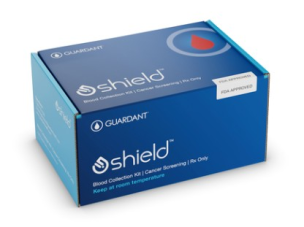
Exhibit 1 Shield™ Multi-Cancer Detection (MCD) Test
Source: Company presentation
Guardant Health — Shield™ Multi-Cancer Detection (MCD)
- Technology: Shield extends Guardant’s cfDNA sequencing platform beyond colorectal cancer screening, integrating genomic mutations, methylation, and fragmentomic features into a unified multi-omic classifier capable of detecting multiple tumor types and predicting CSO. The assay builds directly on the FDA-cleared Shield CRC test, which established the company’s regulatory and payer foundation.
- Clinical Performance: At the ASCO 2025 meeting, Guardant presented a case-control clinical-validation study across eight high-mortality tumor types (bladder, colorectal, esophageal, gastric, liver, lung, ovarian, pancreas) showing overall sensitivity 75%, specificity 98.6%, and CSO accuracy 92%. Per-cancer sensitivities ranged 62–96%, highest in gastrointestinal and thoracic malignancies. These data demonstrate marked improvement over the earlier AACR 2025 cohort (60% sensitivity / 98.5% specificity).
- Commercialization: The CRC version of Shield received FDA approval (2024) and CMS ADLT reimbursement at US $1,495, paving the way for the MCD panel’s eventual submission. Shield MCD currently holds FDA Breakthrough Device Designation. While MCD pricing isn’t announced, the CRC test establish a potential benchmark.
Quest Diagnostics (DGX – $178.28 – NYSE) Proteomic Risk Stratification for Population Screening

Source: Consensus estimates.
COMPANY OVERVIEW
Quest Diagnostics Incorporated (NYSE: DGX), headquartered in Secaucus, New Jersey, is the largest provider of diagnostic information services in the United States. The company operates an integrated network of 2,200 patient service centers and 20+ major laboratories, processing over 500,000 tests per day across clinical, anatomic pathology, and advanced molecular diagnostics. Quest serves physicians, hospitals, employers, and government agencies through its expansive payer network and digital health platforms. In oncology, Quest is known for performing standard tests (like PSA, PAP smears, etc.) and for being a reference lab for advanced molecular tests. Quest’s strategy has increasingly been to partner or acquire emerging test providers to ensure it offers the latest innovations. In the realm of MCED, Quest has taken a collaborative stance: it partners with GRAIL (to offer Galleri) and Guardant (to offer Shield), essentially serving as a channel for those tests. Rather than develop a redundant cfDNA test, Quest identified an adjacent approach – proteomics – that aligns with its high-throughput lab capabilities. In June 2025, Quest announced a partnership with MD Anderson Cancer Center to develop a blood-based multi-cancer test focused on proteins and other biomarkers instead of DNA. This became the MCaST (Multi-Cancer Stratification Test) initiative. Beyond cancer screening, Quest maintains leadership in infectious disease, cardiometabolic, and women’s health testing, while expanding into AI-driven analytics, home collection, and population health management.
Quest Diagnostics — Multi-Cancer Stratification Test (MCaST)
- Technology: Quest Diagnostics, in partnership with MD Anderson Cancer Center, is developing the Multi-Cancer Stratification Test (MCaST)—a blood-based proteomic assay that uses circulating protein biomarkers and machine-learning algorithms to identify individuals at elevated multi-cancer risk. Unlike cfDNA-based MCED tests, MCaST is designed as a risk-stratification tool to complement existing cancer screening methods.
- Clinical Performance: Performance data have not yet been disclosed. Early internal studies suggest the test can differentiate high-, intermediate-, and low-risk groups using composite protein signatures across major tumor types. A prospective validation trial is underway, with results expected before launch in 2026.
- Commercialization: Quest plans to introduce MCaST as a laboratory-developed test (LDT) in 2026, leveraging its national lab footprint (~7,000 patient sites) and EHR integration to reach primary care settings. Pricing is undisclosed but expected to align with advanced proteomic panels rather than cfDNA assays, positioning Quest as a lower-cost, high-throughput screening provider in the MCED ecosystem
191 Mason Street, Greenwich, CT 06830 Gabelli Funds TEL (914) 921-5100
This whitepaper was prepared by Elena Meng. The examples cited herein are based on public information and we make no representations regarding their accuracy or usefulness as precedent. The Research Analyst’s views are subject to change at any time based on market and other conditions. The information in this report represent the opinions of the individual Research Analyst’s as of the date hereof and is not intended to be a forecast of future events, a guarantee of future results, or investments advice. The views expressed may differ from other Research Analyst or of the Firm as a whole.
As of September 30, 2025, affiliates of GAMCO Investors, Inc. beneficially owned less than 1% of all companies mentioned in this report.
This whitepaper is not an offer to sell any security nor is it a solicitation of an offer to buy any security.
Investors should consider the investment objectives, risks, sales charges and expense of the fund carefully before investing.
For more information, visit our website at: www.gabelli.com or call: 800-GABELLI
800-422-3554 • 914-921-5000 • Fax 914-921-5098 • info@gabelli.com