Global Orthopedic Market – Industry Overview in Brief
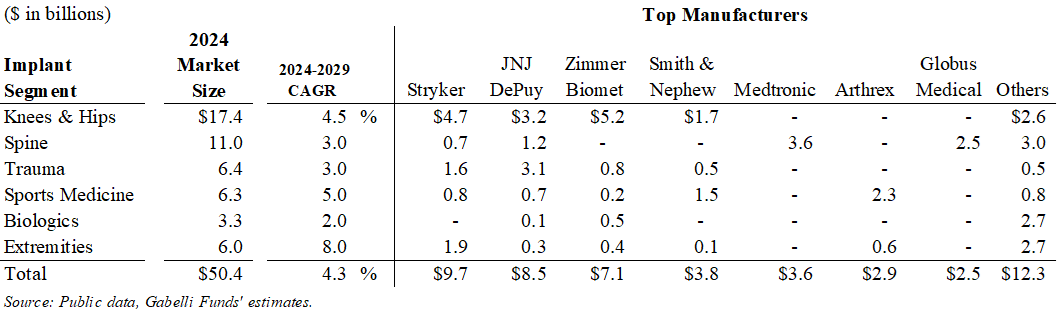
The worldwide orthopedic market was approximately $62 billion in 2025 with orthopedic implants accounting for $53 billion and instruments and equipment representing the remaining $9.4 billion. In 2025, the orthopedic implants market increased 5% to approximately $53 billion as many of the large companies generated above average sales growth due to healthy patient demand, improvements in hospitals’ staffing levels, and growth in ASC procedures. Looking forward, we project growth of 4-5% annually over the next several years, absent any unforeseen catastrophic events, as mid-single digit growth in procedures is offset by an approximate 1% price impact.
In this whitepaper, we include 2025 revenue from the major manufacturers versus 2024.
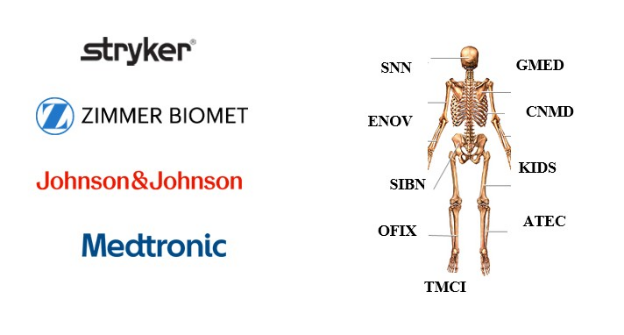
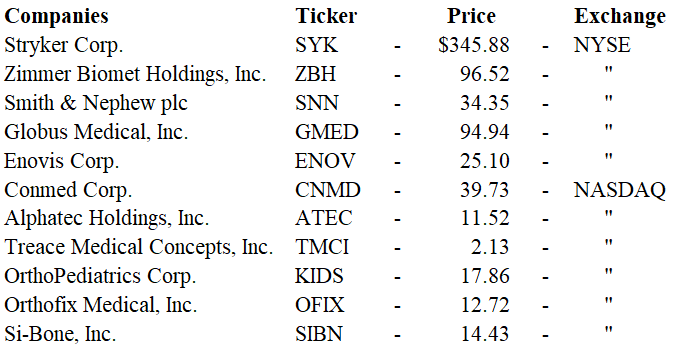
We list the largest manufacturers in the global orthopedic market below:
Table 1
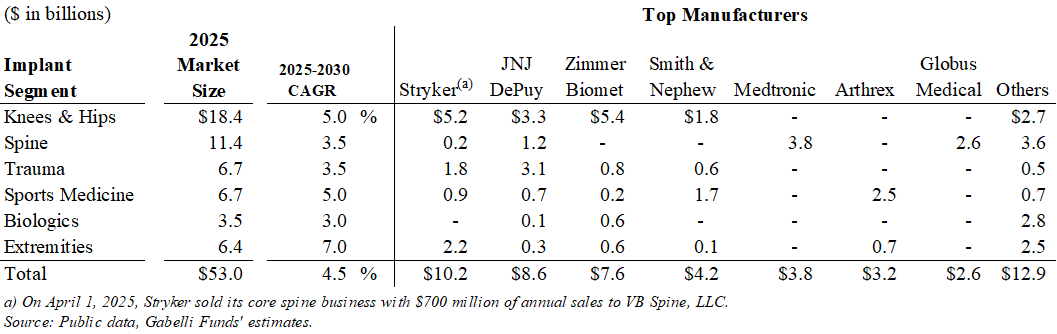
Table 2
Notable 2025 Event – JNJ Orthopedics Separation
In October 2025, JNJ announced its intent to separate its orthopedic business via a spinoff or sale to generate enhanced shareholder value. JNJ’s orthopedic business generated $9.3 billion of revenue in 2025. JNJ formed the business via the 1998 acquisition of DePuy for $3.5 billion and the 2012 acquisition of Synthes for $19.7 billion. A potential sale of this orthopedic business is expected to be valued over $20 billion. JNJ has the #1 market share in the global trauma segment with more than 45% share and has a #3 market share position in the global knee & hip market and global spine market. This business has generated lackluster sales growth over the past decade, and we believe a spinoff or sale is a good option to enhance its performance. If a sale does not occur, a spinoff in the mid-2027 timeframe is expected.
2025: Notable Events and Trends
2025 was another robust year for the medical device sector due to solid patient volumes and fewer challenges. We highlight some events and trends specific to the orthopedic sector:
- The orthopedic market experienced solid procedural volumes as patient demand was healthy (aging demographics, physical activity levels, younger patients getting procedures). International markets also experienced healthy volumes; however, these markets lagged the strength witnessed in U.S. markets. Foreign currency exchange rates had a positive impact of less than 1% on revenue in 2025.
- Robotic systems for joint replacement surgeries experienced solid demand throughout 2025. Robotic system adoption for orthopedics continues at a steady pace, with more than 25% of operating rooms having access to a robot. Companies continue to invest in R&D in robotics to launch different applications for robotic systems, add new features, and improve user experience, while providing options for different surgical settings, especially the ASC setting.
- The trend toward moving procedures to the Ambulatory Surgical Centers (ASCs) setting away from hospital settings continue with good momentum. ASC procedure volume is growing every year as most orthopedic procedures can be done in this setting. Orthopedic companies are offering newer products and services to accommodate the ASC setting as most hospital systems are constructing ASCs. Moreover, pricing for products is very consistent across different channels, whether hospital or ASC. Management of various companies believe that ASC volume could reach 40-60% of knee and hip procedures over the medium term.
- Orthopedic companies are investing in technology, software, robotics, and data informatics to provide surgeons with data and information to achieve better and more predictable surgical outcomes for their patients.
- Within orthopedics, there have been several M&A transactions in 2025. Many companies are acquiring smaller tuck-ins to increase scale within their sales organizations, fill gaps in their product portfolios, and realize cross-selling opportunities, cost savings and economies of scale.
- April 2025: On April 3, 2025, Globus Medical acquired Nevro for $253 million equity value in cash. Nevro is a manufacturer and distributor of spinal cord stimulators for chronic pain of the back, leg, and lower limb with its Senza system. Nevro generated $406 million of revenue in 2024 and an estimated $20 million of EBITDA loss. Under Globus Medical’s management, Nevro has generated positive adjusted EBITDA of 21% in its third quarter of ownership – Q4 2025.
- October 2025: On October 7, 2025, Zimmer Biomet acquired Monogram Technologies for $176 million plus up to $570 million for regulatory and revenue milestones through 2030. Zimmer is complementing its robotic surgery portfolio with Monogram’s mBos TKA system, which is a semi-autonomous and fully autonomous robot, to perform knee surgery autonomously, which will reduce surgeon variability, cognitive load, and fatigue. The semi-autonomous version is expected to launch in early 2027, assuming timely FDA approval.
- Similar to other manufacturing companies, various orthopedic companies experienced tariff costs in 2025. Nonetheless, many orthopedic companies were able to offset the tariff cost with cost improvements and increased volume.
- Pricing for orthopedic implant products continues to be negative, although 2025 pricing was modestly negative in the 1-2% range. Most companies expect 2026 pricing for orthopedic products to be similar to 2025.
- Market share has not materially changed since 2020 as most large orthopedic companies experienced similar revenue percentage changes, absent acquisitions, in each specific orthopedic segment. Some companies with robotic offerings in specific segments have gained market share by 1-2% over the past five years due to higher implant pull-through. In general, market share shifts move gradually in the orthopedic market, so many companies turn to M&A to scale up via consolidation.
- In general, the U.S. hospital capital environment remains healthy. The hospital capital spending environment in international markets is mixed, with some hospitals having financial constraints due to ongoing government budget pressures in some countries.
We lay out specific segments within the orthopedic market and market share positions as follows:
Knee and Hip Market
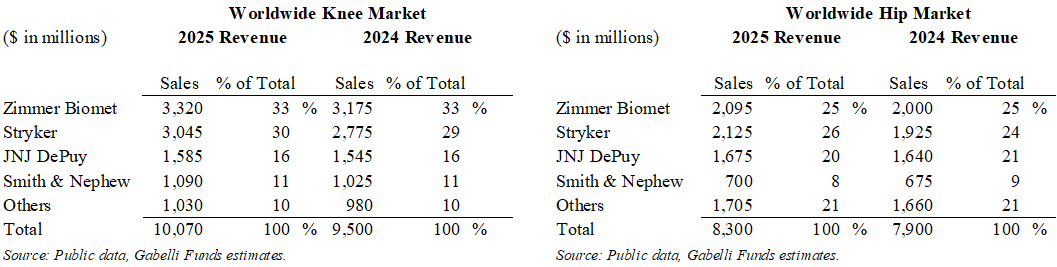
The worldwide knee and hip market generated $18.4 billion in sales in 2025, which is an increase of 5.6% from 2024. The knee and hip implant markets were $10.1 billion and $8.3 billion, respectively, with both knee and hip implants up 5-6%. Worldwide knee procedures are growing slightly faster as a greater number of these procedures are done on robotic systems. Stryker noted that over two-thirds of its U.S. knees and over one-thirds of its U.S. hips were done on its MAKO surgical robots at year-end 2025. We expect both the knee and hip market to perform well in 2026 due to healthy patient volumes, growing ASC capacity, and hospitals managing capacity well. In 2025, price declined by 1% within historical levels.
The top four companies dominate the knee and hip market with approximately 80%+ share. In the knee market, Zimmer Biomet, Stryker, and JNJ DePuy are the top three market leaders, with a 33%, 30%, and 16% share, respectively, followed by Smith & Nephew with an 11% share. In the hip market, Stryker, Zimmer Biomet and JNJ DePuy are the top three market leaders with a 26%, 25%, and 20% share, respectively, followed by Smith & Nephew with an 8% share.
Table 3
Knees and Hips – Robotic Systems
One of the biggest trends in the reconstructive knee and hip implant market in the past fifteen years is the rollout and adoption of robotic assisted surgery systems by all the major manufacturers. In the U.S. market, robotic assisted knee procedures are becoming the standard of care.
- In late 2013, Stryker gained first mover advantage when it acquired MAKO Surgical. Stryker has 3,000 systems installed worldwide at year-end 2025. Stryker’s MAKO system is approved for total knee, partial knee and total hip applications. For Stryker, MAKO robotic surgery is becoming the standard of care in the U.S. with over two-thirds of knees surgeries and over one-third of hip surgeries performed with MAKO at year-end 2025. Moreover, more than 50% of global knee implant procedures and over 20% of global hip implant procedures were performed using MAKO robotic systems at year-end 2025. In 2025, Stryker rolled out MAKO applications for revision hip, shoulder, and spine. In mid-2026, Stryker expects to launch its MAKO RPS system, which is a handheld version geared toward ASC settings.
- In 2019, Zimmer Biomet launched its ROSA knee system for robotic-assisted knee replacement surgeries. We estimate there are more than 1,300 systems placed at the end of 2025. In 2021, Zimmer rolled out its partial knee and total hip applications for its ROSA system. In 2025, Zimmer rolled out its shoulder application on its ROSA system. With its October 2025 Monogram acquisition, Zimmer expects to launch a semi-autonomous robot for total knee procedures in early 2027.
- In 2020, Smith & Nephew launched its CORI surgical system, a handheld robotic solution, for knee implants and total hip implants in early 2022. As of year-end 2025, there were more than 1,100 CORI systems installed globally. In 2023, the company added a robotic revision knee application with its CORI system. In 2026, the company will launch a shoulder application for its CORI system. In 2025, 40% of its CORI systems were placed in ASC settings.
- In early 2021, JNJ DePuy Synthes received FDA approval for its VELYS robotic system for total knee. In 2024, it launched its partial knee application and in 2025, JNJ launched spine application for its VELYS system.
With the four large manufacturers having robotic assisted surgery system offerings, the adoption of robotic for joint replacement surgeries will continue for the foreseeable future given that more than 25% of operating rooms have access to a robotic system. Additionally, there are smaller companies that are also offering robotic systems with knee and/or hip applications.
Spine
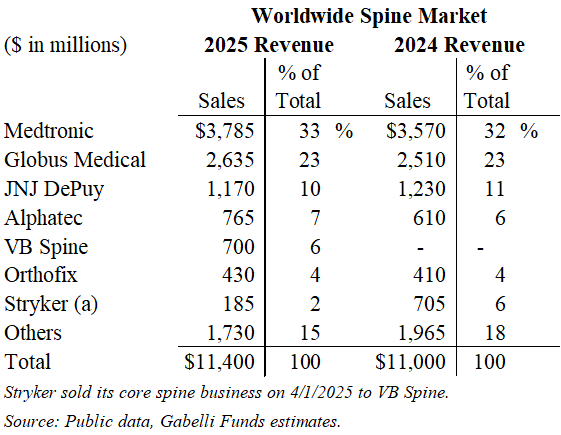
The 2025 worldwide spine market generated $11.4 billion in sales, an increase of 4% from 2024. The top four spine companies currently control close to 75% of the market due to the merger of Globus Medical and NuVasive in September 2023. This segment is dominated by Medtronic with 33% market share, followed by Globus Medical with an approximate 23% share. Beyond Medtronic and Globus Medical, the spine market is relatively fragmented with many companies having 10% market share or less. We provided details on spine transactions in 2025.
April 2025: Stryker sold its U.S. spinal implants business to VB Spine, LLC for an undisclosed amount. This portfolio of spinal implants generated approximately $700 million of revenue in 2024. We believe VB Spine purchased this portfolio at an attractive multiple. Stryker has kept its interventional spine portfolio, its Q guidance system and Copilot spine software and other technologies in-house and has given VB Spine access to its MAKO spine and Copilot.
During 2025, both Globus Medical and Alphatec continued to outperform market growth and gain share. We expect this trend to continue as these companies continue to launch new products along with superior sales execution. We expect the spine market to grow at a 3% CAGR over the next few years. In the U.S., mid-single digit growth in procedures has been offset by low-single digit price declines.
Table 4
Spine Market – Robotics
The robotic trend is experiencing increased adoption in the spine market with Medtronic’s Mazor system and Globus Medical’s Excelsius® system. We estimate that Globus Medical has more than 600 Excelsius® robotic systems installed globally at year-end 2025. Both Stryker and JNJ launched their robotic spine applications to the U.S. market in 2025. We believe most companies will have spine applications on their robotic systems over time; however, we also believe that the U.S. robotic spine market will continue to be dominated by Medtronic and Globus Medical in the near term.
Trauma/Fixation
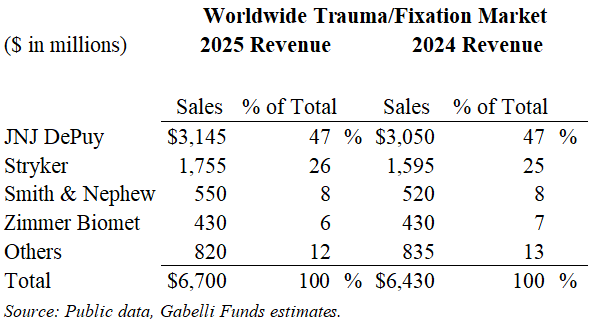
The 2025 worldwide trauma market generated $6.7 billion of sales, up 4% from 2024. This segment is driven by traffic accidents, violence, falls, and other accidents. Unlike other orthopedic segments, the trauma market is not necessarily associated with aging demographics, and its procedures are not necessarily elective and often require immediate care.
This segment is dominated by JNJ DePuy, which acquired Synthes in June 2012 for $19.7 billion. As a result of this acquisition, JNJ has a 45%+ market share of the worldwide trauma market. Stryker has emerged as a solid number 2 company in the trauma market over the past few years via small tuck-in acquisitions and new product introductions.
The trauma market is growing in the low-single digits on an annual basis. Volume and mix are the main drivers of growth, offset by pricing pressure. We expect the trauma market to grow at a 3-4% CAGR over the next several years.
Table 5
Sports Medicine
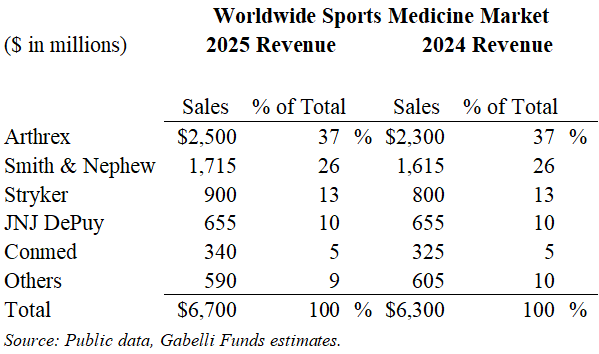
The 2024 worldwide sports medicine market generated approximately $6.7 billion of sales, up 6% from 2024. This segment is driven by injuries related to sports and exercise. Given that many sports injury procedures are done in surgery centers (ASCs) and away from the hospital setting, these procedures are growing at a healthy pace.
The market share leader is privately-held Arthrex, with an estimated 37% share, followed by Smith & Nephew at 26%. Stryker and JNJ DePuy have the #3 and #4 market share positions with 13% and 10% share, respectively. We expect the sports medicine market to grow at a mid-single-digit annual growth rate over the next few years.
Table 6
Extremities
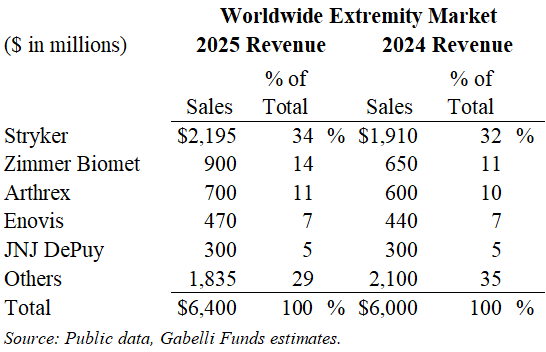
The 2025 worldwide extremities market generated $6.4 billion of sales, an increase of 7% from 2024. This segment is experiencing the fastest growth among orthopedic markets due to new product innovations that are allowing surgeons to treat conditions that were previously often untreatable. This market is typically segmented into upper extremity (shoulder, elbow, hand) and lower extremity (foot and ankle) as orthopedic surgeons treat the former and both podiatrists and orthopedic surgeons treat the latter. Both large and small orthopedic companies compete effectively in this segment, whose growth is largely driven by innovation.
In November 2020, Stryker completed its acquisition of Wright Medical, becoming the #1 market share leader with 30%+ share. In April 2025, Zimmer Biomet acquired Paragon 28 and increased its market share to an estimated 14%. The remainder of this segment is relatively fragmented, since innovation drives adoption and an innovative product line can drive sales growth for a new entrant.
We expect the global extremities market to grow high-single digits CAGR over the next few years. This market will be driven by new product innovation, which expands the market opportunity as more patients are able to be treated. Additionally, the introduction of robotic assisted systems for shoulder applications by both Zimmer Biomet and Stryker and other companies over time will expand the market over the medium term.
Table 7
Shoulder Market – Robotics
In late 2024, Stryker and Zimmer Biomet rolled out their shoulder applications on their robotic systems for the first time. As shoulder reconstructive surgery can be a difficult procedure, the goal of these robotic systems is to make this procedure easier with bone preparation. Both Stryker and Zimmer expect a broader launch of their shoulder applications in 2026. In addition, Smith & Nephew expects to launch its shoulder application for its CORI system in 2026.
Tariff Impact
Most orthopedic companies manufacture their implants and other products in the U.S. and/or outsource to third-party suppliers based in the U.S. There are a few companies with facilities in Mexico and Canada, whose products are expected to be majority exempt from tariffs under the U.S.-Mexico-Canada (U.S.MCA) trade agreement.
Larger orthopedic companies such as Stryker, Zimmer Biomet, JNJ DePuy, and Smith & Nephew have international sales ranging from 24% to 45% and their U.S. manufactured products may face export tariffs from certain countries. Several orthopedic companies have facilities in Europe that manufacture specific product categories that may face import tariffs if these products are sold in the U.S. As of April 2026, we believe many companies will apply for tariff refunds.
Consolidation in the Orthopedic Market
There is ongoing consolidation in the orthopedic market as scale and breadth of product portfolio are critical for success. Additionally, there has been ongoing consolidation among hospitals due to economic pressure, resulting in aggregating purchasing decisions, which in turn limits suppliers and lowers price. As hospitals work with a limited number of orthopedic manufacturers, they prefer manufacturers with broad product portfolios and diversified product lines. In 2025, there were various small transactions, but no transaction greater than $2.0 billion.
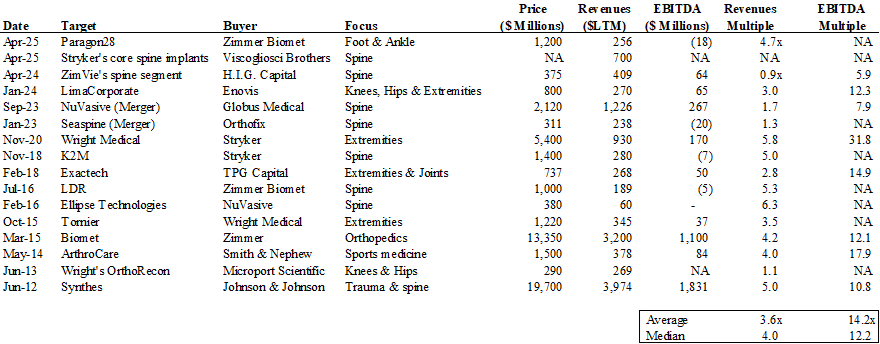
We list the major orthopedic transactions since 2012 below. There are numerous other transactions of smaller, tuck-in product lines of small, private companies that are not listed. In general, the median revenue multiple paid was 4.0x. For companies generating earnings, the median EBITDA multiple paid is approximately 12x. Products that are highly differentiated and/or growing at above market growth rates tend to command higher multiples.
Table 8 Orthopedic Transactions
Although we believe further consolidation will occur within orthopedics over the next few years, we also expect orthopedic companies to acquire companies to expand digital and technology offerings that complement their current product portfolio. Orthopedic companies are offering more data-driven solutions and service offerings to customers to enable improved solutions and outcomes.
Exhibit 1
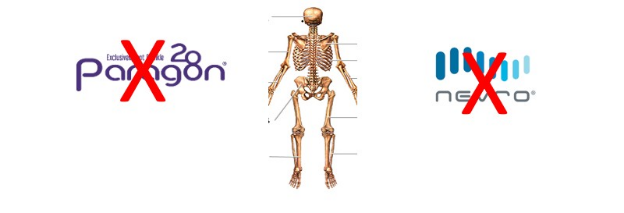
We highlight orthopedic companies that could participate in ongoing consolidation, either as acquirers or targets, on the following pages.
Table 9 Orthopedics Grid
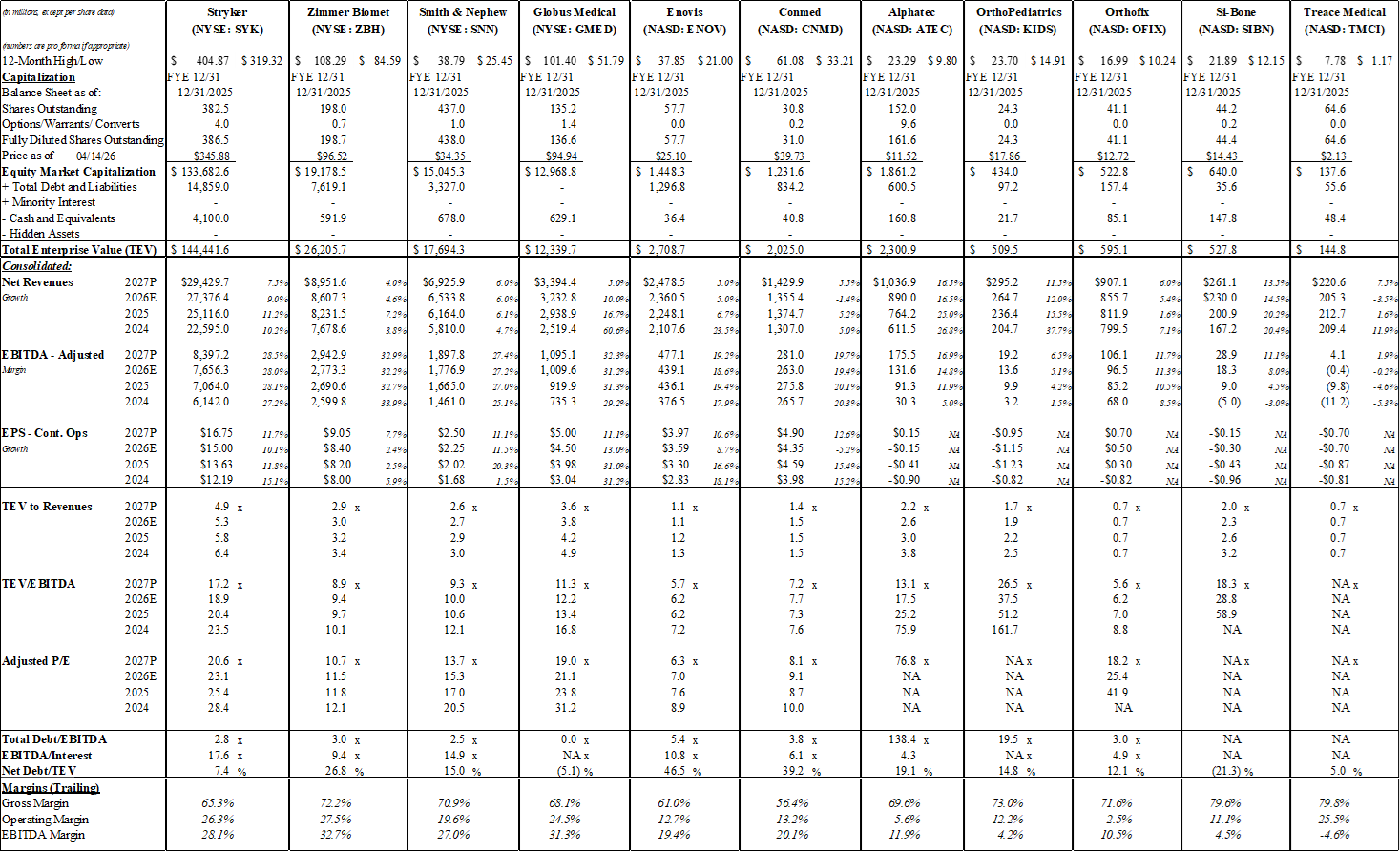
Source: Public data, Consensus estimates.
Stryker Corp. (SYK – $345.88 – NYSE) Strategic Acquirer

Source: Company reports, Consensus estimates.
COMPANY OVERVIEW
Headquartered in Kalamazoo, MI, Stryker is one of the world’s leading medical technology companies with $25.1 billion of sales in 2025. Approximately 38% of its sales are from products in the orthopedic market where Stryker sells knee implants, hip implants, trauma, extremities and related products, where it has leading market positions. Approximately 45% of sales are in the MedSurg segment where Stryker sells instruments, surgical visualization solutions, systems, medical equipment, and medical beds/stretchers to hospitals. The remaining 18% of its sales are from its neurocranial and vascular segments. Approximately 75% of its sales are derived from the U.S. and 25% outside the U.S. In February 2025, Stryker acquired Inari Medical for $4.9 billion and sold its spine implant business in April 2025 for $165 million.
As M&A is a key component of its strategy to enhance shareholder value, Stryker will continue to make strategic acquisitions (mostly tuck-ins). We highlight some key business and financial aspects:
- In 2025, Stryker’s revenue grew 10.3% organically to $25.1 billion. Its sales growth was broad based as its orthopedic and spine segments grew 9.5% while MedSurg and Neurotech segments grew 10.7%.
- In 2025, its ten business segments grew revenue between 8-16% in constant currency except in the spine business, which was sold in 2025.
- In 2025, Stryker benefited from healthy patient demand from favorable demographics, active lifestyles, hospitals operating surgeries operating near full capacity, and growing ASC capacity.
- In 2025, Stryker expects to grow its organic sales at 8.0-9.5% based on strong procedure volumes and a stabilizing macro-economic environment.
- In March 2026, Stryker experienced a cyberattack, which could crimp its sales growth in the near-term as the company experienced some disruptions in order processing, manufacturing and shipping.
- Capital demand from hospital customers remains healthy and Stryker exited 2025 with a higher backlog for capital equipment, which bodes well for its MedSurg segments.
- In 2025, Stryker launched a variety of new products in its various segments, and it expects 2026 to be another year of big product launches including Triathlon Gold, MAKO RPS handheld, and the SmartHospital platform.
- At year-end 2025, Stryker’s net debt to EBITDA was 1.5x, providing the company the financial flexibility for strategic M&A.
- Recent announced acquisition(s) include:
- February 19, 2025 – Stryker closed on a $4.9 billion acquisition of Inari, adding more than $600 million of annual revenue. Inari will be Stryker’s entry into the $15 billion venous thromboembolism (VTE) market with less than 20% addressed with mechanical thrombectomy. Inari’s product portfolio will be complimentary to Stryker’s neurovascular business.
- Similar to other orthopedic companies, Stryker is still experiencing pricing headwinds in its orthopedic segments with price declines of 1% annually despite some cost inflation. Stryker is experiencing some pricing power in its MedSurg segments given its steady cadence of new product introductions.
- Tariff Impact – Stryker’s tariff expense was $200 million in 2025, and management took action to mitigate and offset this cost. Stryker expects $400 million of tariff expense for 2026, assuming no tariff refund.
Stryker is active in strategic M&A, having completed 30+ transactions in the past decade. Stryker’s M&A strategy has been consistent over the past decade as it has focused on transactions in current or adjacent segments that can leverage Stryker’s existing commercial infrastructure to drive sales growth. Its areas of interest include urology, healthcare IT, cardiology, and soft tissue robotics.
Zimmer Biomet, Inc. (ZBH – $96.52 – NYSE) #1 in Knees/ Hips

Source: Company reports, Consensus estimates.
COMPANY OVERVIEW
Headquartered in Warsaw, Indiana, Zimmer Biomet Holdings is the second-largest orthopedic implant company in the world. With $8.2 billion of revenue in 2025, Zimmer is the largest global knee and hip implant manufacturer with approximately 30% market share. Its main products are knee implants, hip implants, sports medicine products, trauma/extremities implants, and surgical products. Zimmer generated 58% of revenue from the Americas and 42% from international markets in 2025. Zimmer Biomet acquired Paragon 28 for $1.2 billion on April 21, 2025, and Monogram Technologies for approximately $176 million plus milestone payments on October 7, 2025.
As the largest company in the global knee and hip implant market, Zimmer continues to shape its product portfolio to drive growth. We highlight some key business and financial aspects:
- In 2025, Zimmer’s revenue increased 3.9% organically in constant currency to $8.2 billion due to healthy patient volumes.
- In 2026, management expects sales to grow 1-3% in constant currency as management is undergoing a transition to its U.S. sales organization to become a more focused, specialized sales organization and to increase sales productivity. This transition will occur during 2026 and 2027.
- ROSA robotics – In 2019, Zimmer Biomet launched its ROSA knee system for robotic-assisted knee replacement surgeries. We estimate there are more than 1,300 systems placed at year-end 2025. In 2021, Zimmer rolled out partial knee and total hip applications for its ROSA system. In 2025, Zimmer rolled out a shoulder application on its ROSA system. With the Monogram acquisition in October 2025, Zimmer expects to launch a semi-autonomous robot for total knee procedures in early 2027.
- Similar to other orthopedic companies, Zimmer is investing in its ambulatory surgical center (ASC) infrastructure to expand its ASC business given the expected growth over the next few years.
- Management expects operating margin improvement over the long term as it makes targeted investments to drive sales growth.
- Zimmer’s net debt to EBITDA is approximately 2.5x at year-end 2025. It currently has financial flexibility to make strategic tuck-in acquisitions to re-shape its portfolio.
- In October 2025, Zimmer acquired Monogram Technologies for $176 million in cash plus up to $570 million for regulatory and revenue milestones through 2030. Zimmer is complementing its current robotic surgery portfolio with Monogram’s mBos TKA system, a semi-autonomous and fully autonomous robot, for knee surgery done autonomously to reduce surgeon variability, cognitive load, and fatigue. The semi-autonomous version is expected to launch in early 2027, assuming timely FDA approval. This launch augments Zimmer’s current robotics portfolio, which includes OrthoGrid AI surgical guidance systems for hip surgery and its Rosa robotic systems.
- Tariff Impact – Zimmer manufactures two-thirds of products in the U.S. and has no manufacturing in Mexico or Canada. In 2025, its tariff expense was 0.4% of sales and it does not expect a significant increase in 2026. Similar to most companies, Zimmer’s tariff may be refunded.
We expect Zimmer to be active in strategic M&A transactions, mostly tuck-ins, in the near term. The company is focused on re-shaping its portfolio to accelerate growth for its core knee, hip, and SET segments.
Smith & Nephew plc (SNN – $34.35 – NYSE) #4 in Orthopedics/ Knees & Hips

Smith & Nephew ADS are ½ shares outstanding LSE total shares outstanding. Source: Company reports, Consensus estimates
COMPANY OVERVIEW
Headquartered in London, UK, Smith & Nephew is a diversified medical device company offering products, systems, and services in orthopedics, sports medicine, and advanced wound care. The company generated $6.2 billion of revenue in 2025. It is the second largest company in the global sports medicine market with ~25% share, the second largest company in the global advanced wound management market with ~13% share and the fourth-largest company in the global knee and hip market with ~10% share and the global trauma market with ~8% share. The company generates approximately 54% of its revenue from the U.S. and the other 46% from international markets, with emerging markets at 17% of total sales.
Smith & Nephew is the fourth largest orthopedic company in the world. We highlight some key business and financial aspects:
- In 2025, revenue increased 5.3% in constant currency to $6.2 billion with sports medicine up 5.4%, advanced wound management up 5.6%, and orthopedics up 5.1%. China VBP negatively impacted revenue growth by 1.7% in 2025, affecting its sports medicine and orthopedic segments. China VBP has impacted Smith & Nephew’s revenue growth by more than 1% annually since 2022 and will continue in 2026, albeit a smaller impact.
- Solid growth across all three business segments was driven by improved sales execution, new product launches, and improved product availability.
- In 2026, Smith & Nephew’s management has adopted a new strategy, I.S.E., after completing its 12-Point Plan strategy from 2022-2025. This new strategy is expected to drive increased adoption of its products to generate higher revenue growth and drive more efficient operations to generate additional free cash flow.
- From 2022-2025, the company made progress with its 12-Point Plan strategy with the following: fixing its orthopedics segment; accelerating sales growth in sports medicine and advanced wound management; improving productivity and focus on cash, capital allocation and ROIC; and moving to a business unit-led structure to enable greater accountability and increased customer focus; Smith & Nephew’s adjusted operating margin improved from 17.3% in 2022 to 19.6% in 2025.
- CORI System: In 2020, Smith & Nephew launched its CORI surgical system, a handheld robotic solution, for knee implants and total hip implants in early 2022. As of year-end 2025, there were more than 1,100 CORI systems installed globally. In 2023, the company added a robotic revision knee application with its CORI system. In 2026, the company will launch shoulder application for its CORI system. In 2025, 40% of its CORI systems were placed in ASC settings.
- During 2025, the company generated $1.3 billion of annual operating cash flow, re-invested $433 million in capex, paid $330 million in dividends, and spent $500 million for share repurchases.
- The company generated 54% of net revenue from the U.S., 30% from other established markets, and 16% from emerging markets. China was slightly more than 2% of net revenue in 2025.
- Tariff Impact – For its U.S. market, Smith & Nephew has manufacturing plants in the U.S. serving its U.S. businesses. The company has a significant manufacturing in China for its Wound Care division. In 2026, management expects $60 million tariff impact, or 1%, vs. $17 million in 2025, which would be offset by any refunds.
We believe Smith & Nephew or one of its business segments is a possible acquisition candidate for a large medical company. It has an approximate 25% share in the global sports medicine market, an approximate 13% share in the advanced wound care market, and an approximate 10% market share in the global knee and hip implant market.
Globus Medical, Inc. (GMED – $94.94 – NYSE) #2 in Spine
 Adjusted for various one-time expenses and acquisition related expenses and costs. Source: Company reports, Consensus estimates.
COMPANY OVERVIEW
Headquartered in Audubon, PA, Globus Medical, founded in 2003, is the second-largest spine company in the $10+ billion global spine market. Globus Medical has a comprehensive spine portfolio for spine surgery, including expandable offerings, 3D printed interbody portfolio, cervical disc, robotic prone lateral system, access retractors, limb-lengthening products pedicle screws, biologics, neuromonitoring solutions, and enabling technologies and services that address a broad array of spinal pathologies such as degenerative, deformity, tumor, and trauma conditions using open or minimally invasive surgical techniques. Globus Medical acquired NuVasive on September 1, 2023, doubling its revenue, and acquired Nevro on April 3, 2025.
Globus Medical is currently one of two companies with a large installed base of robotic systems for spine applications. We highlight some key business and financial aspects:
- Second-largest spine company in the world behind #1 Medtronic.
- In 2025, Globus Medical grew sales 5% on a pro forma basis in constant currency to $2.9 billion driven by new product launches, sales execution, and robotic implant pull-through.
- In 2025, Globus generated approximately $141 million from its Excelsius GPS™ system and other enabling technologies; Over 120,000 procedures have been done using Excelsius technology since launch.
- Its Nevro acquisition contributed $294 million of revenue in 2025 with positive adjusted EBITDA.
- With its continuous investment in spine, robotics, and trauma, we expect Globus to grow above market in the near term.
- With its NuVasive and Nevro acquisitions, Globus Medical’s adjusted 2025 EBITDA margin was 31.3% in 2025. The company achieved $200 million of cost synergies from Q3 2023 to year-end 2025 for its NuVasive acquisition, better than its $170 million initial guidance. The adjusted EBITDA margin of its base business, which includes NuVasive, was 33.4%. Nevro’s adjusted EBITDA margin was 12.4% for the first nine months of ownership in 2025.
- Globus generated free cash flow of $588 million in 2025. Its capital allocation strategy remains unchanged as it invests in new products internally along with inventory and capex investments and complementary M&A.
- Given its strong balance sheet and free cash flow generation, management should continue to make strategic acquisitions whereby it can leverage its operational expertise to improve the profitability of acquired businesses. Management has expertise with turnarounds and operating companies more efficiently.
- International sales represented slightly less than 20% of 2025 net revenue, which is expected to grow as Globus is underleveraged in certain international markets; its key international markets are Japan, the Euro zone, U.K. and Australia.
- Tariff Update: About 95% of its products are U.S.-based or sourced in the U.S.
Globus Medical continues to invest in many areas of its business in addition to broadening its robotic platform and expanding its application in various orthopedic procedures. Management is focused on integration of its Nevro acquisition in the near term. Globus Medical has financial flexibility for strategic acquisitions in orthopedics and/or adjacent medical categories to generate shareholder value.
Enovis Corp. (ENOV – $25.10 – NYSE) Orthopedic Rehab & Recon
 Adjusted for various one-time expenses and acquisition related expenses and costs. Source: Company reports, Consensus estimates.
COMPANY OVERVIEW
Headquartered in Wilmington, DE, Enovis is a manufacturer and distributor of orthopedic rehab products (Prevention & Recovery – P&R segment) and reconstructive surgical products and services (Recon segment). The company was formed in April 2022 when its predecessor company, Colfax, spun-off its ESAB industrial segment into an independent public company. With the spin-off, the remaining Enovis consisted of its DJO Global business and small tuck-in reconstructive acquisitions generating $2.25 billion of revenue in 2025 with two segments: P&R products (51% of revenue) and Recon products and services (49% of revenue). Its P&R products include rigid bracing products, orthopedic soft goods, vascular systems and compression garments, hot and cold therapy products, and bone growth stimulators and electrical stimulators. Its Recon products include knee, hip, shoulder, elbow, foot, ankle, and finger implant products and surgical productivity solutions.
Enovis has transformed itself via strategic tuck-in acquisitions to compete in the global orthopedic market. We highlight some key bushiness and financial aspects:
- In 2025, Enovis grew its revenue 5.9% organically driven by 8.2% growth in its Recon segment and 3.7% growth in its P&R segment. This growth was driven by new product launches and solid execution.
- With $1.1 billion of revenue in its Recon segment in 2025, Enovis has the scale to improve its competitive positioning in the extremity market and knee/hip markets.
- With the LimaCorporate acquisition in January 2024, Enovis became a Top 3 company in the $6+ billion global extremity market with approximately 7% market share; it has a greater presence in the shoulder market than foot/ ankle.
- Enovis’s strategic goals are as follows: mid-to high-single digit organic sales growth, +50bps annual margin expansion with continuous improvement and system productivity, and focused capital allocation.
- In 2025, Enovis expects 4-6% organic sales growth in constant FX with high-single digit sales growth from its Recon segment and low-single digit sales growth from its P&R segment along with ~50bps EBITDA margin expansion.
- With its new product launches and increased global scale, Enovis expects to grow above market rate and gain market share in 2026.
- Management is focused on three key priorities: 1) commercial execution, 2) operational excellence and 3) financial discipline. Management sees a clear path to 20%+ adj. EBITDA margin, up from 17.9% in 2025.
- At year-end 2025, Enovis’s net debt to EBITDA is 3.1x. The company is focused on further deleveraging. M&A would consist of small bolt-on acquisitions in 2026.
- In May 2025, Enovis announced Damian McDonald as its new CEO with 35 years of experience in the medical sector.
- International sales represented 42% of 2025 net revenue.
- Tariff Impact: Enovis’s tariff cost was $15 million in 2025 and expects $25 million net tariff expense in 2026, which would be offset by any refunds.
Enovis has scaled its reconstruction segment via strategic tuck-in acquisitions. As it integrates its acquisitions, the company continues to drive operational improvements. As its market share in both the extremity market and knee/hip markets are relatively low (< 10% share), the company may continue to look for strategic acquisitions to further increase its scale over time.
Conmed Corp. (CNMD – $39.73 – NASDAQ) Sports Med & General Surgery

Adjusted for various one-time expenses and acquisition related expenses and costs. Source: Company reports, Consensus estimates
COMPANY OVERVIEW
Headquartered in Largo FL, Conmed is a manufacturer and marketer of products for orthopedic general surgery. With $1.4 billion of revenue in 2025, the company has two segments: general surgery and orthopedic surgery. Its general surgery products (58% of revenue) include its AirSeal insufflation management system, Buffalo filter smoke evaluation products, electrosurgical and endomechanical products, and endoscopic products. Its orthopedic surgery products (42% of revenue) include sports medicine repair products, allograft tissue, powered surgical instruments, and visualization products. In the U.S., Conmed sells its products using its direct sales reps for general surgery and a hybrid sales model for orthopedics. It generates 43% of its net sales from international markets.
We highlight some key bushiness and financial aspects:
- In 2025, Conmed’s revenue grew 5.1% in constant FX to $1.4 billion as its general surgery products grew 4.7% and orthopedic products grew 5.5%. Its sports medicine and BioBrace products drove its orthopedic business, while its AirSeal insufflation system and biliary product offerings drove its general surgery growth.
- In 2025, approximately 86% of its revenues are single-use, recurring revenue.
- On January 1, 2025, Conmed named Patrick Beyer as its new CEO. He was previously its COO and President of International and Global Orthopedics and joined Conmed in 2014; he worked for Stryker for 21 years prior.
- On March 15, 2026, CFO Todd Garner departed and Conmed has named Andew Moller as its Corporate Controller and principle accounting officer.
- In 2025, management expects sales growth of 4.5-6% in constant FX, excluding the gastroenterology product divesture, and adjusted EBITDA margin of approximately 19% due to negative tariff impact of ~1% .
- Main products include the following:
- Sports medicine and allograft- Arthroscopes, tissue repair sets, suture anchors, metal and bioresorbable implants; Includes BioBrace®, Trushot® soft tissue fixation system, Y-Knot® all-suture anchors, and Argo™ knotless suture anchors.
- AirSeal – Insufflation system for stable pneumoperitoneum, constant smoke evacuation, and valve-free access to the abdominal cavity during surgery.
- Buffalo Filter- Surgical smoke evaluation pencils, evacuators, filters and accessories.
- Electrosurgical and endomechanical products – mono and bipolar generators, handpieces, full line of instruments used in minimally invasive surgery such as trocars, irrigation devices, graspers, dissectors, etc.
- On Dec. 5, 2025, Conmed sold its gastroenterology product lines with revenue of $90-95 million in 2025 and gross margin of 45% (lower than company average of 56%). This sale is dilutive to EPS by $0.45-0.55 in 2026.
- On October 31, 2025, Conmed suspended its dividend as management is focused on share repurchases with at least $25 million of share repurchases annually beginning in 2026.
- With its cashflow generation in 2025, Conmed was able to bring its net debt to EBITDA to 2.9x.
- Tariff Impact: 2026 financial guidance assumes a 1-1.1% negative impact from tariffs, subject to change.
We believe Conmed is a possible acquisition candidate for any company who would like to expand its presence in sports medicine and general surgery and strengthen its international presence.
Alphatec Holdings, Inc. (ATEC – $11.52 – NASDAQ) Growth in Spine

Source: Company reports, Consensus estimates.
COMPANY OVERVIEW
Headquartered in Carlsbad, CA, Alphatec is a manufacturer and marketer of implants, biologics, and systems for the treatment of various spine disorders. The company’s spine portfolio consists of access systems, fixation systems, interbody systems, biologics, neuromonitoring and imaging systems. The company markets its products using strategic independent distributors and direct sales reps in the U.S. The company generated $764 million of revenue in 2025, up from $92 million in 2018. International revenue was 6% of revenue in 2025.
We highlight some key business and financial aspects:
- In 2025, revenue increased 25% to $764 million as the company continues to gain market share by launching new products and attracting new surgeon customers, especially in lateral procedures. For the past five years, the company has grown its revenue significantly and expanded its market share in the global spine market.
- In 2025, the company’s surgical volume grew 22% and its average revenue per case grew 4%. Its EOS imaging revenue grew 15% to $77 million, representing 10% of total revenue.
- In 2026, management expects 17% revenue growth and a targeted 15% adjusted EBITDA margin.
- Its main products include the following:
- Spinal technologies and systems – Includes PTP patient positioning system, access systems, Invictus fixation systems, spinal implants made from allograft, PEEK and porous titanium with NanoTec surface enhancements, expandable implants, and corpectomy implants.
- Biologics – Includes allograft spacers, 3D Profuse Bioscaffold, family of AlphaGRAFT products (DBM, CBM), and Amnioshield amniotic tissue barrier.
- SafeOp Neural InformatiX system for neuromonitoring, which combines EMG, SSEP and MEP monitoring modalities during surgery for real-time nerve location and nerve health.
- EOS imaging system – full body imaging with 3D model of skeletal systems for diagnostic and surgical planning capabilities. Launched in 2024, EOS Insight offers pre-op planning and post-op assessment.
- In late 2020, Alphatec launched its lateral approach to spine surgery called Prone TransPsoas (PTP) which minimizes patient repositioning, provides surgeons with optionality, and achieves spinal alignment at a higher reproducible rate. With its learnings from PTP, Alphatec developed and launched Lateral TransPsoas (LTP) and Midline ALIF approaches to enable single position spine surgery for common spine procedures. All these procedures integrate with SafeOp neuromonitoring. In 2024, Alphatec launched EOS Insights, which provides alignment assessment and surgical planning applications for pre and post-surgical insights.
- The company continues to elevate and expand its sales force while increasing sales force productivity.
- Alphatec continues to invest in new product development to launch improved new products to expand its total addressable market within the spine market.
- In 2025, Alphatec generated adjusted EBITDA of $91 million, or 12% margin, and relatively breakeven free cashflow. The company’s goal is to generate $1.0 billion of revenue and $180 million of adjusted EBITDA in 2027.
- Tariff Update: Alphatec uses third-party manufacturers to make its surgical products, which are mostly U.S.-based. Its EOS imaging system is sourced from its EU subsidiary will be impacted by any U.S. tariffs on EU products.
We believe Alphatec is a possible acquisition candidate for any medical company who wants to increase its scale in the spine market or to expand its spine portfolio offering.
Treace Medical Concepts, Inc. (TMCI – $2.13 – NASDAQ) Bunion & Midfoot

Expected EPS loss for the next three years. Source: Company reports, Consensus estimates
COMPANY OVERVIEW
Headquartered in Ponte Vedra, FL, Treace Medical Concepts is a manufacturer and marketer of implants, instruments and systems for the surgical management of bunions and related midfoot deformities. The company pioneered the Lapiplasty 3D bunion system and launched other surgical systems to correct bunion deformity. The company markets its products using 297 sales reps from its direct sales force and independent sales agencies targeting surgical podiatrists and orthopedic surgeons who focus on foot and ankle procedures in the U.S. – its only market. The company generated $213 million of revenue in 2025, up from approximately $40 million in 2019.
We highlight some key business and financial aspects:
- In 2025, revenue increased 2% to $213 million driven by an increased number of bunion procedure kits offset by lower ASP of its newest bunion kit.
- Treace Medical pioneered the Lapiplasty 3D bunion procedure using its proprietary system. Since its launch in March 2015, more than 150,000 patients have been treated with its Lapiplasty system in the U.S. Benefits include correcting the 3D metatarsal alignment of the bunion, stabilizing the first TMT joint and allowing for return to weight-bearing in a walking boot. The four-year recurrence rate is 0.8% for Lapiplasty procedure with return to weight bearing in 3-10 days.
- In addition to its Lapiplasty 3D bunion system, other products include:
- Adductoplasty system – comprehensive system for reproducible correction of metatarsus adductus deformities and osteoarthritis of the midfoot.
- Speedplate implant fixation platform – provides stability of titanium locking plate with small insertion; used for common bone fusion procedures in the foot.
- Hammertoe PEEK fixation system – system designed to treat hammertoe, claw toe and mallet toe deformities.
- Nanoplasty and Percuplasty systems – newly launched systems for minimally invasive distal osteotomy surgeries.
- IntelliGuide system – pre-op planning and patient specific surgical cut guides.
- The company’s commercial strategy includes 1) drive adoption of new products by leveraging existing customer base, 2) build upon Lapiplasty leadership position with new technologies, and 3) expand product offering to expand TAM.
- In 2026, management expects sales of $202-212 million, or flat to down 5%, due to soft consumer spend toward elective procedures, adjusted EBITDA loss of $4-6 million and cash burn to decrease by 50% vs. 2025 cash burn of $30 million.
- In April 2021, Treace Medical completed its IPO and issued 12.94 million shares @ $17 per share for $107.6 million of net proceeds. In February 2023, the company issued 5.476 million shares @ $21 per share for $107.5 million of net proceeds.
- Tariff Update: Treace uses third-party manufacturers to make its products, which are mostly U.S.-based.
We believe Treace Medical is a possible acquisition candidate for any medical company who wants to enter or expand its bunion and foot offerings.
OrthoPediatrics, Corp. (KIDS – $17.86- NASDAQ) Pediatric Orthopedics

Expected EPS loss for the next three years. Source: Company reports, Consensus estimates.
COMPANY OVERVIEW
Headquartered in Warsaw, IN, OrthoPediatrics is a manufacturer and marketer of implants and products for pediatric patients with orthopedic conditions. The company was founded in November 2007 and went public in October 2017 at $13.00 per share. The company’s products include its trauma and deformity product line (70% of revenue), its scoliosis systems (28% of revenue) and sports medicine products (2% of revenue). The company has the broadest pediatric specific orthopedic offering with 85 unique surgical systems. The company markets its products in the U.S. using its direct sales reps and more than 30 sales agencies employing ~230 sales reps, exclusive to the company. The company generated $236 million of revenue in 2025. International revenue was 21% of total revenue in 2025.
OrthoPediatrics is an orthopedic implant company focused on pediatric patients. We highlight some key bushiness and financial aspects:
- In 2025, revenue increased 15.5% to $236 million driven by new product launches and sales execution.
- Revenue was driven by increased sales of its Cannulated screws, PNP femur, PediPlate, external fixation, Pega System, RESPONSE, and 7D technology.
- The company has grown revenue at a double-digit organic rate since inception.
- Its main products include the following:
- Trauma and deformity (~70% of revenue) – More than 14,000 implants, instruments, external fixation components, specialized braces, and bone graft substitutes for the femur, tibia, pelvis, and upper and lower extremities. Includes cannulated screws, locking cannulated blade, locking proximal femur, PediFlex flexible nailing system, PediNail intramedullary nail, PediPlates, PediLoc, ACL reconstruction system, and others.
- Scoliosis (~28% of revenue) – Includes RESPONSE systems for treating spinal deformity, BandLoc 5.5mm/6.0mm sub-laminar banding system, FIREFLY® pedicle screw navigation guides, 7D flash surgical navigation image guidance system, VerteGlideTM, ApiFix® Mid-C System, the Boston 3D scoliosis brace, as well as providing clinical O&P services.
- Sports medicine (2% of revenue) – ACL and MPFL Reconstruction system and Telos.
- In the U.S., the company has more than 30 sales agencies employing ~230 sales reps who are present in the operating room with the surgeon customer. These sales agencies represented 56% of total global sales in 2025.
- Outside the U.S., the company has 80 stocking distributors and 40 independent sales agencies in over 75 countries. It has direct sales programs in most of the European countries, Australia, New Zealand, and Canada.
- The company has a deep pipeline of new products in development and expects to launch its eLLi™ electromechanical lengthening implant in 2026, pending FDA approval.
- Management expects $25 million adjusted EBITDA for 2026 and breakeven free cash flow in 2026.
- Tariff Update: About 95% of cost of supplies is sourced from the U.S.
We believe OrthoPediatrics is a possible acquisition candidate for any medical company who wants to expand its pediatric product offering.
Orthofix Medical, Inc. (OFIX – $12.72 – NASDAQ) Spine + Limb Reconstruction

Source: Company reports, Consensus estimates.
COMPANY OVERVIEW
Headquartered in Lewisville, TX, Orthofix is a global spine and orthopedics company with comprehensive offerings in spine and biologics, bone growth stimulation, and limb reconstruction. The company increased its product portfolio and scale with the merger with Seaspine in January 2023. The company’s segments include spine implants and biologics (53% of sales), bone growth stimulation products (30% of sales), and limb reconstruction products (17% of sales). The company generated $812 million of revenue in 2025. International sales represented 17% of total sales in 2025 with the majority in European markets.
We highlight some key business and financial aspects about Orthofix:
- In 2025, Orthofix’s revenue grew 4.1% in constant currency pro-forma to $812 million with 5.9% growth in bone growth stimulation, 2.8% growth in spine/ biologics, and 5.3% growth in limb reconstruction.
- In late February 2025, Orthofix decided to discontinue its M6-C artificial cervical disc and M6-L artificial lumbar disc product lines to focus on more profitable areas. Revenue for M6 products was $10.4 million in 2025
- The company’s segments include the following products:
- Spine/ biologics solutions – repair and regenerative products to treat a variety of spinal conditions. Key products include various pedicle screw systems; portfolio of products for ALIF, PLIF, TLIF and LLIF procedures including interbody spacers and access systems; and 7D flash navigation system and products for other spinal procedures. Biologics include Trinity Elite™ tissue forms, demineralized bone fibers products such as Strand(Plus) and FiberFuse, and Ballast products.
- Bone growth stimulation therapies – Portfolio of devices for enhancing bone fusion that utilize Orthofix’s patented pulsed electromagnetic (PEMF) technology. FDA-approved Class III medical devices indicated as an adjunctive treatment to enhance fusion success in cervical and lumbar spine, nonunion fractures, and fresh fractures – CervicalStim, SpinalStim, PhysioStim, and AccelStim.
- Limb reconstruction -Portfolio of repair and regenerative products that allow physicians to successfully treat a variety of orthopedic conditions including products used in fracture repair, deformity correction and bone reconstruction including TrueLok external fixation systems, FITBONE limb lengthening system, Galaxy fixation system, and pediatric portfolio.
- For 2026, management expects sales of $850-860 million or up 5.5% at midpoint, adj. EBITDA of $95-98 million, or 11.3% margin, and free cashflow positive, excluding potential legal settlements.
- In 2024 and 2025, Orthofix spent S35 million each year on capital expenditures, which includes instrument sets. In 2026, management expects to spend $45-50 million on capex.
- As of December 31, 2025, Orthofix had $85 million of cash and $157 million of debt on its balance sheet.
- Tariff Impact: Orthofix has several manufacturing facilities in the U.S. and a manufacturing facility in Italy. Orthofix expects tariff expense of $1-2 million in 2026, which would be offset by any refunds.
Orthofix is improving its sales execution and its product portfolio to compete more effectively in the global spine market.
Si-Bone, Inc. (SIBN – $14.43 – NASDAQ) iFuse Family of Implants

Expected EPS loss for the next three years. Source: Company reports, Consensus estimates
COMPANY OVERVIEW
Headquartered in Santa Clara, CA, Si-Bone is a manufacturer and marketer of the iFuse family of implant systems for minimally invasive surgical treatment of the sacroiliac jointa (SIJ) in the lower back. The company was founded in 2008 and went public in October 2018 at $15.00 per share. The company’s products include its iFuse family of implant systems and enabling technology solutions for the surgical treatment of the sacroiliac joint. The company markets its products using more than 170 field sales reps and clinical support specialists and 300+ sales agents in the U.S. Outside the U.S., the company has 11 direct sales reps and works with 28 exclusive distributors to market its products in 38 countries. The company generated $201 million of revenue in 2025. International revenue was 5% of total sales in 2025.
We highlight some key business and financial aspects:
- In 2025, revenue increased 20% to $201 million due to increased volume with increased productivity for its U.S. sales organization, growing base of active surgeons and its new product launches and robust product portfolio.
- The iFuse family of implant systems includes a series of patented triangular implants, instruments, and diagnostic and surgical techniques to perform the surgical treatment of the sacroiliac joint, sacropelvic fixation, and pelvic fractures.
- The U.S. market opportunity for sacroiliac joint treatment, sacropelvic fixation and pelvic fractures is approximately 470,000 patients per year or over $3.5 billion opportunity.
- According to Si-Bone, iFuse is the market leader with over 140,000 worldwide procedures since inception.
- Benefits of the iFuse-3D implant system include: a) significant decrease in mean pain and disability improvement scores; b) 95% patient satisfaction rate (3.5% revision rate at 4 years); c) significant reduction in opioid use post surgery; d) over 300 U.S. million lives covered by insurance; and e) long-term five year data.
- There are more than 180+ peer reviewed published papers and 6-year long-term data on the iFuse system, which is the most for any SIJ implant.
- FDA approvals: In Feb. 2026, Si-Bone received FDA approval its iFuse INTRA Ti implant, a 3D printed titanium implant with self-cutting blades. It expects another FDA approval in late 2026.
- Management is focused on increasing its sales reps and its sales coverage in the U.S. along with medical training and education; currently it has 89 field sales reps, 83 clinical support specialists, and 300+ sales agents in the U.S.
- For 2026, Si-Bone’s management expects $230.5 million of revenue, or up 15%, with 78% gross margins and adjusted EBITDA of ~$18 million or 8%.
- For 2026, management has four key priorities: 1) innovation and market development, 2) physician engagement, 3) commercial execution, and 4) operational excellence.
- The company has grown significantly in the ASC setting with 35% of total procedures in 2025 vs. no sales in 2020.
- Tariff Update: Si-Bone uses third-party manufacturers to make its products and substantially all of its products, including all its implants, are manufactured in the U.S.
We believe Si-Bone is a possible acquisition candidate with its unique iFuse family of implants.
a The sacroiliac joint connects the base of the spine to the hip joint.
249 Royal Palm Beach Way, Palm Beach, FL 33480 Gabelli Funds TEL (561) 671-2100
This whitepaper was prepared by Jennie Tsai. The examples cited herein are based on public information and we make no representations regarding their accuracy or usefulness as precedent. The Research Analyst’s views are subject to change at any time based on market and other conditions. The information in this report represents the opinions of the individual Research Analyst’s as of the date hereof and is not intended to be a forecast of future events, a guarantee of future results, or investments advice. The views expressed may differ from other Research Analyst or of the Firm as a whole.
As of December 31, 2025, affiliates of GAMCO Investors, Inc. beneficially owned less than 1% of all other companies mentioned.
This whitepaper is not an offer to sell any security nor is it a solicitation of an offer to buy any security.
Investors should consider the investment objectives, risks, sales charges and expense of the fund carefully before investing.
Gabelli Funds, LLC is a registered investment adviser with the Securities and Exchange Commission and is a wholly owned subsidiary of GAMCO Investors, Inc. (OTC: GAMI).
For more information, visit our website at: www.gabelli.com or call: 800-GABELLI
800-422-3554 • 561-671-2100 • info@gabelli.com