Reflections from Gabelli Funds’ 18th Annual Sports & Media Symposium
Gabelli Funds hosted its 18th Annual Sports & Media Symposium at The Paley Center for Media in New York City on Thursday, June 4, 2026. The symposium featured discussions with leading companies and organizations across the media ecosystem, with an emphasis on industry dynamics, current trends, and business fundamentals, as well as Sports Investing, Media & Telecom Regulatory, and Advertising Panels. Attendees also had the opportunity to meet with management in a one-on-one setting.
Key Themes: Today’s Media Landscape
Broadcasters’ revenue profiles are less dependent on core advertising spending than in historical periods, and improved packaging on the distribution side is starting to show improvements in pay-tv subscriber losses. Broadcasters continue to aggressively drive contractually recurring retransmission fees, and political ad dollars are again expected to reach new records during the 2026 midterms election cycle. While core ads are highly volatile during recessionary periods (during ‘08-‘09, U.S. advertising saw steep declines of >15%), politicians and PACs remain well-financed. Local TV continues to be the primary beneficiary of political spending, and given low variable costs, generally fall to a broadcaster’s bottom line.
Cord Cutting & Shaving: From a peak of over 100 million total pay-tv subscribers in 2015, 2025 ended with ~66 million, representing around 50% household penetration (down from peak of ~80%). Virtual MVPDs have become increasingly prevalent as younger consumers continue to shave and cut the cord, and these services continue to take share from traditional pay-tv offerings. Trailing 12-month declines have been showing improvements over the last several quarters as cable operators continue to improve MVPD pricing and packaging – bundling and video attach alongside broadband while also including DTC streaming services to enhance value. Skinny bundles centered on broadcast, sports, news, and streaming are expected to proliferate moving forward, and we view broadcast as a key beneficiary of these dynamics. Management commentary reiterated that cord cutting signs are encouraging, but they are generally not yet ready to call it a trend.
Core Advertising Trends: Pressure continues to mount from reduced linear viewership across the industry, with broadcasters also calling out macro-driven headwinds potentially impacting Q2. Sports and news are the key categories driving viewership, while general entertainment trends continue to show softness. Broadcasters’ revenue will likely be negatively impacted, at least in the near-term, as a result of exposure to core ads. However, the impact is somewhat mitigated by broadcasters’ diversified sources of revenue today, as non-political (‘core’) advertising comprises less than 50% of a pure-play broadcaster’s revenues (vs. about 90% during the last recessionary period).
Broadcast Positioned to Benefit from Competitive 2026 Election Cycle: The 2026 midterms cycle is currently on track to be the most expensive on record – AdImpact recently revised its 2025-2026 election cycle projection from $10.8 billion to $11.6 billion, up 4% vs. the 2023-2024 cycle’s $11.2 billion total. While digital media, driven primarily by CTV, continues to capture a growing share, broadcast has remained resilient in absolute dollar terms, maintaining its role as a critical reach vehicle for campaigns. Local broadcast stations are uniquely positioned to attract political ad dollars due to the regional nature of their signals and their ability to reach older, more likely voters – making them especially effective relative to other media channels. Today’s highly contested political environment is expected to drive further growth; razor-thin majorities in both the House and Senate as well as control of both chambers potentially in play. Stations serving markets with competitive races are likely to outperform, as these contests typically generate the highest levels of political advertising revenue.
Optimism for Broadcast Deregulation + Additional M&A: Although moving slower than anticipated, there is still optimism for meaningful deregulation under FCC Commissioner Brendan Carr. This has already reignited large-scale broadcast M&A (i.e., Nexstar-TEGNA). Local broadcasters in the U.S. have long been limited by FCC rules designed to preserve localism and media diversity – most notably, the national ownership cap, which restricts station groups to reaching 39% of total U.S. TV households. However, in a media landscape now dominated by streaming platforms and Big Tech, these rules are increasingly being viewed as outdated and misaligned with modern market dynamics. Accordingly, a deregulatory agenda is expected to lift or meaningfully ease both national and local ownership rules, allow broadcasters to negotiate directly with virtual MVPDs, and sunset ATSC 1.0 in favor of next-gen broadcast standards (ATSC 3.0). Expected reforms are already unlocking additional meaningful consolidation opportunities, improving operating efficiencies, and better positioning broadcasters to compete in a digital-first environment. Acquirers are expected to continue realizing synergies from several key areas: after-acquired rights, in-market operational efficiencies, and back-office and infrastructure consolidation. While after-acquired rights have historically driven the largest near-term EBITDA lift, the gap in retrans rates has narrowed in recent years. As a result, in-market synergies (including headcount reductions as well as synergies from the consolidation of master control operations, broadcast infrastructure, and real estate) are now seen as the most compelling value driver.
Streaming & Content: Companies across the industry continue to moderate spending on content and raise prices, leading to improved profitability and free cash flow growth. Advertising continues to play a larger role in the streaming future – whether through free ad-supported TV (FAST) or advertising-based video on demand (AVOD). Major platforms including Netflix, Disney+, HBO Max, Amazon Prime, and AMC Networks have all launched AVOD tiers. Bundling is also becoming a key strategic focus, particularly for ad-supported offerings. Bundles offer consumers a lower-cost entry point while enhancing monetization through improved engagement and stronger CPMs enabled by connected TV targeting. Bundled services also tend to exhibit lower churn compared to standalone subscriptions, which are often more sensitive to content pipelines tied to sports schedules or premium scripted releases. We expect bundling to become increasingly prevalent as streaming prices rise and platforms seek to reduce churn. Cross-company bundles are already gaining traction, as seen with Disney/Hulu/Max, Netflix/Max with Verizon, and Comcast’s StreamSaver bundle (Peacock, Netflix, and Apple TV+). We anticipate continued momentum from both streamers and third parties (e.g., cable and telecom operators, Amazon, Apple, etc.), with a particular focus on ad-supported tiers. While bundling is far easier to execute than a full-scale streaming merger, it lacks one of the most compelling benefits: meaningful cost synergies. Mergers offer opportunities to reduce spending across both content and SG&A/technology infrastructure.
Media M&A remains a hot topic in 2026 to date following the re-election of President Trump, Paramount’s ownership change (now Paramount Skydance), the spin-off of Comcast’s cable networks as Versant, and most recently, the bidding war for Warner Bros. Discovery with PSKY coming out on top. These moves reflect the broader industry imperative to scale – consolidation is necessary to compete against the likes of Netflix and Amazon. Longer-term value creation for any surviving legacy networks business will depend on achieving greater scale, whether through M&A, bundling, or sports rights investments.
DraftKings Inc. (DKNG – $25.65 – NASDAQ)

Source: Company data and ThomsonOne consensus estimates.
Company Overview
Headquartered in Boston, Massachusetts, DraftKings Inc. is a leading digital sports entertainment and gaming company. Founded in 2012, the company operates a vertically integrated platform spanning online and retail sports betting, iGaming, daily fantasy sports, digital lottery courier services, event contracts trading, and sports media. DraftKings’ flagship sportsbook and iGaming products are available across numerous regulated jurisdictions in the United States and Canada, while its Jackpocket subsidiary is a leading digital lottery courier platform in the U.S. The company maintains strategic partnerships with major professional sports leagues including the NBA, NHL, MLB, PGA TOUR, WNBA, and NASCAR.
Reason for Comment
On June 4, 2026, DraftKings’s Chief Financial Officer, Alan Ellingson participated in a fireside chat at our 18th Annual Sports & Media Symposium. Discussion highlights are included below:
- Despite a slowing pace of new state launches nearly eight years after PASPA, DraftKings continues to generate healthy organic growth in mature jurisdictions. Management noted that gross profit has increased every year across all customer cohorts, driven by product innovation, increased share of wallet, cross-sell initiatives, and improved customer retention.
- Management remains highly constructive on prediction markets, viewing them primarily as an incremental customer acquisition and market expansion opportunity rather than a source of meaningful cannibalization. DraftKings believes prediction markets could ultimately benefit from a larger addressable market, broader geographic reach, and potentially more attractive economics due to the absence of state gaming taxes and market access fees.
Summary
Management’s commentary reinforced our view that DraftKings’ long-term opportunity extends beyond the pace of new state legalization and near-term handle growth. The company’s ability to deepen customer engagement and increase profitability across existing cohorts, combined with continued investments in product and technology, supports a more durable growth profile than many investors may assume. Management also views prediction markets as a potential source of incremental customer acquisition and market expansion, creating an additional avenue for growth alongside the core sportsbook and iGaming businesses.
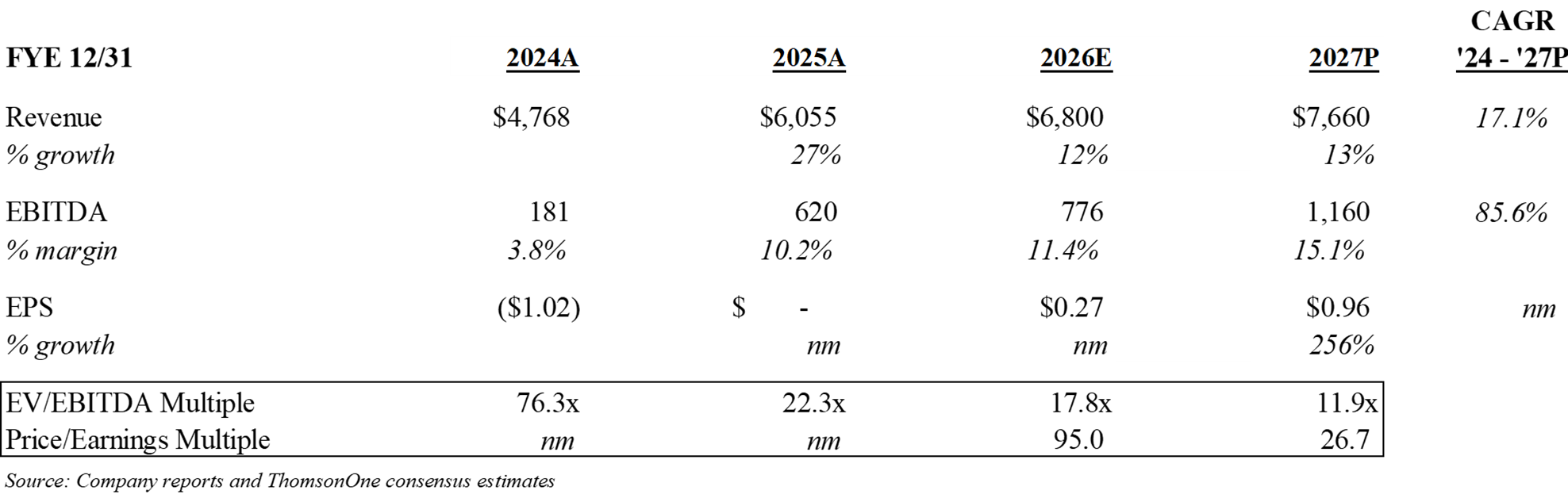
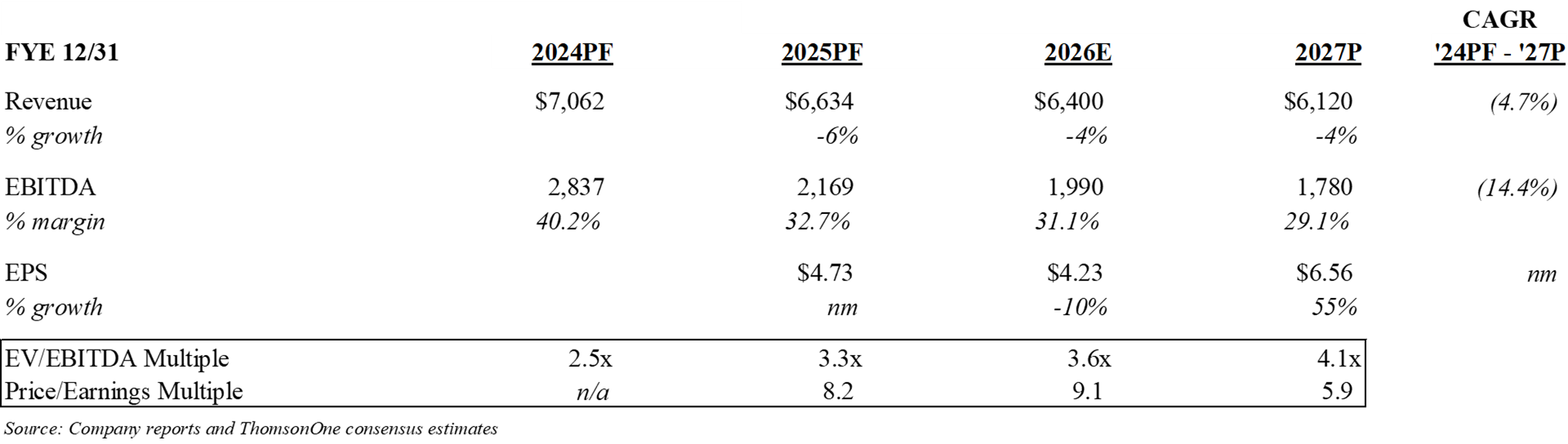
Table 1 DraftKings, Inc. Earnings Model 2024-2027P
The E.W. Scripps Company (SSP – $2.82 – NASDAQ)

Source: Company data and ThomsonOne consensus estimates.
Company Overview
The E.W. Scripps Company is a diversified media enterprise and one of the largest independent owners of local TV stations in the U.S. The company’s Local Media segment operates over 60 TV stations in 40+ markets, reaching ~38% of U.S. TV households. The Scripps Networks division reaches households across the U.S. with national news outlet Scripps News and popular entertainment brands ION, ION Plus, ION Mystery, Bounce, Grit, and Laff. Scripps is the nation’s largest holder of broadcast spectrum. Scripps Sports serves professional and college sports leagues, conferences, and teams with local market depth and national broadcast reach of up to 100% of TV households. The company was founded in 1878 and is headquartered in Cincinnati, Ohio.
Reason for Comment
On June 4, 2026, Scripps’ President & CEO, Adam Symson, participated in a fireside chat at our 18th Annual Media & Sports Symposium. Discussion highlights are included below:
- SSP is optimistic about further broadcast deregulation under FCC Chairman Carr, particularly changes to the national ownership cap and sunsetting of ATSC 1.0.
- On M&A, Scripps was supportive of smart consolidation but indicated Sinclair’s December 2025 offer was significantly too low and noted a meaningful difference in governance philosophies between the companies, adding that the response would likely be ‘significantly different if it were all-cash.’
- Scripps expects record political advertising across the industry and is well-positioned given its station footprint. CTV continues to be a growth driver for Scripps and should also benefit from strong political spend.
- Scripps Sports remains another key growth engine, and the company is focused on acquiring sports rights to capitalize on the decline of the RSN model, with the Scripps Sports Network serving as a platform to bring premium live sports to the FAST marketplace.
Summary
SSP reaffirmed that deleveraging remains the company’s top priority, and expressed optimism around potential regulatory reform, which could create strategic M&A opportunities under a more favorable FCC landscape. Scripps reiterated that the company is in favor of smart consolidation moving forward.
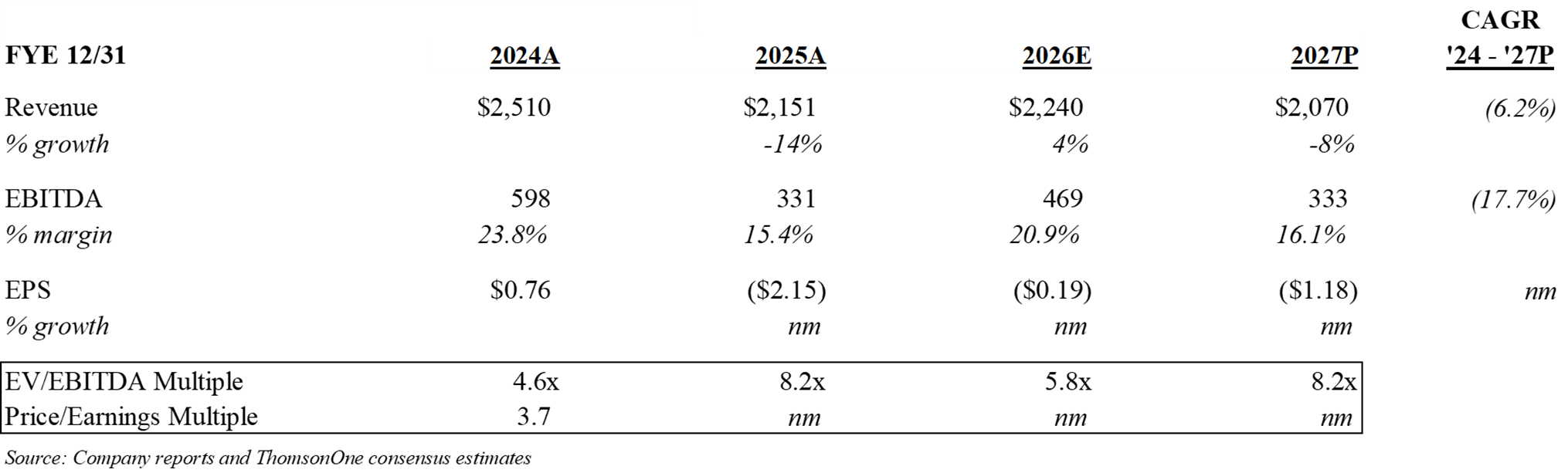
Table 2 The E.W. Scripps Company Earnings Model 2024-2027P
Gray Media, Inc. (GTN – $3.84 / GTN’A $7.58 – NYSE)

Source: Company data and ThomsonOne consensus estimates.
Company Overview
Headquartered in Atlanta, Georgia, Gray is the nation’s largest owner of top-rated local TV stations and digital assets. It serves 117 full-power TV markets that collectively reach ~37% of U.S. households. The portfolio includes 78 markets with the top-rated station and 101 markets with the first or second highest rated station. Gray also owns the largest Telemundo Affiliate group and Gray Digital Media, a full-service digital agency. Its additional media properties include video production companies Raycom Sports, Tupelo Media Group, and PowerNation Studios as well as studio production facilities Assembly Atlanta and Third Rail Studios.
Reason for Comment
On June 4, 2026, Gray’s EVP & CFO, Jeff Gignac and VP of IR Alan Gould participated in a fireside chat at our 18th Annual Sports & Media Symposium. Discussion highlights are included below:
- Gray recently closed a series of tuck-in acquisitions (Bahakel, Allen Media, Block Communications, Scripps stations, Sagamore Hill), all funded off the BS without drawing the revolver. These were in-market transactions, with retrans + facility consolidation synergies as the primary drivers. While currently focused on integration, Gray sees additional opportunities in its footprint over time. Deregulation under Chairman Carr could unlock larger-scale consolidation; however, the ownership cap is not a near-term constraint for GTN at 25% of US HH.
- Q1 core ads came in above guide at +2% YoY (aided by the Olympics), but Q2 is tracking down mid-single digits reflecting macro caution. The World Cup is a near-term tailwind across Gray’s 33 FOX + 47 Telemundo affiliates. With exposure to all but one competitive Senate/ gubernatorial race, ‘26 political should be strong.
- Net retrans revenue returned to growth in Q4 ‘25 and is guided to low single-digit organic growth for FY 2026, even accounting for the DISH blackout. Gray has now completed all ‘26 MVPD renewals (~39% of footprint), providing clear visibility into retrans for the remainder of the year, with no further negotiations until late 2027.
- Net leverage stands at 5.9x, with the recent tuck-ins contributing roughly a quarter turn as they integrate. Target is 4x, with political as the primary near-term driver; a refinancing could further accelerate the path. Gray was candid that the key downside risk is a major recession while carrying this leverage, creating urgency to reduce.
Summary
Gray enters the back half of 2026 with improving visibility: all MVPD retrans renewals complete through 2027, a robust political footprint, and World Cup tailwinds. The recent tuck-in acquisitions which should contribute about a quarter turn of deleveraging, and back half political should drive further progress toward the company’s ~4x target.
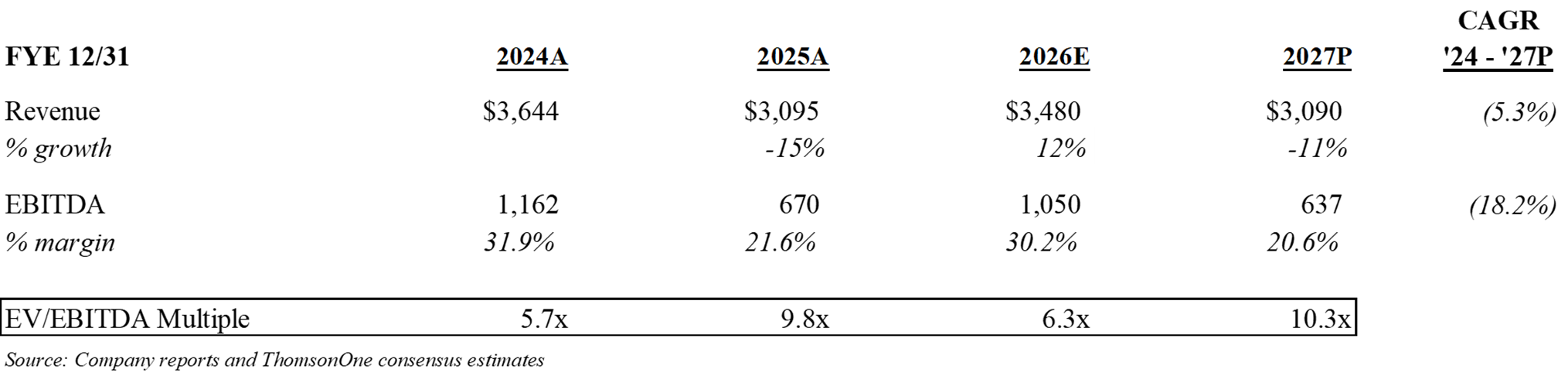
Table 3 Gray Media, Inc. Earnings Model 2024-2027P
Lionsgate Studios (LION – $15.21 – NYSE)

Source: Company data and ThomsonOne consensus estimates.
Company Overview
Lionsgate Studios is one of the world’s leading standalone, pure play, publicly traded content companies. It brings together diversified motion picture and television production and distribution businesses, a world-class portfolio of valuable brands and franchises, a talent management and production powerhouse and a more than 20,000-title film and TV library. In May 2025, the company completed its full tax-free separation from Starz and began trading independently under the ticker NYSE: LION. Lionsgate’s corporate headquarters are in Santa Monica, California.
Reason for Comment
On June 4, 2026, Lionsgate’s Vice Chairman, Michael Burns and Head of IR, Nilay Shah participated in a fireside chat at our 18th Annual Sports & Media Symposium. Key highlights from the discussion are included below:
- Media M&A remains the dominant conversation in the sector following the recent bidding war for WBD. Lionsgate completed its full separation from Starz last year, collapsing its dual share structure into a single class of stock, and establishing itself as an agnostic, talent-first content supplier. With leverage improving and recent expiration of the poison pill, Lionsgate is increasingly well-positioned and attractive to potential buyers.
- Lionsgate’s strategy is straightforward: acquire content and library at reasonable multiples, build franchises opportunistically, and monetize across platforms. The Michael Jackson biopic was a massive recent success, with a second installment planned as well as additional franchise sequels in development (i.e., Housemaid x2).
- A strengthening slate heading into fiscal ’27 should drive meaningful EBITDA recovery from the fiscal ’26 trough.. Looking ahead, AI is expected to save tens of millions of dollars annually in production costs, and owning the underlying IP provides natural protection as AI proliferates.
- Lionsgate’s content library now generates $1+ billion in annual revenue. Management remains focused on multi-platform monetization and highlighted numerous distinct revenue streams per film including digital, international, and short form. LION is also actively leveraging legacy IP across newer formats like YouTube.
- LION’s leverage target is ~3.5x; sees a path to reduction through FCF + potential non-core asset sales (3Arts).
Summary
As the only standalone public film and TV studio, Lionsgate is an increasingly scarce asset as industry consolidation continues. Its assets encompass a Motion Picture Group with iconic franchises including The Hunger Games, John Wick, and Saw; a Television Studio producing for every major platform; and a library of more than 20,000 titles generating $1+ billion in annual TTM revenue; as well as a talent management and production powerhouse. We anticipate LION will ultimately be an attractive takeout target for a strategic buyer in big tech or media.
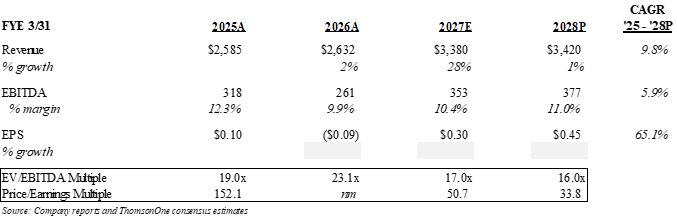
Table 4 Lionsgate Studios Earnings Model 2025-2028P
Media & Telecom Regulatory Expert Session
We hosted Robert McDowell, Partner at Cooley LLP and former FCC Commissioner for an engaging discussion on the regulatory environment and dynamics impacting the media and telecom industries today.
OVERVIEW
Rob is chair of Cooley’s global communications practice group, and he advises telecommunications, media, space technology and satellite clients – including private equity and venture funds – on their most significant regulatory, legal and business matters. As a former commissioner of the Federal Communications Commission and a highly regarded industry leader, Rob has been at the forefront of the most complex and groundbreaking issues facing the telecom-media-tech sector.
Rob was appointed to the FCC by President George W. Bush in 2006 and was reappointed by President Barack Obama in 2009. He was unanimously confirmed both times by the US Senate. During his tenure, Rob led efforts to expand consumer access to spectrum through his work on the two largest wireless auctions in US history at the time. He also played a key role in the 2009 digital television transition, he and led efforts to establish the first federal civil rights rule in a generation by creating a ban on racially discriminatory practices in broadcast advertising, among many other accomplishments.
While at the FCC, Rob worked extensively on several large and complex mergers, including Sirius and XM; Comcast and NBCUniversal; Verizon and Alltel; AT&T and Dobson; Sprint and Clearwire; Verizon and SpectrumCo; and AT&T and T-Mobile. At Cooley, he represents clients on transformative deals before the FCC, Congress, the White House and other regulatory bodies.
Reason for Comment
On June 4, 2026, Robert McDowell participated in a Media & Telecom Regulatory Expert Session at our 18th Annual Sports & Media Symposium to discuss regulatory dynamics, opportunities, and challenges facing today’s media and telecom industries. Discussion highlights are included below:
- The FCC currently has three of its five seats filled: Chairman Brendan Carr (R), Olivia Trusty (R), and Anna Gomez (D). Trump has yet to nominate a third Republican. Deal approvals do not require a commission vote (only new rulemakings and nominees do), meaning M&A activity can proceed unimpeded – though notably, if the lone Democrat were to absent herself from open meetings, there would be no quorum for new rulemaking.
- Broadcast deregulation remains a top priority for the FCC, with Chairman Carr focused on allowing local station groups to better compete with Big Tech and the internet. The national ownership cap is still expected to be eliminated or increased materially. The FCC is also anticipated to address the network-affiliate relationship and other related issues, including reclassifying virtual MVPDs and sunsetting ATSC 1.0 in favor of NextGen TV (ATSC 3.0). McDowell noted the climate is favorable, though the Trump administration remains an “X factor.”
- Regarding Nexstar-TEGNA, the case is proceeding on two parallel tracks in federal court: an appeal of the preliminary injunction and the underlying trial on the merits. The appeal timeline is a matter of weeks and could resolve the case entirely. McDowell believes the judge relied on 15-year-old data (despite significant market changes) and views the state AG involvement as more political performance vs. a substantive legal challenge.
- On large-scale media M&A, the PSKY/WBD combination was still pending regulatory review, and McDowell expected the DOJ to approve with a few conditions (DOJ closed its investigation on June 12th), though California may attempt to sue or block the deal. If completed, the number of major studios would consolidate to four.
- On retransmission consent and negotiating authority, the FCC has issued public notices on the topic, and CBS and FOX affiliates are actively pushing the agency to use Section 303 to assist in negotiations with vMVPDs.
- While uncertain how it ultimately gets resolved, sports regulation has come increasingly into focus. Senator Lee’s March ’26 letter called the DOJ and FTC to reexamine the Sports Broadcasting Act of 1961, which grants pro sports leagues an antitrust exemption. The DOJ has opened investigations into both the NFL and MLB. Revoking the exemption would not automatically mean leagues are violating antitrust law, but it could shift leverage towards distributors.
- Putting more spectrum into the wireless industry’s hands remains a key part of the FCC’s agenda. The One Big Beautiful Bill Act (OBBA) calls for the agency together with NTIA to establish a spectrum pipeline of at least 800 MHz. While re-auction of AWS-3 licenses is currently taking place and Upper C-Band spectrum will be auctioned next year, it is still too early to say which other bands will be designated for future auctions, although it is likely that a meaningful portion of the spectrum will come from the federal government agencies (e.g. one of the bands being studied for potential re-allocation and future auction is 2.7 GHz).
Summary
FCC Chairman Carr’s deregulatory agenda continues to gain momentum, with meaningful broadcast consolidation already underway. The Nexstar-TEGNA litigation (while creating some noise) is viewed as a factually distinct case unlikely to derail the broader M&A wave, and McDowell expects the favorable regulatory climate to drive additional deal announcements over the coming months. Beyond broadcast, the evolving sports rights landscape (with active DOJ inquiries and Congressional scrutiny of the Sports Broadcasting Act), pending PSKY/WBD combination, and ongoing retrans. consent debate collectively signal a period of significant structural change across the industry.
Nexstar Media Group (NXST – $164.01 – NASDAQ)

Source: Company data and ThomsonOne consensus estimates.
Company Overview
Nexstar Media Group, headquartered in Irving, Texas, is the largest local broadcast television group in the United States. Following the acquisition of Tribune in 2019, the company owns or partners with over 200 broadcast stations in 116 markets, reaching ~70% of all U.S. TV households (or roughly 39% after applying the UHF discount). Nexstar also owns News Nation, a national cable network, and has a 75% majority stake in The CW broadcast network.
Reason for Comment
On June 4, 2026, Nexstar’s President & COO, Michael Biard and CFO, Lee Ann Gliha participated in a fireside chat at our 18th Annual Sports & Media Symposium. Discussion highlights are included below:
- Nexstar remains optimistic about the strategic and financial rationale of the TEGNA acquisition, believing the market is not fully reflecting the value of potential cost and revenue synergies. The transaction would expand Nexstar’s local footprint, enhance opportunities in areas such as local sports, and bring additional digital capabilities through Premion, including greater ownership of advertising technology, data, and economics.
- Core advertising was flat in Q1 (aided by some Olympics benefit) but Q2 is tracking down due to macro-driven caution. Management does not view this as structural, characterizing it as an air pocket consistent with prior cycles. Political remains an offset, and Nexstar’s broad geographic footprint provides exposure to contested Senate and House races across its markets.
- NewsNation continues to see strong audience momentum, with the next opportunity centered around closing the gap between viewership and monetization. The CW has pivoted to nearly 50% live sports programming and struck partnership deals with ESPN and Roku, expanding reach meaningfully.
- Nexstar remains constructive on the traditional video ecosystem as distributors increasingly integrate streaming services into the pay-TV bundle. Nexstar believes a better customer experience can slow subscriber erosion, while broadcast continues to provide unique reach, particularly for premium sports content such as the NFL.
Summary
Nexstar remains well-positioned as the largest owner of local TV stations, with significant scale advantages across distribution, advertising, and content. The pending TEGNA acquisition represents a meaningful opportunity to further enhance the company’s footprint and earnings power. Longer-term, Nexstar should also benefit from continued investment in NewsNation, The CW, and evolving sports rights opportunities, among others.
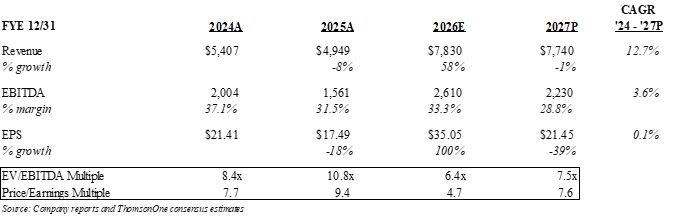
Table 5 Nexstar Media Group Earnings Model 2024-2027P
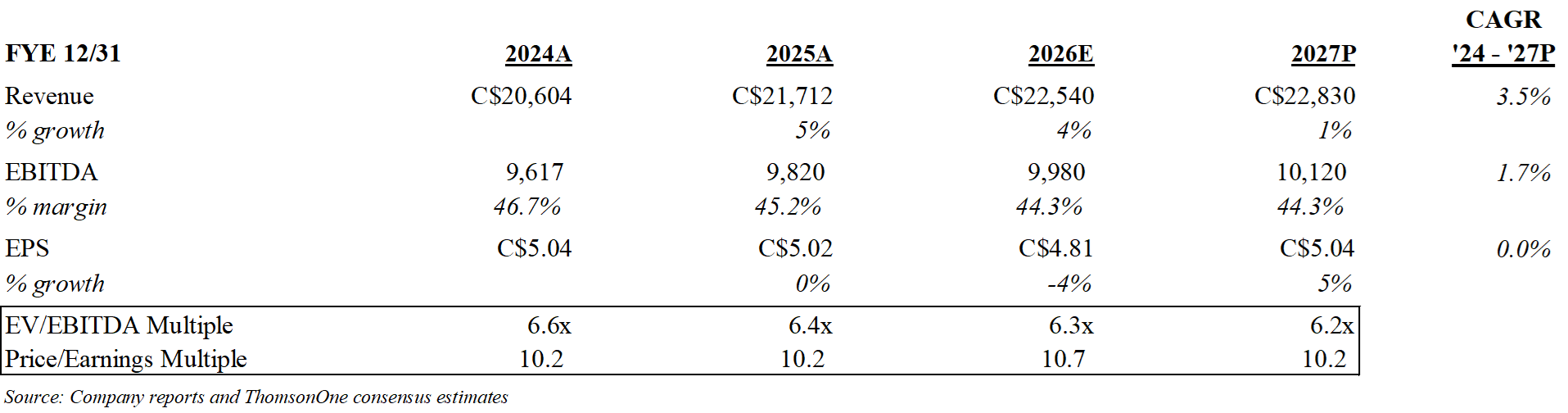
Rogers Communications (RCI’B – C$51.33 – Toronto)

Source: Company data and ThomsonOne consensus estimates.
Company Overview
Headquartered in Toronto, Ontario, Rogers Communications, is a diversified communications and media company that owns the largest national wireless service provider in Canada (serving 12.2 million customers), the largest Canadian cable MSO (with 4.5 million broadband connections), and a media business with a focus on sports and regional TV and radio (including ownership of Toronto Blue Jays baseball club and a 75% interest in Maple Leaf Sports & Entertainment (owner of the Toronto Maple Leafs, Toronto Raptors, Toronto FC), etc.).
Reason for Comment
On June 4, 2026, Rogers Communications’ President and CEO Tony Staffieri and CFO Glenn Brandt participated in a fireside chat at our 18th Annual Sports & Media Symposium. Discussion highlights are included below:
- Rogers is focused on three medium term priorities: (1) growing cash flow (helped by industry-leading margins in cable and wireless as well as lower expected capital investment levels over the next few years); (2) growing communication businesses (both in wireless (with the industry still growing customers at 2-2.5% a year through penetration gains) and cable (where the firm returned to modest growth)); and (3) monetizing sports (unlocking significant and unrecognized value from RCI’s premier sports portfolio).
- Management reiterated that unlocking value from the sports portfolio will involve multiple steps: (1) acquiring remaining 25% of MLSE (call option can be triggered in early July), (2) combining MLSE with the firm’s other sports and media assets (e.g. the Blue Jays, SportsNet, etc.) and realizing some synergies, (3) selling a minority interest in the combined entity to institutional investors in a private transaction. RCI estimates that pro forma sports and media portfolio would be worth ~C$25 billion and it could sell 20-30% of it for C$5-8 billion, which should further accelerate deleveraging.
- In wireless, RCI is focusing on bringing customers on its premium Rogers brand, while putting less emphasis on discount brands. Management believes the firm’s vast bundling / convergence footprint, customer access to sports content, and nationwide direct-to-device satellite connectivity help RCI differentiate from competitors.
Summary
The acquisition of Shaw in 2023 significantly enhanced the company’s scale, improved its competitiveness in enterprise space, and expanded footprint where it can bundle wireless and wireline. Recently lowered capital investment levels should accelerate the firm’s deleveraging over the next 3-5 years. Management remains focused on unlocking value from RCI’s premier sports and media portfolio and leveraging these assets to benefit its communications business (should help with churn reduction, expanded cross-selling opportunities, etc.).
Table 6 Rogers Communications Earnings Model 2024-2027P
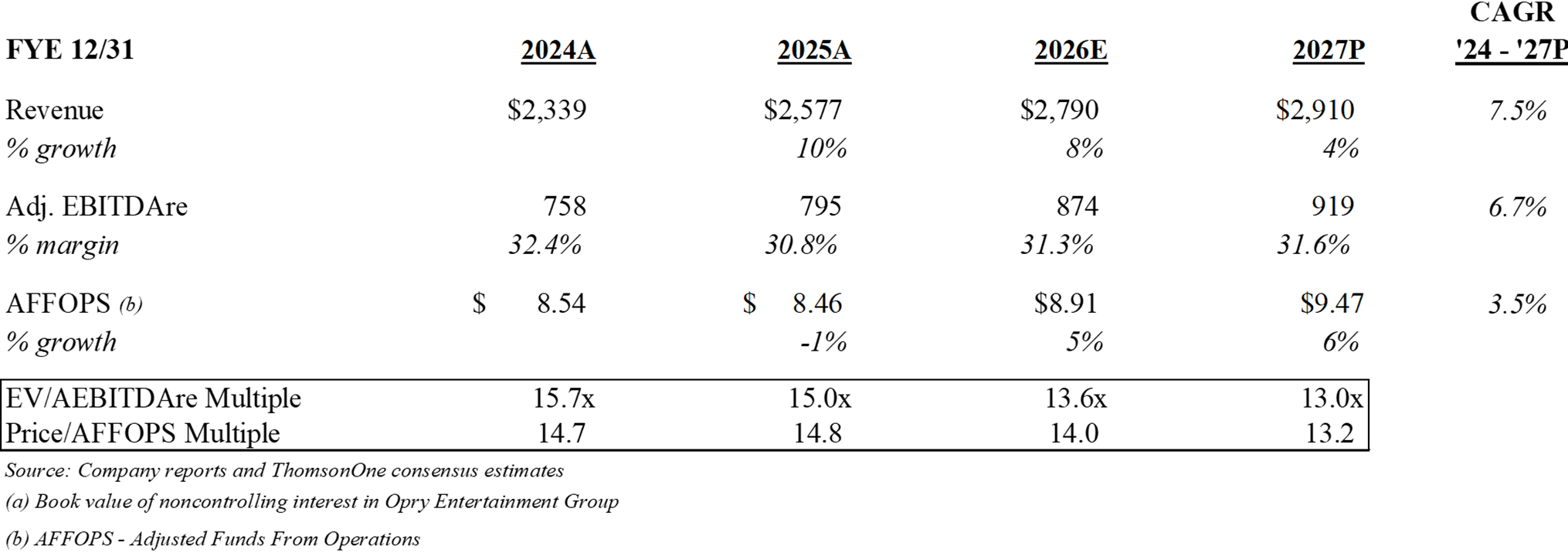
Ryman Hospitality Properties (RHP – $125.16 – NYSE)

Source: Company data and ThomsonOne consensus estimates.
*Adjusted EBITDA for real estate gains/losses.
Company Overview
Ryman Hospitality Properties, based in Nashville, Tennessee, is a lodging REIT focused on large group-oriented destination hotel assets. The company also owns 70% of the Opry Entertainment Group (OEG), a taxable REIT subsidiary focused on the country music consumer. OEG owns two iconic live entertainment venues in Nashville, the Grand Ole Opry and Ryman Auditorium, as well as Block 21 in Austin, home of Austin City Limits at the Moody Theatre.
Reason for Comment
On June 4, 2026, Ryman’s Executive Chairman Colin Reed and CEO Mark Fioravanti participated in a fireside chat at our 18th Annual Gabelli Sports & Media Symposium. Discussion highlights are included below:
- The most incremental commentary centered on a potential expansion into media rights. We believe this is the first time management has publicly identified this as a possible growth avenue. Executive Chairman Colin Reed characterized media rights as a “natural progression,” noting the Company’s strong track record of building relationships with successful artists early in their careers, whose catalogs can ultimately become highly valuable assets.
- Music festivals and amphitheaters continue to represent attractive areas of expansion for OEG following its acquisition of a majority stake in Southern Entertainment in early 2025. We expect additional festival and amphitheater opportunities to emerge over the next 12 months and remain a particularly strategic growth area for OEG given their increasing importance to artists as a larger component of their overall income mix.
Summary
Ryman is the only REIT which focuses on the attractive niche of large group travel, which provides more visibility into future business, has recurring revenue characteristics, and low volatility of earnings. Ryman has purpose-built assets to cater to large groups which peers cannot easily replicate given the structural limit to new supply. The Opry Entertainment Group also provides an interesting catalyst to surface value over the next few years as that business should trade at a higher multiple as a stand-alone entity.
Table 7 Ryman Hospitality Properties Earnings Model 2024-2027P
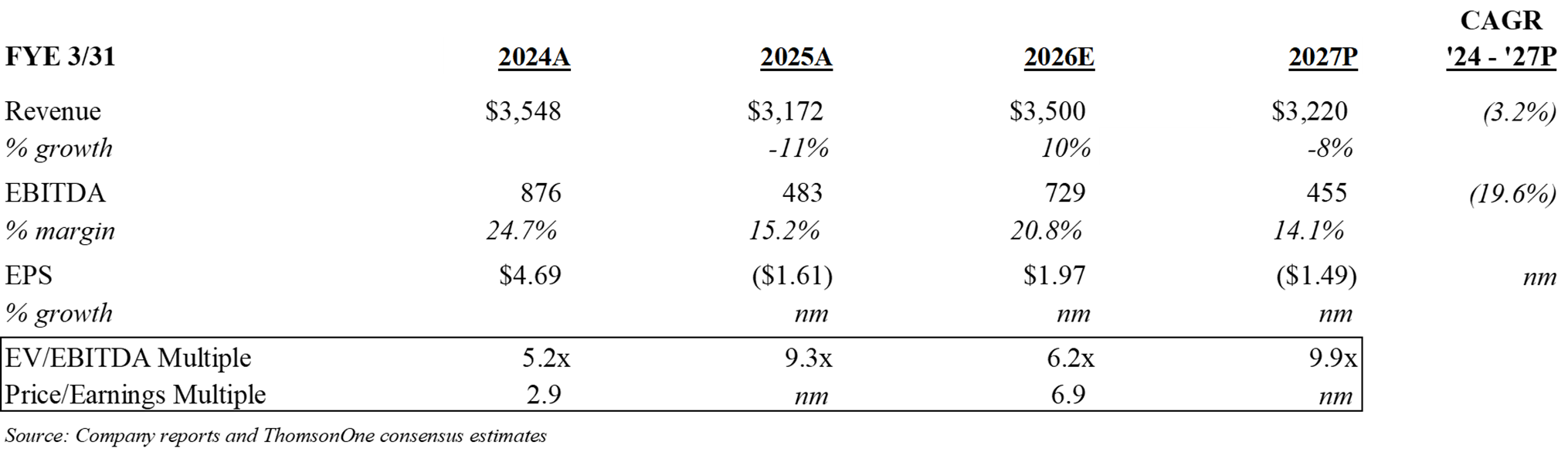
Sinclair, Inc. (SBGI – $13.61 – NASDAQ)

Source: Company data and ThomsonOne consensus estimates.
Company Overview
Sinclair, Inc. is a diversified media company and a leading provider of local news and sports. The company owns, operates and/or provides services to 177 television stations in 79 markets affiliated with all major broadcast networks; and owns Tennis Channel, the premium destination for tennis enthusiasts, and multicast networks CHARGE, Comet, ROAR, and The Nest. Sinclair’s AMP Media produces a growing portfolio of digital content and original podcasts. Its Ventures segment offers Tennis Channel, Tennis Channel International and Tennis Channel streaming services; Tennis Channel 2, a 24-hours a day free ad-supported streaming television channel; Tennis.com; and FAST Channel Pickleballtv. The Ventures unit also includes Digital Remedy, the company’s digital marketing and advertising platform. Ventures also provides non-broadcast digital and internet solutions; and technical sales and services, including the design and manufacture of broadcast systems. In addition, it owns various investments in non-media related companies.
Reason for Comment
On June 4, 2026, Sinclair’s Vice President of Investor Relations, Christopher King participated in a fireside chat at our 18th Annual Sports & Media Symposium. Discussion highlights are included below:
- The Ventures separation remains a top priority, with management targeting completion by year-end. The separation is expected to surface value in the segment and provide optionality for future broadcast M&A.
- Sinclair’s Q1 core advertising came in ahead of expectations; however full-year guidance was unchanged. Management still anticipates YoY core growth but is remaining cautious given macro uncertainty and early signs of consumer pressure in certain categories.
- Political advertising revenue this year is expected to at least match the ~$333 million pro-forma 2022 midterms cycle figure.
- On M&A, Sinclair’s unsolicited December 2025 offer for E.W. Scripps remains outstanding and has been met with silence. Sinclair remains SSP’s largest shareholder at ~10% and has no plans to sell at this time.
Summary
Sinclair enters H2 ‘26 with strong momentum: a sold-out World Cup advertising cycle, a favorable political ads setup with 26 stations in swing states, and an improving distribution picture as sub churn moderates. Outside of a potentially transformational broadcast acquisition which does not look imminent, a top priority continues to be deleveraging.
Table 8 Sinclair Inc. Earnings Model 2024-2027P
Sports Platforms Panel
We hosted Andrea Salvato (Liberty EVP & Chief Development Officer) and Ryan Caswell (CEO, Cannae Holdings) for an in-depth discussion on the sports business landscape from a platform perspective.
Key Takeaways
- Sports continue to emerge as a distinct investable category. The sector offers durable mid-teens compounded growth, remains under-owned by institutional investors, and benefits from the scarcity of live content. Importantly, sports also have a degree of AI resilience – technology can enhance training, tactics, fan engagement and operations, but it cannot replace the athletes, competition or live emotional connection that drive demand.
- Platform ownership is becoming an increasingly important model in sports. Unlike a private equity fund or a one-off individual investment, a sports platform can compound value across multiple assets by bringing operating expertise, permanent capital, commercial relationships, data, media capabilities and a repeatable playbook. Examples include multi-club operators such as Black Knight Football Club, in which Cannae owns ~45%, and broader public company platforms such as Liberty Global, which owns Formula E and can potentially extend its media, distribution and event expertise into other sports verticals.
- Formula E is an example of a platform-style sports asset with significant long-term optionality. The series is effectively the electric vehicle version of Formula 1, with strong revenue growth, double-digit fan engagement growth and a long-term exclusive license. The asset benefits from global relevance, sustainability tailwinds, automaker interest and the ability to build a broader live-event and media ecosystem around the sport.
- Multi-team ownership can create value beyond simple financial ownership. Teams within a platform often operate in different leagues, geographies and economic environments, creating multiple paths to player development, talent identification and commercial growth. A well-run platform can share best practices across scouting, analytics, sponsorship, media, merchandising and performance, while also creating synergies that improve both financial results and on-field performance.
- Media rights remain a core driver of sports valuations, particularly in the U.S., where live sports continue to attract competition from traditional broadcasters, streamers and large technology platforms. While media rights growth may not be linear in every market, the underlying value of must-watch live content remains strong. Even if rights growth moderates, teams and leagues still have meaningful opportunities to monetize through sponsorship, premium hospitality, direct-to-consumer engagement, stadium experiences and real estate.
- The most attractive opportunities are often identified by combining a macro view of the sport with a micro view of the individual asset. Investors are looking for situations where there is a clear path to value creation: improved operations, better commercial execution, under-monetized fan bases, infrastructure investment, player development, league growth or changing consumer behavior. Women’s sports were highlighted as a major growth engine, while more niche sports and passionate fan communities may also create attractive, less obvious opportunities.
- Ultimately, reach and brand affinity are what sustain long-term value. The best sports platforms are focused on making sure fans leave excited, connected to the brand and eager to come back. Winning matters, but so does the broader product: the live experience, the content, the community and the emotional attachment that makes sports different from almost every other form of entertainment.
Summary
We continue to view sports-related assets as attractive long-term compounders of value. The opportunity is increasingly shifting from simply owning teams to building sports platforms that can scale operating capabilities, commercial relationships, media exposure, data, infrastructure and fan engagement across multiple assets. Scarcity of supply, durable demand for live content, under-monetized fan bases and growing institutional interest should continue to support valuations.
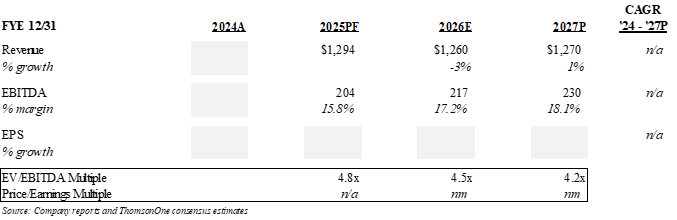
Starz Entertainment Corp. (STRZ – $27.33 – NASDAQ)

Source: Company data and ThomsonOne consensus estimates.
Company Overview
Starz Entertainment Corp. provides subscription video programming services to consumers in the U.S. and Canada. Complementary to any platform or service, STARZ is available across a wide range of digital OTT platforms and multichannel video distributors and is a bundling partner of choice. STARZ is powered by an industry-leading advanced technology, data analytics, & digital infrastructure, and the highly rated and first-of-its-kind STARZ app. It became a standalone public company when Lionsgate Entertainment separated the Studio business in May 2025.
Reason for Comment
On June 4, 2026, Starz Entertainment’s President & CEO, Jeffrey Hirsch and Head of IR, Nilay Shah participated in a fireside chat at our 18th Annual Sports & Media Symposium. Discussion highlights are included below:
- Following its separation from Lionsgate, Starz is executing as a standalone service focused on women and underrepresented audiences, a differentiated approach that positions it as a complementary add-on to larger platforms rather than a direct competitor. Starz raised price to $11.99 effective April 1st (~9% increase) with minimal churn impact; churn is at all-time lows and engagement is up ~8% YoY.
- Q1 came in ahead of Starz’s internal plan on adjusted OIBDA, with FCF up $147 million YoY and leverage of 3.1x. The 20% adjusted OIBDA margin target has been pulled forward a full year to H2 2027 driven by content cost reduction from the Universal Pay-Two exit, de-aging of the slate, and growing owned content contribution.
- Starz expects to exceed its target for 50% owned slate by ‘27. The content sourcing strategy was described as ‘Moneyball:’ using internal title-level viewership + acquisition efficiency data to source library titles at lower cost vs. licensed content. Fightland is their first fully owned original, structured as a co-commission with Sky.
- Byron Allen disclosed a 10.7% stake in March and has since publicly stated interest in gaining control. STRZ responded by instituting a shareholder rights plan, which remains in effect through March ‘27. Starz’s view is that the pill preserves strategic optionality and creates space to pursue its own M&A agenda as a consolidator.
- While M&A is not required to maximize value, Starz acknowledged another path for growth through complementary acquisitions focused on linear assets that leverage its tech stack & accelerate digital conversion. Leverage is targeted at 2.7x by year-end and < 2x by YE ‘27; at that point, capital allocation will be reevaluated.
Summary
Starz is executing well post-separation, with 2027 shaping up as a significant inflection year across margin expansion, free cash flow, and owned originals. The Fightland co-commission model validates the owned content strategy, and the Universal Pay-Two exit removes a meaningful cost headwind. Starz presents an interesting setup, particularly as leverage approaches 2x and capital allocation optionality opens up.
Table 9 Starz Entertainment Corp Earnings Model 2024-2027P
Television Bureau of Advertising (TVB) Panel
TVB OVERVIEW
TVB is the not-for-profit trade association representing America’s local broadcast television industry. Its members include the U.S. television stations, television broadcast groups, advertising sales reps, syndicators, international broadcasters, and associate members. TVB actively promotes local media marketing solutions to the advertising community and works to develop advertising dollars for the medium’s multiple platforms, including on-air, online, and mobile. TVB provides a diverse variety of tools and resources, including its website, to support its members and to help advertisers make the best use of local ad dollars.
Reason for Comment
On June 4, 2026, TVB’s President & CEO, Brad Seitter participated in a fireside chat at our 18th Annual Media & Sports Symposium to discuss trends, opportunities, and challenges in local television. Highlights from the discussion are included below:
- TVB remains confident in the durability of local broadcast viewership despite continued concerns around linear TV declines. Broadcast remains the largest audience platform, but viewers have historically been undercounted due to outdated measurement methodology. Nielsen’s upcoming shift from a five-minute to one-minute qualifier (effective August 31) is expected to better capture actual viewing behavior. TVB also highlighted Nielsen’s updated Gauge reporting, where linear TV represents ~58% of 18+ ad-supported viewing and ~73% of long-form, ad-supported political viewing.
- Sports continues to be a key driver of local broadcast relevance as leagues balance monetization with reach. TVB noted that consumers continue to prefer watching local sports through broadcast due to ease of access and lower latency versus streaming. Leagues are increasingly recognizing the importance of broadcast distribution, with examples including streaming-exclusive NFL games still requiring local market broadcast availability. TVB expects sports to remain a critical programming category for local stations.
- The core advertising environment has softened amid macro uncertainty, tariffs, and category-specific pressures. Current forecasts now expect core advertising to decline ~8.6% in 2026 vs. prior expectations for a ~5.4% decline. Auto remains a key swing factor, representing ~25% of local broadcast advertising sales today, and has recently weakened alongside broader consumer uncertainty. However, certain categories remain resilient, including legal, banking, and financial services.
- Political advertising continues to significantly outperform expectations and remains a major tailwind for local broadcast. AdImpact recently increased its 2026 political advertising forecast from ~$10.8 to ~$11.6 billion, driven by competitive Senate, gubernatorial, and House races, as well as incremental spending from redistricting and ballot initiatives. Local broadcast is expected to capture ~$5.6 billion of total political spend, or ~50% share.
- TVB continues to prioritize technology investments to modernize the local broadcast advertising ecosystem. The organization is developing an industry-owned Linear Trading Platform (LTP) to automate transactions between broadcasters, agencies, and advertisers. All 36 TVB member groups have aligned behind the initiative, which aims to reduce friction in buying local television inventory and make the medium more accessible to advertisers.
- Industry alignment has improved meaningfully, with TVB recently adding SBGI and the Fox O&O station group as members. With effectively all major broadcast groups now represented under TVB, the organization believes the industry is better positioned to address key initiatives around measurement, automation, and monetization.
Summary
While the core advertising backdrop remains pressured by macro uncertainty and weakness in key categories such as auto, TVB remains constructive on the outlook for local broadcast television. The industry continues to benefit from strong reach, premium content exposure through sports and local news, and significant political advertising demand ahead of the 2026 midterm cycle. In addition, TVB expects improved measurement methodology and increased technology adoption through initiatives like the Linear Trading Platform to better demonstrate the value of broadcast audiences and modernize how local TV advertising is bought and sold.
Versant Media Group, Inc. (VSNT – $38.53 – NASDAQ)

Source: Company data and ThomsonOne consensus estimates.
Company Overview
Headquartered in New York City, Versant Media Group engages in the media and entertainment business in the U.S. It produces, licenses, and acquires content that is distributed through various outlets, including networks and digital platforms. The company delivers news, sports, and entertainment content through its portfolio of brands, which includes MS NOW, CNBC, USA Network, Golf Channel, GolfNow, SportsEngine, E!, SYFY, Oxygen True Crime, Fandango, & Free TV Networks. The company serves political news & opinion, business news & personal finance, golf & athletics participation, and sports & genre entertainment markets through TV networks & digital platforms.
Reason for Comment
On June 4, 2026, Versant’s Chief Executive Officer, Mark Lazarus participated in a fireside chat at our 18th Annual Sports & Media Symposium. Discussion highlights are included below:
- Versant is organized around four growing verticals – business news/personal finance (CNBC), political news and opinion (MS Now), golf (Golf Channel), and sports and genre entertainment (USA, E!, SYFY, Oxygen, Fandango) – rather than a cable network roll-up. Over 60% of its audience consumes live news and sports. Golf exemplifies the model, with Golf Channel at ~50% of segment revenue and the balance from GolfNow, GolfPass, and a course software business.
- Versant is investing in three organic DTC initiatives: an MS Now streaming product ahead of the midterms, a consolidated CNBC DTC platform for professionals and retail investors (incorporating the Stock Story AI acquisition), and a free AVOD service on the Fandango brand. Management’s long-term goal is to shift the revenue mix from ~80% pay-TV toward 50/50.
- There’s opportunity to expand VSNT’s sports portfolio as NFL renewals pressure incumbents to rebalance programming budgets, with interest in MLB and NHL rights and USA as the intended home for additions. On distribution, only ~16% of agreements renew in 2026 (~55% after 2028), and early conversations have been constructive, with distributors receptive to VSNT’s live/sports-heavy portfolio and standalone flexibility.
Summary
Versant Media Group is a newly independent company with iconic brands anchored in live news and sports, providing scarcity value in an increasingly fragmented media landscape. With a strong balance sheet and experienced management team, the company is focused on diversifying beyond linear pay-TV through DTC products, international expansion, and potential sports rights opportunities.
Table 10 Versant Media Group Earnings Model 2024-2027P
249 ROYAL PALM WAY, PALM BEACH, FL 33480 Gabelli Funds TEL (561) 671-2100
As of March 31, 2026, affiliates of GAMCO Investors, Inc. beneficially own on behalf of their investment advisory clients or otherwise approximately 31.2% of Atlanta Braves Class A and 5.4% of Class C, 11.3% of Sinclair, 5.8% of E.W. Scripps, 5.2% of Madison Square Garden Sports, 4.7% of Sphere Entertainment, 3.3% of Manchester United, 2.9% of Madison Square Garden Entertainment, 2.6% of Gray Television Class A and less than 1% of common, 2.2% of Ryman Hospitality, 2.0% of Liberty Global Class A, 1.1 Liberty Global Class C, 1.4% of Versant Media and less than 1% of all other companies mentioned.
This document is not an offer to sell any security nor is it a solicitation of an offer to buy any security.
Investors should consider the investment objectives, risks, sales charges, and expense of the fund carefully before investing.
For more information, visit our website at: www.gabelli.com or call: 800-GABELLI
800-422-3554 • 914-921-5000 • Fax 914-921-5098 • info@gabelli.com