Finding the Signal in Life Science Tools, Laboratories and Diagnostics
| Company | Ticker | Price | Exchange |
|---|---|---|---|
| Thermo Fisher Scientific Inc. | TMO | $694.76 | NYSE |
| Labcorp Holdings Inc. | LH | 366.57 | “ |
| Guardant Health, Inc. | GH | 150.87 | NASDAQ |
| BillionToOne, Inc. | BLLN | 113.94 | “ |
| GRAIL, Inc. | GRAL | 121.44 | “ |
WHERE AI IS ALREADY MAKING A DIFFERENCE
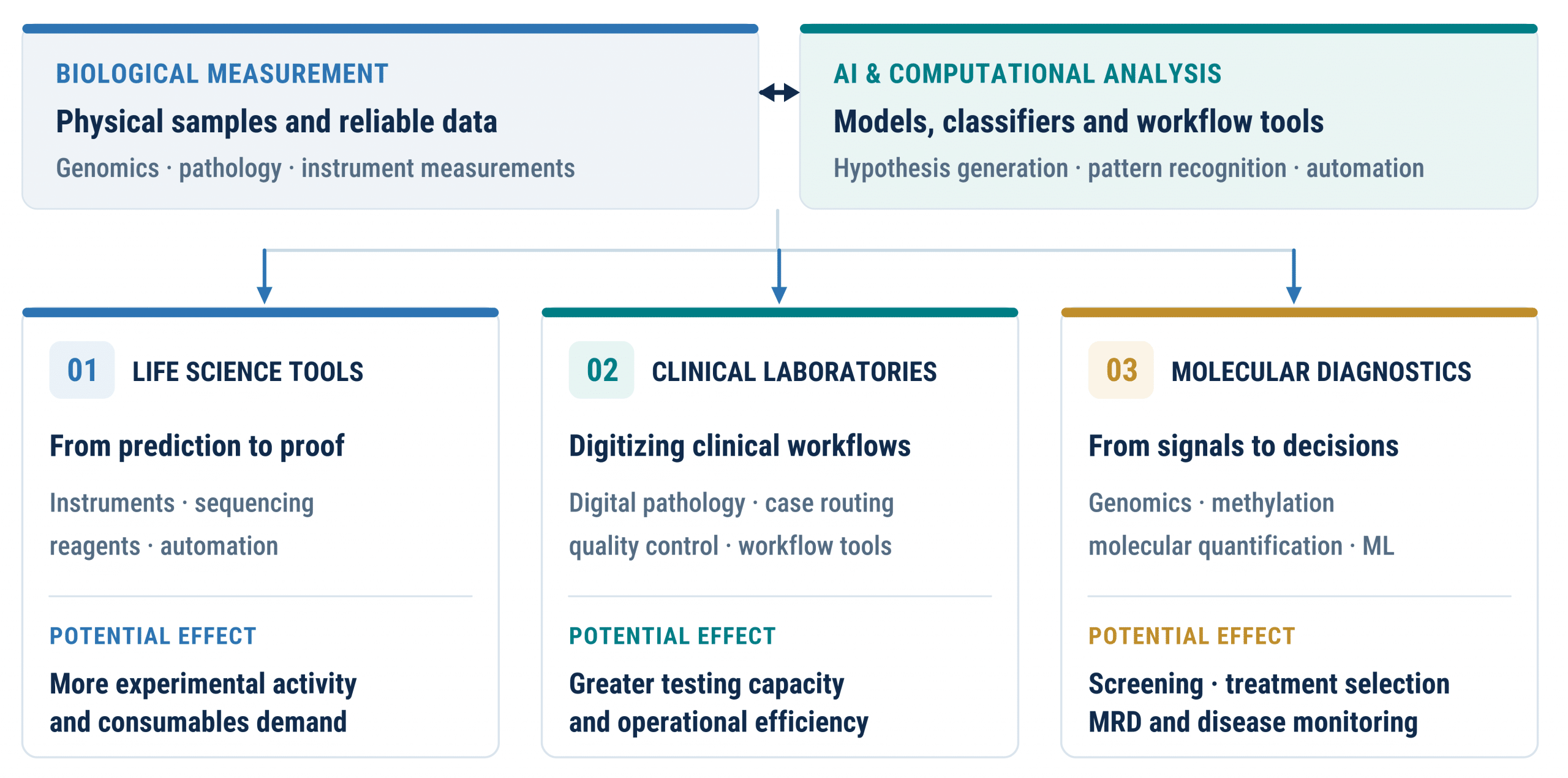
Artificial intelligence is capturing headlines across healthcare, particularly in drug discovery and protein structure prediction. From identifying new drug targets to designing novel molecules, AI is accelerating scientific research and opening possibilities that were difficult to imagine just a few years ago. Yet much of the attention remains focused on what AI could deliver in the future, while a quieter transformation is already taking place across life science tools, clinical laboratories and molecular diagnostics.
These fields sit at the intersection of biology, data and clinical decision-making. AI-generated discoveries still require physical experimentation, creating opportunities for the scientific instruments, reagents and laboratory workflows that turn computational predictions into biological evidence. Meanwhile, clinical laboratories are integrating digital technologies and automation to manage increasingly complex testing, while advances in molecular measurement and machine learning are enabling blood-based diagnostics to detect subtle disease signals, guide cancer treatment and monitor recurrence. Unlike applications that remain largely in research and development, some of these capabilities are already being used in clinical practice, although their commercial impact varies.
For investors, this distinction matters. The opportunity in healthcare AI extends beyond the companies developing algorithms or discovering new medicines. It also includes the established infrastructure that generates biological data, the laboratories that interpret it and the diagnostic platforms that translate it into clinical insights. These businesses offer different forms of exposure to AI adoption, from potentially greater demand for laboratory instruments and consumables to improved operating efficiency and expanding applications for molecular testing. Ultimately, their economic value will depend on clinical validation, adoption, reimbursement and the ability to translate technological progress into sustainable growth.
This paper explores this less-publicized dimension of healthcare AI through three interconnected areas: life science tools, clinical laboratories and molecular diagnostics. Using real-world examples, we examine where AI is already being applied, where opportunities are emerging and what will determine whether scientific advances translate into meaningful clinical and economic value.
Exhibit 1 How AI Connects Biological Data to Clinical Value
Source: Gabelli Funds analysis.
FOUR THEMES SHAPING HEALTHCARE AI
- AI feeds the wet lab: Biological models generate predictions that require experimental validation, supporting the importance of scientific instruments, laboratory workflows and consumables.
- Automation meets laboratory demand: Digital workflows and AI-assisted analysis can help laboratories manage increasingly complex testing, improve productivity and address workforce constraints.
- Blood tests are changing oncology: Advances in molecular measurement and machine learning are expanding applications in cancer screening, treatment selection and disease monitoring.
- Evidence and access will determine adoption: Clinical utility, regulatory approval and reimbursement will ultimately determine how widely emerging diagnostic technologies are adopted.
WHY HEALTHCARE IS AI’S NATURAL HOME
Biology is extraordinarily complex. A single blood sample can contain millions of DNA fragments, while modern scientific instruments generate vast amounts of genomic, proteomic and cellular data. The challenge is no longer simply collecting information, but identifying meaningful patterns within it. This is where AI can make a difference. Machine learning can analyze complex biological relationships, distinguish subtle disease-associated signals from background noise and help translate molecular measurements into clinically useful information.
Unlike many purely digital applications, biological AI depends on physical samples, reproducible measurements and clinical context. Scientific instruments generate the data, computational models help interpret it, and experiments or clinical studies determine whether an apparent discovery is meaningful. This close connection between measurement and interpretation makes life science tools, laboratory networks and molecular diagnostics central to the next phase of AI in healthcare.
THE LAB BENCH: FROM AI PREDICTIONS TO EXPERIMENTAL PROOF
AI can generate molecular designs and promising hypotheses, but a computational prediction is not proof of biological activity or clinical benefit. Researchers still need to synthesize molecules, measure their properties and test them in experimental systems. Sequencing, mass spectrometry, cell analysis and laboratory automation therefore remain essential to AI-enabled science.
The emerging feedback loop is straightforward: models suggest what to test, laboratories generate new observations, and those observations improve subsequent models. If such workflows increase experimental activity, they could support instrument utilization, recurring reagents and consumables, and integrated analytical workflows. Thermo Fisher’s collaboration with Singapore’s PRECISE-SG100K study illustrates the importance of physical measurement in generating biological data. Using its Olink proteomics and Orbitrap mass spectrometry technologies, researchers identified more than 2,500 previously unreported genetic and protein associations from the first 10,000 participants, demonstrating how advanced laboratory instruments can generate the high-quality data needed for computational research and future AI applications. Higher research productivity does not necessarily mean higher spending, but it reinforces the importance of physical measurement alongside AI.
Exhibit 2 AI and the Experimental Discovery Cycle
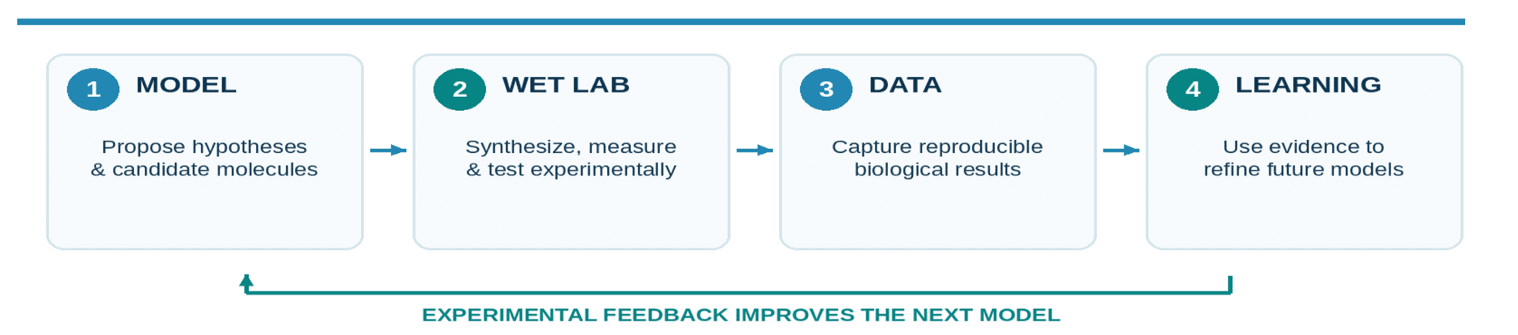
Source: Gabelli Funds analysis; illustrative workflow. AI outputs require experimental and clinical validation.
THE CLINICAL LABORATORY: FROM GLASS SLIDES TO PIXELS
Clinical laboratories are increasingly converting physical workflows into structured digital data. Digital pathology allows slides to be reviewed, shared and organized electronically, while automation can improve specimen handling, case routing and quality control. Labcorp’s deployment of PathAI’s AISight Dx image-management platform illustrates how these capabilities are reaching large laboratory networks. Digital infrastructure may also support validated AI-assisted analysis, although individual algorithms require evaluation for their intended clinical use. The practical benefit will depend on greater productivity and dependable diagnostic quality, rather than technology adoption alone.
DIAGNOSTICS: THREE APPLICATIONS OF BLOOD-BASED TESTING
Liquid biopsy demonstrates how molecular measurement and computational analysis can complement one another. Tumor-derived DNA may represent only a tiny fraction of the cell-free DNA in a blood sample. Sequencing, methylation analysis and molecular counting measure biological signals; trained algorithms help identify and interpret patterns. The applications fall into three distinct categories, each addressing a different clinical question.
Exhibit 3 Three Clinical Uses of Blood-Based Diagnostics
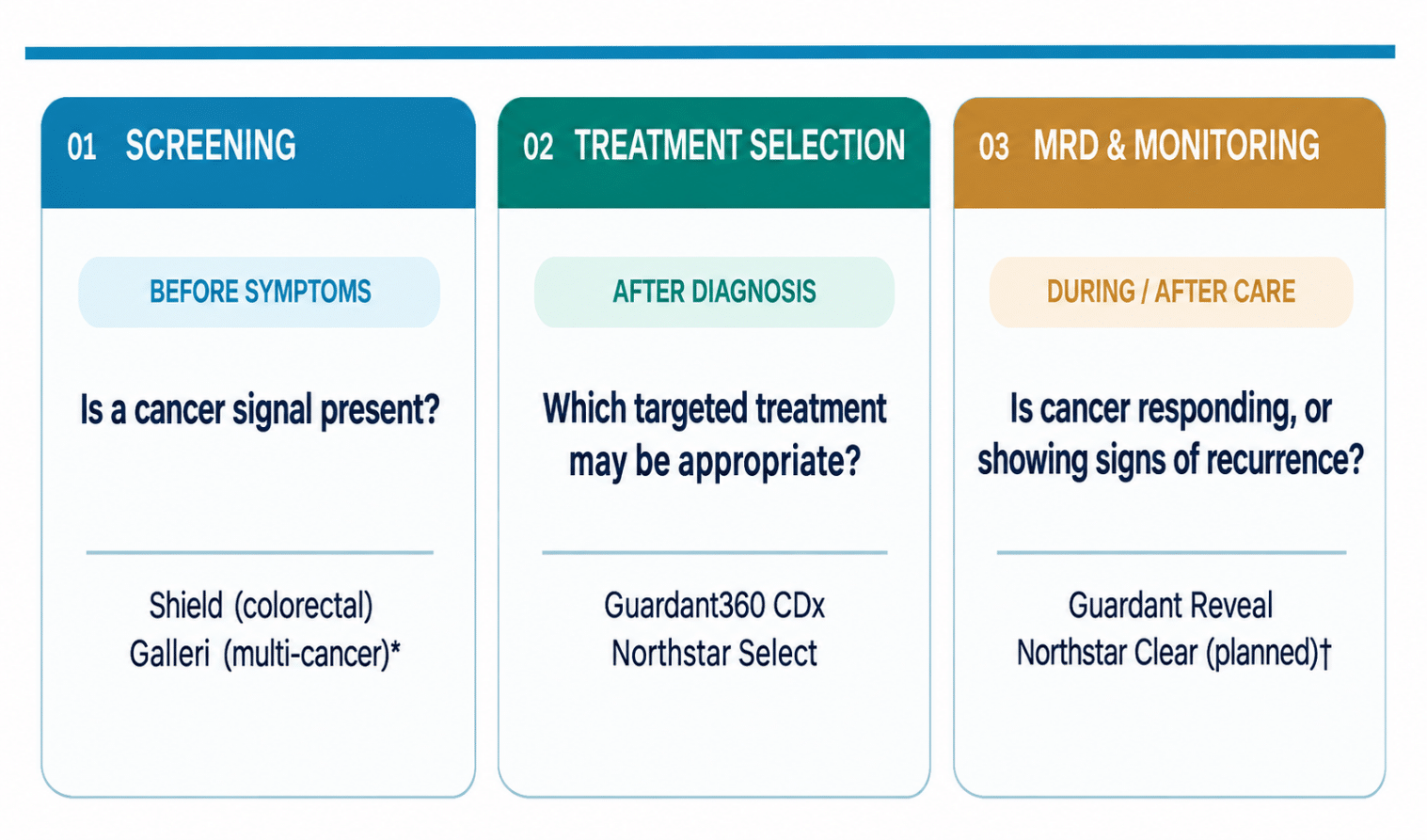
* Galleri FDA authorization pending. † Northstar Clear launch planned for December 15, 2026.
Sources: Company disclosures; FDA; Gabelli Funds analysis.
Screening: Detecting Cancer Before Symptoms
Screening seeks to detect cancer in people who do not have symptoms. Guardant Health’s Shield became an FDA-approved blood-based option for colorectal cancer screening in 2024. Multi-cancer early detection (MCED) tests extend the concept to many cancer types: GRAIL’s Galleri analyzes methylation patterns using machine learning and predicts a likely cancer signal origin. Following a favorable FDA advisory committee vote in September 2026, a regulatory decision on Galleri is anticipated in 1Q27. An enacted Medicare benefit pathway for eligible MCED tests could begin no earlier than January 2029, subject to FDA authorization and a CMS coverage determination.
Exhibit 4 Key Milestones for Blood-Based Screening
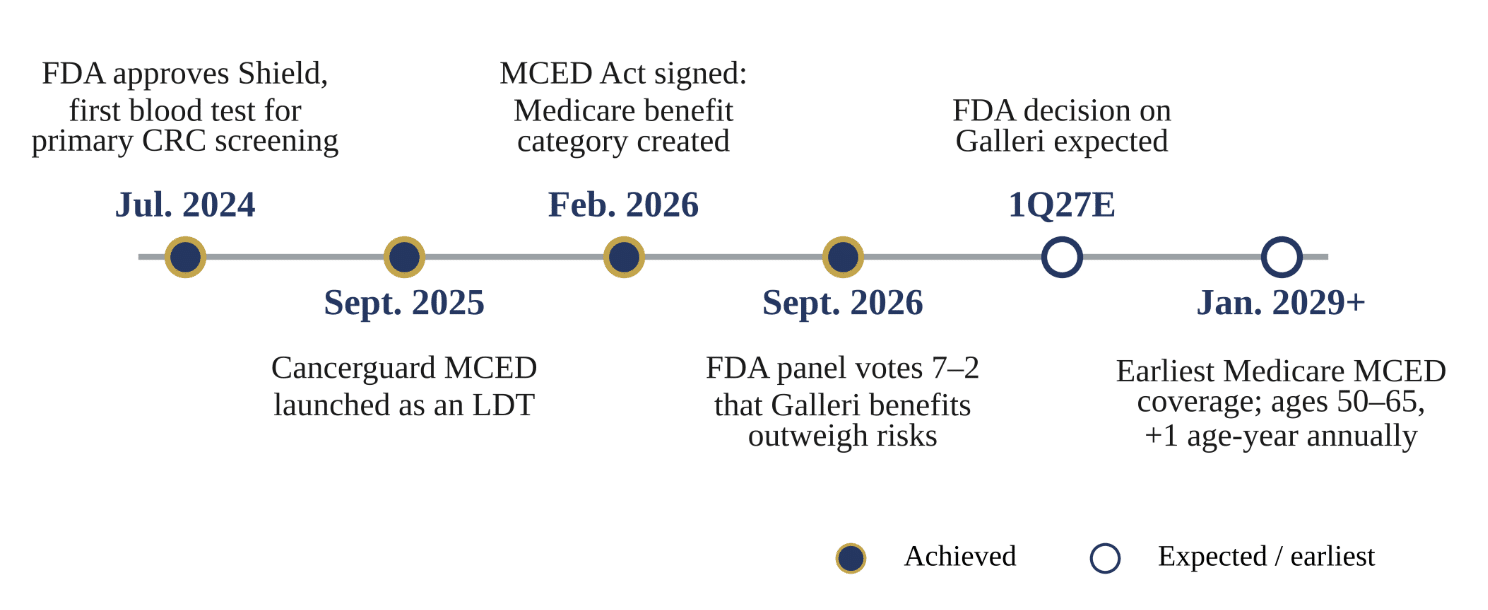
Sources: FDA; Consolidated Appropriations Act, 2026, Div. F, Sec. 6221; GRAIL 10-K.
Screening tests must balance the potential to find disease earlier against false-positive workups and the need to demonstrate meaningful clinical benefit. MCED tests are intended to complement, not replace, recommended single-cancer screening. Table 1 compares representative blood-based screening tests; Exhibit 5 illustrates how Galleri’s detection sensitivity varies by stage. Results from different studies should not be interpreted as direct head-to-head comparisons.
Table 1 Blood-Based Cancer Screening Tests at a Glance
| Shield Guardant Health (GH) | Galleri GRAIL (GRAL) | Cancerguard Exact Sciences (Abbott) | |
|---|---|---|---|
| Cancers targeted | Colorectal | Multi-cancer (signal origin predicted) | Multi-cancer (50+ types and subtypes) |
| Intended population | Average-risk adults 45+ | Adults 50+ without symptoms | Adults 50–84 |
| Regulatory status | FDA-approved (2024) | PMA under review; panel voted 7–2 in favor on benefit-risk, 6–4 on effectiveness (Sept. 2026) | Laboratory-developed test (launched Sept. 2025) |
| Reported performance | 83.1% CRC sensitivity; ~90% specificity; ~13% advanced precancer sensitivity (ECLIPSE) | 31.6% 12-month episode sensitivity; 99.74% specificity; 66.2% PPV (FDA analysis of NHS-Galleri) | 97.4% specificity; 64% sensitivity excluding breast/prostate (development-study population) |
| Coverage / price | Expected to cover >80% of the eligible U.S. population by Jan. 2027 | $949 stated list price at launch; mostly self-pay today; potential CMS pathway after FDA authorization and CMS decision | $689 stated list price at launch; any Medicare MCED pathway would require FDA authorization and a CMS decision |
Sources: FDA Shield PMA and National Cancer Institute; FDA Galleri executive summary (Sept. 2026); Exact Sciences. Metrics use different intended populations, endpoint definitions and trials; not head-to-head. PPV = positive predictive value.
Exhibit 5 Galleri Sensitivity by Cancer Stage, NHS-Galleri Trial
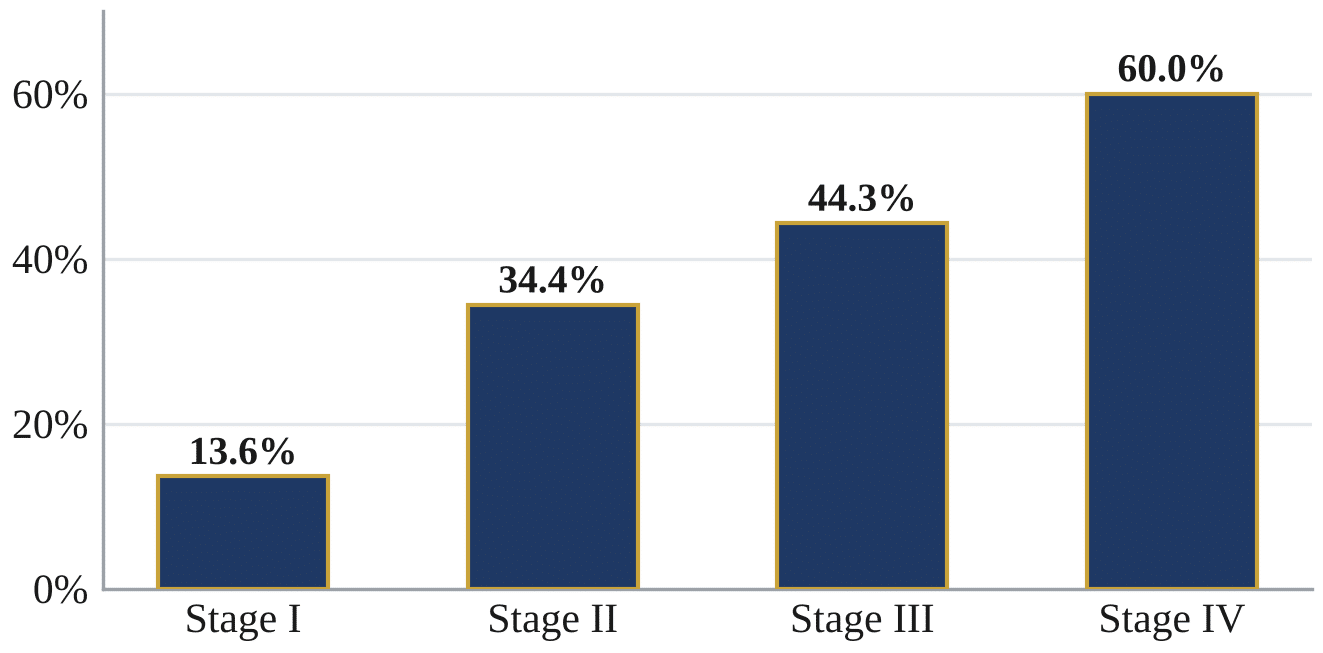
Source: FDA Executive Summary for the September 23, 2026 Galleri advisory committee; stage-specific sensitivity varies by cancer and is generally lower for early-stage disease.
MRD and Monitoring: Tracking Cancer After Treatment
Once cancer has been diagnosed and treated, circulating tumor DNA can be followed over time to identify molecular residual disease (MRD), monitor treatment response or detect signs of recurrence. Guardant Reveal and BillionToOne’s planned Northstar Clear illustrate blood-only approaches, while Labcorp is developing whole-genome and machine-learning methods for MRD research. These tests address a different clinical question from screening: whether known cancer is responding to therapy or may be returning. Their use in routine care depends on clinical validation and evidence that acting on a test result improves patient management.
Treatment Selection: Guiding Precision Therapy
For patients with diagnosed cancer, liquid biopsy can identify tumor alterations that may guide the choice of targeted treatments or reveal emerging resistance. Guardant360 CDx is an example of blood-based genomic profiling used for biomarker-guided care; Labcorp also supplies companion diagnostic testing, while BillionToOne’s Northstar Select provides genomic profiling and Northstar Origin helps predict a tumor’s tissue of origin. Unlike screening or MRD, the immediate objective here is to match clinical decisions to an individual cancer’s molecular characteristics.
FROM CLINICAL EVIDENCE TO ECONOMIC VALUE
AI is creating different opportunities across the healthcare value chain. For established life science tools and laboratory businesses, AI may support demand for scientific instruments and consumables, improve operating efficiency and strengthen existing capabilities. In molecular diagnostics, advances in machine learning and biological measurement are enabling new clinical applications and potentially expanding addressable markets. The economic impact will vary across companies depending on their business models, technological capabilities and stage of commercialization.
In healthcare, compelling technology alone is insufficient. Diagnostic tests must be analytically reliable, demonstrate clinical utility and fit into established care pathways. Widespread adoption also requires physician confidence, appropriate regulatory authorization, payer coverage and sustainable economics. These factors will determine whether advances in AI and molecular measurement translate into durable commercial value.
Strategic transactions offer another perspective on the value of established life science tools, diagnostics and clinical data assets (Table 2). Purchase prices also reflect distribution networks, established product franchises and potential synergies, and should not be interpreted as valuations of AI capabilities alone.
Table 2 Selected Life Science Tools and Diagnostics Transactions Closed in 2026
| Closed | Target | Acquirer | Value | What the Buyer Gets |
|---|---|---|---|---|
| Feb. 9, 2026 | BD Biosciences & Diagnostic Solutions | Waters (WAT) | $18.8 bn | Flow cytometry, microbiology and molecular diagnostics |
| Mar. 2026 | Exact Sciences | Abbott (ABT) | $21 bn equity ($105/sh) | Cancer screening and precision oncology |
| Mar. 2026 | Clario | Thermo Fisher (TMO) | $8.875 bn cash at close, plus possible additional payments | Clinical-trial endpoint data |
| Apr. 7, 2026 | Hologic | Blackstone & TPG | $18.3 bn | Women’s health diagnostics and imaging |
Sources: Company reports; Gabelli Funds analysis.
FIVE COMPANIES ILLUSTRATING THE TRANSITION
AI is creating opportunities across healthcare businesses at different stages of maturity. For established companies, AI can enhance existing capabilities, improve operating efficiency and support long-term growth. For emerging molecular diagnostics companies, advances in machine learning and biological measurement are enabling new clinical applications and expanding addressable markets. The following five companies illustrate how these developments are reshaping life science tools, clinical laboratories and molecular diagnostics.
Thermo Fisher Scientific (TMO)
The Picks and Shovels of AI-Enabled Science
Thermo Fisher Scientific supplies the instruments, reagents, consumables and services that connect computational discovery with experimental science. While AI can predict protein structures, identify drug targets and design new molecules, these discoveries still require physical validation. As AI expands the possibilities for scientific research, it could support demand for sequencing, mass spectrometry, laboratory automation and recurring consumables.
Thermo Fisher’s January 2026 collaboration with NVIDIA aims to integrate AI into scientific instruments and laboratory workflows, improving experimental design, automation and data interpretation. The company is also working with OpenAI to apply AI within its PPD clinical research business, including trial-site selection and patient enrollment. Its acquisition of Clario expanded its capabilities in digital clinical-trial data, including medical imaging and patient assessments.
In precision oncology, Thermo Fisher’s FDA-authorized Oncomine Dx Express Test, powered by the automated Genexus Dx platform, enables molecular profiling of solid tumors in as little as 24 hours, with approximately 20 minutes of hands-on laboratory time. Together, these capabilities illustrate how scientific instruments, laboratory automation and computational technologies can support more efficient research and increasingly accessible precision medicine.

Labcorp Holdings (LH)
AI-Powered Diagnostics at Scale, with Expanding Precision Oncology Capabilities
Labcorp is integrating digital pathology, AI and laboratory automation across its extensive clinical testing network. Its nationwide deployment of PathAI’s FDA-cleared AISight Dx digital pathology platform enables more efficient slide management and digital workflows, while providing infrastructure for validated AI-assisted analysis. Through its LaunchPad initiative, Labcorp is also applying automation and data-driven technologies to improve laboratory productivity and operational efficiency.
Precision oncology is another important application. Labcorp’s Plasma Detect Genome combines whole-genome sequencing with machine learning to identify patient-specific tumor mutations for molecular residual disease (MRD) monitoring in clinical research. Its next-generation MRD Ultra assay is being evaluated for bladder cancer recurrence monitoring, while the FDA-approved PGDx elio tissue complete CDx supports molecular profiling and treatment selection in oncology.
These initiatives illustrate how established laboratory networks can combine advanced molecular testing with digital infrastructure to expand their role in precision oncology, clinical research and patient care.

GRAIL (GRAL)
Machine Learning as the Foundation of Multi-Cancer Early Detection
GRAIL’s Galleri is a blood-based multi-cancer early detection (MCED) test that uses next-generation sequencing and machine learning to identify cancer-associated DNA methylation patterns across approximately one million genomic sites. Its algorithms detect signals associated with multiple cancer types and predict their likely tissue of origin, potentially expanding screening beyond cancers covered by established screening programs.
GRAIL has developed one of the largest prospective evidence bases in MCED, including the NHS-Galleri and PATHFINDER 2 studies. In PATHFINDER 2, approximately 70% of newly detected cancers lacked established screening recommendations, while the test demonstrated 99.64% specificity and 91.3% cancer signal origin accuracy. However, early-stage sensitivity remains a challenge: the FDA’s analysis of NHS-Galleri reported 13.6% sensitivity for stage I cancers. Galleri is therefore intended to complement, rather than replace, recommended screening methods.
In September 2026, an FDA advisory committee voted 7 to 2, with one abstention, that Galleri’s benefits outweigh its risks, while unanimously supporting its safety. However, the panel was more divided on effectiveness, voting 6 to 4 in favor, reflecting concerns about early-stage detection and the lack of evidence demonstrating improved long-term clinical outcomes. An FDA decision is anticipated in 1Q27. Approval could establish an important precedent for the broader MCED industry and support future reimbursement discussions, with a potential Medicare coverage pathway beginning no earlier than 2029, subject to CMS requirements.

Guardant Health (GH)
AI-Powered Precision Oncology Across the Cancer Care Continuum
Guardant Health combines advanced molecular diagnostics, machine learning and clinical-genomic data across three major applications: Shield for colorectal cancer screening, Guardant360 for genomic profiling and treatment selection, and Reveal for molecular residual disease (MRD) monitoring. Its InfinityAI platform further integrates genomic, epigenomic and longitudinal clinical data to support drug development and precision medicine. In March 2026, real-world evidence generated through InfinityAI supplemented clinical-trial data supporting ENHERTU’s approval for certain HER2-positive solid tumors in Japan.
Guardant360 is advancing longitudinal molecular-guided treatment. In September 2026, it became the first FDA-approved liquid biopsy companion diagnostic for monitoring ESR1 resistance mutations in breast cancer before radiographic progression. In the phase 3 SERENA-6 trial, changing treatment following molecular detection of ESR1 mutations reduced the risk of progression or death by 56%, demonstrating the clinical value of serial genomic monitoring.
Guardant Reveal uses circulating tumor DNA (ctDNA) to monitor molecular signs of residual disease and treatment response. An October 2026 Nature Medicine study associated early ctDNA detection with poorer five-year outcomes in HER2-positive breast cancer, supporting further investigation of molecular monitoring to personalize care.
Meanwhile, Shield became the first FDA-approved blood test for primary colorectal cancer screening in 2024, expanding access to a less invasive screening option. Guardant is also developing a multi-cancer detection platform based on Shield’s technology, which has received FDA Breakthrough Device designation and was selected for the National Cancer Institute’s Vanguard study. Together, these capabilities illustrate the expanding role of blood-based diagnostics across cancer prevention, treatment selection and disease monitoring.

BillionToOne (BLLN)
A New Approach to Molecular Quantification
BillionToOne’s proprietary Quantitative Counting Templates (QCT) technology enables highly precise measurement of DNA molecules, including extremely low concentrations of circulating tumor DNA. By introducing synthetic reference molecules before amplification, QCT helps correct for amplification bias and quantify the original DNA molecules in a sample. Combined with advanced bioinformatics and machine learning, this approach supports applications across prenatal screening and precision oncology.
The company’s UNITY prenatal platform demonstrates the commercial application of QCT, while its expanding Northstar portfolio brings the technology into oncology. Northstar Select provides genomic profiling for treatment selection, and Northstar Response uses tissue-free molecular analysis to monitor ctDNA during treatment. Northstar Origin combines genomic and methylation signals with machine learning to predict a cancer’s tissue of origin, achieving 87% accuracy for its top prediction in company-reported validation involving 1,578 patients.
BillionToOne plans to launch Northstar Clear, a tissue-free MRD test for solid tumors, on December 15, 2026. By eliminating the need for tumor tissue and individualized assay development, the test is designed to simplify molecular monitoring, although broader clinical validation and reimbursement remain important. Longer term, QCT’s ability to measure very small quantities of disease-associated DNA may provide a foundation for multi-cancer early detection, an application that remains in development rather than established clinical practice.
BillionToOne illustrates how innovations in molecular measurement, combined with computational analysis, can enable new diagnostic applications across the cancer care continuum.
CONCLUSION
AI in healthcare is already changing how researchers generate evidence, how laboratories operate and how physicians use molecular information. Much of this progress is happening away from the headlines, in the instruments that turn computational predictions into experimental proof, the laboratory networks that are digitizing clinical testing, and the blood-based diagnostics expanding the possibilities for cancer screening, treatment selection and disease monitoring. Across these areas, the common thread is the combination of advanced computational capabilities, reliable biological data and practical clinical applications.
The next phase will be defined by more than algorithms. It will depend on validated measurements, trusted data, clinical utility and commercial scale. Each part of the value chain faces a different test. For life science tools, the question is whether AI-enabled research translates into sustained experimental activity and demand for instruments and consumables. For clinical laboratories, it is whether digital workflows deliver measurable gains in productivity and diagnostic quality. For molecular diagnostics, it is whether new tests can demonstrate clinical benefit, obtain regulatory authorization and secure reimbursement.
Several milestones will help answer these questions, including the FDA’s anticipated decision on Galleri in 1Q27, expanding payer coverage for blood-based colorectal cancer screening, the planned introduction of tissue-free MRD testing and a potential Medicare coverage pathway for MCED tests beginning no earlier than 2029. Recent strategic transactions also underscore the value of established scientific platforms, diagnostic franchises and clinical data assets as the industry evolves. Ultimately, the companies best positioned to benefit will be those that combine scientific innovation with rigorous evidence, scalable operations and sustainable economics, translating advances in AI and molecular measurement into better patient care and long-term economic value.
Appendix 1 Key Terms
| Term | Definition |
|---|---|
| cfDNA / ctDNA | Cell-free DNA circulating in blood; circulating tumor DNA is the fraction shed by tumor cells. |
| DNA methylation | Chemical marks on DNA that regulate gene expression; patterns differ by tissue and between cancer and normal cells. |
| MCED | Multi-cancer early detection: a single test, typically a blood test, designed to detect signals from many cancers. |
| MRD | Molecular residual disease: small amounts of cancer remaining after treatment, detected molecularly. |
| Sensitivity / specificity / PPV | Share of true cases detected / share of non-cases correctly cleared / probability that a positive result is a true positive. |
| CDx | Companion diagnostic: an FDA-approved test used to select patients for a specific therapy. |
| LDT | Laboratory-developed test: a test designed and performed within a single certified laboratory. |
©Gabelli Funds 2026
249 ROYAL PALM WAY, PALM BEACH, FL 33480 Gabelli Funds TEL (561) 671-2100
This whitepaper was prepared by Elena Meng. The examples cited herein are based on public information and we make no representations regarding their accuracy or usefulness as precedent. The Portfolio Manager’s views are subject to change at any time based on market and other conditions. The information in this report represent the opinions of the individual Portfolio Manager as of the date hereof and is not intended to be a forecast of future events, a guarantee of future results, or investments advice. The views expressed may differ from other portfolio managers or of the Firm as a whole.
As of June 30, 2026, affiliates of GAMCO Investors, Inc. beneficially owned less than 1% of all companies mentioned.
These portfolio managers may know the substance of the report prior to its distribution.
This whitepaper is not an offer to sell any security nor is it a solicitation of an offer to buy any security.
Investors should consider the investment objectives, risks, sales charges and expense of the fund carefully before investing.
For more information, visit our website at: www.gabelli.com or call: 800-GABELLI
800-422-3554 • 914-921-5000 • Fax 914-921-5098 • info@gabelli.com