September 24, 2026
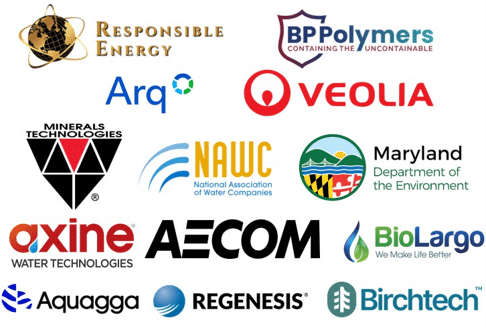
Our team hosted its 4th PFAS Symposium on September 24, 2026, with a focus on the impact of “forever chemicals” on the environment and human health, upcoming regulations, and the potential solutions addressing these concerns. The thirteen participants included specialty minerals and materials companies, engineering firms, manufacturers of PFAS replacements, and waste companies. In addition, we heard from representatives from the State of Maryland and the National Association of Water Companies (NAWC) who gave their views on the issues faced by their constituents.
Introduction
As concerns continue to grow over PFAS and their perceived health and environmental issues, on September 24, 2026, we hosted our fourth PFAS Symposium at Convene 530 in New York. As in previous years, the focus was on existing technologies, including the progress made over the past twelve months, and the potential for future solutions to deal with these “forever chemicals”. In addition, the participants addressed the potential impact from the current regulatory framework on the timing of projects. A key theme was that while there may be some perception of regulatory easing or deemphasis due to recent US administration actions (discussed later), regulations are still very real, stringent, and coming up fast.
Origin of the “Forever Chemicals”
The term “forever chemicals” refers to the strong chemical bond between carbon and fluorine atoms, which makes these substances highly resistant to degradation in the environment. There are thousands of carbon-fluorine PFAS with different properties and applications depending on the number of carbon and fluorine atoms, as well as the presence of additional components. The compounds were invented in the late 1930s as the main ingredient in non-stick and water-proofing coatings. They were first manufactured by 3M and initially used to protect military equipment from the elements. Industrial usage began in the 1940s when DuPont introduced them as Teflon for non-stick cookware. Their development increased in the late 1960s after a deadly fire aboard a US Navy, Aircraft Carrier, killed more than 100 individuals.
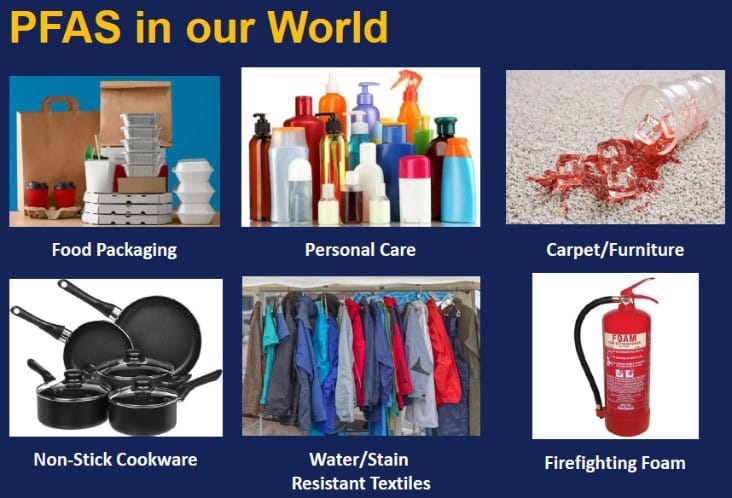
Exhibit 1
Source: Google images, Gabelli Funds
PFAS became widely used in products such as fire-fighting foams, a key area of the EPA’s current focus due to their extensive use at military bases, airports, and for general firefighting activities. In addition to firefighting foams, their oil-stain resistance and water-proofing properties have resulted in widespread use. PFAS are in water resistant textiles, stain resistant furniture and carpets, as well as in paints and cosmetics, among other consumer applications. They are also found in packaging used by fast food restaurants, as well as in sandwich wraps, pizza boxes, and other packaging for greasy food.
Possible Sources of Contamination
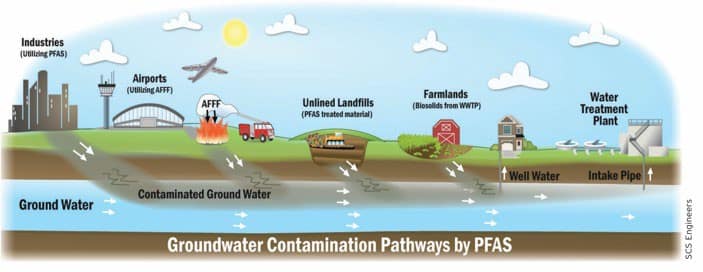
Firefighting foams, in particular, seep into the ground and can eventually reach the water table. They can also be carried to surface water, such as rivers and lakes, by rain. In addition, most of the PFAS-containing items mentioned above eventually end up in landfills, from which they may leach into the ground and into the water table.
Exhibit 2 Possible Sources of Groundwater Contamination
Perceived Health Issues
While PFAS consist of a broad group of thousands of chemicals, a handful of them have been studied and linked to health issues. Research shows that these chemicals have found their way into our environment, drinking water, food supply, and into our bodies. PFAS have been detected in the bloodstream of approximately 98% of all Americans tested as the chemicals can enter the food chain in various ways and, over time, gradually accumulate into our bodies.
The most common and dangerous compounds are PFOA and PFOS, which have been extensively studied, especially due to their presence in drinking water. They have been linked to health conditions including kidney and testicular cancers, a weakened immune system, thyroid disease, high cholesterol, and low birth weight babies, to name a few. Having found their way into the food supply via crop products, dairy, and livestock, PFAS above acceptable levels have been detected in cows’ milk, animal feed, and cereals, among other categories.
The amount of contamination is extensive, persistent, and toxic at a very low level. In 2006, the industry agreed to phase out C8; first out of carpets, followed by paper, and more recently out of textiles. However, PFAS are still on hard surfaces and construction materials such as grout and fiberboard. While some compounds have been replaced by shorter carbon chains with larger molecules, over the long term, these newer chemicals may pose risks similar to those associated with longer carbon chains.
Separately in July 2023, a study from the U.S. Geological Survey (USGS) captured headlines when it found that nearly one-half of the country’s tap water may contain PFAS. In the study, 45% of samples tested found levels higher than the planned limits of four parts per trillion. We note that, while the U.S. is taking steps related to the issues, this is a global problem and, while no other country has issued specific regulations to date, discussions are on-going.
Regulations and Actions
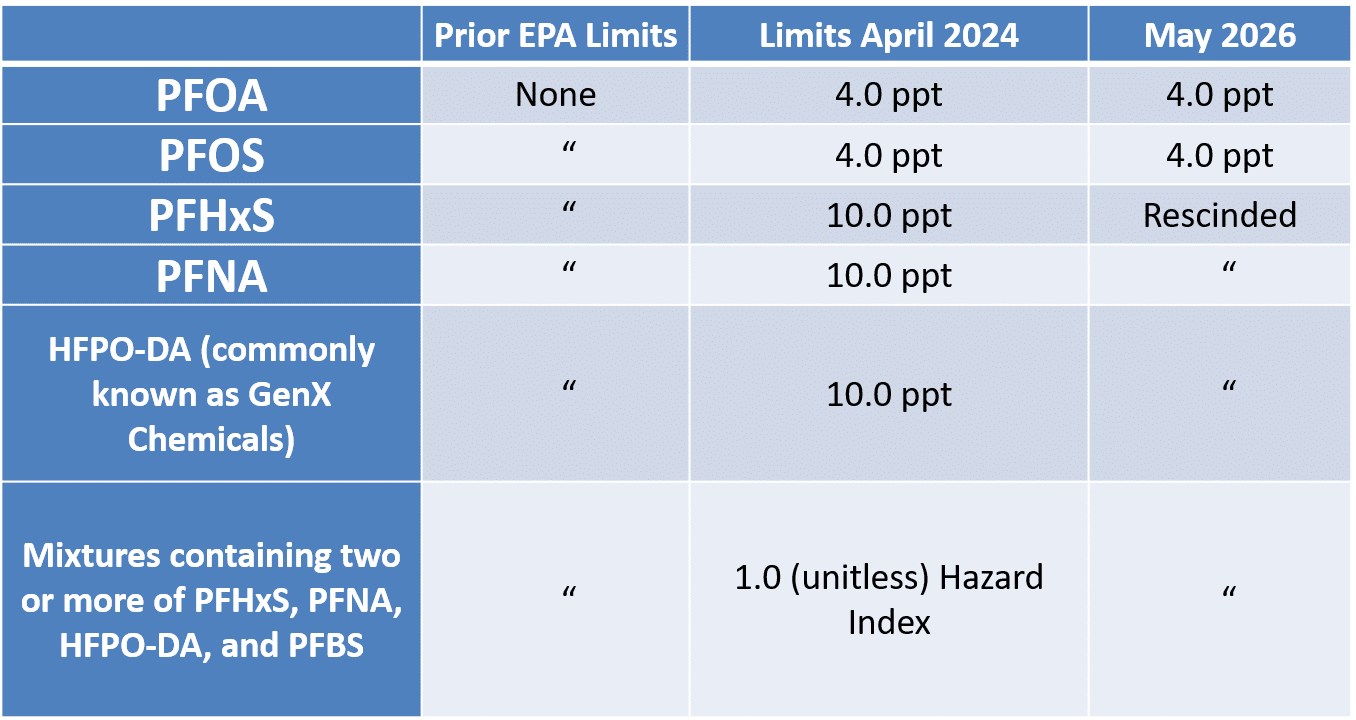
As concerns over their prevalence and associated potential health risks have grown, regulators have zoned in on the issue. On April 10, 2024, the EPA announced its national standards for PFAS in drinking water. The first of its kind regulation set out to limit the two most common PFAS compounds, PFOA and PFOS, to just four parts per trillion (ppt). This is the lowest detectable level using current technology, which essentially requires the elimination of any trace of these compounds. In addition, the EPA announced limits for four other PFAS compounds or mixtures. Following this ruling, water utilities in the US initially had three years to implement testing/detection measures (April 2027), and two years following those initial steps to implement remediation and treatment equipment if they are out of compliance with the limits (April 2029).
Exhibit 3 EPA National Drinking Water Standards
Source: EPA, Gabelli Funds
With the change in administration, the new EPA, led by Administrator Lee Zeldin, reviewed these regulations. In May 2026, the EPA announced that it will keep the current regulations of 4 ppt for PFOA and PFOS; however, it is extending the compliance guidelines by two years to 2031 to allow more time for water systems to develop plans and reduce the regulatory burden on smaller systems. The EPA also announced it is rescinding the regulations for other PFAS compounds and mixtures to reconsider their limits under the legal process laid out in the Safe Water Drinking Act. We would note that in discussions with companies, remediation systems that would comply with PFOA and PFOS regulations would likely also remediate the other PFAS compounds.
In February 2023, the EPA proposed two regulations under the Resource Conservation and Recovery Act (RCRA); these were followed in April 2024 by the EPA designating PFOA and PFOS as hazardous materials under the Comprehensive Environmental Response, Compensation, and Liability Act (CERCLA). Note that RCRA gives the EPA the authority to control hazardous waste from cradle to grave. CERCLA authorizes the President to respond to releases, or potential releases, of hazardous materials into the environment. Coinciding with our 3rd Symposium, in September 2025, the EPA announced that it will maintain and defend the 2024 designation of PFOA and PFOS as hazardous substances under the Superfund Law.
With PFAS designated as hazardous materials, any entity handling these chemicals could become liable for the recovery and remediation costs of any environmental releases. As a result, waste management companies will need to take additional steps to avoid seepage from landfills and the subsequent contamination of ground water. In addition, companies incorporating PFAS in their products will need to ensure proper internal controls and appropriate hazardous waste disposal. The EPA issued a separate CERCLA enforcement policy, which specifies that enforcement will focus on parties who significantly contributed to the release of PFAS chemicals into the environment, and not on passive receivers. Regardless, water utilities and the National Association of Water Companies (NAWC) remain concerned about the wording of the EPA’s policy; they continue to call for new congressional actions needed to fully address PFAS liability concerns
In 2024, large settlements with former PFAS producers were finalized: DuPont (DD), and its spin-offs Chemours (CC) and Corteva (CTVA) settled with the US Water Systems for $1.2 billion, and 3M (MMM) agreed to a final settlement of $10.3 billion. Note that contamination outside the drinking water systems is excluded from the above settlements. There are also smaller natural resource lawsuits from individual state claims that the companies have been settling, including a $110 million settlement from DD (now with recent spin-off Qnity), CC, and CTVA with the State of Ohio in November 2023, a $2 billion+ settlement with the State of New Jersey to be paid over 25 years approved in August 2026, and a settlement with North Carolina for $590 million over 15 years announced just weeks before the Symposium.
Large manufacturers stopped producing the long carbon chains (C8) PFAS; however, there are no official government bans, and they are still produced in India, China, and other countries. As a result, they find their way back to the US via imports of products made overseas and end up into the environment when discarded.
Market Size
While the market size is currently a moving target, PFAS-related liabilities just for US drinking water are estimated to be between $120 billion and $175 billion, according to Milliman. The total and global liabilities will be significantly higher as Europe moves to regulate PFAS and was pegged at $250-$500 billion or more by several conference participants. This includes efforts to remediate, contain, and destroy the chemicals, as well as finding suitable substitutes to eliminate their use. The Infrastructure Bill has $10 billion set aside for PFAS, an amount not nearly enough to solve the major problems created by the existing contamination. The American Water Works Association (AWWA) estimates that capital investments needed to install treatment infrastructure for PFAS standards will total between $37.1 billion and $48.3 billion over five years. Combined with operations and maintenance (O&M) and monitoring, the annualized cost is estimated to be $2.7 billion to $3.5 billion per year.
Potential Solutions
While we touched on several established technologies used for PFAS remediation in our updated September 14th White Paper, the Symposium featured a deep dive into current and novel technologies for both remediation and destruction. They include the following: Activated Carbon, which adsorbs pollutants from a stream of water going through an activated carbon column; Membrane Filtration, which uses either nanofiltration or reverse osmosis; and Ion Exchange, where a specialty resin filters out and holds onto the contaminants. Following the introduction of newer technologies at past symposiums, managements provided an update on FLUORO-SORB from Minerals Technologies, Electrochemical Oxidation from Axine, and Free Radical Gasification from newly public Responsible Energy, among others. We also heard about PFAS-free packaging replacements from BP Polymers and its largest customer, CKS Packaging, using BP’s nylon-based, non-PFAS alternatives for chemical packaging. Joining the teams from the companies working on solutions, we also heard from the President and CEO of the National Association of Water Companies (NAWC) and from the Assistant Secretary for Policy for the Maryland Department of Environment.
Summary
The thirteen participating companies and participants introduced us to multiple perspectives and potential solutions for this growing environmental and health concern. We heard from Specialty Minerals and Remediation companies with new technologies and systems; and Waste and destruction companies whose focus is on capturing, containing, and destroying PFAS contaminants. We also heard updates on regulatory actions from the State of Maryland, and from the president & CEO of NAWC, who touched on how the water industry and regulators are addressing the issue. The participating companies will see increased opportunities to leverage their respective technologies and expertise in the coming years as regulations addressing the issues related to the presence of PFAS in our environment are adopted. Overall, a key message from the symposium was that while some have seen the recent regulatory changes as a means to slow compliance, the regulations are still real and stringent and investments to comply with them are on the way and coming fast.
AECOM (ACM – $58.99 – NYSE)
| Year | EPS | P/E | |
| 2027P | $6.38 | 9.2x | Dividend: $1.24 Current Return: 2.1% |
| 2026E | 3.98 | 14.8 | Shares O/S: 128.7 million |
| 2025A | 5.26 | 11.2 | 52-Week Range: $135.52 – $56.39 |
| 2024A | 4.52 | 13.1 |
Source: Public data and Factset consensus estimates
COMPANY OVERVIEW
AECOM, headquartered in Dallas, TX, together with its subsidiaries, provides professional infrastructure consulting services worldwide. It operates in three segments: Americas, International, and AECOM Capital. The company offers planning, consulting, architectural and engineering design, construction, and program management, as well as investment and development services to commercial and government clients. It is also involved in the investment and development of real estate projects. In addition, the company provides construction services, including building construction and energy, as well as infrastructure and industrial construction. AECOM serves the transportation, water, government, facilities, environmental, and energy sectors.
Reason For Comment
The following are key takeaways from AECOM’s Global PFAS Technical Leader Dr. Rosa Gwinn at our 4th Annual PFAS Symposium:
- As a global company providing engineering and infrastructure consulting services, including planning, architectural and engineering designs with a focus on environmental remediation when needed, AECOM’s solutions focus on the best technology available for the problems at hand. It offers a full range of services to the transportation, water, government, environmental, and energy sectors.
- We heard from Dr. Rosa Gwinn, the Global Leader of PFAS Technical Practice, who early on recognized the need for the company to address PFAS in drinking water, wastewater, and in the environment. Dr. Gwinn is responsible for sharing management’s focus on the issue and on driving the company’s technical innovation and its execution.
- AECOM provides a full range of PFAS services including taking inventory at release sites to meet compliance initiatives, characterizing contamination of sites and evaluating risks to human health and the environment. The team advises on, and implements, remedies for soil, groundwater, drinking water, and biosolids. Over the past 20+ years, AECOM has served over 600 PFAS projects, at >300 locations.
- AECOM is technology agnostic and the group is focused on infrastructure advances as it takes on environmental problems. Ranked #1 in each end markets across transportation, water, environment, and facilities, it currently has a record backlog. PFAS regulatory trends are increasing and expanding from the US and Australia to Japan and Europe. As a result, the number of potential consulting locations is growing, with approximately 51,000 non-source sites including ground, surface water, soil, and air.
- The company has experience in running mitigation programs; it uses a broad range of solutions including Granular Activated Carbon, Ion exchange resin, reverse osmosis, nanofiltration, foam fractionation, thermal desorption, flocculation and coagulation, novel and regenerable sorbents, incineration, electrochemical oxidation, hydrothermal alkaline treatment, supercritical water oxidation, plasma, sonication, and colloidal GAC as they best apply to a specific site.
- AECOM estimates that PFAS liabilities for the US market could amount to ~$200B as it develops over multi-decades and could reach more than $500B on a global basis. As an engineering consulting firm first, it will continue to recommend the best solution to its clients based on sites and projects’ needs and estimates that all technologies will have a role in resolving the problems. Dr. Gwinn noted that there is no silver bullet that will allow people to solve all PFAS issues. She noted that consultants are engaged in prevention, control, and elimination, and that the separation of PFAS from soil and water is the precursor to any destruction that could take place.
AECOM
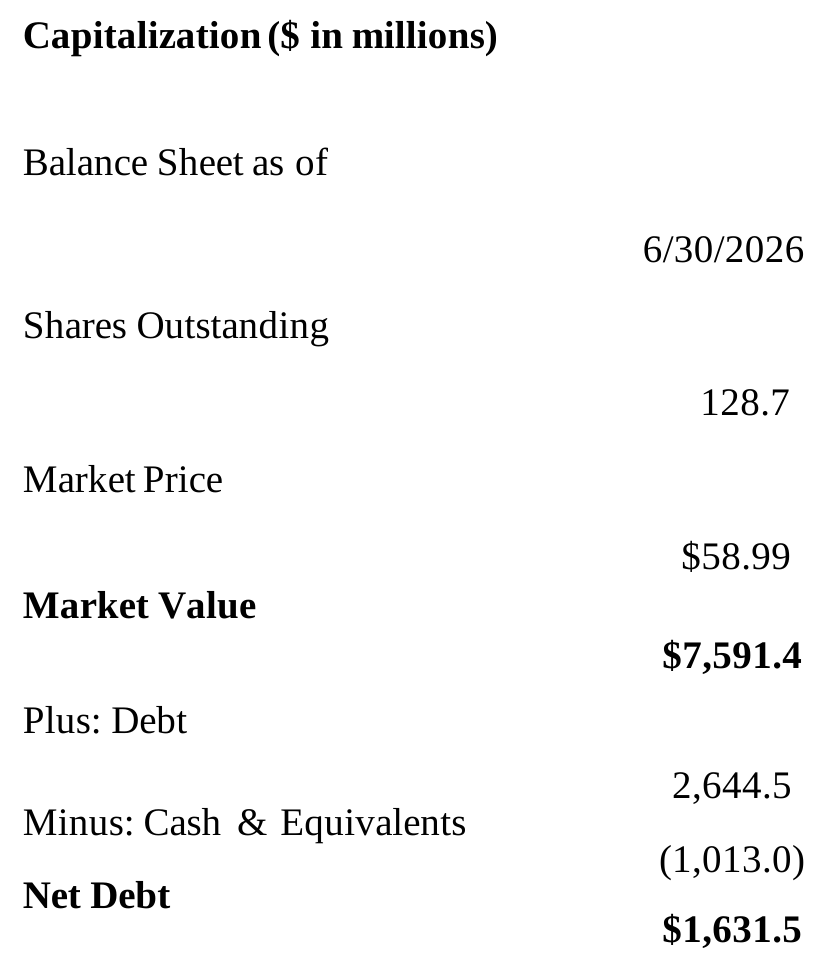
Total Capitalization $9,222.9
Price Performance
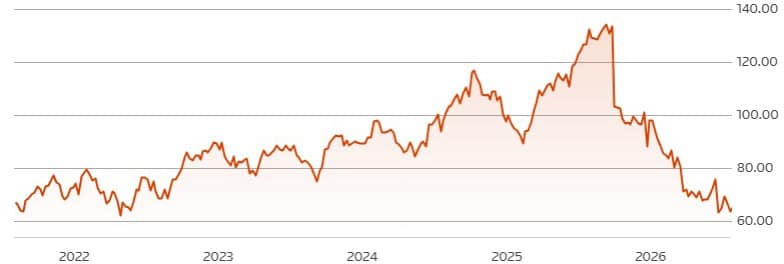
Source: reuters.com
| AECOM | ||||
| ($ Millions – Percent Change) | ||||
| FYE 9/30 | 2024 | 2025 | 2026E | 2027P |
| Net Service Revenue | $7,572.8 | $7,165.0 | $7,334.7 | $7,968.1 |
| % Growth | -5.4% | 2.4% | 8.6% | |
| EBITDA | $1,095.3 | $1,234.8 | $940.0 | $1,379.0 |
| % Margin | 14.5% | 17.2% | 12.8% | 17.3% |
| EPS | $4.52 | $5.26 | $3.98 | $6.38 |
| % Growth | 16.4% | -24.3% | 60.3% | |
| EBITDA Mulitple | 8.4x | 7.5x | 9.8x | 6.7x |
| P/E Multiple | 13.1x | 11.2x | 14.8x | 9.2x |
| Source: Public data and Factset consensus estimates |
Aquagga Inc. (Private)
COMPANY OVERVIEW
Aquagga is a privately held PFAS destruction technology company developing modular, field-deployable treatment systems for industrial, municipal, and government customers. Its patented hydrothermal alkaline treatment (HALT) process uses elevated temperature, pressure, and alkaline conditions to break down concentrated PFAS waste streams rather than simply capture or immobilize contaminants. The technology is designed to integrate with upstream PFAS separation and concentration systems.
Reason For Comment
The following are key takeaways from Aquagga Chief Executive Officer Dr. Dhileep Sivam at our 2026 PFAS Symposium:
- Technology and Differentiation: Aquagga uses subcritical hydrothermal alkaline treatment to destroy PFAS in concentrated waste streams. Management reports that the process treats long- and short-chain PFAS, including challenging compounds, and can accommodate feedstocks with high dissolved solids and other impurities. Its modular Colt, Steed, and Stampede systems are intended for on-site deployment, with the latter configurations approximately the size of 10- and 20-foot shipping containers.
- Commercial Validation: Management reported testing approximately 110 feedstocks from roughly 30 customers and completing 12 on-site pilots. Aquagga has a per-gallon contract with 3M for historical PFAS remediation, was selected as prime contractor for a Colorado AFFF destruction program, and received another state AFFF award as a subcontractor. It is also working toward a European distribution arrangement with SUEZ and has attracted interest from semiconductor manufacturers.
- Treatment Economics: Management estimated operating costs of approximately $0.08–$0.20 per gallon for carboxylate-heavy streams, approximately $0.80 for sulfonate-heavy streams, and up to $2.00 for concentrated firefighting foam. These are operating-cost estimates for concentrated waste, not all-in system costs, and are not directly comparable with off-site shipping and incineration charges without accounting for upstream concentration and capital expenditure.
- Funding and Growth: Aquagga has raised less than $3 million in dilutive capital and is pursuing a $5 million Series A financing. Management intends to remain capital efficient over the next approximately 18 months, with more aggressive expansion dependent on commercial demand. Sivam identified the timing of market adoption and sufficient financial runway as major commercialization risks.
- Market Opportunity: Near-term applications include chemical and industrial wastewater, AFFF take-back programs, defense installations, legacy manufacturing contamination, and semiconductor waste streams. Management views litigation exposure and state-level action as durable demand drivers despite uncertainty around federal PFAS compliance timelines. Aquagga’s destruction systems could complement separation and containment technologies rather than replace them.
Arq, Inc. (ARQ – $1.85 – NASDAQ)
| Year | EPS | P/E | |
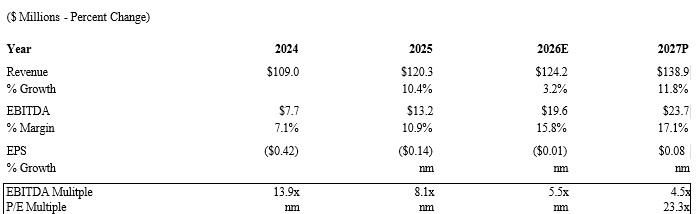
| 2027P | $0.08 | 23.3x | Dividend: None Current Return: Nil |
| 2026E | (0.01) | NM | Shares O/S: 42.8 million |
| 2025A | (0.14) | “ | 52-Week Range: $7.07 – $1.54 |
| 2024A | (0.42) | “ |
Source: Company filings, Factset consensus estimates
COMPANY OVERVIEW
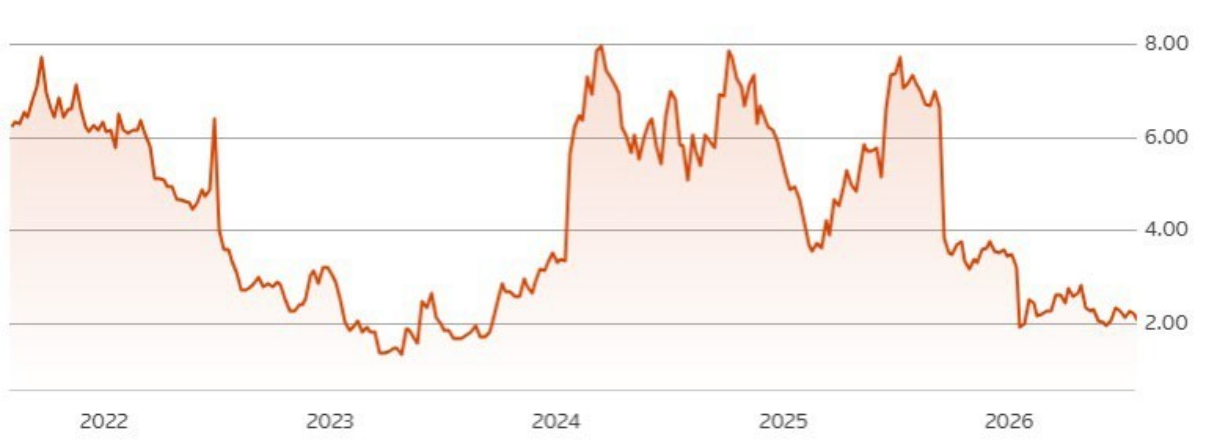
Arq, Inc. (formerly Advanced Emissions Solutions, Inc.) based in Greenwood Village, CO, is principally engaged in the sale of consumable air and water treatment options, including activated carbon (AC) and chemical technologies. The company sells consumable products, which utilize activated carbon and chemical-based technologies to coal-fired utilities, industrials, water treatment plants, and other facilities within multiple end-markets. Its primary products are comprised of AC, which is produced from a variety of carbonaceous raw materials; they include both powdered (PAC) and granular (GAC) activated carbon. The company rebranded as Arq, Inc., with the ticker ARQ on the Nasdaq on February 1, 2024. It is focused on transforming itself from an industrial manufacturing company serving declining industries to an environmental technology company serving growth markets including water remediation of materials such as PFAS.
Reason For Comment:
The following are key takeaways from Arq’s CEO Bob Rasmus and CFO Shimon Steinmetz at our 4thAnnual PFAS Symposium:
- Transformation Into Arq: Legacy Advanced Emissions had historically focused on powdered activated carbon (PAC) products serving markets in secular decline; primarily scrubbing mercury emissions from coal-fired power plants. The company shifted its strategy in early 2023 with the acquisition of Arq and has presented regularly at our PFAS and Chemicals Symposiums since. The Arq transaction significantly increased its capabilities in GAC with the original goal of transitioning to GAC for water treatment and energy transition, thereby targeting the higher growth end-markets of water remediation and purification, further boosted by announced PFAS regulations. This is key to the company’s ambition to rebrand itself as it evolves into an environmental technology company.
- GAC on Pause: After significant capital expenditure for the Phase 1 expansion at its Red River facility aiming to transition to GAC, due to several cost overruns and operational issues, the company has put the GAC startup on pause while it conducts a strategic review. Shortly before the symposium, Arq broadened its strategic GAC optimization plan to include all operations: it identified near-term opportunities to increase furnace throughput, reduce unit costs, and pointed to its ability to further refine its GAC expansion plan. Management is still evaluating GAC; however, spending is on hold and will only move forward with the transition if doing so achieves attractive returns. Estimates received from engineering firms range between $40-60mm as the cost to restart operations. The company still believes in the attractive demand needed to treat PFAS contamination but is assuming no GAC sales in 2027. While the decision to move forward by year end or in 2027 has not been made, Bob stressed that Arq’s near-term growth potential did not depend solely on GAC. Management emphasized that any plans to move forward with the transition will be funded through improved cash flow from PAC operations and debt, rather than potential equity.
- PAC for PFAS: Along with the broadened strategic review, Arq announced its “Advanced PAC for PFAS” to serve customers near compliance with the looming EPA standards. Four customers are currently testing the new products, and management believes that PAC for PFAS could generate revenue in 2026, with meaningful contribution in 2027, and without the need for PAC capacity expansion. PAC for PFAS can provide temporary or permanent solutions to certain water utilities with low levels of PFAS contamination of ~30-40 ppt allowing them to meet the 4 ppt standard. Arq has identified 140+ utilities as potential users generating ~40 million lbs of possible demand. The price for PAC for PFAS should be higher than traditional PAC and closer to (or above) GAC with significantly higher margin for the company. The higher price will be justified by the fact that utilities could treat PFAS and still solve taste and odor issues without the added capital needed to switch to GAC.
- Valuation Disconnect: The GAC pause has led to a significant decline in the share price and a valuation disconnect. Through the significantly improved legacy PAC, the company should generate closer to $20 million of EBITDA in 2026 with a path, including PAC for PFAS, to increase EBITDA by 50% to a ~$30 million run-rate in 2027. The company is now trading at ~6x EBITDA, significantly less than replacement cost for its AC assets in a constrained US market; it also has the option to restart GAC in the near-future.
Arq, Inc.
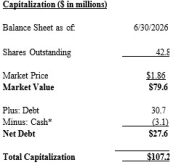
Price Performance
Source: reuters.com
Arq, Inc.
Source: Public data and Factset consensus estimates
*As of July 31 per Q2 results
Axine Water Technologies (Private)
COMPANY OVERVIEW
Axine Water Technologies, based in Vancouver, BC, Canada, is a privately held leader in electrochemical oxidation technology for industrial wastewater treatment. Its mission is to establish a new industry standard for the cost-effective destruction of PFAS, pharmaceuticals, solvents, and other persistent organic contaminants. Axine’s electraCLEAR™ electrochemical oxidation process is a solution for the complete destruction of challenging organic compounds in industrial water and wastewater treatment. electraCLEAR utilizes multiple different catalysts and electrode materials simultaneously within a single reactor. This design maximizes treatment performance, energy efficiency, and electrode lifespan. Supported by a suite of online instrumentation, Axine employs a patented machine-learning/artificial intelligence (ML/AI) algorithm for real-time monitoring and optimization of system performance and operating costs. Its fully automated process offers complete destruction of both long- and short-chain PFAS compounds with no waste or by-products, and seamless integration into existing treatment systems. Systems are available as fully containerized solutions for quick installation at any site or as modular skid-mounted units, seamlessly integrated into existing treatment processes or customer facilities. Axine’s Treatment-as-a-Service (TAAS) program accompanies each solution, covering all operations, routine service, maintenance, and reporting.
Reason For Comment
The following are key takeaways from President and Chief Executive Officer Mark Ralph at our 4th Annual PFAS Symposium:
- Axine’s electraCLEAR™ technology is an electro oxidation process which breaks down PFOA and PFOS through electrochemical oxidation for complete PFAS destruction with no production of solid or liquid waste. There are 57 different patents protecting Axine IP worldwide. The company’s mission is to eliminate transporting the contaminated material and instead destroy it on site with clean chemistry in a way that is simple and safe to run. The size of the mobile systems will meet the needs, and large systems can be permanently installed on a substantial site. Mr. Ralph pointed out the economic benefit from concentrating the pollutants before going into the system and treating on site: by concentrating before treating and eliminating transportation, the cost of a specific project could decline from $8.8M to $5.5M, an annual savings of $3.3M, as per the example given.
- Axine is a leader in electrochemical oxidation. The company’s first units treated pharmaceuticals but there is now a shift to units being deployed for PFAS in the US. Axine offers guaranteed treatment to customers and will further treat the wastewater if it is not up to the required standards. It operates under two business models: 1) Treatment as a service, where Axine owns the full system and offers service and maintenance; and 2) Hybrid, where the customer owns the system with Axine performing maintenance and responding to any breakdown. Customer contracts generally cover a five-year span and are sticky, with those wanting the certainty of a stable cost structure renewing their contracts. Interest is growing from larger customers including semiconductor producers and municipalities.
- Axine expects to grow rapidly as the market expands. The company is generating revenues of around CAD$1.5M; it focuses on treating the source of contamination from leachate, pharmaceuticals, water treatment plants, and industrial discharge. In 2025 the company closed on a $30 million financing with water company Veralto, which gave it access to a distribution network for its systems, as well as access to their existing customers in the municipal and industrial space. Given an estimated 11% CAGR for PFAS treatment alone, management expects that its unique, and very interesting technology will generate substantial interest.
- As with other Symposium participants, Axine is seeking partnerships, specifically around the need to monitor concentration levels and real time detection of PFAS as real time monitoring does not currently exist. In our opinion, the market would view positively the combination of concentration and destruction done at once and on site via one single system.
BioLargo, Inc. (BLGO – $0.07 – OTC)
| Year | EPS | P/E | |
| 2027P | $(0.03) | NM | Dividend: None Current Return: Nil |
| 2026E | (0.05) | “ | Shares O/S: 283.2 million |
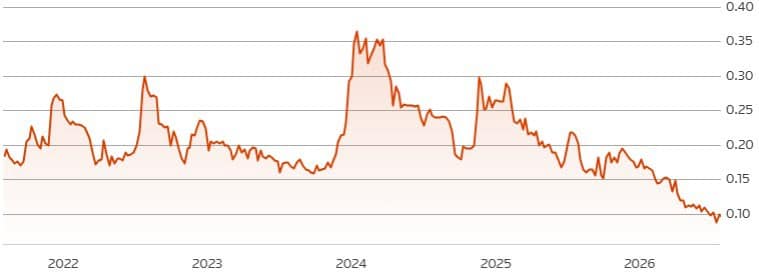
| 2025A | (0.04) | “ | 52-Week Range: $0.32 – $0.14 |
| 2024A | (0.01) | “ |
Source: Company filings, Factset consensus estimates
COMPANY OVERVIEW
Incorporated in 1991, BioLargo, Inc. is based in Westminster, California. The company invents, develops, and commercializes various platform technologies. These technologies solve challenging environmental problems including water contamination by per- and polyfluoroalkyl substances (PFAS), advanced water and wastewater treatment. In addition, the company’s technologies focus on controlling industrial odor and volatile organic compounds, air quality, infection, and other environmental remediation needs. BioLargo provides full-service environmental engineering services.
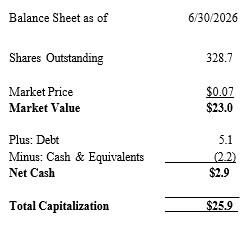
BioLargo operates across seven areas: water reuse, odor control, infection control, air quality, energy storage, PFAS, and full-service engineering. The company has a market capitalization of approximately $30 million, trades on the OTCQX, and carries roughly $3 million in net debt. Approximately $1.7 million has been invested in the PFAS business.
Reason For Comment:
The following are key takeaways from Sally Gutierrez, BioLargo’s Board Member, at our 4th Annual PFAS Symposium:
- AEC Technology: BioLargo’s Aqueous Electrostatic Concentrator (AEC) remains a turn-key solution for PFAS capture and destruction. It is broad-spectrum, low-waste, and efficient. The system uses electrical fields to separate PFAS molecules followed by electrical oxidation for destruction. It produces minimal waste (approximately 1 lb of membrane medium versus ~40,000 lb of spent carbon for GAC systems), requires no chemicals, has low energy costs, and achieves non-detect levels.
- Maintenance and operating costs are significantly lower than GAC. The company emphasizes that capital is the easy part; the ongoing operating bill is the harder challenge for utilities.
- The system has logged more than 10,000 hours of continuous operation and has completed more than a dozen pilot studies.
- Commercial Progress: The Lake Stockholm, New Jersey installation has treated more than 2 million gallons over 7+ months of continuous service. The treated water has met the 4 ppt federal limits. The first industrial contract has been signed, and pilots are converting into full systems. A strategic relationship with Aquatech (announced May 2025) supports further deployment.
- Market Opportunity: Approximately 66,000 public water systems are subject to the PFAS rule. An AWWA study by Black & Veatch estimated the market above $3.8 billion. BioLargo addresses the full chain: industrial pre-treatment, wastewater discharge, landfill leachate, biosolids, soil and groundwater, CERCLA liability, and shorter-chain compounds. The drinking water rule did not include the whole market.
- Funding and Regulatory Environment: Federal funding for emerging contaminants is in its final appropriation year ($945.7 million). Utilities that have already built systems are now facing operating costs. State and local action continues to drive demand even as federal timelines evolve. Practical, lower-waste approaches such as AEC help communities meet standards.
- Next Steps: Continued conversion of pilots to commercial systems, expansion through the Aquatech partnership, and broader application across the capture-concentrate-destroy continuum.
Capitalization ($ in millions)
BioLargo, Inc. Price Performance
Source: reuters.com
| BioLargo, Inc. | ||||
| ($ Millions – Percent Change) | ||||
| Year | 2024 | 2025 | 2026E | 2027P |
| Revenue | $17.8 | $7.8 | $5.2 | $15.8 |
| % Growth | -56.3% | -33.1% | 203.8% | |
| EBITDA | ($4.1) | ($14.5) | ($12.3) | ($8.8) |
| % Margin | nm | nm | nm | nm |
| EPS % Growth | ($0.01) | ($0.04) nm | ($0.05) nm | ($0.03) nm |
| EBITDA Mulitple | nm | nm | nm | nm |
| P/E Multiple | nm | nm | nm | nm |
| Source: Public data and Factset consensus estimates |
Birchtech Corp. (BCHT – $1.18 – NYSE American)
| Year | EPS | P/E | |
| 2027P | 0.00 | NM | Dividend: None Current Return: Nil |
| 2026E | (0.26) | NM | Shares O/S: 26 million |
| 2025A | (0.11) | NM | 52-Week Range: $0.81 – $0.40 |
| 2024A | 0.06 | NM |
Source: Company filings
COMPANY OVERVIEW
Headquartered in Corsicana, Texas, Birchtech Corp., an environmental services and technology company, engages in developing and delivering solutions to the power industry in the United States and internationally. It provides mercury capture solutions. Its Sorbent Enhancement Additive (SEA) technology offers total mercury control with solutions based on a thorough scientific understanding of actual and probable interactions involved in mercury capture in coal-fired flue gas. The company is also involved in the extraction and processing of rare earth elements.
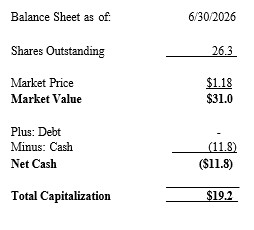
In addition, it provides water purification solutions that focus on PFAS/PFOS removal from potable water. Birchtech Corp. was formerly known as Midwest Energy Emissions Corp. and changed its name to Birchtech Corp. in October 2024. The company has strengthened its balance sheet through a recent $16.4 million capital raise and maintains a cash position of approximately $11.8 million.
Reason For Comment:
The following are key takeaways from Birchtech’s Founder, President & Chief Executive Officer Richard MacPherson at our 4th Annual PFAS Symposium:
- Birchtech continues to leverage its legacy strength in activated carbon technologies and mercury-removal solutions while advancing commercialization of its water/PFAS business. The core air business generates recurring, relatively stable revenue, with product sales expected to grow and Q3 results anticipated to increase year-over-year.
- The company has adopted a data-first and research-first approach. Its design center provides utilities with fast, accurate, and affordable testing to determine PFAS levels. Birchtech has developed an ion exchange product capable of treating PFAS and other contaminants.
- Granular activated carbon (GAC) is expected to become a mainstay for filtering PFAS as regulatory compliance ramps in 2030–2031. The U.S. addressable market for the company’s technologies is estimated at approximately $310 million to $445 million.
- A key strategic asset is the company’s carbon rejuvenation technology. The carbon-rejuvenation facility is expected to come online in 2028, with performance targeted to be comparable to virgin activated carbon. Initial $1 million purchase orders are tied to the facility, and capacity expansion is a priority.
- Key near-term catalysts include collection of proceeds related to a $78.4 million judgment, commercialization of the water/PFAS business, additional licensing revenue, and continued expansion of rejuvenation capacity. Intellectual property proceedings are expected to be terminated.
- In developing the water business, management determined approximately three years ago that the air business was approaching a plateau. The company invested millions, hired expertise in PFAS and carbon, and expects the water business to begin scaling in 2027.
- Owning reactivation capacity is viewed as strategically important versus pure supply. Management prefers a technology-focused approach rather than competing directly with larger players as a commodity supplier.
- Rejuvenated carbon can be reactivated multiple times, though effectiveness decreases with each cycle. The company works with dozens of engineering firms while continuing to develop additional environmental technologies.
Capitalization ($ in millions)
Birchtech Corp Price Performance
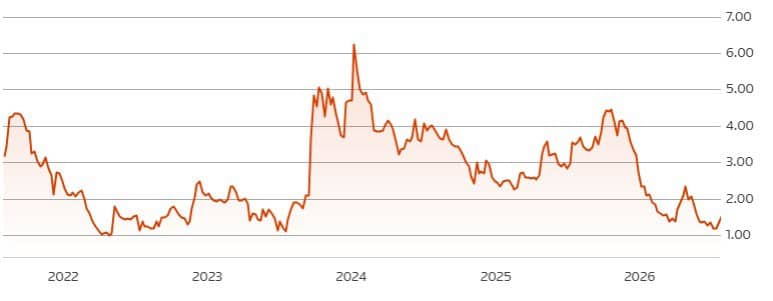
Source: reuters.com
| Birchtech Corp | ||||
| ($ Millions – Percent Change) | ||||
| Year | 2024 | 2025 | 2026E | 2027P |
| Revenue | $17.4 | $17.6 | $16.6 | $28.8 |
| % Growth | 1.3% | -5.8% | 73.5% | |
| EBITDA | ($6.9) | ($2.6) | ($4.3) | $2.8 |
| % Margin | nm | nm | nm | nm |
| EPS | ($0.11) | ($0.16) | ($0.26) | $0.00 |
| % Growth | nm | nm | nm | |
| EBITDA Mulitple | nm | nm | nm | 6.9x |
| P/E Multiple | nm | nm | nm | nm |
| Source: Public data and Factset consensus estimates |
BP Polymers (Private)
COMPANY OVERVIEW
Headquartered in Charlottesville, VA, BP Polymers is the exclusive North American manufacturer of Kortrax® (patented) Barrier Resins (BR). Kortrax BR is a nylon-based, more eco-friendly, and economical solution for chemical packaging made in the US that is PFOS and PFOA free. Kortrax BR is also used in the manufacturing of Baritainers® by BP’s sister-company Barrier Plastics. Baritainers are high-density polyethylene containers that are a revolutionary new way of packaging and transporting liquid chemicals that have proven difficult to contain and traditionally require either fluorinated high-density polyethylene (HDPE) containers or metal packaging.
Reason For Comment
The following are key takeaways from BP Polymers’ Founder and Chief Operating Officer Kevin Callahan and CKS Packaging’s Chief Sustainability Officer Mike Bonsignore at our 4th PFAS Symposium:
- PFAS Replacement: Replacing PFAS has been a major challenge in barrier packaging, which is needed in many of the products people use on a daily basis. This is typically done through fluorination of polymers to treat the packaging to withstand long-term use. Fluorination of containers produces PFOA as a byproduct in rates significantly higher than the 4 ppt mandates. This contaminated plastic is then recycled and reused in plastic packaging repeatedly which perpetuates exposure to PFAS. BP Polymers produces Kortrax which is a patented barrier resin additive. It is safer with no PFAS used, is more efficient/economic than traditionally used barrier packaging methods, and its materials are EPA and FDA compliant as PFAS free.
- Customer Testimonial: Competitors who use fluorine for barrier packaging are under scrutiny and facing lawsuits which provides an advantage for BP Polymers. Mike Bonsignore, Chief Sustainability Officer of CKS Packaging, BP’s largest customer, joined virtually to provide a customer testimonial. Kortrax is added during manufacturing, is recyclable, and can be used on the same manufacturing equipment, requiring minimal switching changes. The company has about 2 million lbs of capacity with room to grow and additional capacity expansion can be done for relatively low capex. The product works well, is PFAS free, and highly regarded by end customers. The companies’ see the ability to move further into agriculture, personal care, industrial, and medical packaging.
- Growth and Future: BP is currently highly profitable with strong margins, growing fast, and with a large market opportunity. Regulatory pressure on PFAS/fluorinated packaging could provide a significant further tailwind. Management is open to the idea of going public and may simplify the two-company structure in the process if it did. The need to raise capital will be driven by the needs for expansion. BP summarized its thesis as: patented PFAS-free technologies, strong growth, improving margins, and lots of capacity to scale with low additional capital.
Maryland Department of the Environment
OVERVIEW
Established in 1987 and headquartered in Baltimore, the Maryland Department of the Environment (MDE) administers and enforces state programs protecting air, water, land, and public health. The agency oversees environmental permitting, compliance, pollution prevention, and remediation and provides technical assistance to communities and businesses. Zachary Schafer has served as Assistant Secretary for Policy since January 2025. He previously worked at the U.S. Environmental Protection Agency’s Office of Water and held infrastructure and environmental policy roles, including at United for Infrastructure and the White House Council on Environmental Quality.
Reason For Comment
The following are key takeaways from Assistant Secretary for Policy Zachary Schafer at our 2026 PFAS Symposium:
- State Versus Federal Regulation: Schafer described a widening divergence between state PFAS policy and the federal regulatory approach. Although EPA has proposed changes to the 2024 drinking water rule and a later compliance deadline, Maryland intends to proceed with the original six-analyte framework and 2029 schedule, subject to future federal developments. The state is also pursuing industrial wastewater discharge restrictions.
- Drinking Water Compliance: Approximately 71 Maryland water systems, mostly small systems serving roughly 200,000 residents, were identified as potentially needing PFAS-related compliance action; approximately 36 smaller systems still required action. Maryland expects compliance before 2029. Schafer highlighted the importance of financing and potential consolidation or regionalization for smaller water systems as federal infrastructure funding winds down.
- Biosolids and Source Control: Maryland established restrictions on land application of PFAS-contaminated sewage sludge, including a 50 ppb upper threshold and a 25 ppb lower threshold that triggers mitigation requirements, evaluated on a rolling 12-month basis. Schafer argued that controlling industrial PFAS discharges before they enter wastewater systems can be more cost-effective than addressing concentrated contamination in biosolids.
- AFFF Destruction Procurement: Maryland authorized $500,000 for a pilot program to collect and destroy PFAS-containing firefighting foam. Two procurement attempts initially drew no bids; after modifying requirements, the state received seven bids. The experience illustrates how conventional government procurement processes can delay deployment of specialized remediation technologies even when public funding is available.
- Expanding Compliance Market: Schafer expects continued state activity around PFAS-containing products, disclosure, labeling, and phase-outs. He also highlighted possible PFAS exposure from certain data-center liquid-cooling systems. These trends could increase demand for analytical testing, source identification, industrial pretreatment, consulting, and remediation services, independent of federal drinking water deadlines.
Minerals Technologies Inc. (MTX – $62.56 – NYSE)
| Year | EPS | P/E | |
| 2027P | $6.98 | 9.0x | Dividend: $0.48 Current Return: 0.8% |
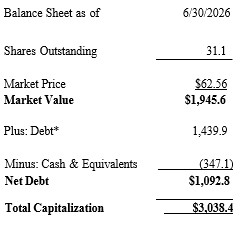
| 2026E | 5.99 | 10.4 | Shares O/S: 31.1 million |
| 2025A | 5.52 | 11.3 | 52-Week Range: $83.34 – $62.91 |
| 2024A | 6.15 | 10.2 |
Source: Company filings, Thomson consensus estimates
COMPANY OVERVIEW
Based in New York City, Minerals Technologies (MTI) is a resource and technology company focusing on minerals-based products and related systems. MTI realigned the business in 2023 and now operates in two segments: Consumer & Specialties (53% of total) split between Household & Personal Care with mineral-to-market products serving pet care, personal care, fabric care, and edible oil and renewable fuel purification, and Specialty Additives serving paper, packaging, sealants & additives, ceramics, plastics, and food & pharmaceutical markets; and Engineered Solutions (47%) with High Temperature Technologies providing specially formulated blends and technologies to foundry and steelmaking industries, and Environmental & Infrastructure offering waterproofing, water purification, remediation, and other fluid management technologies to industrial markets. Minerals Technologies is expected to earn ~$5.99 per share on $2.2 billion of revenue and $389 million of Adj. EBITDA in 2026.
Reason For Comment
The following are the key takeaways from Minerals Technologies’ Michael Donovan, VP, Global R&D Director CETCO, and Barry Shadrix, Global Director Water & Remediation from our 4th Annual PFAS Symposium.
- Members of Minerals Technologies’ R&D team shared the progress achieved and talked about the increased interest in the company’s FLUORO-SORB technology, which removes the PFAS chemicals from landfills, drinking water, and wastewater.
- Minerals Technologies is a resource and technology company focusing on minerals-based products and systems. The company believes that FLUORO-SORB could be an off-the-shelf solution for a wide variety of PFAS contamination, especially given the recent drinking water regulations and government grants likely to be major tailwinds. With limited cost effective PFAS treatment options available, the company believes that FLUORO-SORB could be a player in a $1 billion/year addressable market; however, the timing depends on compliance, currently required by 2031. The CERCLA designation is also expected to accelerate site cleanup obligations.
- FLUORO-SORB is made from sodium bentonite, commonly used in drilling and cat litter among other applications. Sourced from the company-owned mines in South Dakota and Wyoming, it is extremely absorbent with a high surface area to volume. As most types of PFAS carry a negative charge, MTX alters the surface of the material to give it a positive charge, thereby attracting the chemicals’ molecules. The thin FLUORO-SORB plates can expand by as much as 5-10 times their initial thickness as PFAS gets stuck between them. Longer lasting than others, the material appears to outperform activated carbon and ion exchange; its price is slightly above that of carbon and similar to that of the more expensive ion exchange system. In some applications, a FLUORO-SORB-impregnated textile fabric can cover affected areas thereby preventing the chemicals from leaking out.
- Approximately 3,900-6,300 sites in the U.S. with PFAS contamination are affected by the recent EPA limits of four parts/trillion in drinking water. At present, there are more than 300 global drinking water facilities, 120+ landfills, and 35+ wastewater projects in the company’s pipeline. Sodium Bentonite’s unique capabilities allow for versatile applications: subsurface injection, sediment capping wastewater filtration, soil remediation (by mixing it with the soil), and surface water gravity filtration. The company has 250+ pilots and studies worldwide, and 10 full-scale commercial deployments in the U.S. The international interest is growing resulting in deployment in the UK, Sweeden, Belgium and the Netherland, as well as validation/approval in Israel, Germany, the UK, and pilot projects in France, Japan, and Australia.
- FLUORO-SORB can act as a standalone solution in certain systems and can also be used as a component in more complex systems. As a pre-treatment it would extend the life of activated carbon beds already used by water utilities; it could also specifically isolate PFAS from waste, thereby improving incinerators’ efficiencies by burning less extra material.
- Given Minerals Technologies’ significant mineral resources, and ownership of the mineral rights to the clay, it will be able to meet the anticipated strong demand following the impact from regulations, public perception, and litigations. The company’s already ample capacity can easily be doubled with minimal capital expenditures. As a patented product, combined with world-class mineral reserves, FLUORO-SORB offers customers a less expensive overall solution, compared with activated carbon, as it requires a smaller infrastructure, lower capital and lower operating costs (removal only needs two minutes of water contact vs 10-20 minutes with activated carbon).
Capitalization ($ in millions)
Minerals Technologies Inc. Price Performance
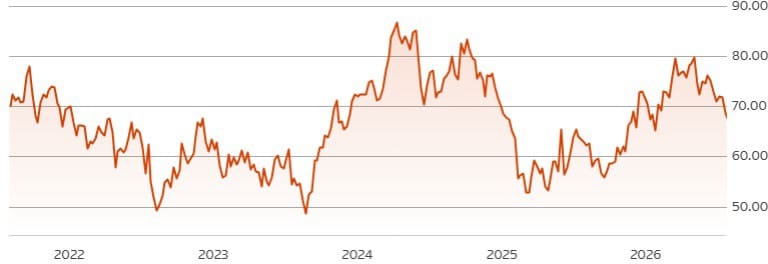
| Source: reuters.com |
| Minerals Technologies Inc. |
| ($ Millions – Percent Change) |
| Year | 2024 | 2025 | 2026E | 2027P | ||
| Revenue | $2,118.4 | $2,072.6 | $2,186.0 | $2,288.0 | ||
| % Growth | -2.2% | 5.5% | 4.7% | |||
| EBITDA | $411.2 | $379.9 | $388.5 | $414.0 | ||
| % Margin | 19.4% | 18.3% | 17.8% | 18.1% | ||
| EPS | $6.15 | $5.52 | $5.99 | $6.98 | ||
| % Growth | -10.3% | 8.5% | 16.5% | |||
| EBITDA Mulitple P/E Multiple | 7.4x 10.2x | 8.0x 11.3x | 7.8x 10.4x | 7.3x 9.0x |
Source: Public data and Factset consensus estimates
*Includes talc liability reserve of $475mm
National Association of Water Companies (NAWC)
OVERVIEW
The NAWC represents private water utilities across the nation; it also includes state-regulated drinking water and wastewater utilities as well as members that participate in public-private partnerships. The 15 largest NAWC member companies collectively invest over $9 billion annually in water infrastructure and have significant expertise and resources.
Our speaker was Robert Powelson, NAWC President and CEO. Prior to joining NAWC, he served as a Federal Energy Regulatory Commissioner; Nominated by President Donald J. Trump in May 2017. He has also served as Chairman of the Pennsylvania Public Utility Commission (February 24, 2011-May 7, 2015), and with the Pennsylvania’s Marcellus Shale Advisory Commission. He served as chairman of the NARUC Committee on Water and represented the Water Committee on NARUC’s Task Force on Climate Policy.
Reason For Comment
The following are key takeaways from NAWC President & CEO Robert Powelson at our 4th Annual PFAS Symposium:
- Mr. Powelson outlined the major challenges and opportunities facing the U.S. water utility sector. He emphasized that increasing infrastructure investment is required to maintain safe reliable drinking water and smaller municipal systems will likely turn to private-sector partnerships to meet rising capital needs, especially under new PFAS compliance standards. NAWC members continue to demonstrate strong leadership in meeting and exceeding federal and state regulations, ensuring access to safe, clean, drinking water as the population grows and resource pressures intensify.
- Powelson highlighted the unsustainable fragmentation of the nation’s water infrastructure, noting that the U.S. operates over 51,000 drinking water systems—85% of which are municipally owned—compared with just 3,200 electric and 1,000 gas utilities. More than 1,500 systems are already in serious violation due to contamination and weak compliance. The EPA’s PFAS regulations, which require less than four parts per trillion, are expected to expose marginal systems and accelerate consolidation across the industry, benefiting companies able to invest and comply.
- The water utility sector is more capital intensive than electricity or gas, and despite bipartisan infrastructure funding of $55 billion ($13 billion for lead service line replacement, $12 billion for PFAS remediation, and the remainder for infrastructure upgrades) federal support remains insufficient. The five-year market opportunity is estimated at $1.6 trillion, or $1.9 trillion when including stormwater treatment. Powelson argued that private capital will be essential, as government funding alone cannot sustain the sector.
- NAWC members are committed to compliance rather than litigation over the EPA’s PFAS rule. Many have in-house testing capabilities that can alleviate pressure on overburdened laboratories. However, Powelson stressed that polluters, not utilities or customers, must bear the costs of cleanup. Making utilities pay for contamination caused by chemical companies would represent a profound failure in water equity. States with revolving loan funds and new EPA programs may offer some relief, but broader congressional action could still be required. The estimated national cost to address PFAS contamination is roughly $50 billion, with litigation targeting major polluters such as DuPont and 3M already resulting in multibillion-dollar settlements.
- Affordability remains a central concern. Water is essential to life, yet utility costs are rising sharply, with electricity rates increasing nearly three times faster than inflation. Maintaining affordability while funding infrastructure improvements is critical. Policymakers are becoming more aware of the crisis, and both municipal and private operators must use modern tools such as GIS technology to manage assets, plan upgrades, and set sustainable rates. Consolidation (both public and private) will be necessary to achieve scale, efficiency, and regulatory compliance.
- Powelson pointed out that spikes in demand and data center proposals are resulting in increased water prices. He also mentioned that the negative view regarding data centers’ water usage was not correct as most plan plans include recycling and reusing water, therefore they should not have the large hit on water availability as is publicized. Rob also mentioned that having to comply by 2031 instead of 2029 would have no effect on the work needed due to supply chain constraints, and noted that the engineering teams have been very aggressive in developing technologies to remove PFAS from sites.
- Mr. Powelson touched on investors’ perspective regarding utilities: The attractive attributes consist of accelerated capital infrastructure spending trends, consolidation opportunities of municipal systems, consistent history of annual dividend increases, and compelling story for ESG investors. The challenges, compared to electric and gas utilities, are public perception of private ownership of water assets, fewer regulatory mechanisms utilized to minimize regulatory lag, limited investable opportunities, and valuation premiums.
REGENESIS (Private)
COMPANY OVERVIEW
REGENESIS is a privately held environmental remediation company based in San Clemente, California, offering technologies for contaminated soil and groundwater, including PFAS, petroleum hydrocarbons, chlorinated solvents, and metals. Its PFAS products include PlumeStop®, a colloidal activated-carbon formulation injected into groundwater formations to limit contaminant migration, and SourceStop®, used in contaminated soil and source zones to reduce leaching. The company also provides bioremediation, chemical oxidation and reduction, and other in-situ remediation technologies. East Region Manager Alana Miller has 11 years of environmental industry experience and holds a B.S. in Civil and Environmental Engineering from Princeton University.
Reason For Comment
The following are key takeaways from REGENESIS’ East Region Manager Alana Miller at our 2026 PFAS Symposium:
- Technology and Applications: REGENESIS specializes in in-situ PFAS retention rather than destruction. PlumeStop uses colloidal activated-carbon particles, approximately 1–2 microns in diameter, to establish subsurface adsorption barriers that reduce groundwater plume migration; SourceStop is mixed into contaminated soil to limit PFAS leaching. The approach may avoid the need to extract, transport, and dispose of large volumes of contaminated water or soil.
- Field Performance: Miller cited more than 75 PFAS deployments, compared with 50 sites referenced in the pre-event booklet, reflecting a more recent company-reported figure. Presented case studies included greater than 99% reduction in PFAS leachate concentrations and groundwater barrier performance sustained for more than 4.5 years. REGENESIS models projects for at least 10 years of barrier performance, while some models suggest substantially longer retention periods.
- Remediation Economics: Management indicated that lifecycle costs for suitable in-situ projects may be approximately one-third or less of conventional pump-and-treat systems. The economics depend on hydrogeology, contaminant loading, monitoring obligations, and site-specific treatment requirements. Because adsorption capacity is finite, long-term monitoring and potential barrier reinforcement remain important.
- Regulatory and Defense Demand: REGENESIS has seen a marked increase in military-related RFPs over the preceding 6–12 months. Miller identified regulatory uncertainty around acceptable remediation endpoints and formal site closure as a key obstacle to faster spending, noting that site owners may defer investment without assurance that regulators will accept a proposed remedy.
- Commercial Positioning and Liability: REGENESIS’ retention approach is particularly relevant where preventing contaminant migration is more economical than full extraction and destruction. However, immobilized PFAS remains on-site, so responsible parties may retain ongoing monitoring and liability obligations. The technology could be used alongside PFAS destruction systems for concentrated waste streams.
Responsible Energy Corp. (REH – C$1.05 – TSXV)
COMPANY OVERVIEW
Headquartered in Maitland, Ontario, Responsible Energy Corporation is a Canada-based clean technology company. The company is commercializing its multi-patented Free Radical Gasification (FRG) platform for the destruction of PFAS, AFFF, and other hazardous liquid waste streams. Through its subsidiaries, the company is advancing FRG using independent third-party validation and commercialization to address the demand for permanent hazardous waste destruction solutions. Responsible Energy is focused on deploying its FRG platform to industrial and government customers seeking permanent destruction solutions for PFAS and other hazardous liquid waste streams.
Reason For Comment:
The following are key takeaways from Responsible Energy’s CEO Gordon Fraser at our 4thAnnual PFAS Symposium:
- FRG PFAS Destruction: Responsible Energy is the developer and owner of the multi-patented Free Radical Gasification (FRG) technology for permanent PFAS destruction. The company is positioning its technology for use in the emerging post-concentration PFAS destruction market with a particular focus on high-concentration PFAS waste streams, starting with AFFF firefighting foams. REH is on Gen 5 of its commercial scale FRG system which can achieve >99.99% PFAS destruction in under 5 seconds using ultra-high heat (>5,000 °C) and free radical chemistry. FRG permanently destroys PFAS and is built to process complex, multi-compound liquid waste streams including PFAS-contaminated water, leachate, AFFF, and industrial liquid waste. REH was founded in 2007, with FRG Gen 1 developed in 2010. Over time, the FRG system has evolved to move from lower value waste streams in solid waste (~$87/ton) to hazardous liquids ($250/ton) to PFAS/AFFF (>$5,000/ton) with Gen 5.
- Process Validation/Partnerships: Legacy AFFF inventories are a high-value waste stream because they carry significant liability for customers. Storage and transfer of AFFF does not eliminate PFAS liability and creates a significant customer need and attractive initial market for FRG. Tetra Tech (NYSE: TTEK) partnered with REH to test and validate FRG under the U.S. Department of Defense’s Environmental Security Technology Certification Program (ESTCP) at the Engineer Research & Development Center (ERDC) facility in Vicksburg, Mississippi. Preliminary testing demonstrated >99.9% destruction of undiluted AFFF. These completed trials provided strong validation for the effectiveness of FRG. The final report regarding independent analytical results from third parties is pending.
- Newly Public: REH presented at our Symposium as its first investor event as a public company. Through a Qualifying Transaction with AD4 Capital Corp (Canadian version of a SPAC) completed on August 26, 2026, Responsible Energy became public and commenced trading under ticker REH on the TSXV. REH’s goal has always been to go public through its own means while maintaining a lean operating structure, strong capital efficiency, and avoiding angel investors. The transaction with AD4 provided an opportunity and helped the company raise ~CAD2.3 million. Management’s goal is to eventually be listed in the US and expand its operations into the US market. The company has no need for further capital in the immediate future. REH is required to have twelve months of cash on hand, based on its current burn rate, to be viable under its recent listing. Management prefers to let the “dust settle” on the stock, but expects that sometime in the next year it will need a significant capital raise to accelerate growth.
- Path Forward and Commercialization: Over twenty years of developing FRG, REH has run very lean, investing only $15 million in technology, commercial readiness, and went public with no debt. The company has now reached commercial scale and the FRG systems do not need to get larger. Management has not yet publicly disclosed the size of its backlog, but it is targeting potential business with government, defense, airports, and companies dealing with PFAS/AFFF waste. It sees a large opportunity if successful testing translates into commercial contracts. The anticipated future milestones will consist of commercialization, first major contract wins, and a potential US listing.
Capitalization (C$ in millions)
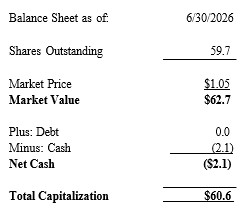
Source: Public data and Factset consensus estimates
Responsible Energy Price Performance
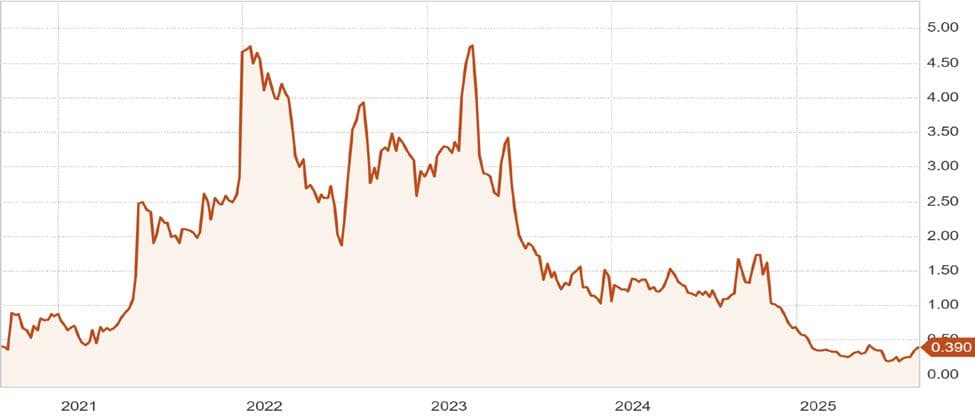
Source: reuters.com
Veolia Environment SA (VIE-FR- €32.02- XPAR)
| Year | EPS | P/E | |
| 2027P | €2.61 | 12.3x | Dividend: €1.50 Current Return: 4.7% |
| 2026E | 2.37 | 13.5 | Shares O/S: 42.8 million |
| 2025A | 2.25 | 14.2 | 52-Week Range: €37.66 – €27.85 |
| 2024A | 2.13 | 15.0 |
Source: Company filings, Factset consensus estimates
COMPANY OVERVIEW
Headquartered in Paris, France, Veolia Environnement is a global integrated environmental services company, specializing on water, waste, and energy services across more than 50 countries. Founded in France in 1853, the company serves municipalities, industrial clients and commercial enterprises by providing end-to-end environmental solutions, from drinking water treatment and wastewater management to waste collection and recycling, as well as energy efficiency and decarbonization services. Veolia is organized along three business segments, “Water”, “Waste” and “Energy”, of which “Water” and “Waste” account for 75% of group revenues. While a truly global company, Veolia generates around 60% of group revenues in Europe and around 20% in the French home market. Veolia has grown through a combination of strategic and transformative acquisitions over the past decade, most notably with the €13 billion SUEZ takeover in 2021/22, after which the company started a portfolio optimization & diversification strategy with more than €8 billion in asset rotations over the past four years. Veolia has been very successful in realizing synergies from integrating acquired businesses as the company has achieved €534 million cumulative synergies from the SUEZ acquisition in 2022-25.
Reason For Comment:
The following are key takeaways from Veolia’s Head of Investor Relations and Financial Communication Selma Bekhechi at our 4thAnnual PFAS Symposium:
- Selma highlighted Veolia’s unique strategic positioning around the megatrends of water scarcity and waste treatment, which provides its business with strong long-term growth prospects. Veolia provides proprietary solutions and technologies that secure access to water supply, which is as critical a resource as oil, if not more, as can be seen now very strikingly in the Middle East when desalinization plants are being targeted in the ongoing military conflict. In addition, Veolia’s products and services also protect the health of citizens by removing pollutants from the ecosystem and treating hazardous waste.
- Veolia offers a unique business combination of resilience and growth, which the company has demonstrated by posting sequential annual earnings growth in an environment of rising inflation and despite trade wars, economic downturns, and more recently, the war in Iran. In parallel, Veolia is a global environmental services leader, which operates in 44 countries across five continents as a technology and innovation leader with 14 R&D centers and over 5,000 patents. This enables Veolia to offer unique integrated product solutions, which combine waste, water, and energy services.
- Veolia’s two largest business segments – Water and Waste – account for 75% of group revenues and the company holds the leading global market position in several business units within both segments: in water services, water technologies, hazardous waste and circular economy. In the smaller Energy segment, Veolia is the second largest global player in district heating and energy efficiency services. Veolia’s business is geographically well diversified with 20% of group revenues coming from the stable French home market, 43% from Europe and 26% is generated in the Americas, Asia, Pacific and Africa & Middle East (which grew 4.1% in 2025).
- Veolia distinguishes its business units between “Stronghold activities” with steady cash flows but slower growth and “Booster activities” with technology-driven faster growth rates. Stronghold activities are the “Municipal Water”, “Solid Waste” and “District Heating and Cooling Networks” business units, which are more mature and generate reliable cash flows. Booster activities are the “Water Technologies”, “Hazardous Waste” and “Bioenergy” business units, which grow twice as fast as the Stronghold businesses because they are tied to global megatrends (such as water scarcity and waste treatment).
- Two years ago, Veolia launched its “GreenUp” strategy, which channels capex into its Booster growth businesses with higher EBITDA margin potential (Water Technologies, Hazardous Waste, and Bioenergy & Energy Efficiency). After reporting net income CAGR of 11.8% in 2022-25, Veolia now targets a net profit CAGR of around 10% in 2023-27. Similarly, after reaching a record ROCE of 9.4% in 2025, Veolia aims to maintain a ROCE of at least 9% going forward until 2027.
- Selma highlighted the innovative product offerings related to AI industries and PFAS, which are both on a trajectory to reach €1 billion in revenues by 2030 each. AI industries include data centers and chips manufacturing, which are businesses that are keen to secure steady water supply for its cooling systems and require ultrapure water. These industries also use large amounts of high-quality solvents and acids.
- As part of its “PFAS & New Pollutants” product offerings, Veolia’s recent acquisition of Clean Earth in the US will enhance its US hazardous waste capabilities with a presence in 50 states. The acquisition of the soil remediation specialist Enviropacific in Australia will also support reaching the €1 billion revenue target by 2030. Selma sees this innovation-driven growth as testimony of the group’s transformation towards more value-added product offerings and services.
- Veolia is very active in M&A and continues its business transformation towards more international and multi-technology driven Booster activities with strategic portfolio management. Over the past four years, Veolia has rotated assets worth €8.5 billion and targets €2 billion of asset disposals until mid-2028.
- Veolia acquired Clean Earth for €2.5 billion in the US, which doubled its size in the US hazardous waste market and gave Veolia the second largest market share in the US market with more than $2 billion of revenues. Veolia is now building a national platform to offer a full range of dealer services throughout the US. The Clean Earth integration is at full speed and Veolia plans to achieve around $120 million in cost synergies by year four and expects the acquisition to be earnings-accretive from 2027 onwards.
- Consistent dividend growth provides further evidence of Veolia’s defensive and resilient business set-up. Since 2019, the company has continuously raised its annual dividend per share, even in a volatile macro and business environment. For 2025, the dividend per share rose by 7% and going forward, Veolia targets to grow the dividend per share in line with EPS.
- Selma finally highlighted that Veolia has raised its full year net profit guidance for 2026 to “at least 8% growth”. This new guidance now also includes the Clean Earth acquisition – which is initially earnings-dilutive – in the 2026 results (before, the initially negative earnings impact from Clean Earth was excluded from the 2026 guidance). The guidance raise is rather significant for Veolia because in the past, the company has usually not raised the full year guidance over the course of the fiscal year. Therefore, the guidance raise reveals the company’s confidence in the Clean Earth acquisition and shows that it can continue to grow its earnings even in a volatile macro and geopolitical environment.
| Capitalization (€ in millions) |
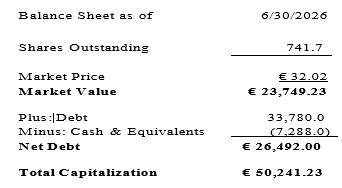
| Veolia Environment SA |
| Price Performance |
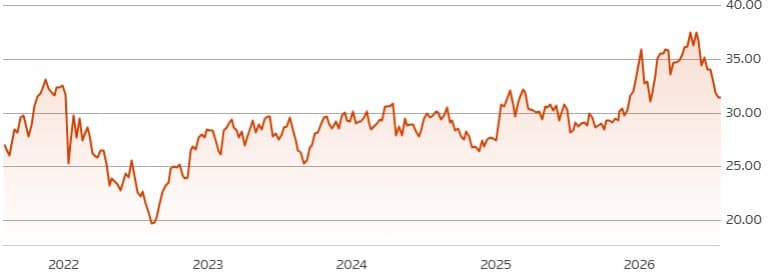
| Veolia Environment SA | ||||
| (€ Millions – Percent Change) | ||||
| Year | 2024 | 2025 | 2026E | 2027P |
| Revenue | € 44,692.0 | € 44,396.0 | € 46,182.0 | € 48,151.0 |
| % Growth | -0.7% | 4.0% | 4.3% | |
| EBITDA | € 6,788.0 | € 7,391.0 | € 7,405.0 | € 7,863.0 |
| % Margin | 15.2% | 16.6% | 16.0% | 16.3% |
| EPS | € 2.13 | € 2.25 | € 2.37 | € 2.61 |
| % Growth | 5.6% | 5.3% | 10.1% | |
| EBITDA Mulitple | 7.4x | 6.8x | 6.8x | 6.4x |
| P/E Multiple | 15.0x | 14.2x | 13.5x | 12.3x |
| Source: Public data and Factset consensus estimates |
249 Royal Palm Way. Palm Beach, FL 33480 Gabelli Funds TEL (561) 671-2100
This whitepaper was prepared by LtCol Tony Bancroft, USMCR (Ret), Rosemarie Morbelli, CFA, Wayne Pinsent, CFA, and Rebecca Stern, PhD. The examples cited herein are based on public information and we make no representations regarding their accuracy or usefulness as precedent. The Research Analyst’s views are subject to change at any time based on market and other conditions. The information in this report represent the opinions of the individual Research Analysts as of the date hereof and is not intended to be a forecast of future events, a guarantee of future results, or investment advice. The views expressed may differ from other Research Analysts or of the Firm as a whole.
As of September 30, 2026, affiliates of GAMCO Investors, Inc. beneficially owned 1.1% of Minerals Technologies and less than 1% of all other companies mentioned.
This whitepaper is not an offer to sell any security nor is it a solicitation of an offer to buy any security. Investors should consider the investment objectives, risks, sales charges and expense of the fund carefully before investing.
For more information, visit our website at: www.gabelli.com or call: 800-GABELLI 800-422-3554 • 914-921-5000 • info@gabelli.com