
On March 19, 2026, Gabelli Funds hosted its 17th Specialty Chemicals Symposium, with both in-person and virtual meetings. Participating companies included Arq, Inc., Ashland Global, Inc. BASF Corporation, The Chemours Company, Ecolab, Inc., Ingevity Corporation, LSB Industries, Inc., Magnera Corporation, Minerals Technologies, Olin Corporation, Orion S.A., Rayonier Advanced Materials, The Sherwin-Williams Company, and Standard Lithium Ltd. While the supply chain issues of the prior years had been settled, given the uncertain, volatile, economic and political environments, companies continued to ensure that they can supply their customers under all conditions. 2025 saw softer demand than anticipated and, as a result of the uncertainties mentioned, they are anticipating a similar environment in 2026. Prior to the situation in Iran, some expected a slight year-over-year improvement in the second half of 2026, but most did not expect to see growth resume until 2027; at this juncture, it is still too early to estimate the impact on demand.
The lower manufacturing activity of the past three years has affected the global economic environment; it was exacerbated by inflation and the uncertain impact from tariffs on consumer demand. At the time of last year’s March 20, 2025, Symposium, companies entered 2025 with, once again, a feeling of déjà vu: sluggishness continuing into the beginning of the year with a rebound in the second half, which did not happen. As we heard during this year’s Symposium, expectations of a second half pickup in 2026 remains all but certain, and concerns increased regarding the continuing impact on the global economy from volatile tariff announcements, the retaliation by our trading partners and, importantly, the direct and indirect impact from the higher oil and energy costs following the U.S. “excursion in Iran”. Inflation is rising again; consumer confidence is softening and expectations for further interest rate reductions have at the very least been pushed out. Domestically, the combination of the inflationary environment, the declining consumer confidence, the uncertainties regarding interest rates, and the impact from higher energy costs, may delay any anticipated housing recovery, regardless of how modest the previous expectations were.
Key topics included the following:
- Supply Chain/Raw Materials: While supply chain disruptions were no longer an issue in 2025, overall demand did not pick up, as anticipated, in the second half of the year. Due to the availability of raw materials, slow demand, and high inventory levels, raw material costs had generally stabilized, or declined, until recently due to the situation in Iran. As a result, crude oil/natural gas/energy costs have increased, and companies are already announcing price increases and/or surcharges in anticipation of the direct and indirect higher costs. Even if the situation in Iran were to stabilize quickly, the impact from the closure of the Strait of Hormuz will be long-lived as it may take at least three-to-six months for traffic to normalize; we note that this excludes the time necessary to repair the damages inflicted on several Middle East oil and refineries operations. However, one of the attributes of specialty products or technologies resides in the fact that sales are based on value, and not volume, due to the substantial amount of service attached to the specialty component. These factors should allow most companies to retain some of these price increases when the situation stabilizes and we expect to see margin improvement. In addition, working capital remains under control as companies, and customers, opted to order raw materials and products on a just-on-time basis due to the limited visibility of demand. As a result, cash flow generation increased, the level of debt declined, resulting in strong balance sheets. We note that given the economic and political uncertainties and volatility, managements are remaining cautious.
- Tariffs: In general, Specialty Chemicals companies, while global in nature, purchase most of their raw materials’ needs in the country in which they operate. In addition, their operations are also close to their customers to facilitate the supply of products and services. We heard confirmation from our Symposium’s presenters that, because of the current volatile environment, it is too early to assess the direct and indirect impact on their customers’ operations as they will be affected to different degrees based on their own end-markets and the demand for their end products. The direct impact from tariffs on specialties is minimal.
- Inflation: Following the 2022 higher overall costs and a positive price/cost ratio by year-end 2023, inflation continued into 2024. However, with slower demand and no supply issues in 2025, inflation had declined until “Liberation Day” when tariffs were announced on most of our trading partners. While the direct impact on specialty companies was small due to their ability to raise prices in line with the higher costs, managements believe that their customers’ order pattern and the size of these orders were affected. As inflation is again rising, as mentioned earlier, companies are announcing price increases and surcharges; at this juncture, given the uncertain demand, they don’t believe that their customers are pre-buying and building inventory ahead of the increases.
- Interest Rates: The high interest rates which have affected the housing market for the past several years were beginning to decline as demand slowed and inflation started declining in 2024 and continued into early 2025; as a result, the Federal Reserve implemented multiple interest rate cuts through 2025. However, previously anticipated additional cuts have been postponed due to the return of higher inflation following the impact from tariffs and, more recently, the higher price of oil and energy due to the situation in Iran. While it is too early to estimate the full impact, the still high interest rates, and the high cost of housing, may delay a housing market resurgence.
- Margins: Following internal actions targeting operating efficiencies and the benefit of selling price increases covering the overall higher inflationary costs, full year margins improved in 2024. The improvements continued into 2025 as raw material costs declined, and companies held onto some of the previous price increases. The recently announced price increases reflecting the current situation, combined with continuing work toward additional cost management, manufacturing consolidation, operational and purchasing efficiencies, should contribute to further margin improvement.
- Demand: The slow demand environment experienced in 2024 continued through 2025 as the anticipated second half recovery did not materialize. Given the uncertain tariff policy, the renewed inflation driven by the war in Iran, and potentially delayed interest rate cuts, companies are not expecting a recovery until 2027. In addition, consumer sentiment is deteriorating as food prices remain high; the recent jump in energy costs and gas at the pump are affecting their overall purchasing power.
- Companies’ Overall Focus: Despite the current headwinds from lower demand, still high interest rates, the impact from tariffs, and now the higher cost of oil and energy, companies remain focused on the long term. They have addressed prior years high inventories, increased operating efficiencies, lowered structural costs, reduced debt levels, and emphasized working capital management as well as cash flow generation. They are announcing additional pricing action in response to the higher input costs and anticipated overall inflation. Investments will continue to target organic growth, emphasize innovation and speed to markets. In addition, with strong balance sheets, acquisitions aiming to add complementary technology, entry into new markets, and geographic expansion are at the forefront of the use of cash. Dividends and share repurchases remain part of the focus on returns to shareholders, if attractive acquisitions are not available.
Arq, Inc. (ARQ – $2.27 – NYSE)

Source: ThomsonOne consensus estimates.
COMPANY OVERVIEW
Arq, Inc., headquartered in Greenwood Village, CO, is principally engaged in the sale of consumable air and water treatment options, including activated carbon (AC) and chemical technologies. The company sells consumable products, which utilize activated carbon and chemical-based technologies, to coal-fired utilities, industrials, water treatment plants, and other facilities within multiple end-markets. Its primary products are comprised of AC, which is produced from a variety of carbonaceous raw materials; they include both powdered activated carbon (PAC) and granular activated carbon (GAC). The company rebranded as Arq, Inc., with the ticker ARQ on the Nasdaq on February 1, 2024. It is focused on transforming itself from an industrial manufacturing company serving declining industries to an environmental technology company serving growth markets including water remediation of materials such as PFAS.
Reason For Comment: Arq, Inc.’s CEO Bob Rasmus presented virtually at our 17th Annual Specialty Chemicals Symposium. We discussed topics including the improvement of its PAC operations, the pause of its GAC operation, and the company’s near-term milestones.
- Transformation Into Arq: Legacy Advanced Emissions had historically focused on powdered activated carbon (PAC) products serving markets in secular decline: primarily scrubbing mercury emissions from coal-fired power plants. The company shifted its strategy in early 2023 with the acquisition of Arq, which significantly increased its capabilities in GAC for water treatment and energy transition, thereby targeting the higher growth end-markets of water remediation and purification, which are further boosted by coming PFAS regulations. At the same time, the company structurally improved its legacy PAC business by exiting money losing contracts and shifting to higher margin sales.
- GAC Pause: Along with Q4 results a week before the Symposium, Arq announced that it was pausing its GAC operations to conduct a comprehensive engineering and production process optimization review. The pause was necessary to fix significant engineering design flaws in the off-gas system that prevented the plant from hitting its 25M lbs nameplate capacity. At the Symposium, Bob emphasized that the company remains committed to GAC, and that the market fundamentals for GAC are too strong. After many issues and cost overruns, the company wants to analyze the best path forward, which may include spending the necessary money to skip phase 1 and move right to phase 2 for 50M lbs capacity. Arq plans to have a comprehensive update, including specific design remedies, costs, and timing, by its next earnings call in early May. Notably, the company says it has not lost any commitments from customers who are contracted for GAC once operations resume despite the many delays.
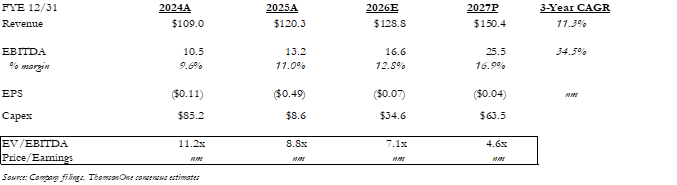
- 2026 Guide and Path Forward: Despite the major disappointment of the GAC pause, the company gave relatively positive 2026 guidance underpinned by its improved PAC business. The company sees 2026 revenue of $120-125M and adj EBITDA of $17-20M supported entirely by the PAC business with no GAC sales. Once a comprehensive plan is in place to move forward with GAC, the company aims to avoid any equity dilution by using a combination of $8–10M in FCF generated by the PAC business and ~$33 million in available debt capacity, keeping its leverage within a comfortable 3x EBITDA limit.
Table 1 Arq, Inc. Earnings Model
Ashland Global (ASH – $57.47 – NYSE)

Source: ThomsonOne consensus estimates.
COMPANY OVERVIEW
Based in Wilmington, DE, Ashland provides products, services and solutions targeting specific customer needs. The company’s additives are used in many markets with applications in architectural coatings, automotive, construction, energy, food & beverage, personal care, and pharmaceutical, among others. Since Guillermo Novo took the helm of the company as its CEO in December 2019, Ashland’s focus has been on specialty offerings, divesting low margin/low growth operations, and adjusting the corporate structure to the company’s smaller size.
Reason for Comment: Ashland’s Senior Vice President and Chief Financial Officer William Whitaker, CFA, joined us for a fireside chat during our 17th Annual Specialty Chemicals Symposium. We discussed topics including the company’s strategy, end markets, sources of growth, tariffs, and the potential impact from the situation in the Middle East.
- Tariffs & the Middle East: Following several years simplifying the portfolio, management is now focused on markets such as pharma, personal care, and architectural coatings. As a cross-functional leadership team, time is spent understanding the environment’s moving pieces, what they mean for the company, and how to react. If the severity of the energy price increases, or their duration extends, the situation will result in four sectors of impact: direct exposure to the region, freight shipping availability, inflation on costs and raw materials and, importantly, overall consumer demand.
- Internal Actions: Following some share loss in the early 2020s, management has been focusing on simplifying its portfolio, emphasizing organic growth, restructuring, as well as internal visibility and accountability. These steps should result in higher growth/higher margins as they are combined with work on operational efficiencies and investments.
- Innovations/New Products/Segments: The additives business serves a diversified market with multiple customer bases, and SKUs. New technology platforms have been introduced; however, approval and commercialization take time as it requires derisking, trials, fine-tuning, and potentially reformulation, before being launched.
- Personal Care: With products going on our bodies in the form of additives used in skin, hair, and oral care, new products introduction requires 2-3 years. They are also sensitive to inflation and its impact on consumer demand.
- Life Sciences: The focus is on the heavily regulated diversified pharmaceutical industry which requires quality, consistency, and reliability. As a result, while it may take 5-10 years for new products to be approved, but the category offers high returns. Ashland is strengthening its presence in oral dose, scaling injectables and tablet coatings, and expanding its offerings in bio processing.
- Specialty Additives: With its current expertise in rheology supplying the coatings industry, the category is very sensitive to construction and housing. The current situation in the Middle East and the resulting pickup in inflation will most likely negatively impact consumers, interest rates, and the housing market, pushing any potential recovery into 2027 as the earliest.
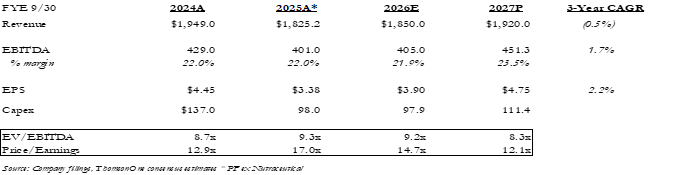
- Long-Term Growth: Management projects that the above growth engines and efficient operations should result in revenue growth 200-300bps above their markets, a 25% EBITDA margin (vs 22% in 2025), and FCF conversion above 50%.
Table 2 Ashland Global Holdings Earnings Model
BASF (BAS-XE – €53.41– XETRA)

Source: ThomsonOne consensus estimates.
COMPANY OVERVIEW
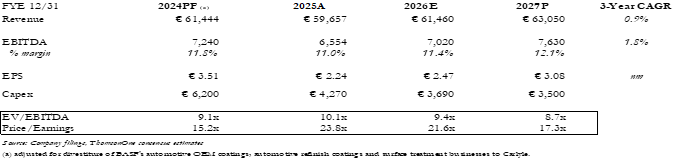
Headquartered in Ludwigshafen, Germany, BASF is a global chemical company serving customers operating within many different sectors. Management’s strategy is to add value, innovate to make customers more successful, and drive sustainable solutions for industries such as agriculture, health & nutrition, construction & housing, consumer goods, transportation, and electrical & electronics, among others. BASF has been upgrading its business portfolio with a focus on contributing to a sustainable future. With €59.7B in revenues and €6.6B of adjusted EBITDA in 2025, it is reporting results in six main groups, with four considered core and two standalone businesses. Chemicals (16.9% of 2025 total revenues) remain the cornerstone and supply the other segments with basic chemicals and intermediates, contributing to the organic growth of key value chains. Materials (21.4%) comprise advanced materials and their precursors for new applications and systems. Industrial Solutions (14.4%) develops and markets ingredients and additives for industrial applications such as polymer dispersions, pigments, resins, electronic materials, antioxidants and admixtures. Nutrition & Care (10.9%) strives to expand its position as a leading provider of nutrition and care ingredients for consumer products in the areas of nutrition, cleaners and personal care. Surface Technologies (15.0%) operates as a standalone business and includes catalysts, and battery materials for the automotive and chemical industries. Agricultural Solutions (16.1%) is the second standalone business. It aims to further strengthen its market position as an integrated provider of crop protection and seed treatment products. The portfolio comprises fungicides, herbicides, insecticides and biological crop protection products, seeds and seed treatment products.
Reason For Comment: BASF’s Head of North America IR, Alex Koehler, presented at our 17th Annual Specialty Chemicals Symposium. We discussed the many changes BASF has undertaken since last year’s symposium, including the sale of two operations, the current global environment, tariffs, and the impact from the war in Iran.
- BASF Now: Alex discussed some of the changes since the company appointed a new CEO and elected new Board members. Under the new management team, BASF has elected to pursue its green transformation and help customers reach their own targets. Following the decision to separate its business portfolio into two major categories such as standalone and core businesses, management sold its Brazilian architectural coatings to Sherwin Williams, it is in the process of selling its industrial coatings to private equity Carlyle and is also working on separating its Ag business.
- Strategy: Management’s focus is on accelerating its transformation with the remaining pillars contributing to profitable growth and value creation. With free cash flow expected to amount to €11B, management expects to return ~ €12B to shareholders over the next four years. Cost savings actions and improvement programs are on-going, capex will decline to below D&A, and management is working toward its Agricultural Solutions’ IPO in 2027. Regarding the Core businesses, the company is building on its leading positions in key value chains; the new Zhanjiang Verbund site in China, the first steam cracker in the world using 100% of renewable energy, started up successfully. It will be a key platform for long-term and sustainable growth in the largest and fastest growing chemical market in the world and provide low-priced raw materials to its core operations. Alex mentioned that the company would not make acquisitions in either the Ag or Nutrition categories just for the sake of consolidating the market.
- Economic Environment: Slow economic growth, inflation, and higher energy costs are expected to continue into 2026. While the German government has recently approved a stimulus, companies are still applying to receive potential contracts, with a potential benefit in the second half. However, given the Middle East tensions, management remains conservative in its 2026 assumptions and no longer sees the uplift in demand it previously expected.
Table 3 BASF Earnings Model
The Chemours Company (CC – $23.87 – NYSE)

Source: ThomsonOne consensus estimates.
COMPANY OVERVIEW
The Chemours Company, based in Wilmington, DE, provides performance chemicals in North America, the Asia Pacific, Europe, the Middle East, Africa, and Latin America. The company sells its products through direct and indirect channels, as well as through a network of resellers, third-party sales agents, and distributors. With 2025 revenues of $5.8B, Chemours operates through three segments: Titanium Technologies (TT- 42% of 2025 sales) offers titanium dioxide (TIO2), a white pigment which delivers whiteness, brightness, opacity, durability, and protection, used in coatings, plastics, and laminates for furniture and building materials; Thermal & Specialized Solutions (TSS- 36%) provides refrigerants, thermal management solutions, propellants, foam blowing agents, and specialty solvents under the Freon and Opteon brand names; Advanced Performance Materials (APM- 22%) sells various specialty product solutions, membranes, industrial resins, additives, films, and coatings for consumer electronics, semiconductors, digital communications, transportation, energy, oil and gas, and medical markets. They are sold as Teflon, fluoropolymers, Krytox performance lubricants, and Nafion brand names.
Reason For Comment: Brandon Ontjes, Vice President Investor Relations, presented at our 17th Annual Specialty Chemicals Symposium. We discussed topics such as the company’s markets and strategy, its legacy titanium technologies and the progress regarding its thermal management and liquid cooling adoption. In addition, we discussed the impact of tariffs and the situation in the Middle East.
- Chemours Today: With 2025 sales of ~$5.8Bn and EBITDA of $742M (13% margin), Chemours generates 46% of its revenues in North America and 54% Internationally.
- Titanium Technologies: Following some volume decline in Q4, the segment is projecting growth in line with its markets and, while expectations for Q1 remain soft, demand seems to be stabilizing. With overall pricing under pressure due to soft demand, management is updating its price structure to remain competitive. While stabilizing, management did not see any major trigger resulting in stronger demand; the situation in the Middle East could have a negative impact on the housing market and the overall economy, resulting in a potential year-over-year decline. However, expectations of flat pricing following an increase in December could change and additional increases could be announced if the Strait of Hormuz remains close, affecting oil prices and shipments of raw materials.
- Thermal & Specialties: The focus is on growing TSS, a highly profitable segment with EBITDA margin of 32%. It provides refrigerants, thermal management solutions, propellants and other products, on a global basis. Management estimates that liquid cooling has a current addressable market of $550M growing to $3B in 2035 as it benefits from the buildup of new data centers. The company has developed a liquid cooling fluid used to directly cool chips via immersion, and it expects this technology to represent a large portion of the total addressable market by 2030. In addition, while TSS provides Freon refrigerants, it is focused on the shift to new lower carbon refrigerants, offering Opteon products, as both the US and Europe are moving away from Freon-based products which harm the environment.
- Advanced Performance Materials: Produces materials and solutions with a focus on strategic growth areas such as advanced electronics, which include semiconductors, data centers, and clean energy (hydrogen, EV batteries). In addition, the segment serves end-markets such as communications, transportation, chemical processing, energy & industrial, as well as consumer goods among others. While results have been subdued due to macro factors, management expects that investments will result in significant long-term growth.
Table 4 The Chemours Company Earnings Model

- Corporate Strategy: The company’s “Pathway to Thrive” consists of four pillars: 1) Operational Excellence targeting manufacturing processes and an improved operating model with >$250M of cost reduction between 2024 and 2027, half from TT and half from other businesses; 2) Enabling Growth by investing in selected growth projects, driving innovation, and improving commercial efforts to drive >5% sales CAGR from 2024-2027; 3) Portfolio Management with a focus on a holistic review including that of European assets, a shift of product mix targeting higher value applications in growing end markets, and optimizing the asset footprint; and 4) Strengthening the Long-Term potential as it progresses toward resolving legacy liabilities (PFAS) and removing the overhang.
- Priorities for Resolving Remaining Legacy PFAS Liabilities: The company views legacy liabilities for banned PFAS in 4 buckets: 1) Drinking Water Related: Cleared majority of those in 2024 with American Water settlement; 2. Natural Resources at State Level: Have settled in OH, DE, and NJ; 3) Personal Injury: CC feels strongly that the company can get good resolutions/settlements; 4) Property Damages: Includes properties where PFAS was manufactured; it is estimated to be the smallest. CC believes that it should be meaningfully past liabilities in the next few years. It is responsible for $4B MOU of liabilities with DuPont and Corteva, of which $2B has been spent. While Chemours has liability potential beyond the MOU, the company believes there is the likelihood that DuPont would share in the costs if necessary.
Ecolab, Inc. (ECL – $269.23 – NYSE)

Source: ThomsonOne consensus estimates.
COMPANY OVERVIEW
Based in St. Paul, MN, Ecolab is the world leader in cleaning and hygiene solutions offered to the Hospitality, Food & Beverage (F&B), and Healthcare end-markets. In addition, the company offers Water solutions and Energy efficiencies to the above markets, as well as to Industrial and Paper customers, among others. Ecolab provides comprehensive programs and services designed to reduce customers’ water and energy usage as well as lower their costs while offering a healthier and safer environment.
Reason for Comment: Ecolab’s Vice President of Investor Relations Andrew Hedberg, CFA, participated in a virtual fireside chat at our 17th Annual Specialty Chemicals Symposium. We discussed topics including the company’s strategy, end markets, sources of growth, tariffs, and the potential impact from the situation in the Middle East.
- Tariffs & the Middle East: Ecolab’s offerings are very important to customers’ operations as they lower their operating costs, including lower water and energy consumption and ensure that their facilities will operate safely and efficiently. The company has built its business in a way that allows them to supply their customers with the products and solutions needed, regardless of their location and the environment in which they operate. Services are a large part of the company’s offerings; they have multiple suppliers and operate close to customers. In addition, Ecolab can respond quickly to higher costs via surcharges and price increases, ensuring that they can deliver products while maintaining attractive margins.
- Offerings/Strength/Actions: Following a focus on customer retention during the pandemic (an important factor for future growth), the company’s attention is now on growth. As a result, Institutional operations serving the hospitality market are reporting growth even though foot-traffic at full-serve restaurants remains below the pre-pandemic level. Ecolab has also been rolling out some of their automation systems within the QSR (Quick Serve Restaurants) market to offset labor shortages. In addition, recently rolled into Institutional, the Health Care category is benefiting from the new organization.
- Global Water: This category, which has grown substantially, both organically and via acquisitions, has become the largest segment generating 50% of total revenues. It is expanding its traditional offerings to hospitality, food & beverage and industrial facilities with products and services targeting wastewater and cooling towers, among others. Following the acquisitions of Purolite and Ovivo, Ecolab now offers fluid solutions to Fabs (microelectronics) and Data Centers which require high-purity recycled water for the manufacturing of chips.
- Sources of Future Growth: The value delivered during difficult economic times helps in further building relationships as Ecolab delivers its products and services regardless of the environment. Growth engines consist of Data Centers, Microelectronics (Fabs), Life Sciences, and ECL Digital. Life Sciences focuses on the pharmaceutical industry; management has allocated resources to scale up production as it believes that it can grow substantially. ECL Digital is applied to all segments, including Pest Services via Pest Intelligence, thereby the traps can be automated and tracked in real time allowing more time for technicians to sell the company’s services instead of manually checking traps, usually ensuring customers are 90% pest free.
- Long-Term Growth: Management projects that the above growth engines and efficient operations for the base categories should result in top line growth of 5-7% and EPS growth of 12-15% regardless of the economic environment.
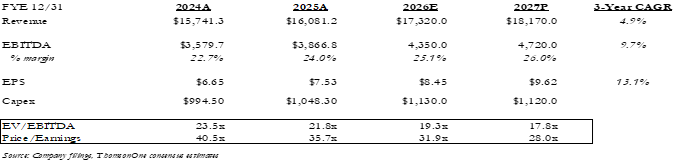
Table 5 Ecolab, Inc. Earnings Model
Ingevity Corporation (NGVT – $73.74 – NYSE)

Source: ThomsonOne consensus estimates.
COMPANY OVERVIEW
Headquartered in North Charleston, South Carolina, Ingevity, a leader in activated carbon and warm mix asphalt technologies, is going through a strategic transformation. The company currently operates in three reporting segments: Performance Materials, Advanced Polymer Technologies, and Performance Chemicals. In January 2025, Ingevity announced a strategic review of its Performance Chemicals Industrial Specialties product line and its North Charleston CTO refinery, which culminated in the sale of the businesses completed on January 5, 2026 for $110 million, plus potential contingent consideration of up to $19 million, subject to business milestones. Additionally on December 8, 2025, the company announced the completion of its portfolio review and the start of a sales process of its Advanced Polymer Technologies segment and Road Markings business.
Reason For Comment: Ingevity’s CEO David Li presented at our 17th Annual Specialty Chemicals Symposium. We discussed topics including the company’s transformation into New Ingevity, progress on asset sales, and capital allocation priorities going forward.
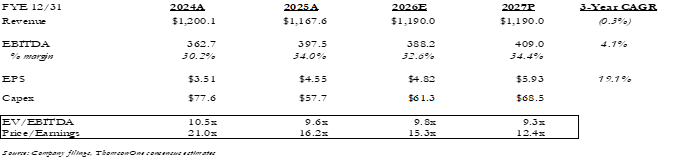
- New Ingevity: David joined Ingevity around a year ago in April 2025 and has overseen a portfolio review that is significantly transforming the business. He saw significant potential to unlock value in the business. Post-asset sales, New Ingevity will consist of 1.) Performance Materials (PM- 67% of total sales) which include Activated Carbon technologies for the automotive, food and beverage purification, and water treatment end markets; and 2.) Pavement Technologies (PT- 33%) consisting of warm mix asphalt specialty additives for asphalt pavement construction, preservation, and reconstruction and recycling. New Ingevity had 2025 pro forma revenue of ~$900 million and EBITDA of ~$335 million, with ~37% EBITDA margin. The company is in the early stages of exploring other markets for its products including water treatment for remediation of PFAS and microplastics.
- Asset Sales and 2026 Guide: The company sold its Performance Chemicals Industrial Specialties product line and its North Charleston CTO refinery in January, and shortly before also announced it was entering a sales process for its Advanced Polymer Technologies segment and Road Markings business. Both businesses are generating significant interest and management expects a strong valuation with plans to close the deals by year-end 2026. It announced the sale of Road Markings to PPG on April 15th for $65M. Post divestitures, New Ingevity estimates that, over the next two years, it will have ~$1 billion of deployable cash from the core business and divestment proceeds. 2026 guidance is for $1.1-1.2B of revenue with adj EBITDA of $380-400M, ~34% margin at midpoint, which includes the divestiture of the two businesses. There will be some associated stranded costs, but NGVT has pricing power in the remaining segments to mitigate impacts.
- Capital Allocation and Near-Term Priorities: The ~$1 billion of expected deployable cash over next two years will largely be focused on debt reduction and share repurchases. The company has low capital intensity and sees around $60M of annual CapEx in 2026 and 2027. Debt reduction is focused on lowering net leverage to a target of 2.0-2.5x vs 2.8x at year end, and the company plans to use its remaining share authorization to repurchase ~$300M of shares over the next two years. Given the significant transformation and focus on organic growth, management expects no significant M&A through 2027 unless there’s a strategic bolt-on acquisition that could further stimulate organic growth.
Table 6 Ingevity Corporation Earnings Model
LSB Industries Inc. (LXU – $14.99 – NYSE)

Source: ThomsonOne consensus estimates.
COMPANY OVERVIEW
Headquartered in Oklahoma City, Oklahoma, LSB Industries manufactures ammonia and ammonia-related products for the agricultural and industrial markets through facilities in El Dorado, Arkansas, Cherokee, Alabama, and Pryor, Oklahoma. LSB also operates a facility for Covestro LLC in Baytown, Texas. The company operates as a single reportable segment with 2025 sales of $615 million, broken into Ammonium Nitrate & Nitric Acid (39% of total), Urea ammonium nitrate (31%), Ammonia (24%), and Other (6%). Sales are roughly evenly split between Industrial and Agricultural uses. In Industrial, LSB makes: Nitric Acid used for semiconductor, nylon & polyurethane intermediates, ammonium nitrate, metals processing applications, and armaments for Department of Defense’s contractors; Ammonia for chemical feedstocks, emissions abatement, water treatment, and refrigerants; Ammonium Nitrate for explosives for mining, quarries, and other blasting activities; Sulfuric Acid for bromine, pulp & paper, water treatment, and metals processing; and CO2 for food refrigeration, dry ice, and enhanced oil recovery. In Agricultural, LSB makes Urea ammonium nitrate for liquid fertilizer for corn and other crops; and Ammonia for high nitrogen fertilizer primarily used for corn.
Reason For Comment: LSB Industries CFO Cheryl Maguire presented at our 17th Annual Specialty Chemicals Symposium. We discussed topics including the Iran conflict and potential structural cost/price benefits from fertilizer shortages, the company’s improved sales profile, its significantly improved balance sheet, and potential for M&A.
- LSB Today: Legacy LSB Industries had HVAC, chemicals, and other disparate businesses, but has transformed over the past 10 years into a chemicals-focused company. Now, LSB manufactures and sells nitrogen-based products roughly split between industrial uses (automotive, home building, chemical manufacturing, and mining) and agricultural markets (fertilizers for corn and other crops). The company is the fifth-largest producer of ammonia and the leading merchant marketer of nitric acid in the US. It holds key competitive advantages: LSB is leveraged to globally competitive, low-cost US natural gas. It has multiple options to add new, or increase existing, plant production capacities, with strategic proximity to key end user markets. And it has an integrated production and logistics network to drive security of supply. The company has significantly improved its margin profile and earnings stability through growing its industrial sales and contracts with gas cost pass-throughs from 19% in 2021 to a projected 39% for 2026.
- US Advantage Amid Global Disruptions: A large focus in Q&A was the fresh Iran conflict and its resulting impacts on fertilizer and chemicals markets. Cheryl pointed to the Russia-Ukraine conflict as the closest comparison when ammonia prices spiked significantly. The company is currently sold out of capacity so it would not benefit from additional volumes, but could have significant leverage to higher pricing and maintain its natural gas cost advantage relative to European and Asia producers. During the beginning of the Russia/Ukraine conflict LSB saw EBITDA run up to $415M in 2022 from ~$150M run rate, before normalizing again in 2023. With ~30% of fertilizer coming through the Strait of Hormuz, there is a potential for a significant choke off of supply should the Iran conflict persist, which could provide a similar temporary cash windfall for LSB.
- Balance Sheet and Capital Allocation: LSB has already significantly improved its balance sheet and reduced net leverage from 11.3x as year-end 2020 to 1.8x at the end of 2025. It has returned capital to shareholders and derisked balance sheet through more than $460M in stock and debt repurchases since 2022. The company has had a renewed focus on free cash flow generation and improved its earnings profile through less reliance on raw ammonia spot sales and upgrading to other products. The company also has substantial NOLs including $226M federal NOLs as of YE 2025, and does not expect to be a cash tax payer for the next 3-4 years. Looking forward, capital allocation will be biased toward M&A and secondary to buying back stock and debt. The company feels it has an experienced management team in place to run a larger company, and is looking at underperforming assets of complementary businesses that could be plugged in including in industrials, acids, and fertilizers in the $150-160M EBITDA range.
Table 7 LSB Industries Earnings Model

Magnera Corporation (MAGN – $10.37- NYSE)

Source: ThomsonOne consensus estimates.
COMPANY OVERVIEW
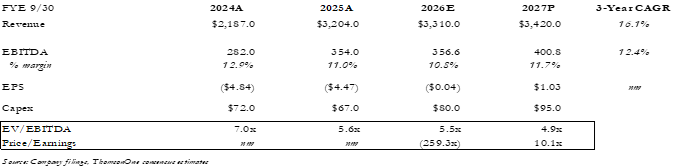
Based in Charlotte, North Carolina, Magnera Corporation manufactures and sells non-woven and related products worldwide. The company was formed in November 2024 through the merger of Berry Global’s Health, Hygiene and Specialties business with Glatfelter in a Reverse Morris Trust transaction. It sells its products primarily into consumer-oriented end markets, including healthcare and personal care. Magnera offers personal care and consumer solution products and components of products including medical garments, wipes, dryer sheets, filtration, bpaby diapers and adult incontinence. The company also makes tea bags, coffee filters, wipes, cable wrap, filtration, baby diapers and adult incontinence. In 2025, its first full year as a combined company, Magnera generated revenues of $3.2 billion and adjusted EBITDA of $354 million.
Reason For Comment: Magnera’s Executive VP, Investor Relations Robert Weilminster presented virtually at our 17th Annual Specialty Chemicals Symposium. We discussed topics including the company’s first year as a combined entity and its integration, its markets, capital allocation priorities, and long-term margin potential.
- Magnera Today: Magnera was formed via the merger of Berry Global’s HHS business and Glatfelter in a Reverse Morris Trust transaction. The name stands for “Magnificent New Era.” The company is a global leader in advanced specialty materials, combining polymer-based non-wovens/films (Berry) with wood pulp and natural fiber technologies (Glatfelter). It has scale and reached $3.2B in revenue, 8,500 employees, and 45 manufacturing facilities globally. The company is focused on innovations and has over 1,000 patents supporting a “moat” of intellectual property. It serves essential end markets focused on non-discretionary consumer goods where its products are “mission-critical” to the end application. Consumer Solutions (53% of sales) include wipes (baby, disinfecting, industrial), infrastructure applications (building wrap, building accessories, and cable wrap), and food & beverage (tea bags, coffee filters). Personal Care (47% of sales) provides solutions for baby diapers, adult incontinence, and healthcare applications (surgical gowns/drapes).
- Merger Integration and Cap Allocation: Integration is effectively complete, and the two companies’ cultures were highly compatible. Management is now focused on executing Project Core, which identifies an additional $20M of cost reductions and allows for strategic pruning of lower margin business lines. The primary focus of capital allocation will be on debt paydown with Robert noting the importance for shareholders and the company targeting to reach 3x net leverage, moving down by a quarter turn per year. The company is CapEx light and will remain disciplined at 2.0-2.5% of revenue, primarily for maintenance and essential IT infrastructure.
- Markets and Path Forward: Magnera’s products are essential for day-to-day use, but the company sees major growth vehicles of wipes as household penetration continues along with other cleaning vehicles and adult incontinence is growing faster than general markets (+4-7%) due to aging demographics and increased product acceptance. On margin, while currently in the 11-12% range, management believes that once synergies are fully captured, the global footprint is optimized, and higher margin specialty products grow faster than the overall portfolio, margins should trend toward the mid-teens.
Table 8 Magnera Corporation Earnings Model
Minerals Technologies, Inc. (MTX – $71.75 – NYSE)

Source: ThomsonOne consensus estimates.
COMPANY OVERVIEW
Based in New York City, Minerals Technologies (MTI) is a resource and technology company focusing on minerals-based products and related systems. MTI realigned the business in 2023 and now operates in two segments: 1) Consumer & Specialties (53% of 2025 revenue) split between Household & Personal Care (25% of total) with mineral-to-market products serving pet care, personal care, fabric care, and edible oil and renewable fuel purification, and Specialty Additives (28%) serving paper, packaging, sealants & additives, ceramics, plastics, and food & pharmaceutical markets; and 2) Engineered Solutions (47%) with High Temperature Technologies (34%) providing specially formulated blends and technologies to foundry and steelmaking industries, and Environmental & Infrastructure (13%) offering waterproofing, water purification, remediation, and other fluid management technologies to industrial markets.
Reason For Comment: Minerals Technologies’ CEO Doug Dietrich and CFO Erik Aldag presented at our 17th Annual Specialty Chemicals Symposium. We discussed the company’s business focus, the benefits from the 2023 segments reorganization, growth targets, margin recovery, the M&A environment, and the potential impact from tariffs and the recent situation in Iran.
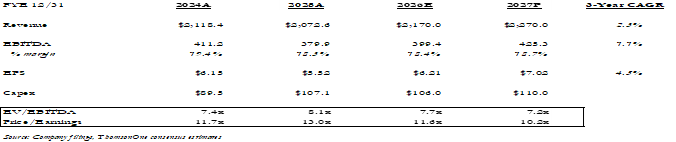
- MTI Today: With $2.1B in 2025 revenues, the company’s portfolio consists of two similar sized segments: Consumer Specialties ($1.1B) which include Household & Personal Care and Specialty Additive; and Engineering Solutions ($975M) with High-Temperature Technology and Environment & Infrastructure. The new segmentation has allowed management to focus more efficiently on growth, profitability, the introduction of new products and technologies, as well as on positioning the company’s offerings within more attractive end markets. MTI’s key differentiator is its vertical integration and ownership of high-quality mineral reserves with 70-80 years of supply globally; the focus is on bentonite and calcium carbonate.
- Growth Catalysts: Strategic growth is driven by new product innovation, with 20% of current revenues generated by products commercialized within the last five years. The company has multiple levers for long-term revenue growth, which it estimates at a 4-7% CAGR. They consist of expanding into high growth consumer-oriented markets, strengthening its position in core markets and key geographies, product innovations, and continuing its penetration in Asia, especially in China and India. In addition to growth of its traditional operations, new growth areas include the following:) Filtration minerals for applications such as edible oil and Sustainable Aviation Fuel (SAF). Management noted that European regulations are increasing SAF inclusion requirements from 0.5% to 2.0%. With a very large surface area, bentonite is effective at removing impurities; it can be recharged during the refining process; 2.) Pet Care, cat litter in particular, has grown due to internal and external actions, offering high-end bentonite and ancillary products. With consumers moving to private labels as they seek lower cost products, MTI is well positioned to participate in the trend and has recently secured a $25M contract with a new North American business launching in Q2 and Q3 of 2026; and 3.) Environmental Solutions is scaling Fluoro-Sorb, a proprietary product designed to remove PFAS from drinking water. In addition to working with the EPA with many trials on-going, the company also has multiple trial sites in Europe.
- Margin/Tariffs/Iran: Despite the current volatile environment, management expect the operating margin to reach its 15% run rate in 2026. While energy costs are rising, the company uses surcharges to offset inflation; historically, it has demonstrated strong pricing power, expanding margins even during the $250M cost increase cycle between 2021 and 2024.
- M&A: With a leverage of 1.7x EBITDA at YE 2025, the company intends to return 50% of FCF to shareholders via dividends and share repurchases. The remaining 50% is reserved for further strengthening the balance sheet and opportunistic acquisitions bringing new mineral technologies, entry into new end markets, and/or geographic expansion.
Table 9 Minerals Technologies Earnings Model
Olin Corporation (OLN – $27.98- NYSE)

Source: ThomsonOne consensus estimates.
COMPANY OVERVIEW
Olin Corporation, based in Clayton, MO, is a vertically integrated global manufacturer and producer of chemical products and a leading manufacturer of small-caliber ammunition under the Winchester brand. Olin operates and reports results via three main business units: 1.) Chlor Alkali Products & Vinyls (CAPV- 54% of 2025 sales) supplies chlor alkali products and derivatives with global capacity. Chlorine, caustic soda and hydrogen are co-produced through electrolysis of salt water to break it into its byproducts. Caustic soda is used in industrial applications which include water treatment, alumina, pulp & paper for packaging, construction, agriculture, urethanes, and soaps and detergents, among others. Approximately 40% of Chlorine is tied to building and construction, as a key component of producing polyvinyl chloride (PVC) for vinyl siding, pipes, pipe fittings, and automotive uses; it is also used for water treatment, agriculture, and in the manufacture of soaps and detergents; 2.) Epoxy (20%) is the largest global supplier of epoxy materials. Olin produces engineered, specialty polymers, liquid & solid epoxy resins, plastics, as well as curing agents & hardeners, used in a variety of applications in civil engineering, construction, consumer goods, electronics/smart phones, paints/coatings, wind turbine blades, and transportation; and 3.) Winchester (26%) is the number one leader in commercial and military small ammunitions globally, making ammo and components for rifles, pistols, rimfire, as well as White Flyer Clay targets.
Reason For Comment: Olin Corporation’s Director of Investor Relations Steve Keenan presented at our 17th Annual Specialty Chemicals Symposium. We discussed the company’s value over volume strategy, its markets and the impact from the Iran conflict, capital allocation, and the potential for financial engineering.
- Olin Today: Olin’s largest segment is Chlor Alkali Products & Vinyls (CAPV) with 54% of 2025 sales and ~$660M of EBITDA in trough market conditions. CAPV is the largest supplier of chlor alkali by producing chlorine and caustic soda through the electrolysis of brine salt water. The market used to be very fragmented and centered around pulp and paper, and producers would maximize production volume sometimes at the detriment of pricing on the product with lower demand. Olin shut down 20% of its capacity and shifted its operating model to a value-based strategy producing to the lesser side of demand. Epoxy, 20% of revenue and had a loss of ($52M), but is improving and Olin sees it turning profitable in 2026. Winchester, 26% of sales and $94M of EBITDA, is typically seen as a more stable cash generator compared to the more volatile chemicals businesses, but has hit a destocking air pocket following significant retail stocking ahead of the 2024 US presidential election. The destocking has led to both volume and pricing declines at retail. The company is implementing price increases to restore margin in retail channels. Military has been a bright spot with steady demand and winning of military contracts.
- US Cost Advantage: Despite the extended trough environment, Olin maintains its position as a cost advantaged producer in the US with lower energy costs. The Iran conflict could accentuate this should oil prices remain high for an extended period. Olin noted that this has given North American producers more room to operate and given them an advantage over Asian producers.
- Beyond250 and Cap Allocation: Amid the weak market conditions, the company has taken self-help actions under its Beyond250 program, seeking to exceed $250M of annual cost savings by 2029. A little more than half will come from CAPV, and include staff reductions, optimizing manufacturing assets, improvements in procurement, and closure of its Brazil epoxy plant. The company was levered at ~4x by year end 2025, and capital allocation will be focused on leverage reduction as FCF improves, but the company notably has no significant bond maturity until 2029. Asked about potential financial engineering, given the incongruence of the chemicals and ammo businesses, Steve mentioned that they see Winchester as a value creator and will not sell it off for no reason. When asked about a potential spin, while signaling that there are no plans, OLN would be open if it saw a way to create value.
Table 10 Olin Corporation Earnings Model

Orion S.A. (OEC – $6.89 – NYSE)

Source: ThomsonOne consensus estimates.
COMPANY OVERVIEW
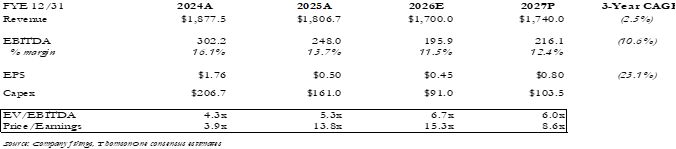
Orion is headquartered in Luxembourg, but its principal executive office is in Spring, TX. It is a leading global manufacturer and supplier of carbon black products. Carbon black is a solid form of carbon produced in powder or pellets; it is used to create a variety of desired physical, electrical and optical qualities of various materials. Carbon black products consist primarily of two categories: Specialty Carbon Black used as additives in the production of polymers, batteries, printing inks and coatings, and Rubber Carbon Black used in the reinforcement of tires and other rubber applications. The company is one of the largest global producers of both types, with 2025 revenue of $1.9 billion and adj. EBITDA of $248 million. Orion’s core competencies include the ability to engineer the physical properties of carbon black to meet the functional needs of customers. The company operates in two reporting segments: Rubber Carbon Black (66% of 2025 sales) and Specialty Carbon Black (34% of sales).
Reason For Comment: Orion S.A.’s new CFO Jon Puckett presented at our 17th Annual Specialty Chemicals Symposium. We discussed topics including the current global demand environment, EBITDA growth potential, the company’s positive cash flow inflection, and planned uses of cash.
- Orion Today: Orion is #1 in the specialty carbon black market and #3 in rubber carbon black globally. It serves over 80 countries through innovation centers on three continents and 15 plants worldwide, offering one of the most diverse production processes in the industry. The company’s history goes back more than 160 years to Germany, where it continues to operate the world’s longest-running carbon black plant. Its market advantage is derived from its ~1,150 kmt carbon black capacity skewed toward Western tire markets.
- Competitive Moat and Stable Markets: The cost of building a new carbon black plant is estimated at $2 million per ton of capacity, or $350-400M for a 180 kmt plant. This high cost is an impediment for new competitors entering the market; there is no significant capacity being added to the market in either the Americas or Europe. With around 60% of company volume going into tires and 2/3 of that into replacement tires, demand is typically stable, and in addition, onshoring/reshoring trends are favoring local supply.
- Import Overhang Improving: China and Southeast Asia imports have been an overhang in the industry in the US and Europe in 2025, but it is starting to improve. Exports from Thailand, the largest tire exporter to the US have been declining and exports from India have reduced sharply. US tire imports have subsided, but channel inventories remain elevated. The company has also rationalized its footprint consolidating lines to optimize operations, targeted at lower margin businesses, and is now well positioned when the market recovers.
- CapEx Normalizing and FCF Inflection: Orion is exiting a period of heightened spending since 2020 including maintenance Capex to revitalize and/or modernize its asset base in order to comply with EPA regulations, as well as additional investments for growth. Management estimates that, following the end of these projects, Orion now has sufficient production capacity to serve the anticipated industry demand growth. As these projects have been completed, capex spending has declined significantly from $207M and $161M in 2024 and 2025, respectively, to an expected ~$90M in 2026. The company inflected to positive FCF in 2025 and is expected to be positive in 2026 as well despite continued weak markets and pricing environment. FCF priority will focus on leverage reduction. OEC ended 2025 at 3.7x and with the pricing environment in 2026 needed to renegotiate its credit agreement to have more headroom. The company expects FY2026 EBITDA of $160-200M.
Table 11 Orion S.A. Earnings Model
Rayonier Advanced Materials (RYAM – $9.86 – NYSE)

Source: ThomsonOne consensus estimates.
COMPANY OVERVIEW
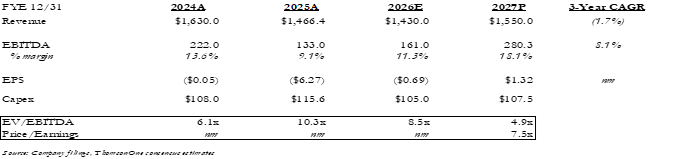
Headquartered in Jacksonville, FL, Rayonier Advanced Materials has developed a platform focused on producing natural cellulose fibers. The company’s natural cellulose polymers are used in the production of a variety of specialty chemical products including liquid crystal displays, filters, textiles, and performance additives for pharmaceutical, food and other industrial applications. In addition, the company makes high-purity cellulose paper pulp products used by paperboard producers for specialty paper manufacturing, as well as for making lightweight, multi-ply paperboard used for production in commercial printing, lottery tickets, and high-end packaging. Rayonier is also focused on strategic investments for renewable products and fuels. These investments include renewable energy projects, biodegradable ingredients for cosmetics and various industrial materials. With 2025 revenues of $1.5B, the company reported results in three segments: High Purity Cellulose (80% of 2025 revenue) produces a combination of cellulose specialties and commodities serving end-markets such as electronics, pharmaceutical, and cigarettes; Paperboard and Biomaterials(14%) focuses on Kallima brand printing paper, packaging, and muti-ply coated board; and High-Yield Pulp (6%) focus is on mechanical hardwood pulp from maple and aspen.
Reason For Comment: Scott Sutton, President and Chief Executive Office effective January 6, 2026, presented at our 17th Annual Specialty Chemicals Symposium. We discussed topics such as the company’s Value Creation Plan, its 2028 targets, and the impact from tariffs and the situation in the Middle East.
- New CEO Perspective: Sutton, previously CEO of Olin Corporation, saw the opportunity to lift shareholders’ value, and his compensation package is aligned with the company’s performance. He is excited by the “opportunity to triple something” and plans to remain with Rayonier Advanced Materials post the turnaround.
- The Turnaround/Value Creation Plan: With geographically balanced operations (1/3 of revenues generated in each geography: the Americas, Europe/Africa, Asia Pacific), 2026 priorities include generating positive FCF, recover its leadership in cellulose specialties, focusing on the business as differentiated assets, and drive yoy EBTDA improvement toward doubling 2025’s level of $133M by 2028. The plan includes the following: 1.) Leadership playbooks will focus on the value of success; 2.) Dynamic asset allocation; 3.) New product extensions and existing products focused on growth; 4.) Pipeline of ideas and products to offset inflation; and 5.) Restructure the debt in 2027 to help deliver a 300bps improvement in earnings.
- Necessary Actions: Scott believes that EBITDA improvement in 2026 does not require strong topline growth, and that low digit revenue growth in 2027 and 2028 should result in the targeted doubling of EBITDA by maximizing value sales and a better allocation of resources. He also believes that, as the result of the substantial changes in philosophy, the management team is better prepared to take the necessary steps to turn around the company’s operations.
- Tariff and the Middle East: As of the time of the Symposium, the impact from tariffs on Canada have been a wash. Regarding Iran and the Middle East, it is too early to know; however, Scott noted that the company’s facilities are almost entirely independent in terms of energy. In the location where they purchase natural gas, they are fully hedged through the end of 2026, and they can also pass the higher costs to customers in the form of surcharges.
Table 12 Rayonier Advanced Materials Earnings Model
The Sherwin-Williams Company (SHW – $333.34 – NYSE)

Source: ThomsonOne consensus estimates.
COMPANY OVERVIEW
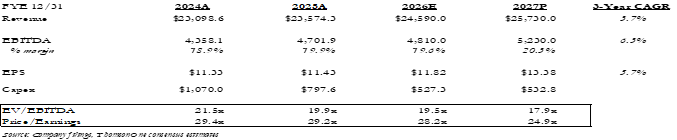
Based in Cleveland, OH, Sherwin-Williams is a leading manufacturer and marketer of paints and coatings to professional, industrial, commercial, and retail customers. The Sherwin-Williams branded products are sold through more than 4,850 company-owned stores in the Paint Stores Group (PSG) segment. Other brands are sold by the Consumer Brands Group (CBG) through mass merchandizers, home centers, independent paint dealers, hardware stores, automotive retailers, industrial distributors, and company-owned stores in Latin America. The Performance Coatings Group (PCG) sells a broad range of coatings and finishing solutions for general industrial, industrial wood, protective & marine, automotive refinish, packaging, and coil & extrusion applications globally.
Reason For Comment: Sherwin-Williams’ Senior VP of Investor Relations & Corporate Communications Jim Jaye and VP Investor Relations Eric Swanson participated in a virtual fireside chat at our 17th Annual Specialty Chemicals Symposium. We discussed topics including the company’s end markets, store strategy, competitive dynamics, tariffs, Iran, and M&A.
- End Markets: While end markets overall were soft in 2025, a similar environment is anticipated in 2026 due to high interest rates, inflation, higher energy costs, affordability challenge, and declining consumer confidence which are expected to delay any housing and industrial recoveries; Jim noted that no recovery was factored in in management’s expectations for 2026. However, Sherwin has been in this type of environment before, and the company’s focus is on procurement, servicing customers to mitigate the impacts from the conflict, and retain strong customer relationships, actions critical to long-term growth. Consistency is key to the company’s success and SHW continues to invest by adding new stores, sales and tech representatives, while many competitors often cut customer-facing assets.
- Paint Store Model: This category represents the largest and most profitable segment with more than 4,850 company-owned stores serving professional painters with offers of Sherwin-Williams brands and a strong service component. With 2025 revenues of $13.6B and an EBIT margin of 22.5%, management continues its successful strategy of adding 80-100 stores annually; new stores usually breakeven in 9-12 months.
- Consumer Brands: Non-Sherwin-Williams brands are sold via big box such as Lowe’s, hardware stores, and other independent channels. Most of these sales are generated by DIY consumers and this market remains soft as consumers are under significant financial pressure. Actions taken to attract customers such as remodelers and small contractors are resulting in growth in this category despite the soft DIY. In addition, the recent acquisition of BASF’s Brazilian architectural paint, Suvinil, will result in a strong overall position in the region with Sherwin as the #3 market share holder buying the #1. To date, management is pleased with the integration and the potential for sales synergies.
- Performance Coatings: Industrial end markets remained soft in 2025, and at this juncture, no improvement is expected in 2026. However, packaging (coatings for inside of food and beverage cans) should continue to benefit from legislation in Europe requiring can manufacturers to use non-BPA coatings. General industrial categories, which include heavy machinery and coil coatings used in construction material, will remain soft for the balance of the year; auto refinish is also affected by the fact that consumers are delaying repairing their vehicles.
- Tariffs & Iran: With approximately 80% of revenues generated in North America, 9% in EMEA, 6% in Asia Pacific, and 5% in Latin America, management does not expect the volatile tariffs to directly affect its operations. However, it will not be immune to its negative impact regarding demand for architectural paints and industrial coatings. In addition, the cost of raw materials downstream from crude oil will be affected by higher energy prices, and as a result, management has already announced price increases: first in company-owned stores, followed by other categories as necessary.
Table 13 The Sherwin-Williams Company Earnings Model
Standard Lithium (SLI – $3.92- NYSE American)
COMPANY OVERVIEW
Standard Lithium, based in Vancouver, Canada, is a near-commercial lithium company focused on the sustainable development of a portfolio of large, high-grade lithium-brine properties in the United States. The company prioritizes projects characterized by high-grade resources, a robust infrastructure, skilled labor, and streamlined permitting. Standard Lithium aims to achieve sustainable, commercial-scale lithium production via the application of a scalable and fully integrated DLE and purification process. The company’s flagship projects are in the Smackover Formation, a large lithium brine asset with North America’s highest grade lithium brine located in Southwest Arkansas and East Texas. Through a partnership with oil & gas company Equinor, Standard Lithium is advancing the greenfield Southwest Arkansas (SWA) project and strengthening lithium brine prospects in East Texas. Standard Lithium trades on both the TSX Venture Exchange and the NYSE American under the symbol SLI.
Reason For Comment: Standard Lithium’s Vice President of Investor Relations & Strategy, Dan Rosen did a fireside chat at our 17th Annual Specialty Chemicals Symposium. We discussed the company’s Smackover Project and its progress, planned funding, and general lithium market dynamics.
- The Smackover Project: Dan has significant experience in the lithium industry following stints with Livent, which merged with Allkem to form Arcadium Lithium, followed by Arcadium’s acquisition by Rio Tinto. Dan joined Standard Lithium due to its unique opportunity to support the domestic US lithium supply chain. The Smackover Formation has North America’s highest grade lithium brine, and has a mining culture/infrastructure with over 1/3 of the world’s bromine supply already coming from the area. Other companies have followed suit and acquired land in the area, but Standard has first-mover advantage. The project has proven reserves of 447k tons of LCE, and measured & indicated resources of 1.18M tons. The project is planned to be the first U.S. commercial DLE using the Aquatech Lithium Selective Sorption process and the company has performance guarantees and regional exclusivity in Smackover under a Joint Development Agreement.
- Progress and Funding: The project timeline is 30 months. The company completed brine field tests last year and is targeting first commercial production in 2028 with an aim of 22,500 tons of annual production capacity of lithium carbonate. The SWA Project was identified as transparency project on Federal Permitting Dashboard and awarded $225 million grant from the U.S. DOE finalized in 2025. The CapEx requirements over the same timeline are $1.45B, and Standard plans to finance it with $1B of debt and the remainder through grants and equity stakes.
- Lithium Markets Turning: Lithium demand is still forecast to double by 2030 and triple by 2035, but markets have hit an air pocket due to near-term concerns of oversupply. Lithium markets finally seem to be normalizing after a couple years of low pricing which has delayed or cancelled several planned projects by major producers, with spot prices having firmed to ~$22/kg recently up from lows of ~$9 over last summer. Dan highlighted that high-teens and above is pricing that most companies would say is necessary for project investment, and that sustained pricing at these levels is needed to promote pricing stability and confidence in the market. Should markets remain stable, it should bode well for Standard’s 2028/2029 timeline. Notably, the company uses a price of ~$22/kg in its feasibility study and is forecast to be a low-cost producer with estimated operating costs of ~$4.50/kg and all-in costs of ~$5.90/kg.
We Rosemarie Morbelli, CFA, and Wayne Pinsent, CFA the Research Analysts who prepared this report, hereby certify that the views expressed in this report accurately reflect the analysts’ personal views about the subject companies and their securities. The Research Analysts have not been, are not and will not be receiving direct or indirect compensation for expressing the specific recommendation or view in this report.
249 Royal Palm Wat, Palm Beach, FL 33480 Gabelli Funds TEL (561) 671-2100
This whitepaper was prepared by Rosemarie J. Morbelli, CFA and Wayne C. Pinsent, CFA. The examples cited herein are based on public information and we make no representations regarding their accuracy or usefulness as precedent. The Research Analysts’ views are subject to change at any time based on market and other conditions. The information in this report represents the opinions of the individual Research Analyst’s as of the date hereof and is not intended to be a forecast of future events, a guarantee of future results, or investments advice. The views expressed may differ from other Research Analysts or of the Firm as a whole.
As of December 31, 2025, affiliates of GAMCO Investors owned 1.13% of Minerals Technologies and less than 1% of all other companies mentioned.
This whitepaper is not an offer to sell any security nor is it a solicitation of an offer to buy any security.
Investors should consider the investment objectives, risks, sales charges and expense of the fund carefully before investing.
Gabelli Funds, LLC is a registered investment adviser with the Securities and Exchange Commission and is a wholly owned subsidiary of GAMCO Investors, Inc. (OTC: GAMI).
For more information, visit our website at: www.gabelli.com or call: 800-GABELLI
800-422-3554 • 914-921-5000 • Fax 914-921-5098 • info@gabelli.com