Gabelli Commercial Aerospace and Defense ETF (NYSE: GCAD) Portfolio Manager, LtCol Tony Bancroft, USMCR, provides comments on the ongoing situation in Iran.
Monday, March 9th – Weekend Escalations
Recent escalations in the Middle East have intensified over the weekend, with strikes on an Israeli desalination plant (likely by Iran or its proxies) and retaliatory Israeli/US attacks on Iranian oil facilities, including storage depots near Tehran. While these actions have heightened tensions, they have not shifted the broader strategic balance. US and Israeli strikes have proven highly effective, with over 3,000 sorties in late February and early March degrading Iranian capabilities—missile attacks down approximately 90% and drone launches down 83%—thanks to sustained air superiority and precise targeting of launch sites by assets like B-2 bombers. A potential US-led blockade or seizure of Kharg Island could choke off roughly 90% of Iran’s oil exports, severely constraining its economy and shipping capacity. Optimism is growing that Ukraine-derived counter-drone technologies (interceptors, EW, and small munitions) could neutralize Iranian swarms, help reopen the Strait of Hormuz, and ease threats over time.
On the US side, President Trump has convened defense industry CEOs from Lockheed Martin, Raytheon (RTX), Northrop Grumman, Boeing, BAE Systems, Honeywell, and L3Harris to plan quadrupling production of advanced (“exquisite”) missiles, backed by a proposed $5 billion supplemental bill to replenish depleted stocks. This push reflects a broader outlook of sustained or rising demand for weapons systems amid multiple global flashpoints. Geopolitically, the Middle East focus creates risks of distraction, potentially opening windows for China to act on Taiwan, while high oil prices bolster Russia in Ukraine and strain European unity through inflation and fragmented support.
Thursday, March 5th – Epic Fury
US-Israeli strikes have degraded Iran’s retaliatory capability: ballistic/missile launches down 86% since Epic Fury start (+23% drop last 24 hours), drone launches down 73%. Shifted to precision strikes (drones, strike aircraft, JDAMs, LGBs, Hellfires) burying missile cities; manufacturing destruction cuts production sharply. US Navy has ~15 warships in region (Abraham Lincoln/Ford carriers add airpower), far below historical 30+ needed for large tanker convoy escorts.
Strait of Hormuz remains mostly blocked, risking oil price spikes if prolonged, inflating costs and reducing global growth. Drone defense (fighters, interceptors, EW, small munitions, LASERs) is now key to reopening the Strait. Past disruptions resolved with escorts/diplomacy and temporary oil spikes. Looking ahead, focus pivots to the pacing threat, China: robust IADS and high-fidelity C2 severely limit GPS/direct munitions (JDAMs/LGBs) via area denial. We will likely continue to see strong demand for missile and long-range smart weapon production.
Wednesday, March 4th – Defense Spending
There is speculation that markets tend to price in defense stock gains early on war fears, but that excitement often fades quickly. Defense firms historically thrive on “Goldilocks” conflict: enough tension to sustain steady orders, but not so much as to destabilize economies. Hot wars can produce short-lived price spikes, but gains frequently reverse if fighting ends rapidly or markets panic. Sustained geopolitical tension — without catastrophe — remains the most favorable environment for long-term defense stock performance.
That said, the U.S. faces severe shortages in air-defense missiles and effectors, a problem worsened by ongoing conflicts burning through already depleted stockpiles. This vulnerability becomes far more acute against a peer competitor like China in an expeditionary conflict, where drone threats and munitions demands will multiply rapidly. A potential conflict with China — our pacing threat — would require an expeditionary fight, often conducted on the move, demanding significantly more missiles, smart weapons, ships, aircraft, and logistics assets with materially longer range requirements.
Rather than resolving underlying vulnerabilities, the current conflict only highlights and exacerbates a glaring reality: U.S. and allied nations remain critically understocked in missile defense interceptors. Wargames suggest as many as 5,000 long-range missiles could be expended in the first weeks of a conflict with China — requiring a 2–10x increase in current production rates, depending on the weapon system, to sustain a prolonged engagement.
The White House is expected to meet with defense executives from Lockheed Martin and RTX on Friday, March 6, 2026, to accelerate munitions production. The Pentagon is speculated to be seeking a $50B supplemental budget for restocking, against a current defense baseline of approximately $30B in missile and munitions procurement and R&D. Expect continued announcements of boosted output from key munitions suppliers.
Tuesday, March 3rd – Epic Fury Drone / Missile Math
Iran’s missile and drone arsenal is currently estimated at approximately 1,500–2,500 ballistic missiles (IDF 2026 estimate; down from a pre-2025 inventory of roughly 3,000, depleted to 1,000–1,500 following recent conflict, with ongoing production of 50–100 per month) and around 80,000 Shahed drones (Israeli estimate), produced at a rate of approximately 400 per day. Missile costs range from $250K to $5M per unit; drones run $20,000–$50,000 each.
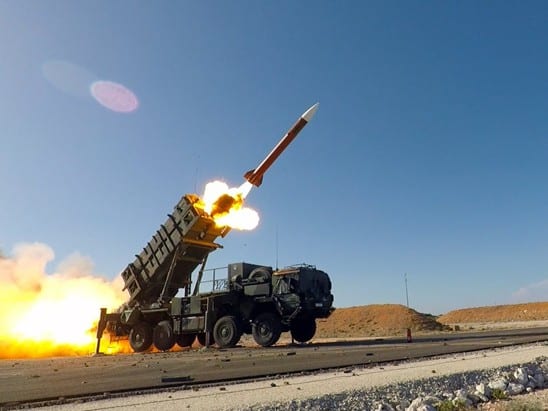
On the defensive side, U.S., Israeli, and GCC interceptor stocks are under strain. THAAD held an estimated 500–600 interceptors pre-depletion (with 100–150 expended by the U.S. in 2025, representing roughly 25% of stockpiles; production has since been ramped to 400 per year). Patriot production has scaled from 500–620 annually toward a target of 2,000 per year, though stockpiles remain strained. Arrow production capacity stands at approximately 24 per year at $3M each; David’s Sling and Iron Dome Tamir interceptors ($40,000–$50,000 each) remain classified in total inventory. Interceptor costs broadly range from $1M to $15M per unit. The fundamental math — a cost and volume asymmetry favoring Iranian saturation tactics — suggests allied defenses could sustain high-intensity operations for roughly 10–14 days before meaningful degradation. This dynamic continues to drive restock contracts benefiting Lockheed Martin, RTX, and their supplier base.
ISW (Institute for the Study of War) reports confirm that Israeli aircraft are now dropping munitions directly over Tehran targets using stand-in (non-standoff) weapons, enabled by severely degraded Iranian air defenses — marking the first direct air drops of the conflict. U.S. and Israeli strikes conducted between February 28 and March 2, 2026 destroyed over 200 Iranian ballistic missile launchers (approximately 50% of inventory), damaged key bases, degraded an estimated 20–30% of missile and drone production capacity (with a projected one-year rebuild delay), and neutralized roughly 90% of Iranian air defenses. These strikes could reduce Iranian barrage capacity from a potential 1,200+ missiles and drones daily down to 40–200, meaningfully limiting saturation risk. As a result, allied interceptor sustainability may extend from 10–14 days to 20–30+ days at current tempo, significantly reducing depletion rates.
The Portfolio Manager’s views are subject to change at any time based on market and other conditions. The information in this posting represents the opinions of the individual Portfolio Manager and is not intended to be a forecast of future events, a guarantee of future results, or investment advice. Views expressed are those of the Portfolio Managers and may differ from those of other GAMCO officers, Portfolio Managers, other employees, or of the Firm as a whole.
You should consider the ETFs’ investment objectives, risks, charges and expenses carefully before you invest. The
ETF’s’ Prospectus is available from G.distributors, LLC, a registered broker-dealer and FINRA member firm, and
contains this and other information about the ETF, and should be read carefully before investing.
Distributed by G.distributors, LLC, a registered broker dealer and member of FINRA.