
2025 Gabelli Funds Auto Symposium
Conference Highlights
Resilient Today, Adaptive for Tomorrow
Our presenting management addresses to a transition marked by tariff-driven supply chain shifts, evolving consumer dynamics, and disciplined operational improvement. Despite differing cycles and challenges, every participant shared a unified message of resilience, pragmatism, and long-term optimism as the industry collectively builds a more adaptive, innovative, and interconnected mobility future.
- A stable cycle, though affordability pressures abound. Despite annualized new vehicle sales (SAAR) near 16 million and normalized inventories, automakers and dealers noted that average new-vehicle payments of ~$750/month and limited sub-$30k models are pushing buyers toward used vehicles or delayed purchases. Dealers expect incentives to rise meaningfully to clear BEV (Battery Electric Vehicle) mix imbalances, especially among premium brands. The next leg of demand depends heavily on interest-rate relief, which would free up consumer credit and restore leasing volumes.
- Tariffs and geopolitics are now structurally embedded in every strategic decision.
Nearly every supplier discussed either direct or indirect tariff exposure, the shift to USMCA (United States-Mexico-Canada-Agreement) compliance, and the need for multi-regional manufacturing footprints. The immediate impact of counter-tariffs—particularly in China—has pressured near-term earnings even as reshoring benefits remain years away. Companies are increasingly designing their businesses to be tariff-agnostic, with Mexico emerging as a key manufacturing hub.
- Aftermarket and parts businesses remain a point of strength and resilience across the industry.
Multiple companies emphasized that aging fleets, elevated vehicle ages, and delayed replacement cycles are boosting parts demand. These businesses benefit from both recessionary environments and constrained vehicle affordability, creating stable cash flows even as new-vehicle sales fluctuate. Several suppliers are expanding into diagnostics, filtration, sensors, and other high-margin aftermarket categories to capture more lifetime value.
- Data, electronics, sensing, and connected technologies are becoming core differentiators.
From Donaldson’s sensor-enabled filtration and Rush’s predictive maintenance initiatives, companies are leaning into electronics-driven value creation. These systems enhance safety, efficiency, and customer experience while enabling stickier aftermarket relationships. Even traditional mechanical suppliers increasingly view software-enabled capability as central to long-term competitiveness.
- Electric Vehicle (EV) momentum has cooled, forcing suppliers and automakers to recalibrate investment plans. Companies highlighted that EV penetration expectations for the US and Europe have fallen meaningfully from 2023 forecasts. This shift has led suppliers like Dana and others to scale back EV capital plans and refocus on profitable ICE (Internal Combustion Engine) and hybrid platforms. The emerging consensus is that hybrid architectures will absorb a larger share of future volume—providing a new mix of opportunities rather than a pure Battery Electric Vehicle (BEV) world.
- Commercial vehicle markets are moving through a cyclical trough, but long-term fundamentals remain constructive. Rush and Dana described one of the weakest freight environments in years, with Class 8 orders still sluggish and carriers sweating assets longer. Tariff-driven cost increases and pending EPA emissions rules may spur some pre-buy activity, but fleet profitability must improve first. Vocational segments—particularly refuse and construction—remain bright spots and provide a buffer against broader Commercial Vehicle softness.
AUTO SYMPOSIUM 2025:
A History of Resilience, Reinvention, and the Road Ahead
The history of our Auto Symposium harkens back nearly 50 years, to when two automotive trade associations – AASA (Automotive Aftermarket Suppliers Association) and SEMA (Specialty Equipment Manufacturers Association) began holding annual conventions in early November in Las Vegas. These two groups brought to Nevada a critical mass of auto industry executives, providing an opportunity to discuss in a unique environment the global auto industry and at inception, the automotive aftermarket.
This year, a leading group of over 20 automotive companies and their management gathered for the 49th time to provide commentary and insights on the challenges of today and the opportunities of tomorrow at our annual automotive symposium. Our symposium brought together entire automotive ecosystem—from global suppliers and filtration companies to dealership groups, aftermarket manufacturers, commercial truck distributors, and emerging technology and materials companies.
Across these conversations, the industry’s scale and complexity were unmistakable: a global vehicle population of 1.3 billion unit (including nearly 300 million light vehicles in the US and 10 million commercial vehicles), an aging U.S. fleet, electric vehicle adoption that has moderated from early expectations, and a supply chain still adapting to tariff regimes, production normalization, and shifting consumer dynamics.
A recurring message was resilience through disciplined execution and strategic repositioning. Suppliers described multi-year efforts to rebuild margins, diversify geographies, and reposition portfolios for a more measured EV environment. Dealers emphasized affordability constraints but noted stable used-vehicle dynamics and a strengthening service business. Heavy-duty truck participants offered insight into freight recessions, regulatory uncertainty, and the ongoing tug-of-war between new-truck pricing and fleet maintenance patterns. Meanwhile, suppliers underscored the longer-term transition toward electrified components, advanced filtration, AI-enabled monitoring, and domestic supply chains for critical materials—shifts that are reshaping what it means to be a strategic partner in mobility.
Looking ahead, the shared tone across companies was one of pragmatic optimism. Electrification will continue—though not in a straight line—and hybrid architectures, powertrain diversification, aftermarket strength, and advanced industrial technologies will all play roles in the next phase.
The industry’s unifying message this year: despite complexity, the organizations represented at this conference remain essential to the global economy, and together they are building a more resilient, adaptive, and technologically advanced automotive ecosystem. Each company, whether upstream or downstream, contributes to a future where mobility remains reliable, efficient, and continuously improving.
This reflections piece attempts to capture the spirit of our symposium, initially with key analyst takeaways summarizing the two days. The report then delves into industry-specific data to frame the environment in which our presenting companies operate. We conclude with takeaways on the companies themselves.
A Global Look at the Auto Industry
Over the past three decades, the global population of motor vehicles has rapidly expanded — transforming into what is now a truly massive fleet. According to estimates there are roughly 1.3 billion vehicles worldwide. In historical context: the global vehicle population passed the 1-billion mark around 2010. his sustained growth reflects rising incomes, urbanization, and expanding road infrastructure across Asia, Latin America, and other developing regions.
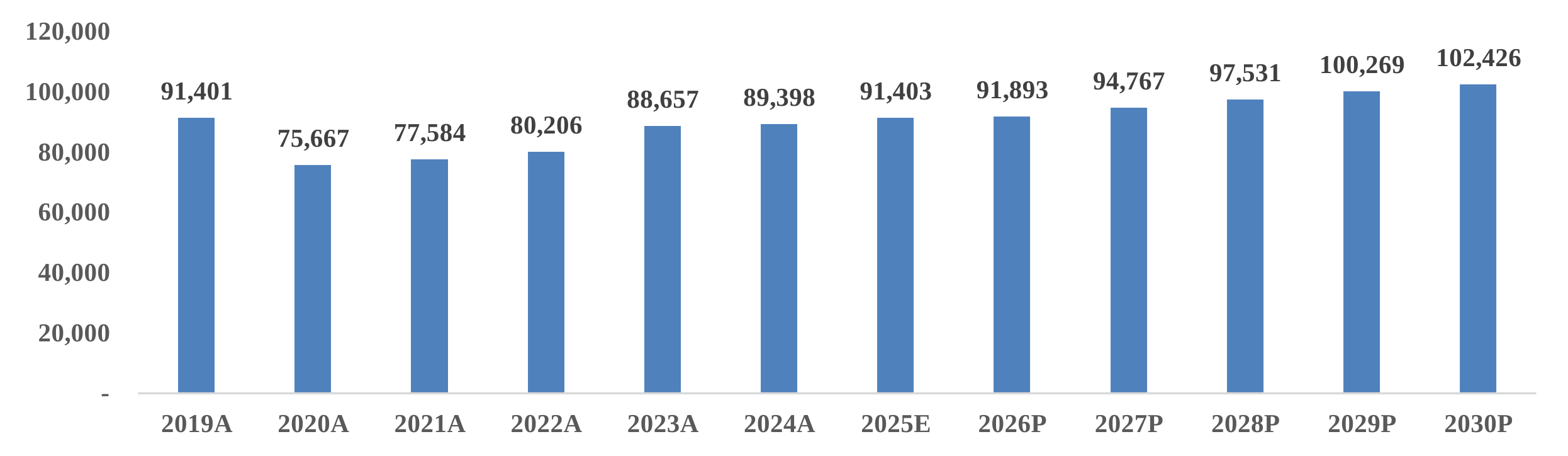
Turning to production and sales: for 2025 we expect light vehicle production to reach just over 91 million units, a modest 2% rise compared with 2024. This reflects a period of stabilization: after a post-supply-chain-recovery surge, manufacturers and markets appear to be moderating growth amid economic headwinds, lingering inflation, higher interest rates, and uncertainty about electrification and regulatory regimes.
Looking ahead over the next five to seven years, the global outlook is cautiously optimistic — with growth likely to be uneven across regions. The broader global vehicle fleet still has headroom to expand, especially in Asia and other emerging markets. At the same time, the shift toward electrification is still growing: as of end-2024, the global electric-car fleet reached nearly 77 million units. Sales forecasts from project close to 19 million battery-electric + plug-in hybrid vehicles (Table 2, page 8) sold globally this year. That suggests Electric Vehicles (EVs) and other light vehicles will continue to add to the global fleet, even as overall production growth remains modest.
Exhibit 1 Global Light Vehicle Production (2019A-2030P)
Source: Ward’s, Gabelli Funds estimates
Looking outside North America (which we detail in this report’s next section) Chinese electrification momentum continues to accelerate: battery-electric and plug-in models are expected to make up a significantly larger share of production, helping bolster output even as pricing and mix pressures intensify among incumbent players. Meanwhile, automakers with joint ventures in China may increasingly re‑optimize their strategies — scaling back low-margin platforms while emphasizing high-margin Sport Utility Vehicle (SUV)/van EVs or higher-value New Energy Vehicles (NEVs).
In Europe, the near-term outlook is more subdued, with production of about 16.6 million units in 2025, slightly down from 2024, remains constrained by emission-regulation pressure and rising costs. Over the longer run, Europe’s growth in fleet size is likely to be limited, given high vehicle density, slower population growth, and increasing regulatory constraints. The region may instead see a sharper shift in composition (e.g., more EVs, different vehicle types) rather than large increases in total volume.
On the mix front, electrification remains the key growth lever. According to S&P Global, BEV and Plug In Electric Vehicle (PHEV) production continues to expand strongly into 2026, with battery-electric volumes growing around +21.9% year over year (per their forecasts). This trend underscores a structural shift away from ICE (internal combustion engine) vehicles, as EVs increasingly drive global production growth.
Still, risks are non-trivial. Macroeconomic uncertainty, tariff volatility, and affordability constraints could cloud demand — especially in more rate-sensitive markets. And while EV adoption is continuing, the competitiveness of EV business models will be tested as manufacturing scales, pricing pressures mount, and incumbents adjust to a more crowded and mature NEV market.
US LIGHT VEHICLE MARKET OUTLOOK:
A March Back to 17 Million Vehicles Begins
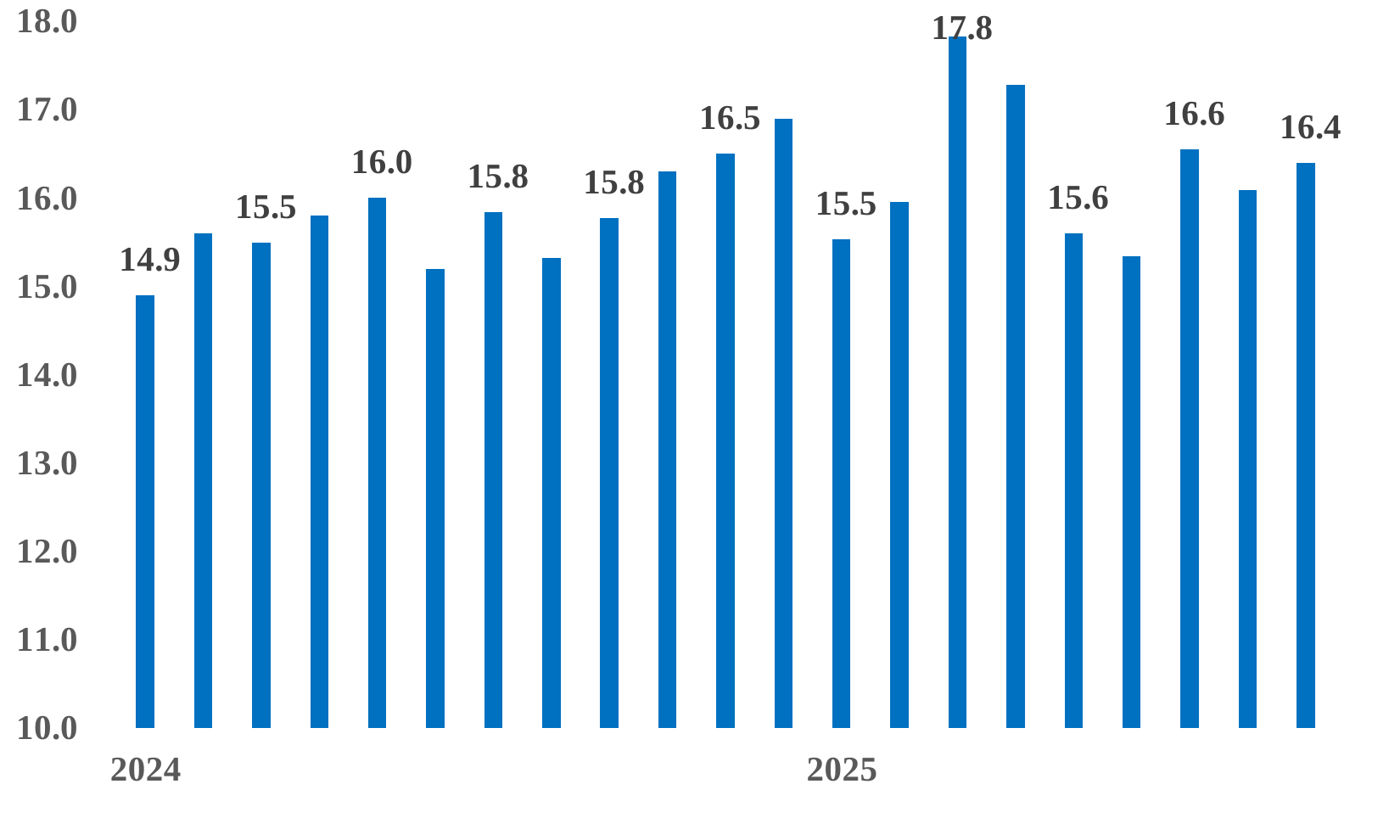
After a period of inventory tightness and step‑function disruption to the supply chain, the U.S. light‑vehicle market has moved toward a more normalized equilibrium. Production and dealer lots have largely replenished after the supply dislocations of 2020–2022, and industry indicators during 2024–2025 show a Seasonally Adjusted Annual Rate (SAAR) that has oscillated in the mid‑to‑high‑16-million-unit level. That normalization has brought the industry back to a base from which a modest recovery toward a 17-million-unit SAAR appears feasible, but the path remains dependent on affordability dynamics. Elevated average transaction prices (driven by richer content and higher mix of SUVs/trucks), higher finance costs, and still‑elevated monthly payments have kept some buyers on the sidelines; conversely, pockets of pent‑up demand and improving production in North America and China suggest upside if interest rates ease. The Las Vegas symposium underscored this duality: executives see a near‑term stability in production but emphasized that a sustained step back to history’s trend pace will require a combination of lower financing costs, broader price relief, and continued inventory discipline.
Exhibit 2 2024-25 Monthly US Light Vehicle SAAR
Source: Ward’s
During conversations in Las Vegas, suppliers highlighted a significantly improved business environment, noting that production schedules are more predictable and supply chains are largely stabilized. This contrasts sharply with the challenges of recent years, when COVID-driven disruptions and component shortages weighed heavily on profitability. Suppliers also discussed the pricing environment, indicating that while elevated input costs and competitive pressures persist, ongoing adjustments in vehicle pricing and improved mix are helping to support margin recovery. The more normalized environment provides a foundation for solid performance; however, pockets of excess inventory and production adjustments could still create occasional disruptions, particularly in the first half of the year. Overall, suppliers expressed cautious optimism, emphasizing that consistent production, continued alignment with OEM demand, and disciplined pricing strategies will be key to sustaining recovery and profitability.
Dealer Inventory On Watch Exhibit 3 US Monthly Dealer Inventory, 2022-2025
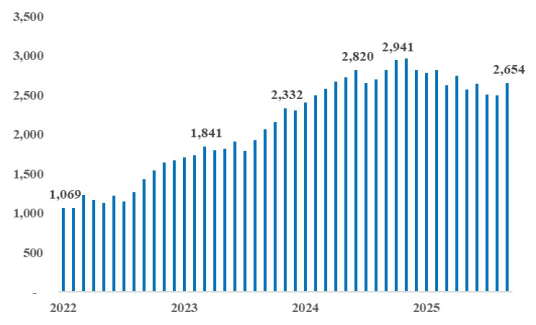
The rebound in dealer inventory that began in the back half of 2023 continued into 2025, as production schedules became more predictable and consumer demand softened . In the U.S., new‑vehicle inventory stood at approximately 2.68 million units at the end of July 2025, with a days’ supply of roughly 73 days. Although the unit count is broadly comparable the days’ supply has now moved higher than the 60-day level and is above the typical automaker target band of 50‑60 days. (Exhibit 3 Source: Ward’s)
The implication: while greater availability has helped offset some affordability headwinds, the fact that days’ supply is drifting above target suggests dealers may face increasing pressure on pricing and incentives, especially if the sales pace fails to pick up. The normalization in inventory is continuing — but perhaps with a slight overhang compared to “optimally” balanced levels.
US Sales Recovery Continues
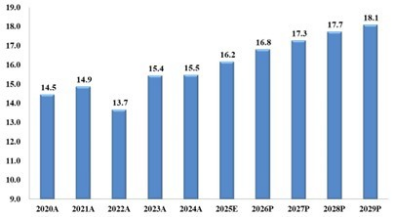
The U.S. vehicle market is expected to continue its gradual recovery through 2026 and 2027, supported by more balanced inventory levels, a slowly easing interest-rate environment, and ongoing pent-up demand. Sales are projected to grow modestly from the 2025 level, with total annual light-vehicle sales likely reaching the mid‑16 million range in 2026 and approaching 16.5–16.7 million units by 2027.
While the overall trend points toward stabilization, affordability pressures remain a potential constraint, particularly for buyers sensitive to financing costs and vehicle pricing. The recovery is expected to be steady rather than sharp, allowing the market to digest the sales lost during the 2020–2022 downturn and move toward more normalized volumes. Dealers and manufacturers are likely to focus on managing incentives, maintaining adequate inventory, and adjusting mix to capture growth in high-demand segments such as Sport Utility Vehicles (SUVs).
Exhibit 4 US Light Vehicle Sales 2019A-27P
Source: Ward’s, Gabelli Funds estimates
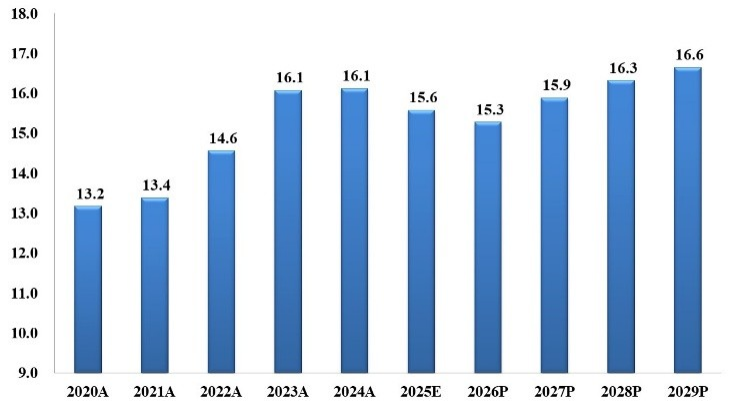
Exhibit 5 North American LV Prod. 2019A-27P
Source: Ward’s, Gabelli Funds estimates
Given the expectation for improvements in sales coupled with a more normalized production environment for suppliers, the backdrop for investing is generally positive. We view the likelihood of production declines in the coming years as low, given the foundational demand that exists. Slowing inflation and broader declines in commodity prices, including steel mean that the headwinds of 2023 have subsided – a factor that we expect will help drive profit margins for ecosystem players. These benefits will likely be offset by the potential for trade disruption along with stranded EV capacity, which we will discuss in later sections of this report.
Of Tariffs and Trade
Tariffs and geopolitical shifts are no longer episodic concerns—they have become structural inputs to sourcing and capital allocation. Management teams described multi‑regional footprints, United States-Mexico-Canada (USMCA)‑compliant production, and nearshoring to Mexico as core responses that reduce tariff exposure and better align lead times with customer needs. The immediate pain of counter‑tariffs in certain export markets has produced.
near‑term earnings pressure; however, executives noted that reshoring and localized manufacturing create durable advantages in supplier‑Original Equipment Manufacturer (OEM) relationships over a 3–5‑year horizon. The symposium highlighted that while onshoring improves resilience, the benefits accrue with lag relative to the immediate cash‑flow hit from tariffs and trade frictions.
Commercial vehicles, freight and aftermarket offset
Commercial vehicle participants described a cyclical trough in freight markets that has depressed Class‑8 orders and constrained new‑truck demand. Yet vocational segments (refuse, construction, municipal) and used/leasing operations provide countervailing demand for parts and service. Truck dealers and distributors emphasized uptime and parts availability as competitive differentiators: while new‑truck orders may be soft, parts and service margins remain a durable earnings engine that can offset cyclicality in equipment sales. Several presenters noted the absence (to date) of a significant EPA‑driven pre‑buy, tempering near‑term upside but preserving long‑run structural demand tied to emissions compliance and fleet renewal.
Electric Vehicle Outlook
The Great EV Recalibration and Its Implications
Electrification: moderation, repricing, and evolving addressable markets
The conference made it clear that electrification remains an industry transformation, but the cadence and form of adoption have moderated. Where earlier forecasts painted a nearly straight‑line shift to battery‑electric vehicles (BEVs), managements now expect a more mixed future where hybrids and plug‑in hybrids (PHEVs), along with more conventional ICE platforms, absorb meaningful share as consumers balance cost, range, and charging infrastructure. Public data reflect the slowdown: BEV penetration of new‑vehicle sales and the car parc has advanced but more slowly than earlier consensus (with estimates showing BEV share of new sales in low‑double digits and BEVs still a small percentage of the total on‑road fleet). Importantly for the aftermarket, the long vehicle replacement cycle and the current age profile of the U.S. fleet mean that electrified vehicles will represent a relatively small share of parts volumes in the near term, while hybrids expand the addressable opportunity for filters, brakes, sensors and electronics. Firms at the symposium stressed a pragmatic pivot—right‑sizing EV capital commitments while accelerating investments in Advanced Driver-Assistance Systems (ADAS), sensorization, and hybrid content that deliver nearer‑term margin and revenue upside.
EV Growth – Framing the Discussion
The discussion in Las Vegas reinforced that electrification remains a structural transformation, but with a more tempered growth curve than the industry envisioned earlier in the decade. Global EV adoption continues to rise, with most credible forecasts—including our own—now expecting annual global EV sales to increase from roughly 10 million units in 2022 to approximately 36 million by 2030, while the number of EVs on the road expands from about 40 million to nearly 230 million. This represents a slower trajectory than was forecast in 2021–2022, yet one that still drives a multi‑fold increase in electrified units and creates a steadily growing installed base for suppliers, dealers, and the aftermarket.
The below includes both battery electric/fully electric vehicles (BEVs) and plug-in hybrid electric vehicles (PHEVs).
Table 1 Global Electric Vehicle Sales 2022A – 2030P

Table 2 Global Electric Vehicle Population

Hybrid and PHEV proliferation remains central in this moderated pathway.
Consumer preferences, charging‑infrastructure constraints, and affordability concerns are supporting a balanced electrification mix rather than a pure‑BEV transition. At the symposium, OEMs emphasized lower‑priced EV nameplates and broader hybrid lineups as the practical vectors for mass‑market adoption. This aligns with the recent stabilization in EV pricing—particularly Tesla’s pullback from aggressive 2023 price cuts—and with nearly every global OEM maintaining multi‑year BEV and PHEV product pipelines.
Artificial Intelligence, autonomy, and the next regulatory wave
While less of a headline topic in Las Vegas than EV adoption, artificial intelligence and autonomous driving remain top of mind for investors. Reports that the next administration may pursue a more permissive federal regulatory framework for autonomous vehicles have amplified expectations for renewed momentum. Over the next five years, AV deployment—long gated by fragmented state rules and federal caution—could accelerate if regulatory harmonization materializes.
Large‑scale autonomy efforts remain anchored by Tesla’s Full Self Driving (FSD) and Alphabet/Waymo. Although FSD still requires human oversight and Waymo operate within limited geofenced environments, the industry now has active robotaxi pilots, including driverless tests in select cities. The intersection of EV architecture, advanced compute platforms, and AI—outlined in our 2024 “EV + AI” white paper—remains pivotal: autonomous systems are increasingly dependent on high‑performance sensors, data‑center‑scale training models, and vehicle‑edge computing. Suppliers such as Aptiv and others stand to play critical roles in this evolution, providing the connectivity, compute, sensor suites, and safety‑critical architectures required for scaled autonomous deployment.
Implications of the EV Tax Credit Elimination Exhibit 6 Gabelli EV +AI Report

Presenters in Las Vegas were mixed but generally cautious about the implications of eliminating the $7,500 federal EV tax credit. Several OEM and dealer executives noted that the credit has meaningfully supported demand at the margin, particularly for mid-priced EVs where affordability remains a central barrier to adoption. Without the credit, they expect near-term EV sales growth to moderate further, especially in segments where consumers are highly payment sensitive. Suppliers echoed this view, suggesting that an abrupt removal of the incentive could delay platform transitions or require a temporary rebalancing of production mix toward hybrids and ICE vehicles. Though most acknowledged that long-term electrification remains inevitable, the consensus was that removing the credit would likely flatten the adoption curve over the next several years. (Exhibit 6 Source: Gabelli Funds)
Others at the conference—especially those with significant exposure to premium segments or strong EV product leadership—argued that the elimination of the credit would have uneven competitive effects. Tesla was repeatedly cited as a potential relative beneficiary, given its cost position, scale, and established brand strength, which may allow it to weather a subsidy removal more effectively than emerging competitors. Some presenters even suggested that removing the credit could raise barriers to entry and increase industry concentration, as newer or smaller OEMs would face greater pressure to absorb costs or cut prices. While no clear industrywide preference emerged, the discussion highlighted that the credit’s removal would not only influence consumer affordability, but also reshape competitive dynamics, capital-allocation decisions, and the pacing of electrification across North America.
Regulations Remain a Primary Driver Exhibit 7 Tesla Model Y
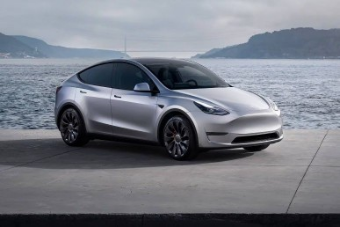
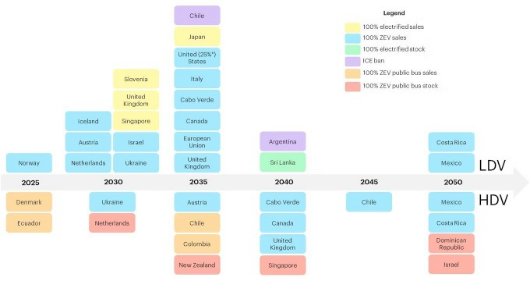
Global electric-vehicle regulation continues toward lower emissions and higher electrification, but at differing paces across the U.S., Europe, and China. In the U.S., federal policy now allows slower timelines and greater flexibility, letting hybrids and plug-in hybrids help meet the EPA’s 2024 emissions standards through 2032, while some states, notably California, pursue stricter zero-emission targets for 2035.
(Exhibit 7 Source: Edmunds)
Europe maintains the world’s strictest rules, effectively banning new internal combustion vehicles by 2035 under its Fit for 55 package, with steep CO₂ reduction mandates and penalties driving rapid EV production and charging expansion. China combines regulatory pressure with industrial support: its NEV mandate requires increasing EV production, while subsidies, charging infrastructure, and supply-chain investment have pushed EVs past 30% of new sales. These approaches—Europe’s strict regulation, China’s policy-driven growth, and the U.S.’s flexible, hybrid-inclusive path—show global electrification progressing along very different timelines and strategies
Exhibit 8 Global Emissions Regulations/ICE bans
Source: International Energy Agency (IEA)
AUTOMOTIVE AFTERMARKET OUTLOOK
Vehicle Necessity Addresses Market Resilience:
Aftermarket Fundamentals Remain Strong Despite Challenges
The US automotive aftermarket continues to be one of the industry’s most durable pillars, supported by an aging vehicle fleet, normalized used-vehicle values, and the non-discretionary nature of core replacement categories. Even as OEM production normalizes and consumers face affordability pressures, the aftermarket continues to benefit from sustained miles driven, deferred new-vehicle purchases, and the stickiness of installer and retail channels. With U.S. aftermarket sales exceeding $400 billion and expanding more than 30% over the past five years, reliability, fill rates, category management, and technology-enabled diagnostics have become key differentiators. The sector also enjoys a long runway as EV adoption moderates; battery-electric vehicles account for only about 3% of the U.S. car parc, and the slowdown in EV demand across North America and Europe is allowing internal-combustion platforms to age further—and require more parts.
Suppliers emphasize that core categories tied to combustion engines continue to anchor the aftermarket, while hybrids, introduce new opportunities in consumables, filtration, cooling, and electronics. Companies also highlight structural advantages stemming from diversified sourcing, United States-Mexico-Canada-Agreement (USMCA)-compliant production footprints, and remanufacturing expertise. Profitability and growth expectations remain solid as firms invest in product expansion, margin recovery, and diagnostic technologies that enhance value for installers and retailers. Supported by improving supply chains, better inventory positioning, steady customer-pay activity, and opportunities in brake systems, sensors, and testing platforms, the aftermarket remains a stabilizing force—essential, resilient, and positioned for continued share capture and long-term growth.
A Review of Industry Basics
The Automotive Aftermarket Suppliers Association (AASA) now estimates that the U.S. light-vehicle aftermarket has grown to roughly $430 billion in 2025 and is on track to reach $450 billion by 2027, supported by an aging vehicle fleet, normalized used-vehicle values, and steady miles driven. After demand fell sharply in 2020 amid COVID-related declines in travel, the sector rebounded more than 35% through 2023 and has continued to grow year-to-date in 2025, with suppliers reporting stable volume, better fill rates, and improving gross margins as supply chains normalize. Forecasts now call for high-single-digit cumulative growth over the next three years, even before factoring in incremental opportunities tied to hybrid and plug-in platforms.
Exhibit 9 US LV Aftermarket Size (2016-2028P)
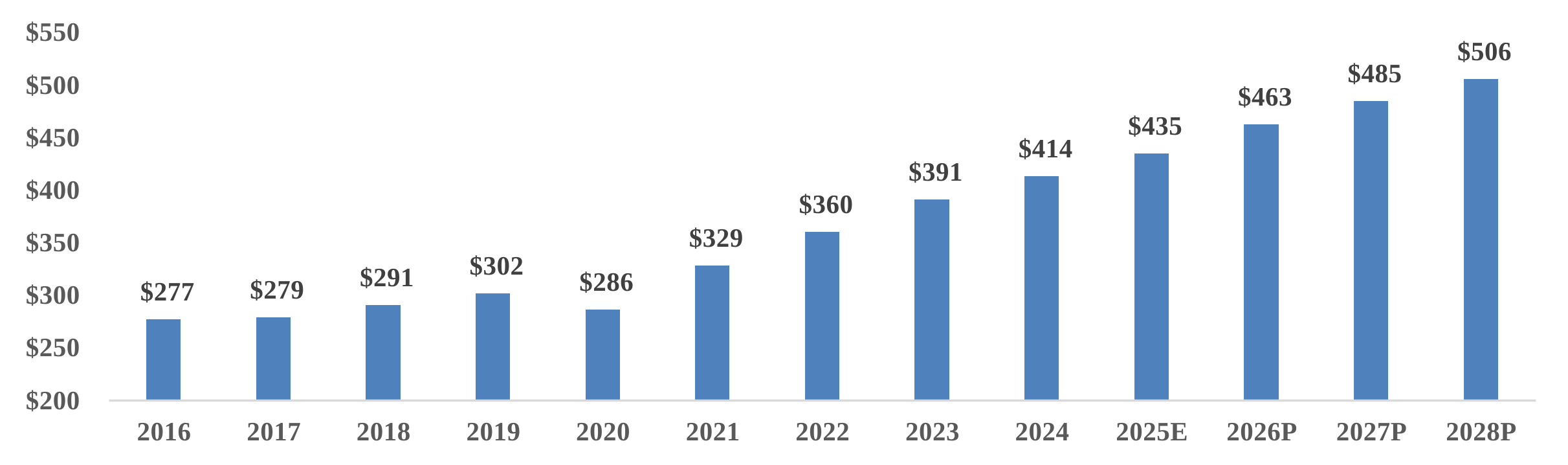
($ in billions, USD) Source: MEMA
Aftermarket Drivers
The automotive aftermarket is traditionally driven by four primary dynamics: a) the number of vehicles on the road; b) the age of the vehicle population; c) employment and wage growth; and d) the number of miles driven by consumers. On average, aftermarket growth has ranged between 1-4% over the past thirty years, proving to be recession resistant.
More Vehicles on the Road –and older at that
U.S. Vehicles in Operation (VIO) have continued to rise steadily over the past decade and now stand at roughly 296 million units, supported by improved vehicle durability, elevated average ages, and several years of constrained new-vehicle production that slowed replenishment at the front end of the fleet. The U.S. car parc is older than ever, with the average light-vehicle age at 12.6 years and the average truck age at 14.1 years, and nearly 140 million vehicles between 6–14 years old. More than 30 million vehicles are now over 20 years old, further extending the tail of the curve as consumers continue to maintain aging vehicles amid affordability pressures and still-normalizing supply. Looking forward, vehicle population growth is expected to remain modest but positive, driven by long-term suburbanization trends, continued improvements in vehicle quality that extend life cycles, and steady household formation. With only 27 million vehicles aged 0–3 years, the fleet remains heavily weighted toward older units, reinforcing a supportive backdrop for parts and service demand through the remainder of the decade.
Exhibit 10 US Light Vehicle Population 2014-2024e
(millions)
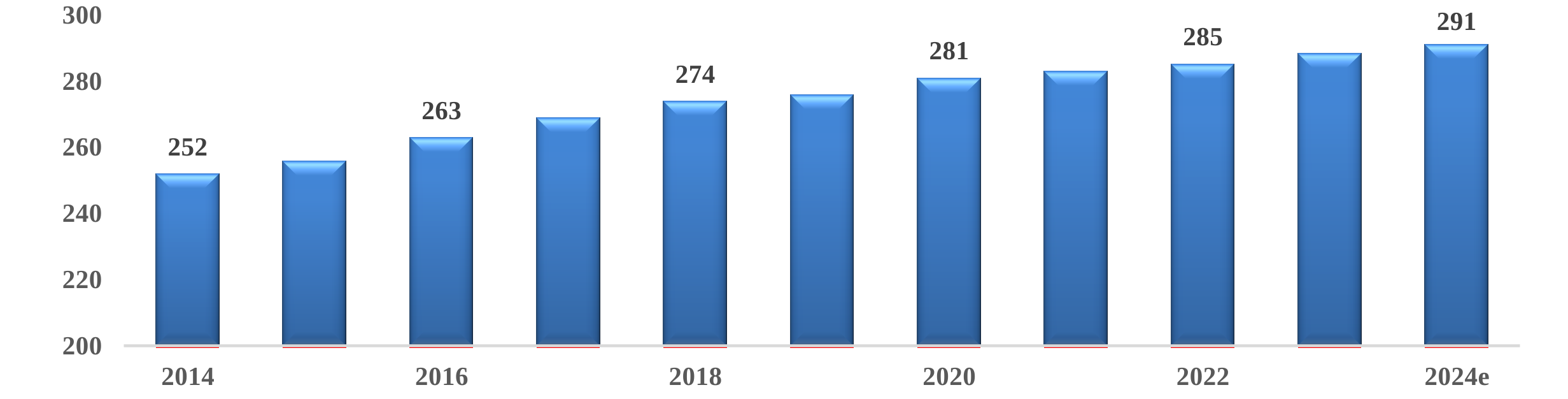
Source: AASA, Experian
The “sweet spot” for aftermarket repair includes vehicles roughly 6–12 years old, representing the period of highest repair and maintenance intensity. Vehicles in this range have typically exited warranty coverage and manufacturer-subsidized programs while experiencing rising failure rates of wear components, generating 2–3 times the annual parts and service revenue of newer vehicles. U.S. fleet demographics strongly favor this segment: the average vehicle age reached 12.8 years in 2025, with a growing share of the fleet concentrated in older age cohorts. Factors such as production constraints during 2020–2023, elevated new and used vehicle prices, and economic pressures on consumers have extended vehicle service lives, reinforcing the “drive it until it dies” mentality. Repair needs increase with age—6–9-year-old vehicles require major maintenance like brakes, suspension, and cooling systems, while 10–12+ year vehicles face accelerated wear on engines, electrical systems, and chassis components.
The sweet spot population is set to grow over the next 3–5 years as the large production volumes from 2015–2019 reach prime aftermarket years, creating a sustained period of elevated demand, while production-constrained 2020–2023 model years will cause a temporary dip in the late 2020s. Vehicles from the mid-to-late 2010s combine substantial electronic content and advanced safety systems with manageable complexity, generating high-value repairs without deterring independent shops. Owners in this segment are motivated to maintain their vehicles: many have completed financing, exhibit emotional attachment, and prefer cost-effective, reliable aftermarket service over dealership visits. This combination of fleet demographics, vehicle complexity, and customer behavior makes the 6–12-year age range the most attractive opportunity for aftermarket repair.
Exhibit 11 US Light Vehicle Age (Years)
Years

Source: AASA, IHS Markit
Vehicle Age Drives Aftermarket Growth
The average age of a car on the road has grown to 12.8 from under 10 over the last 20 years (Exhibit 13). As owners are able to drive vehicles longer, they are more willing to invest in repair and replacement of parts. We believe this additional investment has effectively expanded the age range of the “sweet spot,” or age in which the owner sees value in repairs.
An older vehicle parc bolsters the sale of alternators, starters, brake calipers, and brake master cylinders – parts are generally replaced later in a vehicle’s life. Higher numbers of replacement jobs generate more aftermarket demand as service providers diagnose ancillary problems in these older vehicles. Further, in response to recent higher costs pressuring consumers, historic lows in new/used vehicle supply, and high new/used vehicle prices, many consumers have decided to maintain their vehicles longer. Both of these recent and historical trends should drive aftermarket age and replacement demand.
Exhibit 12 Number of Vehicles in Aftermarket “Sweet” Spot 2014-2026P
(millions)
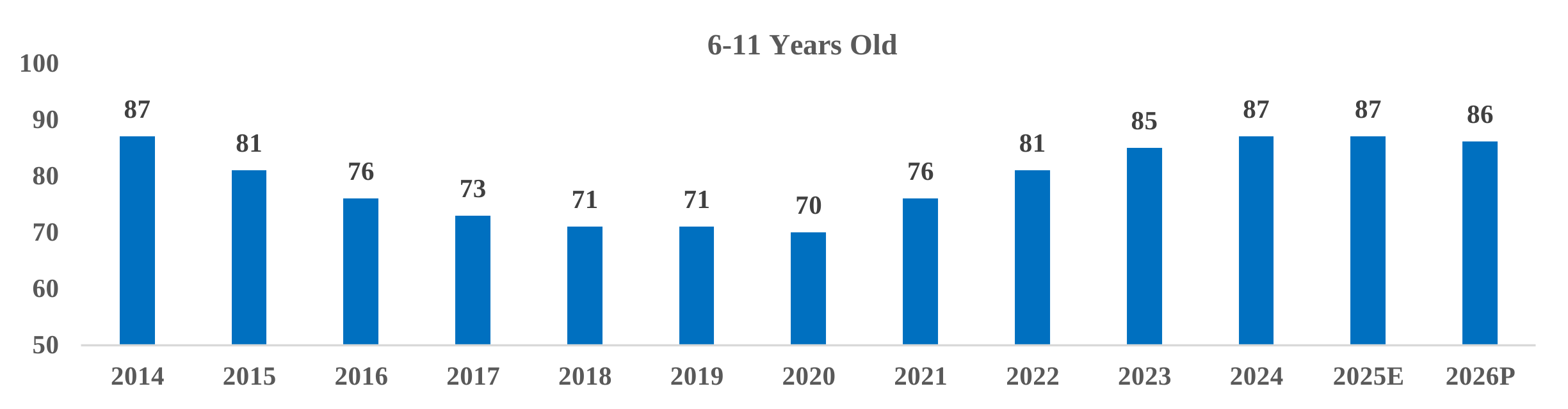
Source: AASA, IHS Markit, Gabelli Funds Estimates
Miles Driven to Grow: Need for Personal Vehicles, Suburbanization, and Return to Work
Miles driven (outside of warranty) is a historic indicator of broader vehicle wear and tear. However, from the beginning of the COVID pandemic, there was a clear spread between miles driven and aftermarket demand. We attributed this to: 1) owners of older vehicles tended to be essential workers who continued to drive; and 2) stimulus dollars supported low-income consumers in 2020/2021 who were more likely to own older vehicles. Previously declining categories tailored to 12+ year old vehicles grew during this period, while appearance and performance categories significantly outperformed in 2020/2021. These products are not tied to miles driven, but an indication of time, money and interest by the end consumer.
As of 2025, the average vehicle age has reached 12.8 years across the 290 million vehicle US fleet, creating sustained demand for maintenance and repair. Industry participants confirm that “miles driven wears stuff out,” with operators “sweating their fleet more” due to economic pressures from high vehicle costs—new vehicles now average $50,000+ with monthly payments exceeding $700 and used vehicle payments average over $500. Consumers are responding by keeping vehicles longer and increasingly “trading up” in parts quality, knowing they will maintain ownership for extended periods. With unemployment remaining at a historically strong 4.3% and wage growth supporting resilience, the non-discretionary nature of repairs continues to support steady aftermarket demand.
Going forward, suburbanization (where residents own 2.5 cars on average vs 1.8 in urban areas), return-to-work trends (85% of CEOs now predicting full office return vs 60% in 2023), and shared mobility growth should support continued miles driven. The combination of an aging vehicle fleet, sustained employment, return-to-office mandates, suburbanization, and ride-sharing growth suggests miles driven should continue to support robust aftermarket demand, even if total miles driven have stabilized rather than grown significantly from pre-COVID levels.
Exhibit 13 U.S. Vehicle Miles Driven (2014 -2024)
(billions)

Source: US Department of Transportation Federal Highway Admin
Aftermarket Ecosystem
The U.S. car parc now stands at 290 million light vehicles, operated by approximately 240 million licensed drivers, and remains the core engine of aftermarket demand. This ecosystem is serviced by a highly fragmented network that includes individual DIY consumers; roughly 130,000 independent repair outlets; 100,000 service-oriented gas stations; nearly 600 warehouse distributors; and 37,000 parts stores across the country.
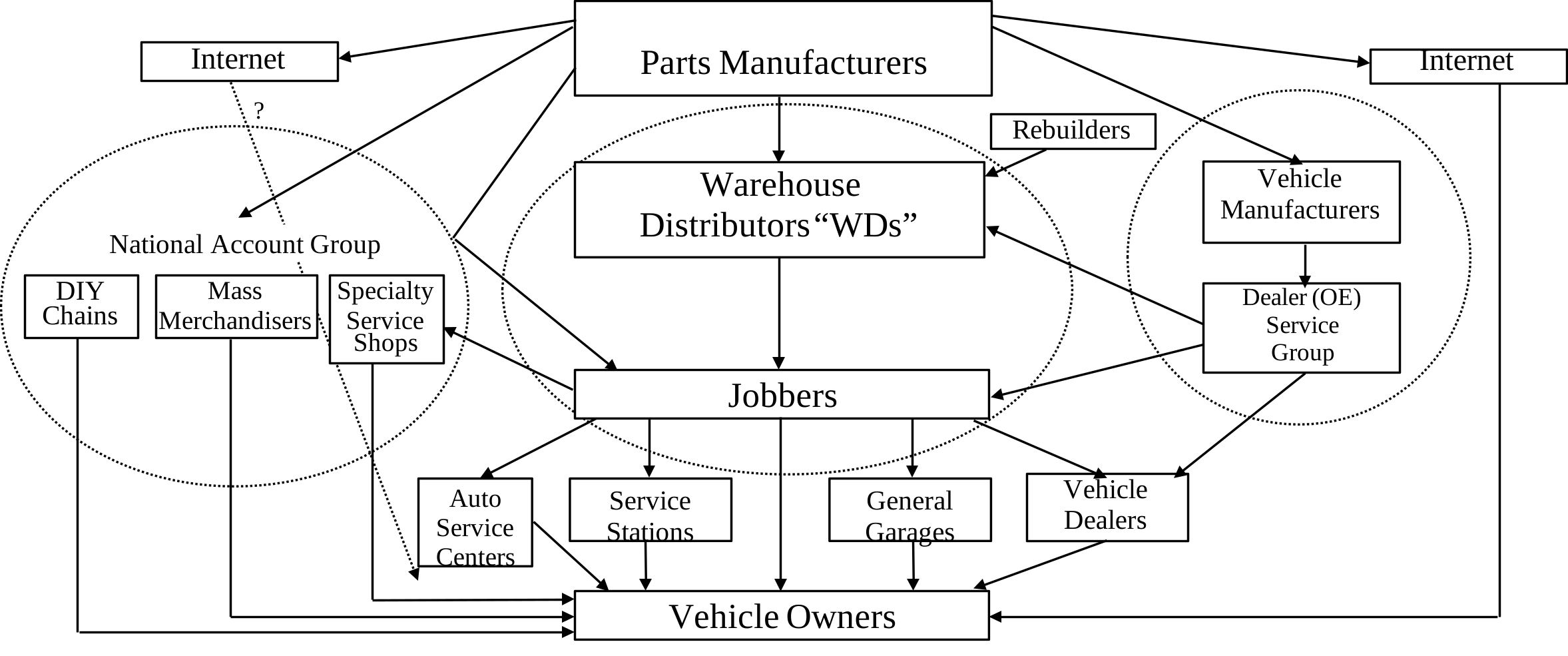
The traditional or “three-step” parts distribution system consists of the warehouse distributor (WD), the jobber, and the end-user or installer (Exhibit 14). The leaders amongst WDs and jobbers continue to be NAPA (Genuine Parts), CARQUEST (part of Advance Auto Parts), and O’Reilly Automotive. The largest service chains include Midas, Jiffy Lube, and Monro Muffler Brake (MNRO). While the three-step system produces lower margins for distributors, this system remains efficient and provides the broadest range of parts deliverable within the shortest amount of time. The ability of new forms of distribution to gain share, most notably e-commerce, will depend on the ability to meet required delivery speeds of 30-45 minutes after an order is received.
In the retail “two-step” system, parts are distributed directly through consumer accessible chain stores, the largest of which are AutoZone, Advance Auto Parts, and O’Reilly Automotive, as well general retailers such Costco and Wal-Mart. In this system, the DIY chain or retailer acts as both distributor and retailer (Exhibit 14). In the OE Service “two-step” system, part suppliers ship products to a dealer service group (e.g. Ford or Toyota), which typically warehouses the product and ships it off to franchised vehicle dealers and other repair operations.
Exhibit 14 U.S. Automotive Aftermarket Channels
Source: Gabelli Funds
Online update
Online automotive aftermarket activity continues to expand, but its growth remains slow, uneven, and highly category-dependent, with only 25–28% of sales occurring online in even the most e-commerce-friendly segments such as intake manifolds, turbochargers, shock mounts, and shocks/struts. Despite more shoppers turning to digital channels, the transition has not accelerated meaningfully in recent years due to cataloging complexity, the need for fitment confidence, and the ongoing preference among installers for traditional DIFM distribution networks. Amazon remains a meaningful player—particularly for commodity, convenience, and DIY-oriented items—but even its marketplace has seen measured rather than explosive share gains as consumers still rely heavily on brick-and-mortar retailers and professional service channels. As a result, online penetration continues its gradual rise, but remains far from disruptive to the broader aftermarket ecosystem.
Out-Of-Warranty Benefits
Vehicles exiting OEM warranty coverage mark a pivotal point for the aftermarket industry, as owners assume full responsibility for repair and maintenance costs. Using a conservative 5-year powertrain warranty threshold, vehicles from model year 2020 and older largely fall into the out-of-warranty population, totaling an estimated 220–230 million of the 289 million U.S. light vehicles. Once warranties expire, owners become highly price-sensitive, creating opportunities for aftermarket providers. Industry data suggests aftermarket channels capture roughly 65–75% of maintenance and repair spending for these vehicles, generating $260–280 billion annually, with per-vehicle spending averaging $1,000–1,200—significantly higher than in-warranty vehicles.
The out-of-warranty population continues to grow both in absolute terms and as a share of the fleet. Strong production years from 2016–2019 are now reaching warranty expiration, with large cohorts like the 2019 model year (17+ million units) entering the aftermarket in 2024, while pandemic-constrained production years temporarily slow near-term additions. Trends such as extended manufacturer warranties, certified pre-owned programs, and third-party coverage modestly delay aftermarket engagement, but their impact is limited. Overall, the combination of fleet aging and increasing per-vehicle repair needs supports mid-single-digit aftermarket growth through 2030, as each year adds more vehicles to the out-of-warranty pool than are retired or returned to warranty, creating durable secular growth tailwinds.
Exhibit 15 Vehicle owners trend towards aftermarket Exhibit 16 Out of warranty (%) increasing
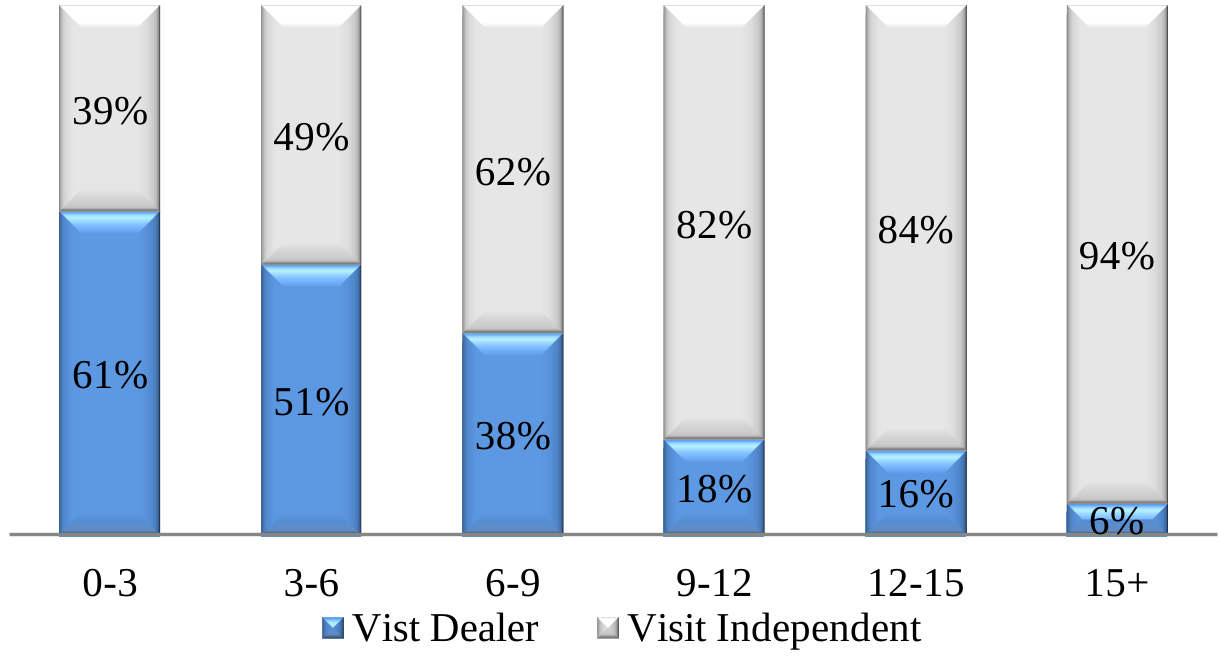
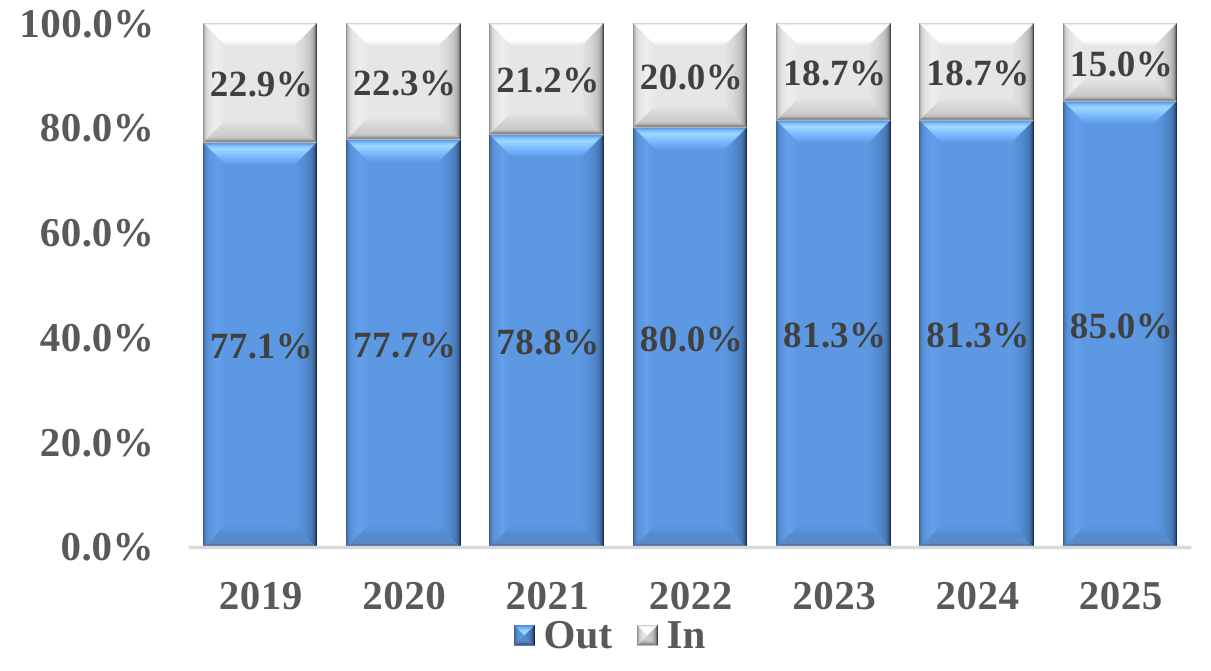
Source: Automotive Aftermarket Suppliers Association Source: Automotive Aftermarket Suppliers Association, Gabelli Funds estimates
Previously, it was hypothesized that dealers would take share as the increasing use of technology created cybersecurity issues that could lock out aftermarket parts suppliers due to OBD-II (on-board diagnostic standards) access restrictions, making it more difficult to reverse engineer these parts. However, Massachusetts passed the pro-aftermarket “right to repair” measure in 2021, which enables aftermarket providers access to vehicle data for the purpose of service and repair. Federal regulation supporting the aftermarket is expected to follow. This reduces any risk that only dealers will have access to telematics and data within the car.
Going forward, we believe that dealers and large repair chains will take share due to the increasingly large investment required to repair complex vehicles, train technicians, and optimize telematics/data. Complexity in parts is raising costs of doing business, providing an advantage for larger organizations, including both dealers and large repair chains that have the diagnostic and tool capability to complete these jobs. The question will be whether these shops can leverage the topline growth as costs rise.
Vehicular mix shift to SUVs
Americans have shifted to larger vehicles over the last 20 years which drives aftermarket demand. Light trucks went from ~50% of sales in 2013 to ~80% in 2023. Larger vehicles tend to require more repair dollars with a mid-size crossover costing 12.5% more per mile repair and maintenance cost than a small car. This should create a longer, bigger tail of larger vehicles for the aftermarket, driving bigger tickets for participants.
Exhibit 17 North American New Vehicle Sales by Type (2001-2025E)
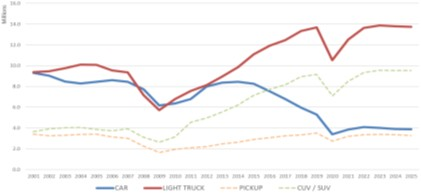
Source: AASA, IHS Markit
Potential headwinds
Consumer Affordability
New vehicle prices averaging $50,080 with $750 monthly payments, combined with used vehicle payments exceeding $500, have created severe affordability constraints. Elevated insurance premiums have driven record uninsured motorist levels and liability-only coverage. Recent bankruptcies of subprime lenders (First Brands, Tricolor, Primalend) underscore stress on lower-income consumers. However, this dynamic forces consumers to maintain existing vehicles longer, benefiting the aftermarket. As one executive noted, “outside of NYC, you need a car”—this necessity provides underlying resilience, particularly in break-fix categories.
Exhibit 18 The Increasing Costs of Vehicle Maintenance and Repair (CPI Index data: base year 2015-2025)
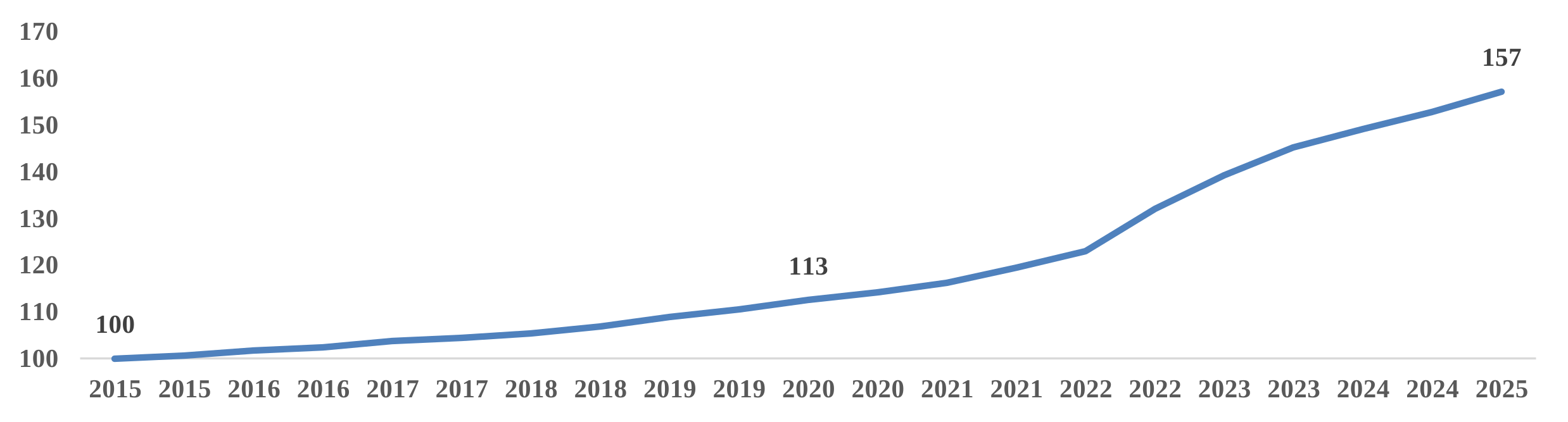
Source: Federal Reserve Bank of New York
Tariffs and Supply Chain Disruption
Tariff uncertainty creates significant challenges, with China-sourced products particularly affected. Companies report varying exposures: AutoZone reduced Chinese imports from 85-90% to 60% (targeting 50%), while Dorman dropped below 30%. The industry is diversifying sourcing to Mexico, Turkey, India, and Malaysia. Most suppliers successfully pass tariff costs through, though on 90–120-day delays. USMCA renegotiation in 2026 adds uncertainty for Mexican manufacturing operations. Beyond tariffs, ongoing semiconductor shortages and facility disruptions (Novelis fire) demonstrate supply chain vulnerability, prompting elevated “just-in-case” inventory levels.
Commercial Vehicle Market Weakness
The commercial vehicle segment faces its worst downturn since 2009, three years into a “freight recession.” Class 8 orders from April-September represented the weakest six-month period since 2009. Pending EPA emissions regulations could add $10,000-25,000 per truck, while tariffs may add another $10,000-12,000. Despite production weakness, aftermarket parts and service remain relatively flat as aging fleets require maintenance. Rush Enterprises noted replacement cycles extended from 14-16 months to three years, supporting parts demand even as new truck purchases decline.
Supply Chain Finance Stress and First Brands Bankruptcy
The bankruptcy of First Brands Group exposed critical vulnerabilities in supply chain financing arrangements that had proliferated across the automotive aftermarket. First Brands—a major PE-backed distributor consolidator—collapsed under excessive leverage amplified by off-balance-sheet supply chain finance programs that extend payment terms to 365 days or more while presenting improved working capital metrics. The bankruptcy triggered immediate counterparty risk concerns and forced an industry reckoning on supply chain finance sustainability. Suppliers now scrutinize customer balance sheets more carefully, with Phinia factoring extended payment terms into ROI calculations—a 365-day payment term might require a 15% price increase to achieve acceptable returns. The event accelerated a flight to quality, with suppliers prioritizing financially stable customers over revenue growth with highly leveraged distributors. It serves as a stark reminder that in an industry with thin margins (gross margins in the mid-30s for most distributors), excessive financial engineering through off-balance-sheet arrangements and aggressive M&A-driven leverage quickly becomes unsustainable when market conditions tighten.
Moderating inflation, but no historic precedence for disinflation
The automotive aftermarket has demonstrated remarkable resilience navigating inflationary pressures by leveraging vehicle repairs’ non-discretionary nature. AZO noted approximately 85% of sales come from relatively inelastic break-fix categories, enabling disciplined pricing. When inflation drives up costs, retailers protect or expand gross margins through price increases; critically, in deflationary periods, prices remain steady, expanding margins further. Current tariff-driven inflation is gradual rather than pandemic-era freight inflation. GPC emphasized low single-digit price increases are being accepted with limited elasticity even at end-of-2022 peak levels. Suppliers successfully recover tariff costs dollar-for-dollar, typically on a 90-120 day delayed basis. The industry’s pricing power stems from consumers needing operational vehicles for daily life, creating leverage discretionary retail lacks. Historically, inflation has benefited aftermarket companies by driving higher ticket averages and gross profit dollars, with the environment expected to stabilize once the tariff cycle normalizes.
Exhibit 19 Fed Global Supply Chain Index (CPI Index data: 2014-2025)
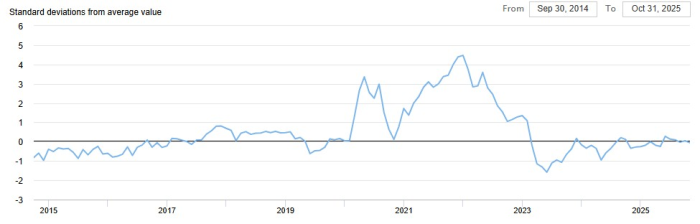
Source: Federal Reserve Bank of New York
Declining Reparable Claims and Collision Repair Headwinds
The collision repair segment faces significant pressure from declining reparable claims over the last several years. This trend affects wholesale North America businesses focused on collision parts, including salvage, aftermarket collision parts, and paint. Multiple factors drive this decline beyond just accident frequency.
First, the combination of high repair costs and elevated insurance premiums means more consumers choose not to repair vehicles after accidents, particularly those with liability-only coverage or who are uninsured. Second, insurers are more aggressively totaling vehicles rather than repairing them when repair costs approach significant percentages of vehicle value. This reduces the repairable claims pool even as absolute accident numbers may not decrease materially.
Exhibit 20 Body Shop Sales Per Repair Order ($ USD)

Source: NADA via MEMA
Advanced driver assistance systems (ADAS) and collision avoidance technology may reduce accident frequency over time, though the near-term impact appears limited. LKQ Corporation noted they “don’t see accidents decreasing more than 1%” currently. The long-term trajectory remains uncertain, with technology adoption rates varying significantly across the vehicle fleet.
Vehicle complexity creates a counterbalancing opportunity. Modern vehicles have more sophisticated, expensive components that drive higher average repair costs per claim. Calibration requirements for ADAS systems, advanced materials in body construction, and integrated electronic systems all increase repair complexity and cost. This benefits suppliers with technical capabilities and scale to handle sophisticated repairs, potentially consolidating market share toward larger MSOs (multi-shop operators) and away from smaller independent shops.
Electric Vehicles and The Aftermarket
Electric Vehicle Impact on the Automotive Aftermarket
The electric vehicle transition presents a complex but manageable long-term challenge for the automotive aftermarket, with adoption timelines extending far beyond initial projections and creating ample time for strategic adaptation. EV adoption forecasts have declined substantially from 45% of newly built vehicles globally at the beginning of 2023 to only 34% currently, with North American SUV electrification notably stalled.
Battery electric vehicles represent just 3% of the total US car population today, and even optimistic projections suggest EVs will comprise only 5% of North America’s vehicle fleet by 2035, meaning combustion engines will dominate aftermarket demand for decades.
Exhibit 21 Electrification Percentage of US Car Population (millions)
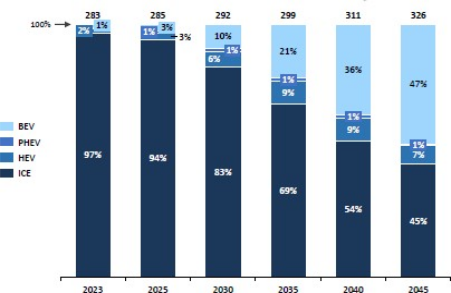
Source: MEMA/AASA Industry Overview – Gabelli Conference
The aftermarket impact varies significantly by product category: traditional engine components, exhaust systems, transmissions, and oil change services face long-term pressure from EV adoption, while brake wear is reduced due to regenerative braking. Conversely, EVs create substantial opportunities in battery systems and remanufacturing, battery management systems, thermal management components for battery cooling, power electronics, and charging systems. MPAA has invested in remanufactured hybrid battery businesses and is actively testing full EV battery remanufacturing, though current headwinds from low used EV residual values complicate the business case.
Hybrid vehicles are gaining favor as they reduce CO₂ emissions by 30-50% without range anxiety or charging infrastructure requirements, maintaining substantial ICE aftermarket content while adding electric components.
ICE engines will dominate aftermarket through at least 2040, providing adaptation runway. The industry consensus is that the extended transition timeline allows for measured adaptation, with the current aftermarket business model remaining fundamentally sound through at least 2040.
Exhibit 22 Aftermarket Growth by Product Category (2025-2035)
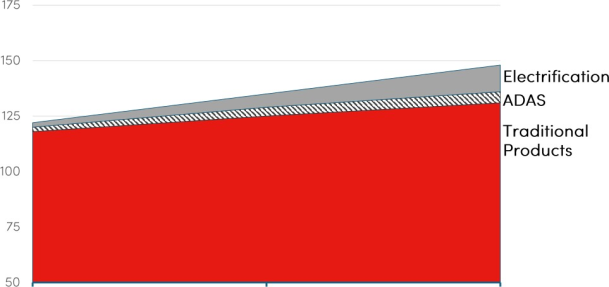
Source: MEMA/AASA Industry Overview – Gabelli Conference
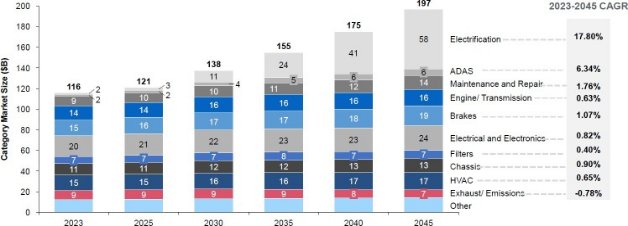
As shown in Exhibit 23 (below), traditional categories such as filters, chassis and brakes are only expected to grow by 0-2% per year; however, ADAS and electrification technologies are expected to grow at 6% and 18% per year respectively through 2045. According to MEMA, the ADAS addressable market is expected to double to $1.1 billion from 2024-2030, indicating signs of short- and long-term growth. The growth in these higher priced, higher value parts should drive aftermarket earnings as historically, the aftermarket has been able to push through prices of new technology while maintaining strong margins.
Exhibit 23 Aftermarket Growth by Product Category (2023-2045)
Source: Joint EV Forecast, conducted by Strategy& for MEMA Automotive Aftermarket Suppliers and Auto Care 2023
Online Aftermarket Retail (E-Tailing)
Opportunities to Gain Share and Barriers to Entry
Industry experts believe that the immediacy of parts and service needed by professional installers has slowed e-tailing penetration.
Service & Technology
Service and technology are central to the e-tailing experience in the automotive aftermarket. Urgent repair needs favor providers with fast fulfillment capabilities, while expert advice and installation services differentiate omnichannel retailers from pure-play online channels. Professional installers (DIFM) rely on same-day delivery, technical support, warranty handling, and flexible credit terms, which are difficult to replicate in a purely digital environment. Technology supports omnichannel integration by enabling real-time inventory visibility, online ordering, part compatibility verification, installation guidance, and service scheduling, helping retailers blend digital convenience with the immediacy and expertise customers expect.
Pricing Pressure & Distribution Capacity
E-commerce introduces significant pricing pressure by increasing transparency, compelling traditional retailers to balance competitive pricing with service, convenience, and availability. Retailers respond by investing in hub-and-spoke distribution models and leveraging local store networks to ensure rapid delivery and same-day fulfillment for urgent aftermarket needs. A physical footprint close to customers remains a competitive advantage, particularly for DIFM and high-turnover parts, while balancing local inventory and central distribution helps reduce stockouts and manage carrying costs efficiently.
SKU Management
The vast proliferation of SKUs in the aftermarket—often exceeding 80,000—creates complexity for e-tailing, especially for parts requiring fitment verification or technical expertise. Commodity parts with universal fitment, such as filters and wipers, are easiest to sell online, whereas vehicle-specific or complex components often necessitate guidance, limiting pure-play e-commerce adoption. Effective SKU management combines accurate digital catalogs, search and filtering functionality, and synchronized inventory across online and physical channels. Additionally, online-only models face challenges managing returns, core exchanges, and warranty-supported SKUs, whereas omnichannel providers can leverage store networks to mitigate these constraints.
Auto Dealers: Resiliency Through Diversity
Presenting dealers in Las Vegas emphasized that 2024–2025 marked a decisive move toward normalized margin structures as new‑vehicle inventories recovered from multiyear lows. While both new‑ and used‑vehicle gross profit per unit (GPU) compressed from the extraordinary highs of 2021–2022, the decline has been more muted than originally expected. This reflects the structural reshaping of dealership profit models: parts and service continue to deliver robust, recurring revenue; and the attach rates for finance and insurance (F&I) products—extended warranties, GAP insurance, and ancillary protection plans—remain elevated relative to pre‑pandemic levels. These fixed‑ops and F&I profit pools helped buffer GPU compression and reinforced the durability of dealership earnings even as unit economics normalized.
Dealers also noted that normalization does not imply a return to the pre‑COVID environment. Instead, the industry appears to have settled at a sustainably higher baseline of profitability. Lessons learned during the 2020–2021 supply shortages, coupled with more disciplined OEM production strategies, have created a structurally healthier operating environment. Dealers have embraced tighter inventory management, stronger pricing discipline, enhanced digital retail tools, and greater focus on service throughput—changes that continue to support mid‑cycle profitability.
From an investor perspective, the dealership model remains one of the most resilient business models across the automotive landscape. Over decades, dealers have demonstrated an ability to adjust quickly to shifts in supply, demand, technology, and regulation. With strong balance sheets and cash generation, many are entering what appears to be a new era of consolidation. M&A activity—both tuck‑ins and larger platform expansions—is expected to increase, driven by aging private‑owner demographics, rising compliance and technology costs, and the scale advantages enjoyed by larger groups. Share repurchases also remain a central component of capital allocation strategies, extending a long-term trend of returning capital to shareholders.
Table 3 Top Dealership Groups in the United States, 2024 (by US Units)

Source: Automotive News
Dealers 101
To refresh, franchised auto dealers are diversified businesses that generate sales and profits from four distinct operating lines: 1) new vehicle sales, 2) used vehicle sales, 3) parts & service, and 4) finance & insurance. While new vehicle sales constitute the majority of an auto dealer’s revenues, dealers historically have relied heavily on the higher margin service & parts business to cover fixed costs and generate considerable gross profit. Dealers benefit from a variable cost structure in which primary fixed costs consist of building maintenance, administrative overhead, and base advertising. A dealer’s sales force is generally compensated via commission, helping maintain dealer profitability at low new vehicle sales levels by naturally reducing SG&A. To highlight this, AutoNation, Penske, and Lithia all reported positive EPS in 2009 and again in 2010 despite the largest percentage decline in new unit sales since World War II. In 2020, as automotive repair remained an “essential” activity in the spring despite COVID-related shutdowns, service bays remained open and enabled dealers to continue to generate positive operating income.
Dealer Model Driven by Parts & Service Table 4 Franchised Dealer Operating Model (2025E)
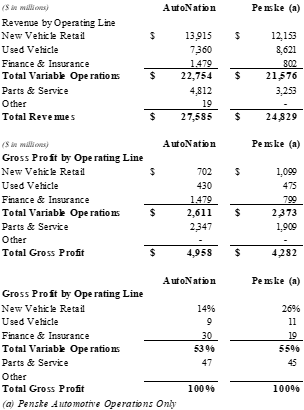 Table 4 (right) provides a snapshot of the public dealers’ businesses by revenue (excluding Penske’s Commercial Vehicle operations).
While the top portion of the table highlights what appears to be a model driven largely by variable operations (selling more units), the bottom depicts a more telling reality. Dealerships draw a considerable percentage of their profits from the combination of selling Used Vehicles along with providing Aftermarket Parts & Service; line items largely independent of broader cyclicality within the new vehicle market. This unique feature of the operating model is a primary reason (but not the only one) that dealers have remained resilient through nearly every economic headwind faced through their history- including the Great Financial Crisis and COVID.
Source: Company filings
Gross Per Unit – The Debate Continues
Dealer conversations in Las Vegas—particularly with Sonic Automotive, Penske Automotive, and AutoNation—reinforced that the normalization of new‑ and used‑vehicle gross per unit (GPU) is underway, but the structural floor is meaningfully higher than pre‑pandemic norms. While GPUs have moderated from the exceptional peaks of 2021–2022, management teams consistently pointed to approximately $3,000 per unit as a realistic and sustainable floor under current market conditions.
Executives across the groups highlighted two durable forces supporting this higher baseline. First, OEM production discipline appears to be holding. Leaders from Penske and Sonic emphasized that manufacturers have shown little interest in returning to pre‑COVID overproduction cycles. After experiencing record profitability in 2021–2022 on leaner inventories and lower incentives, OEMs now recognize that tight wholesale flows and more rational output levels benefit the entire value chain. Stellantis’ proactive production adjustments this year were cited repeatedly as evidence that the industry’s incentive‑heavy past is unlikely to fully return.
Second, sustained elevation in vehicle prices has structurally lifted GPU potential. Average U.S. transaction prices have risen from roughly $35,000 in 2019 to over $50,000 today, providing more room for dealers to generate profitability.
Table 5 AutoNation 3Q Same Store Unit Metrics, 2019-2025

Source: Company filings
As shown in Table 5 (above), per unit profit metrics at publicly traded dealers reached new historical highs in 3Q of 2020. Both AutoNation and Penske saw gross profit per new unit reach nearly $5,500 and $6,000, respectively, with corresponding increases as well in F&I per unit. OEMs across the board have realized they can maximize profitability by producing fewer vehicles, focusing on content per unit, and reducing costly (and brand dilutive) incentives.
Additionally, 2020 tested dealer-operating models in such a way that businesses learned they could generate greater profitability with considerably lower overhead. For example, AutoNation had SG&A/Gross Profit (an important metric for dealer profitability) well above the 70% range. In the interim, while the aforementioned benefits to Gross Profit Per Unit have clearly played a role, the company have enjoyed considerable increases in SG&A/Gross that remain well below historic areas. This level of success has led to a strategic shift by management toward keeping this metric in the mid-60% range whenever values eventually compress for new vehicles. Essentially, dealers are better prepared to earn more with lower fixed costs.
Used Vehicle Market In Flux
The used-vehicle market in 2025 continues to stabilize as supply conditions gradually normalize after several years of disruption. Inventory availability has improved meaningfully with healthier flows of off-lease returns, more consistent trade-in activity, and increased wholesale volume returning to auction lanes. Dealers report that sourcing has become more predictable, though competition remains fierce for late-model, low-mileage units—a segment still structurally undersupplied due to the production shortfalls of 2020–2022. Retail sales volumes have been resilient, supported by affordability constraints in the new-vehicle market and an expanding pool of consumers prioritizing value and monthly payment flexibility. Pricing has moderated from pandemic-era peaks yet remains above historical norms, reflecting both elevated new-vehicle MSRPs and strong demand for well-reconditioned vehicles.
Used-vehicle gross profit per unit (GPU) has naturally pulled back from the exceptional highs seen during tight-inventory years, but profitability remains solid relative to pre-COVID baselines. Dealers have leaned into more sophisticated data-driven pricing, tighter reconditioning standards, and faster inventory turns to preserve margins even as market dynamics normalize. Digital sourcing channels—particularly upstream auctions and online marketplace acquisitions—have become more integral to maintaining a balanced and cost-efficient inventory mix. Looking ahead, the used market is positioned for continued stability: sourcing optionality is increasing, price elasticity is improving as consumers re-enter the segment, and the profitability profile remains supported by operational discipline and a structurally healthier supply-demand balance than existed before the pandemic.
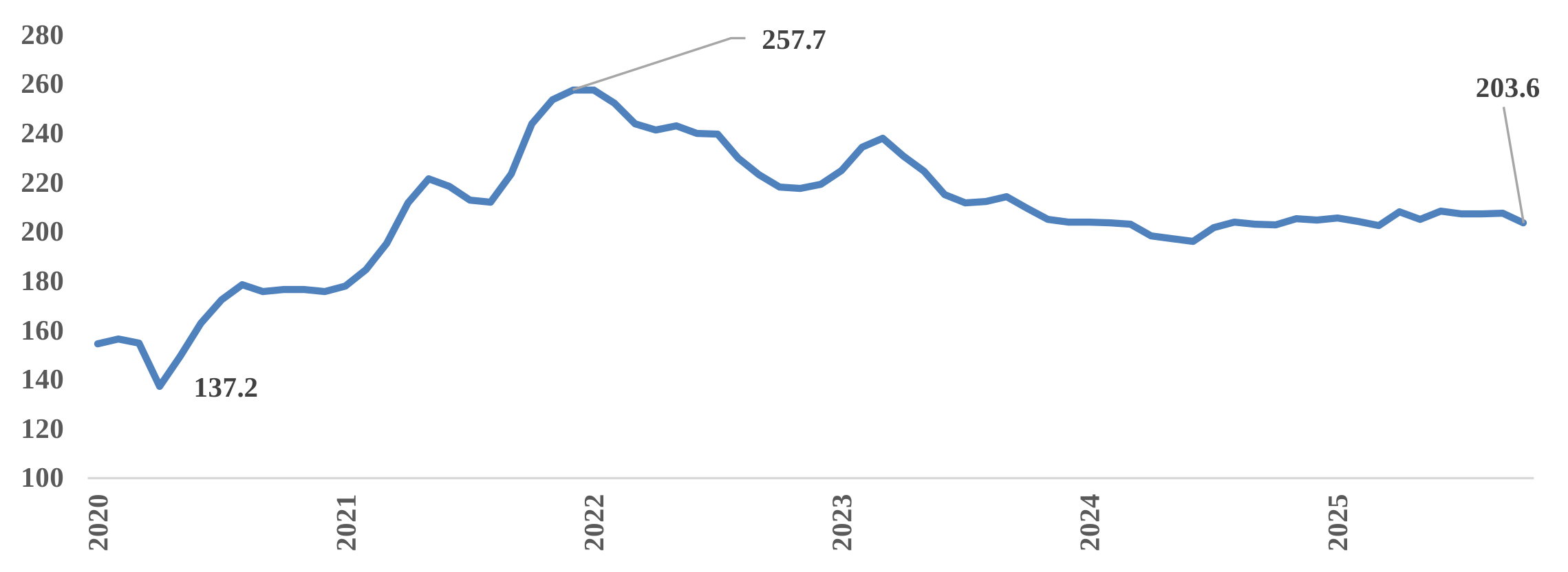
These factors helped drive used vehicle prices to all-time highs in 2021 and 2022 before finally correcting mildly during this past year. Used vehicle prices, as measured by the Manheim Used Vehicle value index, have declined from all time highs, but remain elevated on a historical basis (Exhibit 24).
Exhibit 24 Manheim Used Vehicle Value Index
Source: Manheim
Commercial Vehicles: Navigating the Trough
We were fortunate to once again have executives from both Rush Enterprises (RUSHA/B) and Penske Automotive Group (PAG) speak at our conference to provide a unique perspective as the two largest retailers of Heavy Duty (HD) trucks in the United States. The comments were particularly poignant given the difficulties faced by the commercial vehicle industry as investors look for reasons for optimism heading into 2026. We provide takeaways below.
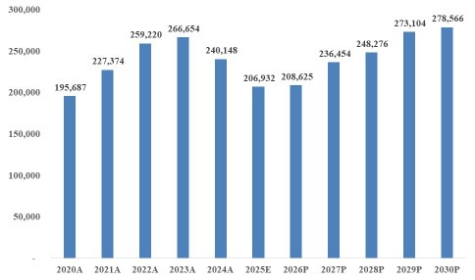
The U.S. Class 8 market is navigating one of its weakest demand periods since the Great Recession.
Rush Enterprises described April–September as the worst six-month order-intake period since 2009, reflecting a prolonged freight recession now running three years. Over-the-road truckload carriers—the segment most sensitive to freight demand—remain especially weak, while Less Than Truckload (LTL) and vocational markets are holding up relatively better. OEMs produced aggressively through mid-2025, but incoming orders remain soft.
Regulatory uncertainty is clouding 2026–2027 demand patterns and influencing buyer behavior.
The market is awaiting clarity on EPA emissions rules, particularly Nitrogen Oxide (Nox) standards for 2027 engines. Discussions between OEMs, regulators, and California have created shifting expectations around compliance costs. Depending on the final rule, trucks could face $10,000–$25,000 per-unit cost increases, which would impact pre-buy activity, financing, and fleet replacement decisions. Both Rush and Dana note that customers are reluctant to commit until regulations stabilize.
Exhibit 25 US Class 8 Truck Sales
Source: Ward’s, Gabelli Funds estimates
New-truck price inflation is materially boosting used-truck values and increasing fleet-maintenance intensity.
With tariffs, regulatory costs, and supply-chain issues raising new-truck prices, fleets are sweating assets longer, directly benefiting parts, service, and aftermarket businesses. With nearly 10 million medium and heavy duty trucks on the road, Rush highlighted that miles-driven is what wears trucks out, and fleets extending life cycles improves maintenance demand. As a result, used-truck prices—particularly for late-model equipment—remain stable to firm despite weak new-truck orders.
Vocational markets are a relative bright spot, supported by infrastructure spending.
While long-haul freight is soft, Rush noted strong demand in sectors like refuse, construction, and infrastructure, where federal and state spending (including highway bill allocations) is supporting activity. Refuse in particular is a high-retention, maintenance-heavy business: fleets keep trucks for long periods and drive strong parts-and-service revenue for dealers. This segment is helping offset broader Class 8 weakness.
Electrification momentum in commercial vehicles has slowed, and alternative-fuel strategies are shifting.
Dana and Rush both emphasized that EV adoption in commercial applications has stalled. Many OEM EV programs have been delayed, and some electric commercial-vehicle startups have failed. Rush highlighted that even natural-gas truck adoption—once expected to accelerate—has been hindered by state policy volatility. The industry is recalibrating around practicality, infrastructure limitations, and customer economics, with more interest in hybrid solutions and cleaner ICE technologies than in full electrification in the near term.
Advance Auto Parts, Inc. (AAP – $51.70 – NYSE)
Operational Improvement Plan

*Thompson One consensus estimates
COMPANY OVERVIEW
Advance Auto Parts, Inc., headquartered in Raleigh, NY, is an automotive aftermarket distributor in North America serving both professional installers and DIY (Do-It-Yourself) customers. As of October 4, 2025, the company operated 4,061 stores primarily in the United States, with additional locations in Canada, Puerto Rico, and the U.S. Virgin Islands.
HIGHLIGHTS
- Under new CEO Shane O’Kelly, AAP is currently undergoing a turnaround plan. He emphasized his leadership philosophy rooted in military experience, highlighting this as one of the main differences between this approach and prior turnaround attempts. Certain philosophies include the inverted pyramid where customers come first and all employees support the frontline, being able to make decisive actions, and placing leaders with true functional competence, not generalists.
- Since taking over, Shane O’Kelly has taken several actions as part of the turnaround plan. This includes selling the Worldpac business to Carlyle Group for $1.5 billion, closing over 500 stores and exiting over 200 independent locations, significantly reduced headcount at headquarters, and invested in the frontline.
- The plan targets ~$9 billion in sales and operating income margin of 7% vs LSD historically by 2027. The sale target includes an annualized impact of $0.6-0.8 billion in store closures, LSD comp growth each year, and 50-70 news stores annually. The turnaround plan is built around three strategic pillars: Merchandising Excellence, Supply Chain, and Store Operations.
- Merchandising efforts are focused on closing product gaps and enhancing strategic sourcing to achieve high-90% product availability. Store-level availability has improved under new merchandising leadership, stronger vendor partnerships, and the rollout of a new assortment framework now live in the top 50 DMAs. In Q3 2025, availability reached 96–97%, consistent with target levels. AAP is also realizing cost savings through vendor negotiations.
- Supply chain initiatives are focused on optimizing the distribution footprint, improving productivity, and reducing costs. Key efforts include consolidating distribution centers (DCs) and expanding the market hub network. AAP plans to reduce its DC count to 16 by year-end 2025, down from 38 at the end of 2023, while adding 14 new market hubs in 2025, bringing the total to 33 versus 0 at year-end 2023. The company’s goal is to reach 60 market hubs by mid-2027. These initiatives are driving operational improvements, with DC labor productivity, measured in product lines per hour, up mid-single digits year-to-date.
- Store operation actions are centered around standardizing the in-store operating model and improving customer satisfaction, with the goal of keeping the time to serve between 30 to 40 minutes. Implementation of store operating models is set for year-end 2025 and is expected to be completed in 1H 2026.
- AAP experienced approximately 3% same-SKU inflation in Q3 2025, which is expected to rise to 4% in Q4 and peak in Q1 2026. The company has been able to maintain pricing discipline, supported by its high mix (~90%) of non-discretionary, break/fix maintenance sales.
- Free cash flow has strengthened and is expected to continue improving in 2026. Excluding $150 million in cash restructuring charges, AAP anticipates being free cash flow positive in 2025, with further improvement in 2026 as strategic initiatives expand operating margins and boost conversion.
AutoNation (AN – $206.97 – NYSE)
Expanding Financial Capabilities

*Thompson One consensus estimates
COMPANY OVERVIEW
AutoNation, Inc., based in Fort Lauderdale, FL, is the largest automotive retailer in the United States, owning and operating 328 new vehicle franchises from 243 stores. The company sells 32 different new vehicle brands, with 88% of new units sold manufactured by Toyota (incl. Lexus), Honda, Ford, General Motors, FCA US, Mercedes Benz, BMW, Nissan, and Volkswagen (incl. Audi and Porsche).
HIGHLIGHTS
- AutoNation has strategically transitioned from relying on third-party financing for used vehicles to originating loans internally through their acquisition of CIG Financial. The loan book has grown significantly from $300 million to $2 billion in originations over the three years since closing the acquisition, with the average loan staying on their books for 2.5 years. This internal origination approach is 2.5 times more profitable than selling loans to third parties at the time of sale, and it creates additional customer touchpoints through loan servicing.
- AN company has deliberately moved away from subprime lending and has stated they have no intention to participate in new subprime financing going forward. They are now moving toward higher credit quality origination, focusing on customers with FICO scores above 690, with approximately 85% of their current lending business concentrated in used cars. Management noted that the subprime customer is experiencing significant distress due to inflationary pressures, while prime customer health remains solid with continued pent-up demand.
- AutoNation sources approximately 90% of their used vehicles internally through trade-ins, which allows them to avoid competing at auctions. They hold their stores accountable to a metric of selling one used car for every new car sold, ensuring consistent trade-in flow. While they acknowledge the sub-$30,000 used car market is highly competitive, they feel comfortable with their sourcing model and ability to acquire inventory through their dealer network and direct consumer purchases.
- BEV inventory has declined from 7% to approximately 4% of total inventory in the third quarter as sales momentum has softened. Management expects the underlying EV market to be lower than it has been in recent months, reflecting the changing pace of consumer adoption and demand for electric vehicles.
- Service bay utilization currently stands at only 55%, with the primary constraint being technician availability rather than customer demand. Warranty claims have increased due to OEM launches featuring various new powertrains and more electronic components, which means more things can potentially go wrong. This creates both operational challenges and revenue opportunities as they work with customers and OEMs to resolve issues quickly.
- When AutoNation originates a loan internally, 46% of customers leave with a service contract that incentivizes them to return to AutoNation dealerships for ongoing servicing. This creates a valuable long-term relationship that extends well beyond the initial vehicle sale and generates additional revenue opportunities over the life of vehicle ownership.
- Gross profit per unit as a percentage of average front-end profit has declined to pre-pandemic levels and appears to be approaching bottom levels.
- Industry-wide inventory stands at approximately 2.8 million units, down from 4 million units pre-pandemic, indicating a structurally tighter supply environment. While there are some isolated supply constraints such as Ford’s chip issues affecting certain models, management feels confident they will have adequate inventory levels overall, particularly for high-demand segments like pickup trucks where they typically maintain a 100-day supply.
AutoZone, Inc. (AZO – $3,897.88 – NYSE)
Best-in-Class DIY Business

*Thompson One consensus estimates
COMPANY OVERVIEW
AutoZone, Inc., headquartered in Memphis, TN, is the largest specialty retailer of automotive parts and accessories in the United States. The company sells to both the DIY (Do-It-Yourself) and DIFM (Do-It-For-Me) markets. As of FY2025, the company operated 6,627 stores in the United States and Puerto Rico, 883 in Mexico, and 147 in Brazil.
HIGHLIGHTS
- AZO has proven the ability to drive earnings growth regardless of underlying economic cycles. The company grew EPS at a 5-year 15% CAGR through topline growth and share repurchases. The company has repurchased $38.5 billion or 155.6 million shares since 1998, with only 16.6 million shares outstanding today.
- AZO operates a break/fix business with highly inelastic demand. Approximately 70% of the domestic auto business is DIY. Despite this mix, 85% of sales are failure related with only 15% discretionary. Discretionary categories have seen some pullback in recent years as customers deal with economic uncertainty.
- The commercial customer, 30% of the business, up from 20% 5 years ago, is now operating at over a $5 billion run rate business and growing. AZO has been able to leverage its DIY assets to grow DIFM programs to over 90% of stores. AZO has partially driven this growth via a hub and mega hub strategy placing more parts closer to customers and driving AZO up the “first-call” list. The company has a goal to deliver +200 mega hubs and 300 hubs. Hubs carry roughly 50,000 SKUs and a mega-hub closer to 100,000 SKUs. Despite this growth, AZO only accounts for 5% of DIFM market share with significant opportunity to continue to expand.
- Regional performance remained as expected in FY2025 with weather-driven demand affecting certain areas of the country. AZO continues to benefit from cold winters and hot summers as these environments drive higher failure rates and boost sales.
- The international business, now 13.5% of the store base, has generated a 19.5% 2-year growth rate (constant currency). The company now has 883 stores in Mexico and 147 stores in Brazil, with plans to double Mexico stores within the next decade. Further, Mexico is a growing market with an older vehicle population, higher gross margins, and lower labor costs. It has the largest chain in Mexico by a wide margin. Brazil could grow to the size of Mexico over time.
- Ecommerce is a small but growing trend within the aftermarket. AZO believes their competitive advantage still holds as customers still value trusted in-person advice, as well as the company offers curtesy installations (e.g. batteries and wipers) which online players can’t replicate.
- Inflation ticked up in FY2025 as the company worked to mitigate tariff-related cost increases. The mitigation strategy includes diversifying the sourcing base, negotiating with suppliers, and raising prices to preserve margins. AZO has shown success during periods of high inflation. For example, despite +10% inflation in cost of goods sold from 2022-2023, AZO maintained gross profit margin of +53% as the industry remained disciplined and the company passed through price. This is largely due to the non-discretionary nature of the parts sold. With new car prices above $50,000 and increased average monthly car payments, AZO’s consumers have chosen to invest in their vehicle versus buying at these levels during economic uncertainty.
- AZO generated ~$4.2 billion in EBITDA in FY2025 and spent $1.3 billion in capex providing the company with significant free cash for investments in growth and repurchase of shares. Adjusted debt to EBITDAR remained at 2.5x, in line with management’s target.
Dana Incorporated (DAN – $20.85 – NYSE)
Looking Past Off Highway Sale

*Thompson One consensus estimates
COMPANY OVERVIEW
Dana Incorporated, based in Maumee, OH, is a world leader in providing power-conveyance and energy-management solutions that are engineered to improve the efficiency, performance, and sustainability of light vehicles, commercial vehicles, and off-highway equipment. Enabling the propulsion of conventional, hybrid, and electric-powered vehicles, Dana specializes in the supply of driveline products (axles and driveshafts), power technologies (sealing and thermal-management products), and genuine service parts for light and heavy vehicle manufacturers.
HIGHLIGHTS
- Dana’s portfolio reshaping—most notably the sale of its high-margin off-highway business—is a deliberate strategy to unlock value and fund core priorities such as electrification, margin improvement, and North American simplification. The sale was years in the making and reflects a disciplined sum-of-the-parts approach to improving the company’s valuation and strategic focus.
- Management, under CEO Bruce McDonald has launched a comprehensive operational turnaround aimed at lifting margins to the 10–10.5% range by 2026, supported by $310 million of identified improvement initiatives. Dana already delivered $235 million of that improvement within the current year, signaling strong execution and a willingness to rationalize investments—particularly on the EV side where earlier market expectations have pulled back.
- EV demand normalization has led Dana to significantly scale down previous spending plans while still maintaining a $700 million EV revenue base. The company is now prioritizing profitable ICE and hybrid SUV/truck programs, where it continues to gain share due to strong customer relationships, new capacity expansions, and USMCA-compliant production.
- Management expects commercial-vehicle markets to remain soft into 2026, with limited signs of a pre-buy ahead of 2027 emissions changes. Orders point to another down year, and several EV-focused commercial OEMs have already exited the market—further validating Dana’s pivot toward more conservative, returns-driven investment.
- Aftermarket and service-related businesses represent an under-leveraged opportunity for accretive growth, as the company has historically underinvested in this $800–$850 million segment. As Dana simplifies operations and prioritizes high-return areas, aftermarket expansion is expected to contribute meaningfully to future earnings and margin durability.
- The company’s restructuring has also strengthened its manufacturing footprint, including a new greenfield Mexico facility that provides cost leadership and full USMCA compliance. This footprint enhances Dana’s competitiveness versus imported products, particularly as tariffs and reshoring trends shift more volume toward North American production.
- Capital allocation is becoming more shareholder-oriented, highlighted by plans to repurchase $600 million of stock from the off-highway proceeds. Executives emphasized that Dana’s intrinsic value is not reflected in its current price, and the buyback is part of a broader effort to rebuild investor confidence through consistent performance and clear long-term guidance.
Donaldson Company (DCI – $87.68 – NYSE)
Life Sciences Future

*Thompson One consensus estimates
COMPANY OVERVIEW
Donaldson Company, based in Minneapolis, MN, is a global manufacturer of worldwide filtration systems and replacement parts. The company’s products include air and liquid filtration systems and exhaust and emission control products. Donaldson has two reporting segments: a $2.3 billion Mobile Solutions business, a $1.1 billion Industrial Products segment, and a recently formed $300 million Life Sciences segment.
HIGHLIGHTS
- Donaldson continues to leverage its position as a global filtration leader, with 110 years of technology development, 3,000 active patents, and a strong aftermarket mix that drives recurring, resilient revenue. The company’s performance since COVID—consistently breaking revenue and EPS records—highlights the durability of its filtration-focused model and geographic balance.
- CEO Tod Carpenter emphasized that aftermarket and industrial filtration will remain the primary growth engines in the near term, as core OE end markets such as construction, mining, ag, and long-haul trucks remain at cyclical lows. With 68% of sales tied to replacement parts, Donaldson benefits from stable pull-through demand even when equipment production softens.
- The life sciences segment remains a long-term strategic priority, despite slower-than-expected drug development cycles and inventory overhangs across the industry. Donaldson is building this business organically and through targeted acquisitions, with expectations that life-sciences margins will rise toward the company average over the next five years as products scale.
- Donaldson is increasingly differentiating through technology-enabled filtration solutions, including sensor-equipped dust collectors and connected monitoring systems that optimize maintenance and performance. These offerings strengthen customer relationships and position the company to benefit from broader digitalization trends in industrial and mobile equipment.
- The company is actively restructuring its footprint to reduce costs and improve margins, highlighted by the decision to close a California plant and shift production to Illinois, with a 2.5-year payback. Management views structural cost management—not buybacks—as the primary tool for sustaining long-term profitability improvements.
- Aerospace and defense represents a growing and margin-accretive niche for Donaldson, supported by long product cycles and rising demand across military applications. This business has expanded its margins in recent years and provides diversification away from more cyclical commercial markets.
- Donaldson maintains a balanced capital allocation framework, including bolt-on M&A in filtration-adjacent markets, modest buybacks to offset dilution, and continued organic reinvestment. The company’s global manufacturing model—75% of production in the region where products are consumed—also supports stable cash generation and supply-chain resilience.
Dorman Products (DORM- $131.32 – NASDAQ)
Differentiated Ideation Process

*Thompson One consensus estimates
COMPANY OVERVIEW
Dorman Products (DORM), headquartered in Colmar, Pennsylvania, is a leading supplier of replacement and upgrade parts in the motor vehicle aftermarket industry, serving passenger cars, light-, medium-, and heavy-duty trucks, as well as specialty vehicles, including utility terrain vehicles and all-terrain vehicles. The company has an asset-light operating model, mostly sourcing their products from the over 400 different third-party suppliers they work with. DORM markets approximately 138,000 distinct parts and sells primarily through aftermarket retailers, dealers, and salvage yards.
HIGHLIGHTS
- DORM has been able to double revenue from $1.1 billion in 2020 to a projected $2.1 billion in 2025. CEO Kevin Olsen attributes this success to innovation, highlighting their ability to push 5,000-6,000 new SKUs a year. Unlike competitors who have a full-line coverage philosophy, DORM has a unique ideation process in which they can identify the parts of a vehicle that are most likely to fail and manufacture SKUs based on that knowledge.
- DORM generates approximately 78% of revenue from the Light Duty market, 12% from Heavy Duty, and 11% from Specialty Vehicles. About 50% of sales flow through retail channels, 36% through wholesale distribution, with the remainder sold direct-to-consumer or via other channels. In total, Dorman participates in a $165 billion addressable market, where it currently holds a modest share, offering significant room for expansion.
- The ideation process is the key differentiator with DORM and their ability to identify the parts that are most prone to fail. The company uses various techniques to identify these parts, including utilizing a council of over 40,000 technicians, a customer call center staffed with ASE (Automotive Service Excellence) certified technicians, and data scraping the internet. This disciplined approach has supported higher organic growth, increased pricing power, and leading EBITDA margins.
- DORM has an asset light model compared to its peers, utilizing a network of over 400 different suppliers and third-party manufacturers for over 90% of part production. With vehicle technology constantly changing and vehicle parts being life-cycle natured, having this asset light model allows the company to be flexible with parts production without the manufacturing overhead. This has been a major proponent of margin outperformance as DORM has achieved an EBITDA margin of almost 20%.
- While the asset light model drives margin outperformance, it also makes DORM reliant on these third-party manufactures. The company was historically heavily indexed to China during the previous tariff environment with Section 301 in 2018 and 2019, however, they are now in a better position. The company has been able to reduce sourcing from China from around 70% back in 2018 to lower than 30% today. Apart from China, 30% is sourced from the U.S. and the remainder from other parts of the world.
- DORM does not view First Brands as a competitor given the differences in the health in their balance sheets and the participation of off-balance sheet activities. DORM has a strong balance sheet with very low leverage and high liquidity. Additionally, the company does not participate in any off-balance sheet activity, only the customer sponsored programs.
- For the last 15+ years, DORM has excelled in being able to find and retain the technician talent needed to keep up with the changing complexity of the vehicle. The company targets young adults who are software driven and digital enthusiasts who enjoy reverse engineering software.
Garrett Motion (GTX- $16.08 – NASDAQ)
Turbo Resiliency

*Thompson One consensus estimates
COMPANY OVERVIEW
Garrett Motion, headquartered in Rolle, Switzerland, is a Tier 1 auto, commercial truck and off-highway vehicle supplier delivering differentiated solutions for emission reduction and energy efficiency. The company, which spun from parent Honeywell in October of 2018, is best known for manufacturing highly engineered turbocharging, air and fluid compression, and high-speed electric motor technologies for original equipment manufacturers. Products are sold for Internal Combustion Engines (ICE) using gasoline, diesel, natural gas and hydrogen, as well as for zero emission technologies using hydrogen fuel cell systems, both for mobility and industrial use.
HIGHLIGHTS
- Garrett continues to demonstrate leadership in turbocharging, a segment proving more resilient than traditional ICE components as global OEMs prioritize efficiency and hybridization. The company has maintained an impressive 50% new-business win rate since 2018, gaining share as the supplier landscape consolidates and as OEMs increasingly value Garrett’s high-performance, high-reliability systems.
- CFO Sean Deason highlighted early but meaningful traction in its zero-emission and electrified product pipeline, particularly in e-turbos, e-compressors, and range-extender architectures. Technologies such as e-cooling compressors—which deliver double the cooling in half the space—position Garrett to benefit from rising thermal-management needs in EVs, hybrids, and data-center infrastructure.
- The commercial vehicle market remains cyclical and under pressure, but Garrett sees emerging “green shoots” from power-generation applications, especially linked to data-center demand. Management expects commercial vehicle volumes to improve into 2026 while adjacent markets like industrial cooling offer near-term growth opportunities for its e-cooling technology.
- China remains the most competitive and price-sensitive market globally, with ongoing customer price-cut demands and share losses among global OEMs. Garrett is navigating this environment by remaining highly cost-competitive and positioning itself to serve both local and global OEMs as China’s vehicle parc matures and replacement demand grows.
- In Europe, regulatory uncertainty around the 2035 combustion-engine targets is driving OEMs toward plug-in hybrids and range-extender EV architectures—areas where Garrett is well positioned. Management sees PHEVs and REEVs as likely beneficiaries of shifting policy sentiment, providing the company with multi-year visibility in these platforms.
- Tariffs pose a $40–50 million exposure, but Garrett is successfully negotiating pass-through pricing with OEMs and accelerating moves toward USMCA compliance. This demonstrates the company’s ability to maintain margins even in a volatile geopolitical environment while preserving its competitiveness in North American programs.
- With strong gross and EBITDA margins relative to peers, Garrett continues to deploy capital into share repurchases, signaling management’s confidence in the company’s underlying cash-generation profile and valuation. The company sees its business model, balance sheet, and contracted revenue base as meaningful tailwinds for future shareholder returns.
Gentex Corp. (GNTX- $22.42 – NASDAQ)
Building Back Margins

*Thompson One consensus estimates
COMPANY OVERVIEW
Gentex Corporation, headquartered in Zeeland, MI, designs and manufactures vision systems, dimmable devices, connectivity and sensing systems for global vehicle markets. The company also manufactures dimmable aircraft windows for the aviation industry and commercial smoke alarms and signaling devices for the fire protection industry.
HIGHLIGHTS
- Gentex CEO Steve Downing emphasized its identity as an electrochemistry and automotive electronics company with a uniquely U.S.-based manufacturing footprint, which provides stability but also exposes the business to tariff-related volatility. Counter-tariffs in China significantly impacted its expected 2025 export volumes, creating near-term headwinds even as long-term reshoring trends ultimately favor its model.
- Management remains bullish on North America given pent-up replacement demand and aging vehicles, while expressing greater caution on Europe and high uncertainty in China’s fragmented and hyper-competitive market. The company focuses its engineering resources on well-capitalized OEMs most likely to survive, offering custom development only to those viewed as long-term winners.
- Gentex is proactively expanding beyond its core auto-dimming mirrors into dimmable glass, visors, sunroofs, and other high-value interior technologies. These products position the company to thrive even in more autonomous vehicle architectures, where the traditional mirror TAM shrinks but dimmable and integrated electronic systems expand substantially.
- Margin recovery is a key strategic priority, with a focus on restoring gross margins to the 34–35% range after post-COVID compression. Management believes that achieving steady 5–10% revenue growth and running a highly efficient operation are prerequisites for that expansion, and early signs point to improving trajectory as supply chain disruptions normalize.
- Tariffs are influencing both Gentex’s manufacturing conversations and its customer engagement model, pushing the company toward more regionalized production solutions. While exports into Korea and Japan remain stable, Europe presents the greatest risk outside China, making geographic diversification an increasingly important strategic consideration.
- Gentex’s R&D allocation process mirrors a venture-capital model in which projects compete purely on long-term value and profitability potential. This mindset has led the company into adjacent categories such as aerospace dimmable windows, consumer home-safety devices, and even medical wearables—broadening its addressable market while leveraging core competencies.
- The acquisition of Voxx International exemplifies Gentex’s disciplined approach to capital deployment, prioritizing undervalued assets with clear operational upside. After only six months of ownership, the business turned profitable, validating management’s view that conservative balance sheet management and selective M&A can unlock meaningful incremental value.
Genuine Parts Company (GPC – $128.56 – NYSE)
Technology Driven Global Distributor

*Thompson One consensus estimates
COMPANY OVERVIEW
Genuine Parts Company, located in Atlanta, Georgia, is a premier global distributor of automotive and industrial parts. The automotive aftermarket parts business encompasses a network of ~10,000 global warehouses and jobber stores under the NAPA brand.
HIGHLIGHTS
- The automotive segment, 63% of revenues, operates 151 distribution centers globally. Despite consumer pressure price elasticity concerns, demand has held up well due to the essential nature of repairs and the strong position of independent NAPA store owners in their local markets. CEO Will Stengel highlighted resilience across categories, with maintenance and repair spending remaining steady. GPC continues to support independents with tools, data, inventory, and marketing to help them navigate varying regional demand trends.
- GPC is the leading player within the Industrial segments the company operates within. However, the US Industrial market is in the longest contraction cycle in the 21st The industry experienced some improvement, especially in response to tailwinds such as reshoring; however, market uncertainty, in particular tariffs and the government shutdown, drove some pullback in spending. GPC highlights their leading market position, the non-discretionary nature of the business (80% break/fix) and its diverse end-market exposure as key strengths, positioning the company well when the industry rebounds.
- In response to a softer demand environment over the past two years, management implemented a multi-year restructuring and cost optimization program, now in its second year. Key initiatives include facility consolidation, workforce and headcount optimization, and cost discipline across the organization. These actions delivered a $0.20 EPS benefit in Q3 2025 and are expected to generate approximately $200 million in annualized run-rate savings by 2026.
- Europe continues to experience volatility driven by geopolitical tensions, inflation, and soft consumer sentiment. Despite this, GPC maintains leadership positions, with #1 or #2 share in major markets. The region is benefiting from supply chain upgrades, improved distribution networks, and an accelerated rollout of NAPA-branded products, which is enhancing margins and differentiation. The long-term strategy focuses on operational excellence and bolt-on acquisitions.
- GPC is driving investment (capital expenditures) from 1% of revenue to 2%. The company is focusing on two main areas: supply chain and IT. The investments being made support both the Automotive and Industrial businesses. Management believes investing 2% of revenue is the optimal level in order to modernize and stay competitive. On the supply chain side, lot of the investments being made are focused on the consolidation and automation of the distribution centers. With IT, investments are being made to modernize technology across all aspects of the business, including at the store level.
- Independently owned stores account for 63% of GPC’s total automotive store network and play a critical role in serving small-town and rural markets across the U.S. To modernize and strengthen parts of this local footprint, GPC has been selectively acquiring independent stores in key markets. In 2024, the company acquired MPEC and Walker, the two largest independently owned NAPA groups, as well as more than 500 additional NAPA stores from independent owners.
LKQ Corp. (LKQ- $29.56 – NASDAQ)
Non-Discretionary Collision Focused

*Thompson One consensus estimates
COMPANY OVERVIEW
LKQ Corp., headquartered in Antioch, Tennessee, is a global distributor of vehicle parts, components, and systems used in vehicle repairs, and aftermarket products and accessories for specialty vehicles. The company operates in four different segments: Wholesale – North America, Europe, Specialty, and Self-Service.
HIGHLIGHTS
- LKQ has been able to grow its business to over $14 billion by being an acquisition driven company. Since its inception in 1998, the company has made over 320 acquisitions, with the focus on the fragmented automotive markets where they see opportunity to build scale.
- Under new CEO Justin Jude, LKQ has initiated a portfolio simplification strategy, focusing on divesting businesses that no longer align with the long-term strategic priorities. Given the significant number of acquisitions over the years, there are certain businesses that are no longer core assets and are not a priority on a capital deployment standpoint. Most notably, in October 2025, the company completed the sale of its Self Service segment to Pacific Avenue Capital Partners for $410 million.
- The two largest segments, Wholesale – North America and Europe, represents almost 90% of total revenues and are non-discretionary, maintenance/repair services. The North American business is mostly collision repair focused, including paint, aftermarket parts, and used OEM parts. The Europe segment operates as one of the largest independent aftermarket distributors selling over 900,000 SKUs across 20 countries. This segment has also begun expanding into wholesale recycling operations through acquisitions, creating the opportunity for significant synergies between the two segments.
- Although collision volumes have remained stable in recent years, insured repairable claims have declined at a -7% to -9% CAGR, driven primarily by rising insurance premiums, elevated repair costs, and growth in self-pay repairs. 1) Insurance premiums have surged over the past three years, resulting in a record number of uninsured drivers, liability-only policies, and vehicles left unrepaired. 2) A decline in older used car prices, combined with collision repairs now costing $4,000–$5,000, are pushing more vehicles to be deemed total losses rather than repaired. 3) Self-pay repairs, including partial repairs, have increased 3%–5% since 2022 as consumers are actively trying to avoid additional premium hikes after filing a claim. Management views the decline in repairable claims as cyclical rather than structural and notes that LKQ continues to outperform overall repairable claims growth by an average of 450 bps.
- Tariffs primarily impact the North American aftermarket collision-parts business, where LKQ competes with both pure aftermarket distributors and OEMs. LKQ’s pricing generally falls between these two groups, above pure aftermarket peers but below OEMs. The company’s stronger fill rates and higher service levels support its premium versus aftermarket competitors, while it must still provide a value proposition for insurers relative to OEM pricing. Historically, LKQ has been able to capture margin above the tariff impact, but in the current environment the company is passing tariffs through dollar-for-dollar to preserve its value position against OEM competitors.
Monro, Inc. (MNRO – $18.40 – NASDAQ)
All About the Customer Experience

*Thompson One consensus estimates
COMPANY OVERVIEW
Monro, Inc. headquartered in Rochester, NY, is the largest chain of company-operated undercar care facilities in the United States, operating 1,260 stores in thirty-two states. The company operates in the combined $310 billion “Do-It-For-Me” (DIFM) and Tire segments of the $390 billion U.S. Automotive aftermarket industry.
HIGHLIGHTS
- MNRO is currently executing on a turnaround plan under new CEO Peter Fitzsimmons, who joined on March 31, 2025. The strategy focuses on strengthening operating income regardless of market conditions. Key priorities include identifying and divesting unprofitable stores, driving profitable customer acquisition through more effective marketing, enhancing merchandising productivity while mitigating tariff exposure, and improving both the customer experience and overall selling effectiveness.
- Monro is the only publicly traded full-service provider in the industry. MNRO’s sweet spot are vehicles aged 6-12 years old with a 50% mix of tire to service revenue. The sweet spot has been growing due to the aging car parc and the higher price tags of both used and new vehicles. Customers will choose to maintain their vehicle over buying a new vehicle at these price points.
- The company operates 1,260 company-owned stores across 32 states and has 47 franchised locations. MNRO’s customers tend to be the 2nd to 3rd car owners that leaves the dealership service center for better value in the independent aftermarket. These vehicles typically have 50,000+ miles.
- Following a comprehensive review of its store portfolio, MNRO identified 145 underperforming locations for closure. The review included an evaluation of store-level performance metrics along with market segmentation and demographic insights for each site. These closures were completed in fiscal Q1 2026 and had minimal impact on total sales but are expected to meaningfully enhance profitability. The company is now in the process of exiting the associated real estate, which is expected to generate positive cash flow.
- Market investments are focused on driving profitable customer acquisition and leveraging the CRM system to target higher-value customers more effectively. The company completed a customer segmentation analysis that has enabled management to better focus marketing efforts on higher-value current and prospective customers. The analysis revealed two segments with the greatest value: “deal-seeking bundlers,” who represent 15% of customers and visit MNRO for multiple services at larger ticket sizes, and higher-income customers with newer vehicles, who account for roughly 30% of the customer base. These initiatives are expected to drive meaningful comp store growth.
- Merchandising initiatives are focused on narrowing the tire assortment and reducing inventory while continuing to satisfy customer demand. This includes tariff mitigation though vendor negotiations and pricing. MNRO is seeing minimal direct impact from tariffs, however the tariff environment broadly speaking is creating pressure on the lower income customer.
- MNRO is enhancing customer experience and improving selling effectiveness by deploying centralized customer call centers and reinforcing the use of ConfiDrive complimentary inspections. Call centers are now supporting more than 700 stores, which are outperforming the rest of the stores. The company expects to expand the rollout to the remaining stores in fiscal Q3 2026.
Motorcar Parts of America (MPAA – $12.91 – NASDAQ)
Right Part, Right Place

*Thompson One consensus estimates
COMPANY OVERVIEW
Motorcar Parts of America, Inc., based in Torrance, CA, is a leading manufacturer, remanufacturer, and distributor of rotating electrical parts including alternators and starters for the automotive aftermarket. As a result of recent acquisitions, MPAA has expanded its product line to include remanufactured undercar components such as steering components, brakes, clutches and wheel hubs. MPAA sells its products predominantly in North America to the largest auto parts retail and traditional warehouse chains and to major automobile manufacturers for both its aftermarket programs and its warranty replacement programs.
HIGHLIGHTS
- MPAA offers more than 44,000 SKUs sold in more than 26,000 outlets across the US and Canada. The company has traditionally focused on the $130 billion non-discretionary replacement hard parts categories. New product lines have increased exposure to heavy duty, diagnostics, hybrid and electric vehicles. MPAA covers all part numbers in the effort to fill installer demand across the 220,000 different varieties of vehicles on the road and their respective immediacy of need. The company provides value via this expansive inventory and product mix, category and inventory management, including business plans for new product lines, pricing strategies, training programs, and more.
- The car parc has aged to an average of 12.8 years and is supporting the demand for replacement parts. Further, due to the high new and used vehicle prices, consumers are choosing to invest in their current vehicles verses purchasing. Older vehicles along with more complex vehicles are driving replacement rates and the value of parts sold by MPAA (example: high output alternators needed to support new technologies).
- Underlying products are split 60% DIFM, 40% DIY, mirroring the large retailers share which account for over 85% of MPAA’s share. The majority of parts are non-discretionary, hard parts. MPAA holds 50% of rotating electrical share, which has allowed management to use leverage this scale and relationships to expand into other product categories such as wheel hubs and brake calipers. MPAA has been able to gain market share in these categories through product reliability and consistent fill-rates. The company is now the second-largest player in the break caliper market.
- MPAA has a fast-growing diagnostics business that CEO Selwyn Joffe believes can ultimately scale to $100+ million in revenue. Its flagship product is a diagnostic device that tests communication protocols for alternators and starters. Management emphasized that this technology is unique in the market and has the potential to become standard equipment in retail automotive stores worldwide.
- Prior to the current tariff environment, MPAA had already largely diversified away from Chine due to the social environment which was not conducive to stability. The majority of production is now located in Mexico and Malaysia. The company is a lean manufacturer, and these efficiencies has enabled to company to absorb more capacity in Mexico, lowering the effective tariff rate.
- The consumer continues to be pressured due to economic uncertainty; however, the majority of products are fully non-discretionary. If an alternator or starter fails, you must replace it. There is some deferral in the brake pad and rotor business; however, eventually you must replace brakes. Despite some market weakness, MPAA continues to grow the brakes business and management sees significant opportunity to continue gaining share.
MP Materials (MP – $55.27 – NYSE)
Transition to Production Capabilities

*Thompson One consensus estimates
COMPANY OVERVIEW
MP Materials is the owner and operator of the Mountain Pass Rare Earth Mining and Processing facility, the only integrated site of its kind in the Western Hemisphere. MP Materials produces approximately 15% of global rare earth materials, essential for the development of technologies such as defense systems, smartphones, drones, and electric vehicles. It operates a “green” mining and processing facility and is currently one of the lowest‐cost producers of rare earth concentrate. The company has begun operations to refine rare earth metals, and will soon produce permanent magnets, with shipments beginning in 2025.
HIGHLIGHTS
- CFO Ryan Corbett highlighted how MP Materials is executing a comprehensive transformation to become a fully integrated rare earth materials company, progressing from mining through refining and ultimately to manufacturing permanent magnets for multiple industries. This vertical integration strategy is considered critical for national security and has received significant investment and backing from the Department of Defense (Department of War).
- The DoD (DoW) transaction accelerates the build-out of a fully integrated American supply chain at scale and addresses significant economic and national security vulnerabilities. The agreement provides a price floor for all materials produced and includes a guaranteed minimum of $140 million in EBITDA, though management believes they will exceed this guarantee. This partnership aligns MP’s interests with national security objectives while sharing upside with DoD on a 10x magnet manufacturing facility build-out.
- MP Materials’ total magnet manufacturing capacity is expanding dramatically from 1,000 tons to 10,000 tons through two major partnerships. The existing Apple relationship is expanding their facility from 1,000 tons to 3,000 tons, while the new DoD partnership adds a 7,000-ton manufacturing facility that will be among the largest globally. Production at Mountain Pass is expected to scale from 3,000 tons to 6,000 tons, with the company having visibility to a minimum of $650 million in revenue before including upside measures.
- China currently dominates the rare earth magnet space with 60% share of rare earth reserves and 95% share of global magnet manufacturing, creating significant supply chain vulnerability for US and Western customers. The global rare earth magnet market is projected to grow from 250,000 tons currently to 900,000 tons by 2040, driven by multiple applications beyond electric vehicles including robotics, data centers, and physical AI manifestations. Less than one-third of current magnet demand comes from automotive, with only 10% going into EVs specifically.
- The Mountain Pass mine has just shy of 30 years of capacity at planned production levels based on current drilling campaigns, which were primarily conducted over 10 years ago. Mountain Pass currently exports the vast majority of its production to magnet makers in Japan and Vietnam, though this will shift as downstream manufacturing scales up domestically.
- The biggest operational risk management identified is translating new product introduction capabilities from smaller-scale production. MP deliberately chose to start with the hardest quadrant—producing auto-grade magnets—to build a robust business foundation but now faces the challenge of getting commercial equipment running at target rates while maintaining the IP and technical capabilities they have developed.
NN Inc. (NNBR – $1.25 – NASDAQ)
Quality at the Right Price

*Thompson One consensus estimates
COMPANY OVERVIEW
NN Inc., based in Charlotte, North Carolina, designs and manufactures high-precision components and assemblies for a variety of end markets on a global basis. The company, which has just under 30 facilities in North and South America, Europe, and China, organizes its businesses into two segments: Mobile Solutions and Power Solutions.
HIGHLIGHTS
- CEO Harold Bevis highlighted how stabilization in core automotive volumes is improving visibility. NNBR leadership noted that the normalization of automotive production—particularly in North America—has materially improved forecast accuracy and scheduling stability. With customers shifting from volatile spot buys back toward more regular ordering patterns, NNBR is seeing healthier baseline demand across precision-driveline, braking, and powertrain components.
- Portfolio positioning is benefiting from electrification and higher-content platforms. Although the pace of BEV adoption has moderated, NNBR emphasized that its precision components (bearings, motion control elements, and engineered metal/plastic parts) map well to both hybrid and full-electric architectures. Growth opportunities are emerging in thermal management, e-axle subcomponents, and high-speed bearings required for electric drivetrains—offering a multi-year content uplift irrespective of drivetrain mix.
- Supply-chain normalization is allowing cost recapture and improved operational efficiency. Management highlighted that the worst of the logistics and material inflation cycle is behind them. Freight costs, expediting, and premium freight have declined meaningfully, and NNBR is regaining the ability to run plants on more predictable, level-loaded schedules. Several previously lagging cost-recovery negotiations with customers are now being finalized, improving incremental margins entering 2025.
- Margin expansion remains a central focus as restructuring actions mature. NNBR reiterated that its multiyear footprint optimization program—consolidating legacy facilities, simplifying product flows, and increasing automation—is tracking to plan. The company expects 2025 to show clearer throughput gains and fixed-cost leverage, particularly as higher-margin medical and industrial programs scale.
- Customer diversification efforts are starting to show traction. While automotive remains the largest end market, NNBR emphasized expanding wins in medical and general industrial applications, helping to reduce cyclicality and increase mix quality. These verticals carry structurally higher margins and longer program life cycles, which should complement the more variable automotive baseline.
- Healthy new-business wins support multi-year revenue visibility. NNBR reported continued success securing long-duration platforms with both existing and new OEM/Tier-1 customers. Many wins are tied to electrified or higher-precision mechanical systems—areas where NNBR’s engineering strengths resonate. Management emphasized that the awarded backlog now covers a substantial portion of the company’s 2026–2027 revenue runway.
- Balance-sheet discipline and liquidity improvement remain priorities. Management reinforced a disciplined capital-allocation framework focused on deleveraging, measured capital investment, and avoiding discretionary expansion until margin improvements become fully embedded. They noted that the combination of footprint rationalization and more predictable end-market demand should support improved cash generation through 2025.
O’Reilly Automotive, Inc. (ORLY – $100.43 – NASDAQ)
Driving Outperformance

*Thompson One consensus estimates
COMPANY OVERVIEW
O’Reilly Automotive, Inc., headquartered in Springfield, MO, is one of the largest specialty retailers of automotive aftermarket parts, tools, supplies, equipment and accessories in the United States. The company sells to both the DIY (Do-It-Yourself) and DIFM (Do-It-For-Me) markets. As of September 30, 2025, O’Reilly operated 6,538 stores in 48 states, Mexico and Canada.
HIGHLIGHTS
- ORLY has driven significant growth since the company’s inception in 1957. The focus has always been on robust distribution and parts availability. Given this history, ORLY’s distribution model is based on data targeted at local markets. Proprietary systems focus on individual store locations that hold approximately 23,000 SKUs and have access to millions of parts across the network. This tiered distribution network of 31 distribution centers (average 153,000 SKUs), 396 hubs, and over 6,500 stores provide competitive advantages that meet customer needs of immediacy and availability.
- Operating within a ~$155 billion industry, ORLY only captures roughly 10% of the market, leaving significant room to drive share gains. While DIY (52% of revenues) is more consolidated, DIFM (48% of revenues) is highly fragmented. ORLY’s competitors range from smaller regional players to large public operators. The company’s scale provides a decisive advantage when it comes to buying power and cost efficiency. The Covid pandemic shifted the competitive dynamic as many of the smaller players weren’t able to adjust and ultimately had to exit the market.
- ORLY continues to prioritize expansion opportunities across all geographies. The company plans to open 200-210 new stores this year with plans to accelerate this growth in 2026 with 225-235 new stores. ORLY recently opened a distribution center in Stafford, Virginia, which can service 350 stores in the area. This provides ORLY with further opportunity to grow within its domestic whitespace of the Northeast and Mid-Atlantic regions. The company continues to see significant opportunities for growth in the US with 1/3 of the US population untapped.
- ORLY entered the Mexican market in 2019 through its acquisition of Mayasa and has continued to invest in the region, including opening a major distribution center in Guadalajara in 2023 to support growth. The company now operates 107 stores, with 20 opened YTD, and plans for continued expansion. Mexico’s older vehicle fleet and challenging road conditions drive higher repair needs, and the market remains highly fragmented, presenting meaningful opportunities for growth.
- While the company is impacted by tariffs through its supplier base, ORLY has been able to mitigate the effects and pass through any increased cost at margin. This is consistent with historical times of inflation. For example, despite+10% inflation in costs over 2021-2023, ORLY maintained gross profit margin of +51% while pushing through price. This is due to the non-discretionary nature of the business. ORLY’s end-customer needs a car to get to work, take kids to school, etc. The success of ORLY’s commercial customer, the shop, is based on having the right parts at the right time. The value proposition is not price. This allows ORLY to take price during periods of inflation.
- ORLY is able to generate significant amounts of free cash flow, expected to generate over $1.5 billion in 2025. Capital deployment priorities continue to be investing in organic growth and expanding the distribution network, and share repurchases. In 2024, the company repurchased $2.08 billion worth of shares.
Penske Auto Group, Inc. (PAG – $160.63 – NYSE)
Resiliency Through Diversity

*Thompson One consensus estimates
COMPANY OVERVIEW
Penske Automotive Group, headquartered in Bloomfield Hills, MI, is a diversified international transportation services company that operates automotive and commercial truck dealerships principally in the United States, Canada and Western Europe, and distributes commercial vehicles, diesel engines, gas engines, power systems and related parts and services principally in Australia and New Zealand.
HIGHLIGHTS
- EVP of Investor Relations and Corporate Development Tony Pordon highlighted how Penske continues to benefit from a highly diversified business model spanning U.S. and international retail auto, commercial truck dealerships, and its 28.9% stake in Penske Transportation Solutions (PTS), which is a major cash and tax-efficiency engine. The PTS partnership generates significant tax losses that flow through to PAG, lowering federal tax payments and creating a uniquely accretive structure that has already returned more than $2 billion on a $956 million cumulative investment.
- Inventory levels across the industry have normalized, positioning Penske’s premium-focused retail operations for steadier throughput even as consumer affordability remains a challenge. The company maintains an average transaction price around $60k, with 26% of customers paying cash and leasing expected to rebound as interest rates decline, supporting volume stability.
- Penske sees sustained strength in parts and service, which continues to set revenue and margin records driven by warranty activity, customer-pay work, and elevated repair needs tied to aging vehicles. This segment remains one of the company’s most dependable profit pillars and helps offset cyclicality elsewhere in the portfolio.
- The U.K. market—representing roughly 35% of PAG’s business—continues to navigate government policy shifts and EV mandates, which have created consumer uncertainty and elevated compliance costs. Penske is responding by growing its “Select” used-only business in the region and maintaining strong performance across luxury brands despite a challenging regulatory backdrop.
- PAG is actively adapting to the rise of agency models in Europe, already operating under full agency with Mercedes and MINI, and preparing for broader transitions with select OEMs. Early results indicate that Penske is earning more per vehicle in the agency model than under traditional retail, helping mitigate concerns about margin compression.
- Used-vehicle dynamics remain favorable as the supply of 1–4-year-old cars tightens and off-lease volumes remain below normal through 2028. Penske emphasizes rigorous selection and reconditioning standards, preferring newer, higher-quality inventory to protect gross profit per unit and minimize warranty exposure.
- The company is also leaning into white-space opportunities, including the addition of multiple Chinese brands in the U.K. and continued expansion of its global commercial truck footprint. These initiatives reflect PAG’s willingness to test new brands and segments to capture incremental share in markets where new entrants are disrupting historical norms.
PHINIA, INC. (PHIN – $53.44 – NYSE)
Growth in Aftermarket

*Thompson One consensus estimates
COMPANY OVERVIEW
PHINIA Inc., based in Auburn Hills, Michigan, is a leader in the development, design and manufacture of integrated components and systems that are designed to optimize performance, increase efficiency and reduce emissions in combustion and hybrid propulsion for commercial vehicles and industrial applications (medium-duty and heavy-duty trucks, buses and other off-highway construction, marine, agricultural and industrial applications) and light vehicles (passenger cars, trucks, vans and sport-utility vehicles). The company offers a wide range of original equipment service (OES) solutions and remanufactured products as well as an expanded range of products for the independent (non-OEM) aftermarket products.
HIGHLIGHTS
- CEO Brady Ericson highlighted how PHINIA’s leadership emphasized that internal combustion engines—particularly in commercial vehicles, off-highway, and developing markets—will remain essential for decades. Global regulatory pathways, especially in the U.S. and emerging markets, increasingly support a mixed-technology future rather than a BEV-only transition. This backdrop reinforces the longevity of PHINIA’s core fuel-systems and components portfolio.
- With OEMs slowing the pace of full EV development and ramping hybrid and plug-in hybrid solutions, PHINIA sees increasing opportunities for advanced fuel injection, high-pressure pumps, and precision thermal/mechanical components. Management highlighted that hybrids require more complex ICE subsystems—often at higher content per vehicle than traditional combustion platforms—providing a multi-year growth vector.
- Executives reiterated that PHINIA’s exposure to commercial vehicles, agricultural equipment, construction machinery, and industrial engines supports a resilient demand baseline. These segments remain slower to electrify due to duty-cycle, range, and infrastructure constraints, giving PHINIA long-term embedded relevance and stable program visibility.
- PHINIA discussed ongoing investments in ultra-high-pressure fuel systems, improved atomization, and next-generation control modules designed to meet increasingly stringent emissions rules across global markets. As OEMs prioritize compliance through incremental efficiency gains rather than radical architecture changes, PHINIA’s engineering roadmap remains tightly aligned with customer requirements.
- Management indicated that expediting, logistics volatility, and raw-material inflation have materially improved from 2022 peaks. Combined with productivity initiatives and stronger price-cost alignment, PHINIA expects sustained margin expansion into 2025. Manufacturing footprint optimization and selective automation are key contributors to improved incremental profitability.
- PHINIA continues to secure new and extension awards with major global OEMs. Many of these wins are tied to next-generation diesel and hybrid applications, markets where PHINIA sees long-term stability. Management underscored that awarded business now supports a high percentage of the company’s 2026–2027 revenue expectations.
- The company highlighted its commitment to maintaining liquidity strength, funding innovation selectively, and supporting measured growth rather than aggressive expansion. Cash generation is expected to improve as margins expand and supply-chain normalization reduces working-capital drag, giving PHINIA flexibility for strategic investment while preserving financial stability.
Rush Enterprises (RUSHB – $52.04 – NASDAQ)
Share Gains to Continue

*Thompson One consensus estimates
COMPANY OVERVIEW
Rush Enterprises, Inc. is a full-service, integrated retailer of commercial vehicles and related services in the U.S. and Canada. Through a nationwide network of truck centers, the company sells new – and to a lesser degree – used Class 4-8 vehicles – along with ancillary services including aftermarket parts and repair, financing, lease and rental, and insurance. We estimate the company will earn $4.05 per share on $7.9B of revenue and $565M of EBITDA in 2023E.
HIGHLIGHTS
- Rush emphasized that the Class 8 and medium-duty truck markets are moving through the softer portion of the cycle, driven by weaker freight conditions and more cautious fleet spending. Even so, the company noted that replacement demand remains intact, and vocational markets—construction, refuse, municipal, and energy—continue to show relative stability. Management reiterated that long-term fleet age and regulatory-driven replacement needs underpin a healthy multi-year outlook once freight markets recover.
- CEO Rusty Rush described how parts, service, and contract maintenance continue to be the backbone of Rush’s earnings profile. Management highlighted that parts and service activity remains resilient despite softer new-truck demand, supported by high fleet utilization, increased vehicle complexity, and growing customer reliance on RushCare service solutions. These operational segments not only mitigate cyclicality but also position RUSH to capture an increasing share of aftermarket spend.
- Inventory availability has normalized compared to the past three years, improving order fulfillment and giving better visibility into customer purchasing patterns. However, OEM build schedules remain somewhat uneven, with certain powertrain configurations and vocational specs still experiencing elongated lead times. Disciplined OEM production should prevent the overbuild cycles that historically pressured dealer margins.
- On pricing and GPU, Rush indicated that while new-truck margins have naturally moderated from the unprecedented highs of the supply-constrained period, GPUs remain above pre-pandemic levels. Elevated vehicle costs, technology-rich configurations, and a stronger mix of vocational units continue to support healthy per-unit profitability. In the used-truck market, Rush is seeing more predictable valuation trends as supply normalizes.
- Management reiterated that regulatory changes—including EPA emissions phases and the early-stage progression toward zero-emission vehicle mandates—will create both challenges and opportunities. While near-term EV adoption in heavy-duty remains limited, Rush expects hybridization, alternative fuels, and compliance-driven replacement cycles to contribute to steady demand across the decade. The company continues to invest in charging, training, and service capabilities, preparing for a gradual, customer-driven transition.
- Rush highlighted the strength of its dealership network and integrated service platform as a key differentiator. The combination of nationwide parts availability, mobile service expansion, telematics-driven maintenance solutions, and customer uptime programs has helped deepen customer relationships, even in cyclical downturns. Management believes these capabilities further solidify RUSH’s position as the leading commercial-vehicle dealer group in North America.
- Balance-sheet discipline remains a priority. Rush noted that strong cash generation from parts and service supports ongoing investments in facilities, technician training, and digital systems, while still leaving room for shareholder returns. The company continues to approach capital allocation conservatively, with a focus on maintaining flexibility through the cycle and pursuing selective growth opportunities in both traditional and alternative-fuel vehicle segments.
Sonic Automotive, Inc. (SAH – $61.93 – NYSE)
Quality at the Right Price

*Thompson One consensus estimates
COMPANY OVERVIEW
Sonic Automotive Inc., based in Charlotte, North Carolina, is one of the largest automotive retailers in the United States. The company has three operating segments: the “Franchised Dealerships Segment,” in which franchised dealerships sell new vehicles and buy/sell used vehicles, as well as providing maintenance and financing/insurance services; the “EchoPark Segment,” which includes specialty retail locations for pre-owned vehicles; and the Powersports segment, which sells both new and used powersports vehicles, as well as maintenance and financing/insurance services. The company operates in 21 states with 141 stores, retailing +25 different brands of automobiles. Most dealerships sell both new and used vehicles, as well as aftermarket replacement parts. Fourteen of the dealerships also have collision repair centers.
HIGHLIGHTS
- In the new-vehicle market, retail conditions remain healthy with SAAR expectations of roughly 15.8–16.2 million units. Inventory has normalized to pre-COVID levels, with SAH having an 89-day inventory nationally, but varies significantly by OEM, with Honda, Toyota, and Lexus running tight while brands like Chrysler, Mercedes, and Audi have higher stock levels. Luxury demand started to soften in October, causing inventory in those brands to be elevated. SAH expects incentives to play a big role in sparking sales and inventory reduction.
- On financing, SAH’s customers continue to show strong credit quality, with average FICO scores around 710 across both franchise and EchoPark stores. Subprime delinquencies are starting to rise, and approval rates at EchoPark have tightened to around 55%, but SAH does not take underwriting risk because all loans are originated by third-party lenders, and the company hasn’t observed any material operational impact to date.
- Vehicle affordability remains a structural concern, with average new-car payments around $750 per month and average new vehicles prices over $50,000. SAH’s 50% luxury mix and higher FICO customer provides insulation, but affordability issues may be impacting lower-trim models. If the Fed continues to cut rates, this should flow through to the consumer and act as a tailwind. Despite this, GPUs remain elevated relative to pre-pandemic levels: new-vehicle GPU will be $3,100-$3,200 in 2025 and is expected to stabilize between $2,500 and $3,000 depending on supply conditions. Used GPUs, currently near $1,500, should face mild pressure until off-lease volumes recover beginning in 2026, which SAH expects to be a major tailwind over the next few years.
- Within EchoPark, the company downsized from 50 stores to 18 to align with tighter used vehicle supply post-COVID, which helped restore profitability. SAH believes EchoPark’s long-term growth resumes in 2026 as lease returns normalize. EchoPark’s relative value proposition compared to competitors like CVNA (generally $3–4k cheaper) and growing brand presence should support long-term share gains, along with increased sourcing from consumers.
- In powersports, while it’s only 1% of revenues, SAH sees a long runway of opportunities to modernize the operational process in the highly fragmented market where acquisitions trade at only 3-4x EBIT.
- On capital allocation, acquisitions remain the top priority, highlighted by recent Jaguar Land Rover purchases, followed by a dividend philosophy targeting 20–25% of earnings. Organic investment will increase in 2026 as EchoPark expansion resumes.
Standard Motor Products (SMP – $37.75 – NYSE)
Innovative Global Supplier

*Thompson One consensus estimates
COMPANY OVERVIEW
Standard Motor Products, Inc., located in Long Island City, NY, is a manufacturer and distributor of replacement parts for motor vehicles in the automotive aftermarket industry. The company operates four segments, Vehicle Control, Temperature Control, Engineered Solutions, and Nissens, and sells its products to warehouse distributors and retail chains, primarily in the United States, Canada, and Latin America, as well as in Europe.
HIGHLIGHTS
- The company has grown revenues 30% since 2020 by meeting customer demand and achieving market-winning fill-rates during volatile periods. Relative to many peers in the space who are reselling products, SMP has always been committed to manufacturing. Over 2/3 of SMPs supply chain resides in North America. On top of M&A, good customer relationships, and a reputation dedicated to long-term aftermarket commitments, have enabled the company to grow with their customers.
- A key part of SMP’s value proposition is having full-line parts coverage. The company sells over 80,000 SKUs, offering critical components for most years, makes, models, and engine sizes. This coverage, along with the innovative R&D that takes place across the 13 design centers across the world, are key parts of SMP’s strategy and growth.
- The company recently closed on its largest acquisition in November 2024: Nissens Automotive for $390 million. Generating $263 million in annual revenue, Nissens is a large European aftermarket manufacturer. The acquisition adds over 15,000 SKUs and 17 distribution centers across Europe. With 84% exposure to AC and engine cooling categories and 16% to engine efficiency, operations mirror those of SMP’s NA operations, providing significant cross selling opportunities. Additionally, the company expects $8-$12 million of cost synergies.
- SMP sees evolving car complexity as an opportunity given its R&D capabilities and increased price per part. SMP not only manufactures engine components, but also vehicle sensors and electronics including the fast-growing ADAS, anti-lock braking, and tire sensor categories which are benefiting from increased car complexity. SMP is committed to developing and growing parts that benefit from more advanced ICE vehicles and the introduction of EV vehicles as these vehicles require more enhanced cooling systems.
- SMP is a basic manufacturer with a diversified footprint, but heavily indexed to NA. The company sources roughly 25% of products from China and management believes this environment gives them a competitive advantage.
- Following the acquisition of Nissens Automotive in 2024, SMP had a debt to EBITDA ratio of 3.7x. The company has been focused on debt reduction with the company now sitting at 2.6x. Management is targeting 2x by the end of 2026.
- Increased factoring costs in response to higher interest rates have pressured SMP’s EBITDA margin; however, the recent decrease in interest rates should act as an earnings catalyst going forward. Every 100-bps cut in interest rates translates to over $8.5 million in earnings.
Strattec Security Corporation (STRT – $68.56 – NASDAQ)
Tech to be Unlocked

*Thompson One consensus estimates
COMPANY OVERVIEW
Headquartered in Milwaukee, Wisconsin, Strattec Security Corporation designs, develops, manufactures, and markets automotive access control products under the VAST Automotive Group brand primarily in North America. The company provides mechanical and electronically enhanced locks and keys, passive entry passive start systems, steering column and instrument panel ignition lock housings, latches, power sliding side door systems, power tailgate and lift gate systems, power deck lid systems, door handles, and related products. It also offers full service and aftermarket support services for its products.
.
HIGHLIGHTS
- Strattec’s new leadership under CEO Jen Slater team has driven a meaningful operational turnaround, with revenue, margins, EBITDA, and EPS all showing strong year-over-year improvement as pricing actions, volume gains, and cost reductions take hold. Headcount reductions, improved plant efficiency, and reestablished disciplined pricing behavior have restored profitability and cash generation. Management views the last five quarters as clear validation that the transformation is taking root.
- The company is repositioning itself as a broader “vehicle access and security technology” provider rather than a traditional mechanical lock supplier. Its portfolio now spans keys, fobs, passive entry systems, liftgate and tailgate actuators, latches, charging-port access, and emerging digital-key software. Strattec can then benefit from OEMs’ push to “upstage” the access experience and integrate more electronic, touchless, and security-centric features into both premium and mainstream vehicles.
- The company is actively expanding its footprint with new North American OEMs. STRT sees significant runway to sell existing technologies to customers it hasn’t historically served, especially as power-access systems and digital-entry features migrate from premium to mid-market models. This growth opportunity does not require major new engineering investment, making it especially margin-accretive.
- Mexico-based manufacturing footprint provides cost advantage and strong USMCA compliance, with 95% of relevant components meeting regional-content rules. STRT retains flexibility to shift production within North America if USMCA renegotiation materially alters cost structures.
- The long-term margin target of 18–20% remains intact despite near-term supply-chain disruptions related to the Novelis fire and semiconductor shortages expected to affect Q2 FY26. Management believes the core gross margin progress is sustainable due to better pricing discipline, portfolio alignment, and ongoing automation.
- Demand for power-access products—such as powered doors, liftgates, and tailgates—continues to expand as OEMs move toward more touchless and convenience-focused features. Strattec believes these systems will follow the same adoption curve as powered windows, beginning in luxury vehicles and gradually standardizing across mass-market segments.
- Management is taking a measured approach to innovation and M&A, prioritizing stability and operational excellence before layering on new platforms. The company sees opportunity to scale sensing and electronics capabilities through both internal development and potential future acquisitions but will not pursue deals until the operational foundation is fully solidified.
Save the Date!
50th Annual
Automotive Aftermarket Symposium
Las Vegas
2026
Contact: Brian Sponheimer
(914) 921-8336
bsponheimer@gabelli.com
191 MASON STREET, GREENWICH, CT 06830 Gabelli Funds TEL (914) 921-5100
This internal report was prepared by Brian Sponheimer, Edward Nakamura and Carolina Jolly, CFA. The examples cited herein are based on public information and we make no representations regarding their accuracy or usefulness as precedent. The Research Analyst’s views are subject to change at any time based on market and other conditions. The information in this report represent the opinions of the individual Research Analyst’s as of the date hereof and is not intended to be a forecast of future events, a guarantee of future results, or investments advice. The views expressed may differ from other Research Analyst or of the Firm as a whole.” GAMCO Investors, Inc. or its affiliates, on behalf of their investment advisory clients or otherwise, may be beneficial owners of securities of the companies referenced herein.