Gabelli Opportunities in Live & Sports ETF (NYSE: GOLS) Investment Spotlight Series
Company overview
Borussia Dortmund is one of Europe’s most iconic football clubs and a cornerstone brand within global sport. Based in Dortmund, Germany, the club competes in the Bundesliga, Germany’s top football division, and is a perennial participant in UEFA competitions. Founded in 1909, Borussia Dortmund has built a reputation defined by passionate fan culture, elite player development, and consistent competitiveness at the highest levels of European football.
With eight German league titles, five DFB-Pokal trophies, and a UEFA Champions League title (1997), Borussia Dortmund stands among the most successful clubs in German football history. The club generated approximately €526M in revenue in FY 2025 and commands a global fan base estimated at over 100 million supporters worldwide. Dortmund is globally recognized not only for its on-field success but also for its distinctive identity, anchored by one of the largest and most engaged supporter communities in world sport.
Borussia Dortmund represents a globally scarce, publicly listed sports asset distinguished by a sustainable operating model built around elite youth development and disciplined player monetization. The club has established one of the most effective talent pipelines in global football, consistently identifying, developing, and selling top players at attractive returns while remaining competitively relevant on the pitch. This approach supports a resilient financial framework, characterized by balance sheet discipline, diversified revenues across matchday, media, and sponsorship, and a self-funding sporting strategy. As a publicly traded organization operating with financial transparency, BVB offers investors exposure to a rare sports franchise that systematically converts player development into long-term enterprise value.
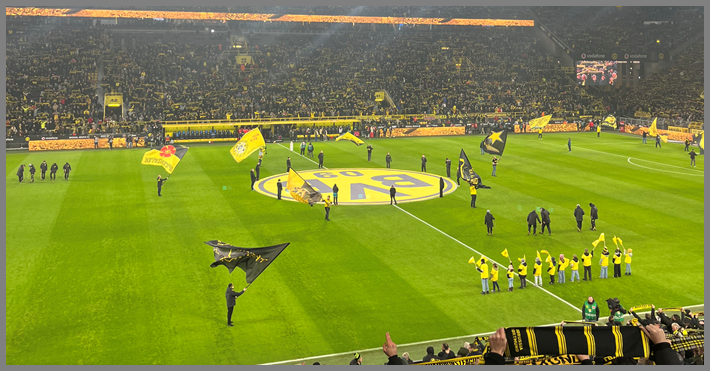
The club’s home ground, Signal Iduna Park, is the largest football stadium in Germany and one of the most iconic venues in global sport. With a capacity of over 80,000 and the famed “Yellow Wall” (Südtribüne), Borussia Dortmund consistently ranks among the highest-attended clubs worldwide. Beyond matchday, the club’s commercial reach spans a global fan base, extensive international supporter networks, and long-standing blue-chip partnerships, most notably with Puma and Vodafone.
Founding and Evolution:
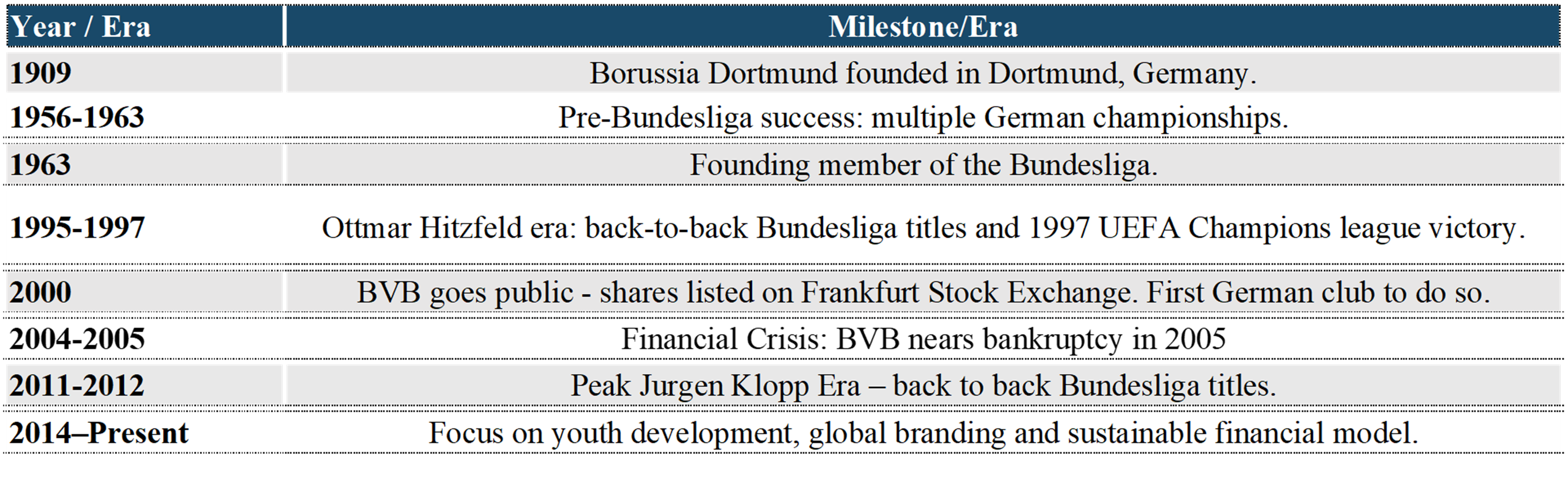
Borussia Dortmund was founded in 1909 by a group of young men seeking independence from church-affiliated sports clubs. Over more than a century, the club has evolved from a regional side into a globally recognized football institution—shaped by periods of domestic dominance, European success, financial restructuring, and modern professionalization. Dortmund’s contemporary identity emphasizes sustainability, youth development, and competitive ambition within a disciplined operating framework.
Exhibit 1 Key Milestones/Eras
Dortmund – City Overview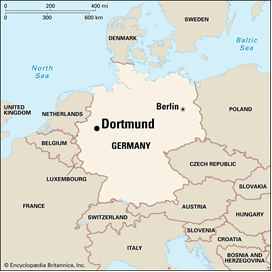
Dortmund is in Germany’s Ruhr region, historically one of Europe’s most concentrated industrial corridors. For much of the 19th and 20th centuries, the city’s economy was driven by coal mining, steel production, and large-scale manufacturing. Employment was demanding, unionized, and community-based. Neighborhoods were built around mines and factories, and social life revolved around collective institutions, churches, worker associations, and football clubs.
As heavy industry declined from the 1960s onward, Dortmund underwent economic restructuring, shifting toward logistics, technology, and services. The population base remained largely working and middle class, and the city never developed the corporate-financial profile seen in places like Munich or Frankfurt. In this context, Borussia Dortmund became the city’s most visible and enduring institution. Unlike clubs backed by aristocratic, corporate, or state structures, BVB’s identity was shaped by its membership base. The club’s governance remains tied to its registered association under Germany’s 50+1 rule, reinforcing member influence and limiting outside control. This structure aligns with the city’s tradition of collective ownership and civic participation.
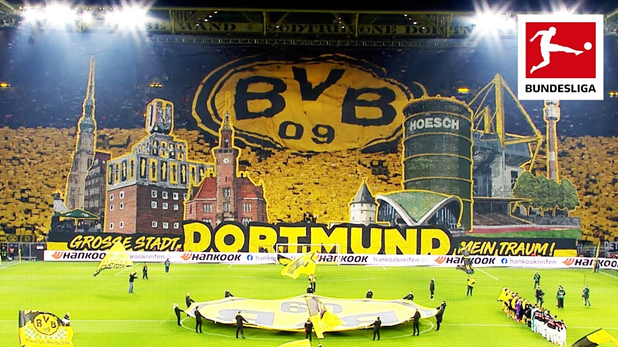
At Signal Iduna Park, accessibility remains a deliberate strategic choice. The stadium includes the Südtribüne (“Yellow Wall”), the largest standing terrace in European football, accommodating over 20,000 supporters in a single section. Standing tickets are priced materially below premium seating levels common in England or Spain, preserving broad access for local fans. Season ticket pricing is structured to maintain affordability relative to the other top-five European leagues, reinforcing multi-generational attendance patterns. This pricing philosophy constrains short-term matchday yield optimization but strengthens long-term demand stability. Dortmund consistently operates at or near 100% capacity, leading Europe in average attendance. The fan base is heavily local and repeat-based rather than tourism-driven, creating predictable utilization independent of short-term performance volatility.
Exhibit 2 Dortmund’s Famous “Yellow Wall”
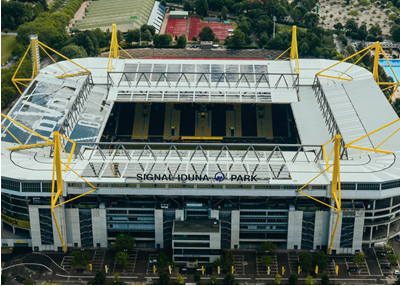
Westfalenstadion: Signal Iduna Park
Exhibit 3
Source: BVB
Signal Iduna Park has been Borussia Dortmund’s home ground since 1974. With a capacity of 81,365, it is the largest football stadium in Germany and one of the most iconic venues in global sport. In 2025, Borussia Dortmund recorded the highest average home attendance in European football at 81,365, effectively operating at full capacity for the season. This sustained sell-out performance highlights the exceptional depth of local demand and the club’s uniquely engaged supporter culture, anchored by the famed “Yellow Wall,” the largest standing terrace in European football.
Signal Iduna Park is owned by Borussia Dortmund, providing the club with long-term strategic control over its most important physical asset. Continuous modernization investments over the past two decades have enhanced hospitality offerings, infrastructure, and commercial functionality while preserving the stadium’s distinctive atmosphere. The venue serves not only as a matchday asset but also as a year-round commercial platform, supporting premium seating, sponsorship activation, and large-scale events. Consistently operating at or near maximum capacity positions the stadium as a critical driver of recurring matchday revenue and reinforces Borussia Dortmund’s status as one of the best-supported clubs in world football.
Exhibit 4
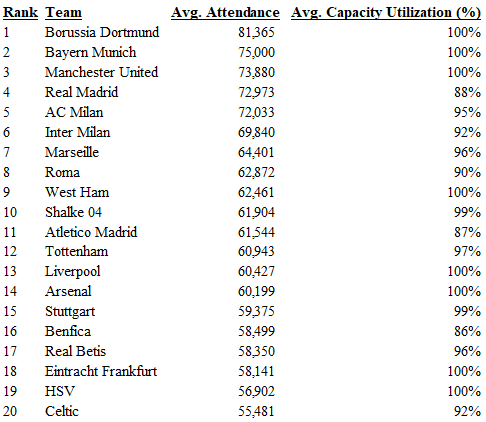
Source: Transfermarkt.com & Gabelli Funds
Borussia Dortmund Financial Overview
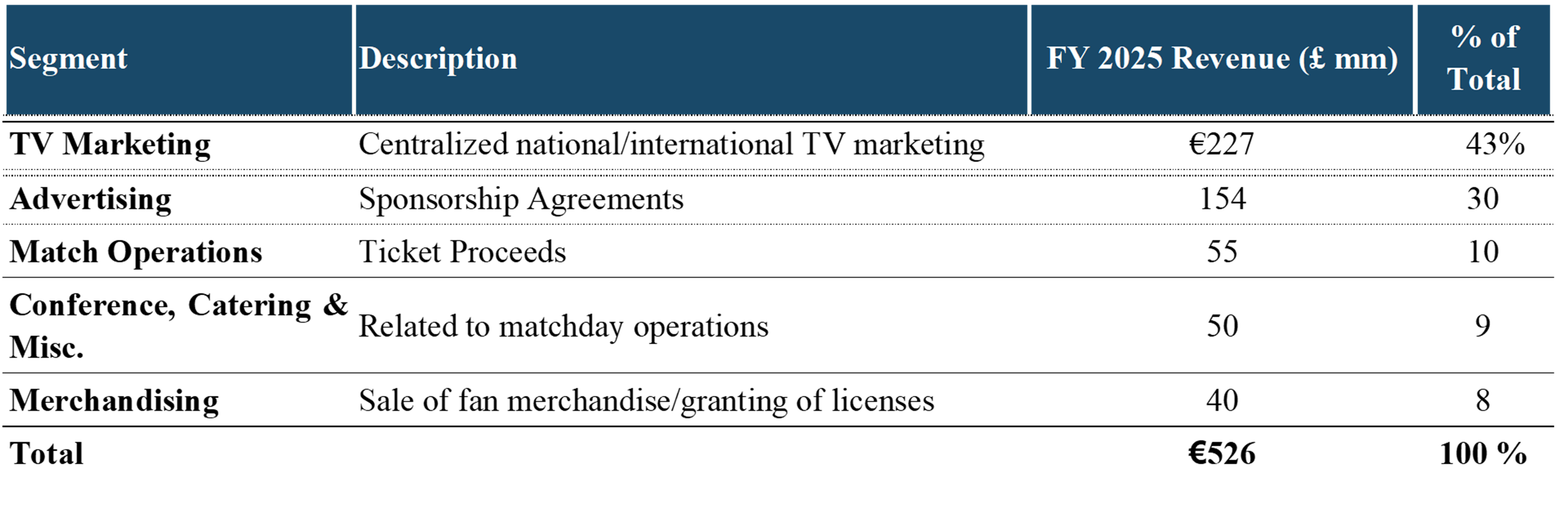
Revenue Composition: Borussia Dortmund’s operating model is supported by five primary revenue streams. While player trading income is excluded from IFRS revenue, it remains a critical driver of cash flow and profitability. In FYE (6/30) 2025, BVB generated approximately €63 million in gross transfer gains, reflecting disciplined squad management and a structured approach to player development and monetization.
Table 2 Borussia Dortmund FYE (6/30) 2025 Revenue Breakdown
Source: BVB Filings, Gabelli Funds
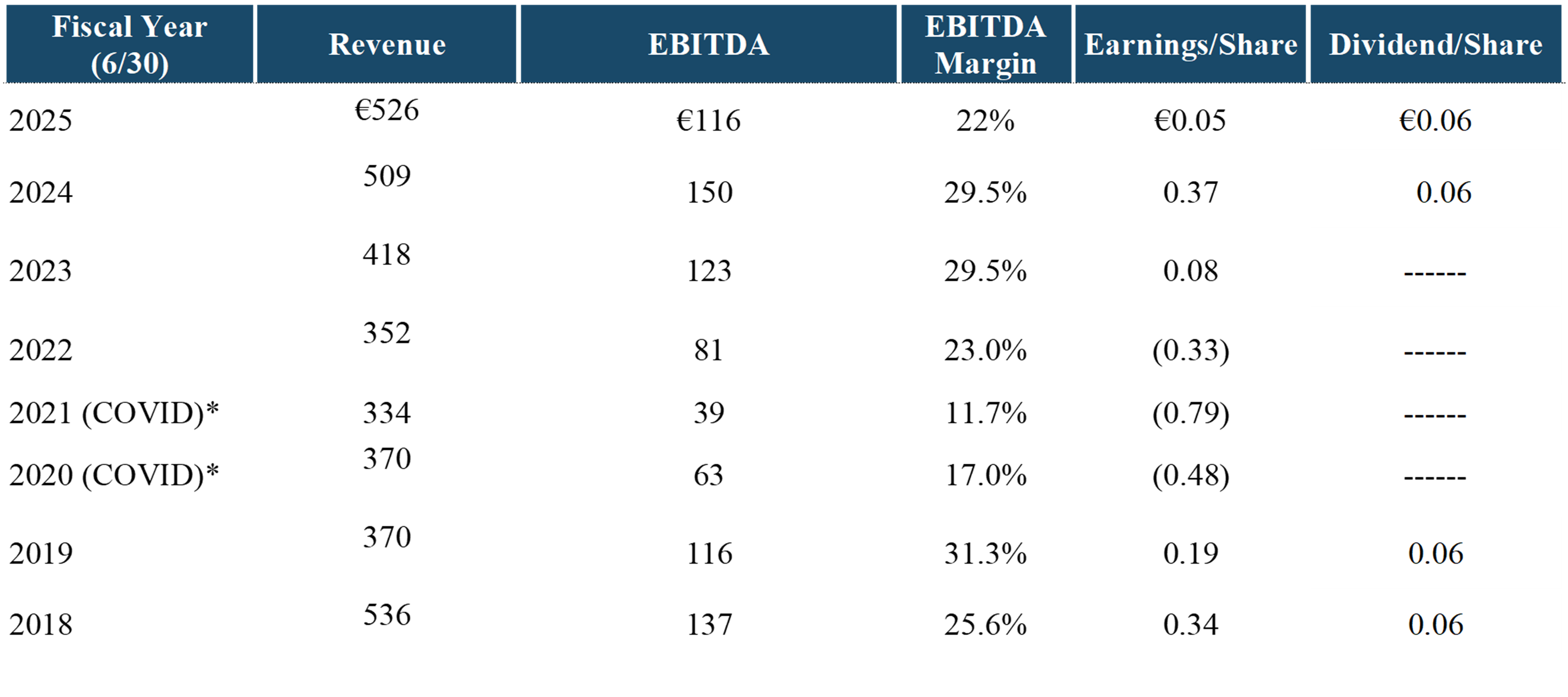
Profitability Trends: Over the past decade, Dortmund has operated one of the most profitable and financially sustainable models in European football. The club consistently delivers strong EBITDA margins and has generated net income in many of its recent seasons, driven by disciplined cost control and a repeatable player development and monetization engine. This durable earnings structure supports a level of financial stability rarely seen in the sport and allows BVB to return capital to shareholders through a dividend, an exceptional characteristic for a professional football club. The ability to pair competitive performance with sustained profitability reinforces Dortmund’s position as one of the best-managed franchises in global sport.
Table 3 Borussia Dortmund Profit Metrics
Growth Drivers (#1 – Commercial & Broadcasting Rights)
Dortmund operates a diversified commercial model that converts sporting performance and fan engagement into recurring revenue across sponsorship, licensing, retail, and digital channels, supported by a strong domestic base and growing international reach (especially in the US and Asia).
Commercial Partnerships:
Borussia Dortmund ranks among Germany’s most commercially successful sports franchises, supported by a broad portfolio of long-term strategic sponsors and category partners.
- Puma (Kit Partner + Strategic Investor): Long-standing technical partnership extending through the early 2030s, positioning BVB among Puma’s flagship global football properties and supporting international merchandising growth. Vodafone (Front-of-Shirt Sponsor): New five-year partnership (through 2030), worth around €30M/year according to Bild.
- Signal Iduna (Stadium Naming Rights): Long-term naming rights partner of Dortmund’s stadium, reinforcing the club’s deep corporate integration within the German market and providing stable, recurring commercial revenue tied to one of Europe’s most iconic football venues.
Media & Broadcast Rights:
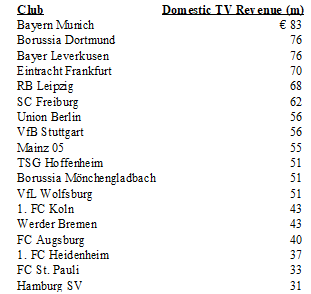
Participation in the Bundesliga’s centralized domestic broadcast pool provides stable, high-margin cash flow and equitable revenue sharing across all clubs. For the 2025/26 to 2028/29 cycle, the German domestic TV rights deal has been renewed at approximately €1.121 billion per season, reflecting modest growth in the domestic market and broad distribution across key German-speaking territories.
- Under the Bundesliga’s multi-pillar distribution model, clubs receive a significant equal basic payment (~50% of total) supplemented by allocations based on sporting performance (43%), youth development (4%), and fan interest metrics (3%)
- For the 2025/26 season, Borussia Dortmund is among the top recipients, reflecting both strong recent league performance and long-term competitiveness within the distribution formula.
- The Bundesliga’s international rights pool, while smaller in scale than some rival leagues, is expanding into key markets including the Americas and Asia, enhancing global exposure for member clubs.
- Dortmund also benefits from incremental UEFA distributions linked to Champions League participation, further complementing domestic broadcast income and reinforcing recurring media revenue streams.
Exhibit 6 2025-2026 Expected Domestic Broadcasting Payments to Bundesliga Clubs
Growth Drivers (#2 – Scaling the Player Trading Engine)
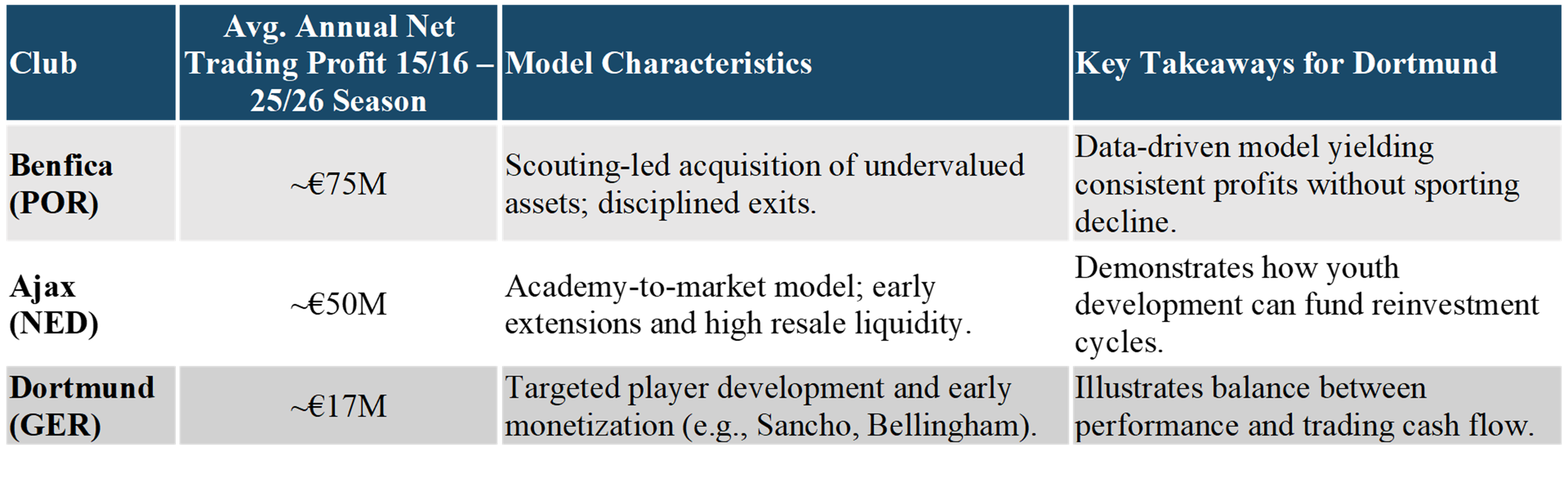
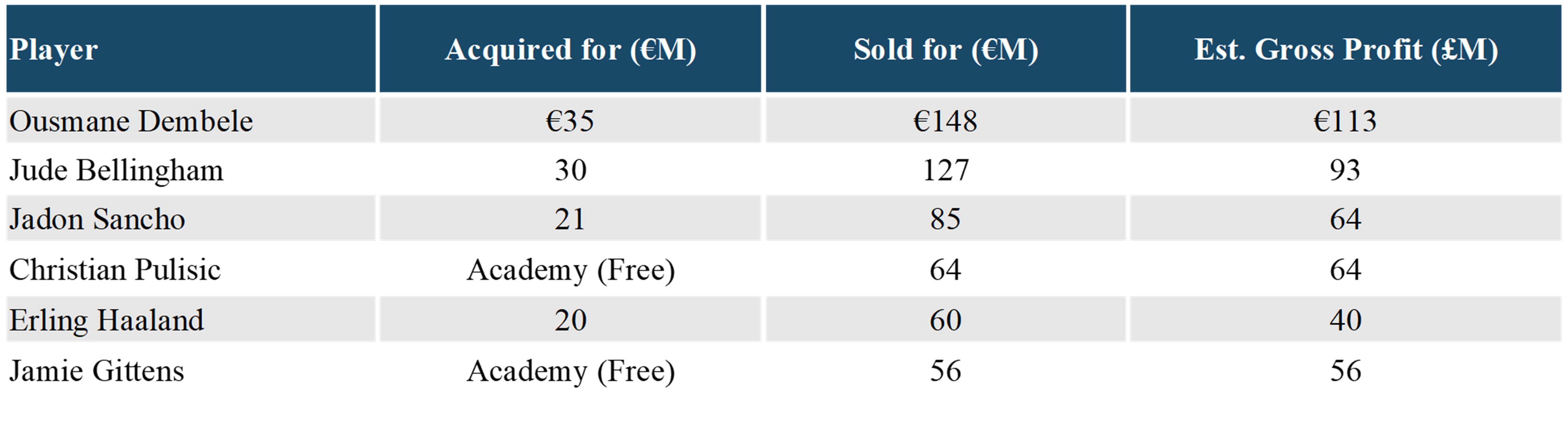
Dortmund’s player development and trading platform is its primary long-term growth driver. The club runs one of football’s most efficient talent pipelines, consistently acquiring or developing high-upside players, accelerating their progression in a Champions League environment, and monetizing at peak value to fund reinvestment. Compared with trading leaders such as Benfica and Ajax, Dortmund has historically emphasized sporting competitiveness alongside monetization, resulting in lower annual trading profits but stronger European performance.
Exhibit 7 Comparable Trading Net Trading Profit
Source: Transfermrkt.com Data, Gabelli Funds
Table 4 Selected BVB High-Value Player Sales + Profits
Source: Transfermrkt.com Data, Gabelli Funds
Recent Performance & Squad Investment Overview:
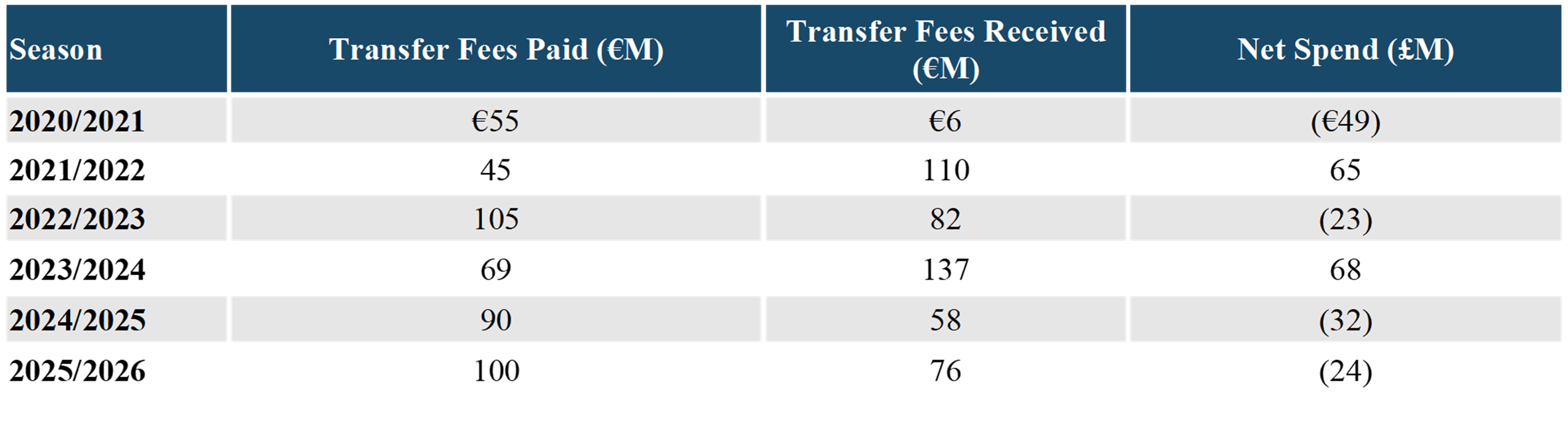
Over the past six seasons, Dortmund has alternated between net investment and capital recycling cycles, reflecting a disciplined approach to squad construction. Unlike perpetual net spenders, BVB actively balances competitive investment with monetization windows. This cyclical capital allocation framework supports long-term financial sustainability while preserving Champions League competitiveness.
Table 5 Dortmund Squad Investment Overview (2020/21 – 2025/26 Seasons)
Source: Transfermrkt.com Data, Gabelli Funds
Growth Drivers (#3 – Matchday Optimization & Stadium Optionality)
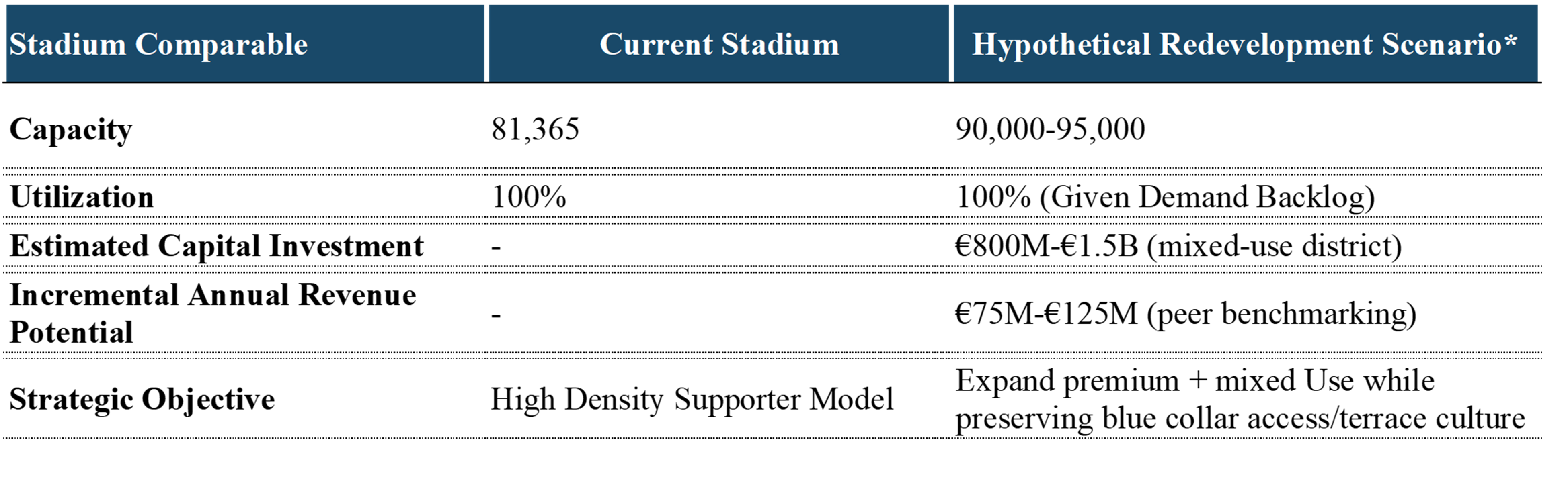
Borussia Dortmund currently operates at structural maximum capacity at Signal Iduna Park, averaging 81,365 supporters per match (100% utilization). The stadium is already the largest in Germany and among the highest-attended in global football. While Borussia Dortmund has not announced plans for a new build or major redevelopment, the club’s full-capacity utilization highlights embedded long-term optionality. Any future expansion, modernization, or mixed-use redevelopment could materially increase matchday and non-matchday revenue, particularly through premium hospitality, naming-rights optimization, and year-round event monetization.
Given the club’s current attendance ceiling, incremental growth would likely come from:
- Expansion of VIP and corporate inventory
- Enhanced hospitality yield per seat
- Multi-use event hosting (concerts, international fixtures, exhibitions)
- Digital ticketing and dynamic pricing optimization
- Mixed-use style entertainment district (i.e. revenue outside of matchdays)
Exhibit 8 Signal Iduna Park – Current Profile vs Hypothetical Redevelopment Scenario
*Illustrative Scenario – No formal plans announced by BVB for new stadium
Source: Gabelli Funds
Table 6 Conceptual New or Redeveloped Stadium Comparable Revenue Lift Analysis
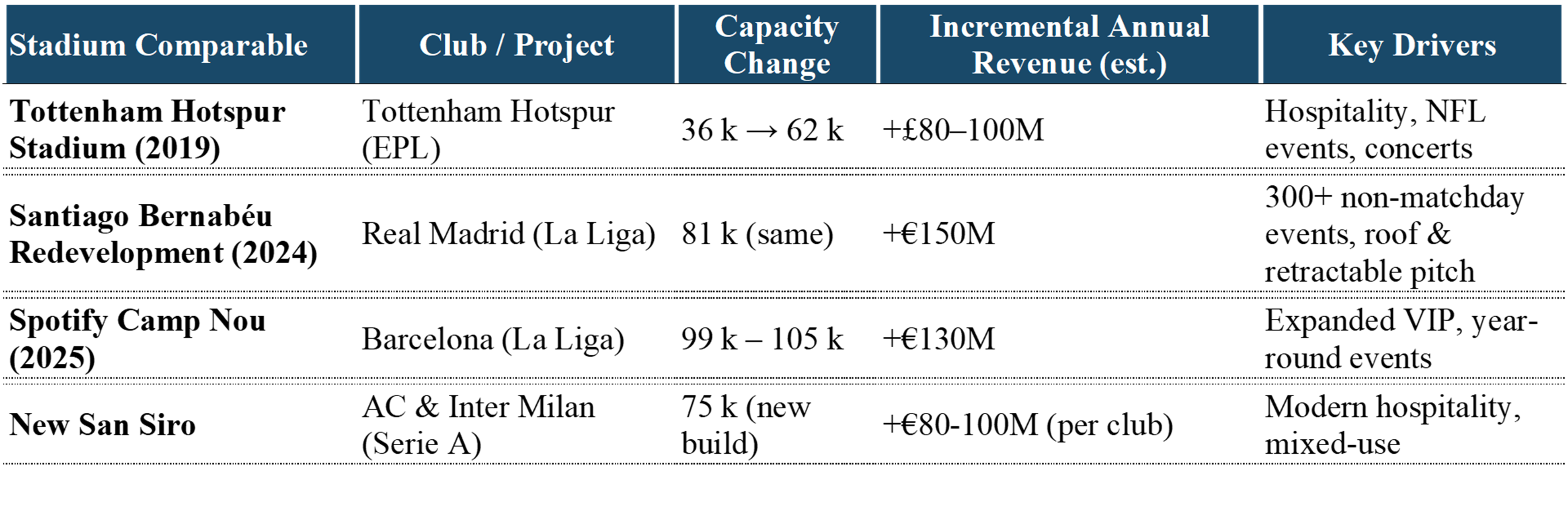
Source: Public Data, Gabelli Funds
Dortmund’s Current Squad & Valuation
Borussia Dortmund entered the 2025–26 campaign with a largely stable squad, consistent with the club’s disciplined roster management approach. The primary summer transaction was the sale of Jamie Gittens to Chelsea for approximately €56 million, a transfer that effectively funded the acquisitions of Jobe Bellingham and Fábio Silva on a near cost-neutral basis. Gittens, who joined Dortmund’s U19 system on a free transfer in 2020, represents a textbook example of BVB’s player development model, identifying undervalued talent, accelerating progression through its academy pipeline, and monetizing at scale. Transfermarkt currently values Borussia Dortmund’s squad at approximately €483 million. Squad value reflects the estimated aggregate market value of the players under contract, effectively the resale value of the roster in the transfer market. For investors less familiar with soccer economics, this differs from enterprise value, which captures the total valuation of the club as a business. Squad value is therefore a measure of sporting assets, not the valuation of the company itself.
While this figure sits below the financial scale of Europe’s largest spenders, Dortmund consistently competes on comparable sporting terms despite operating with materially lower squad investment. This disparity underscores BVB’s capital-efficient model: the club regularly fields Champions League-caliber teams and advances deep in European competition while deploying less than half the squad value of the continent’s wealthiest peers.
Exhibit 9 Europe’s Most Valuable Squads (2025-26 Season)
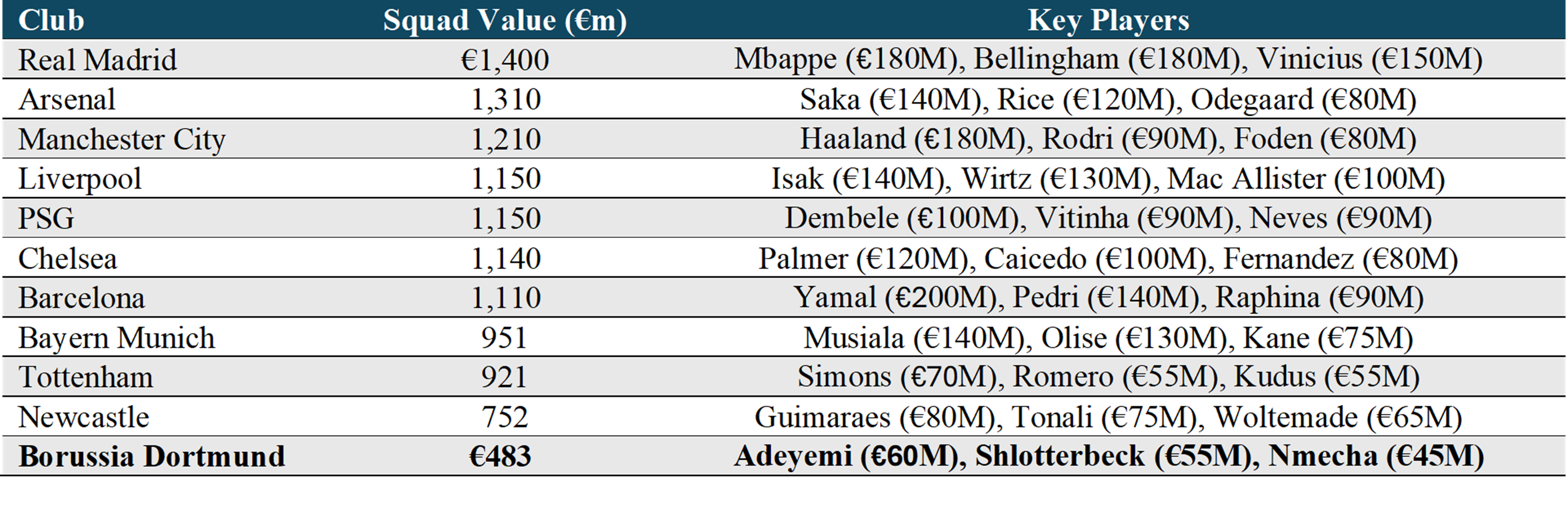
Source: Transfermarkt.com Data, Gabelli Funds
Jamie Gittens = sold to Chelsea ~€56M in total Transfer Gains
Jobe Bellingham, Fabio Silva = ~€53M in total Transfer Outlay
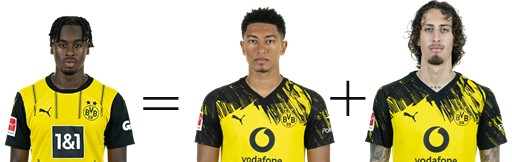
Exhibit 10 Borussia Dortmund’s Squad Breakdown by Age Group
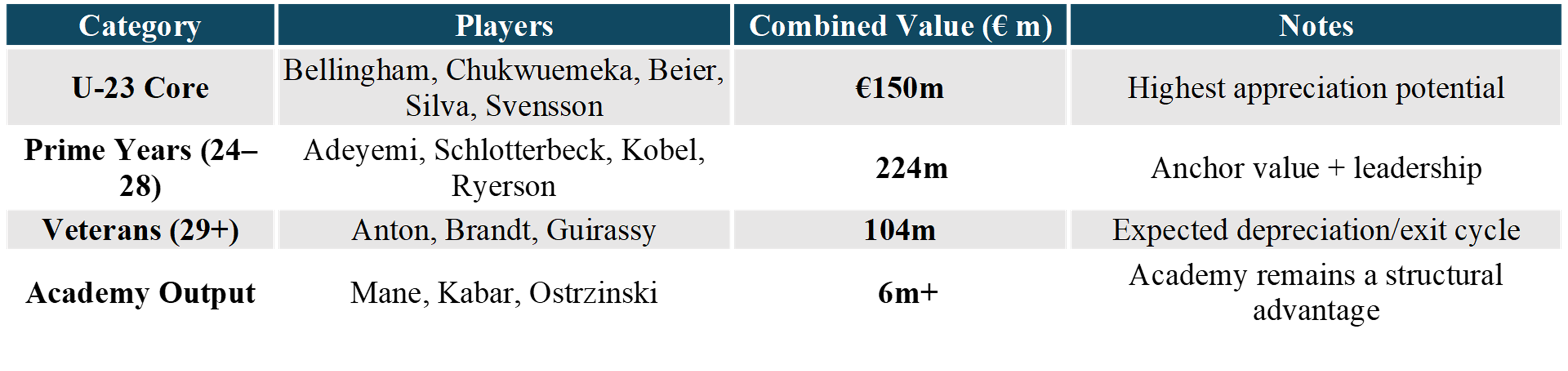
Source: Transfermarkt.com Data, Gabelli Funds
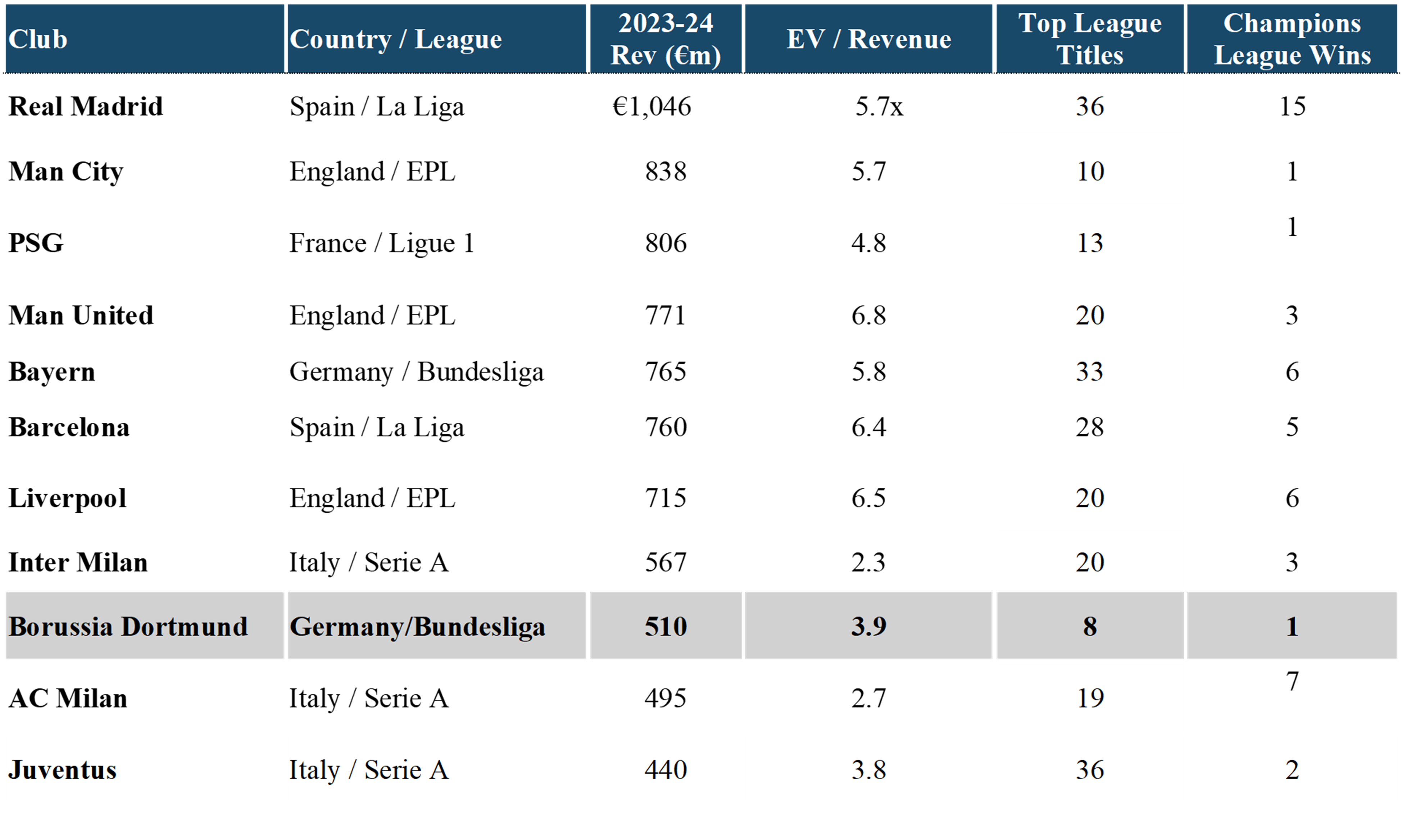
Competitive Landscape: Dortmund’s Position within Global Soccer
Dortmund competes in the Bundesliga, Germany’s top domestic football league and one of Europe’s most financially disciplined competitions. The Bundesliga’s centralized media rights model, strong attendance culture, and financial governance framework provide clubs with predictable recurring revenue and broad international exposure. Within this structure, Dortmund consistently ranks as the league’s second commercial and sporting force behind Bayern Munich, supported by one of the largest and most engaged fan bases in world football. Despite Bayern’s extended period of domestic dominance, Dortmund has established itself as one of Europe’s most reliable deep-stage competitors in the Champions League, frequently advancing into the latter rounds of the tournament. The club’s strategy emphasizes youth development, disciplined recruitment, and financial sustainability rather than ownership-funded spending, allowing it to remain internationally competitive while generating recurring transfer profits. During the 2024–25 season, Dortmund delivered a solid domestic performance and maintained its position among Germany’s elite clubs, reinforcing its role as the Bundesliga’s leading challenger brand within the global soccer landscape.
Exhibit 5 Borussia Dortmund Five-Season Lookback
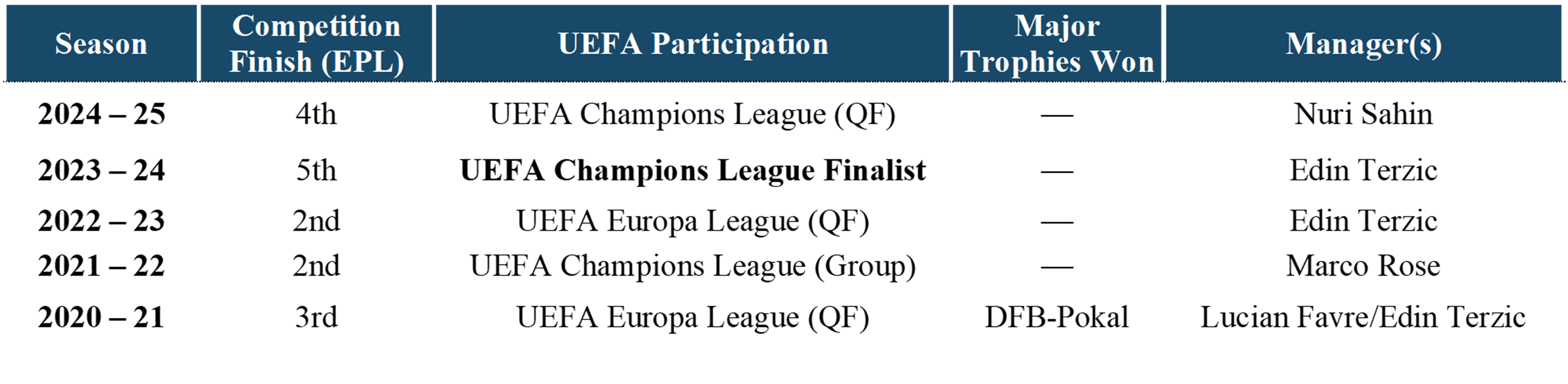
Table 1 Borussia Dortmund Peer Group Analysis
Source: Company Filings, Public Data, Gabelli Funds
Investment Risks & Considerations
On-Field Performance Volatility:
- League position and European qualification directly influence broadcasting, prize money, and commercial bonuses.
- Missed Champions League qualification can reduce annual revenue by €55–100 million.
Player Development & Trading Volatility
- Borussia Dortmund’s financial model relies meaningfully on successful player identification, development, and monetization. Transfer profits are inherently volatile and dependent on market timing, player performance trajectories, injury risk, and external buyer demand.
- The club’s historical profitability has been supported by recurring high-value player sales, however, there can be no assurance that similar transaction multiples or volumes will persist in future cycles.
- Competitive underperformance, contract mismanagement, or delayed exit decisions could materially compress transfer margins and reduce reinvestment flexibility.
- As trading gains are not recurring in a linear fashion, periods of lower monetization may result in reduced EBITDA and net income, even if core operating revenues remain stable.
Regulatory & Financial Fair Play (FFP) Constraints
- UEFA’s financial sustainability regulations limit spending flexibility.
Competitive Landscape
- Bundesliga Competition: Dortmund faces intense domestic competition from well-resourced clubs such as Bayern Munich, Red Bull Leipzig, Bayer Leverkusen, Eintracht Frankfurt, and Stuttgart.
- European Competitive Pressure: Top European clubs such as Real Madrid, Barcelona, Bayern Munich, PSG, Man City and the Milan clubs continue to raise investment levels, pushing the standard needed to compete.
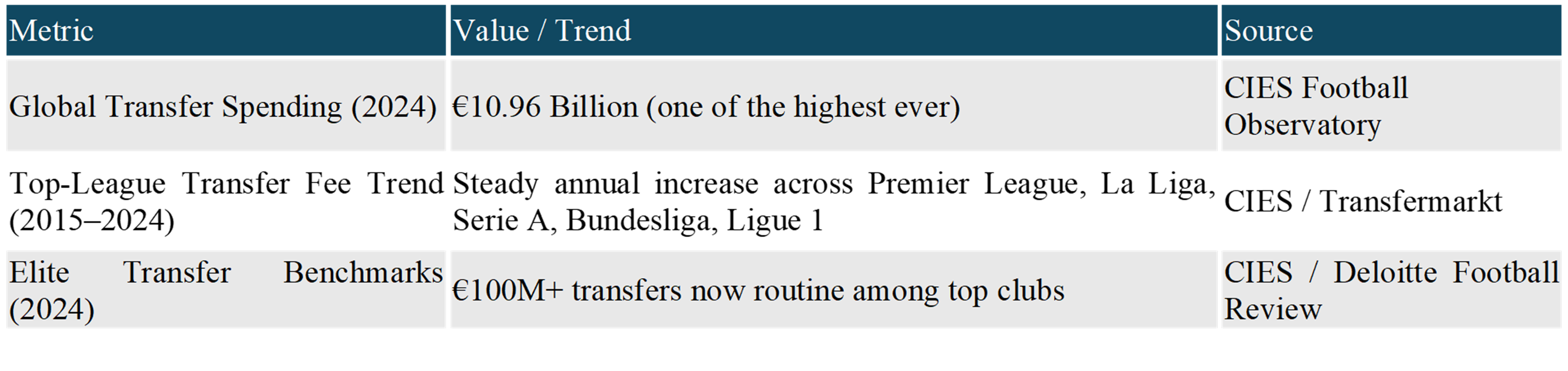
- Transfer Market Inflation: Transfer fees and wages have surged across the last decade, increasing amortization costs and tightening financial flexibility.
Exhibit 11 Transfer Market Inflation Metrics
Appendix (Ownership, Germany’s 50+1 Rule)
Ownership Structure:
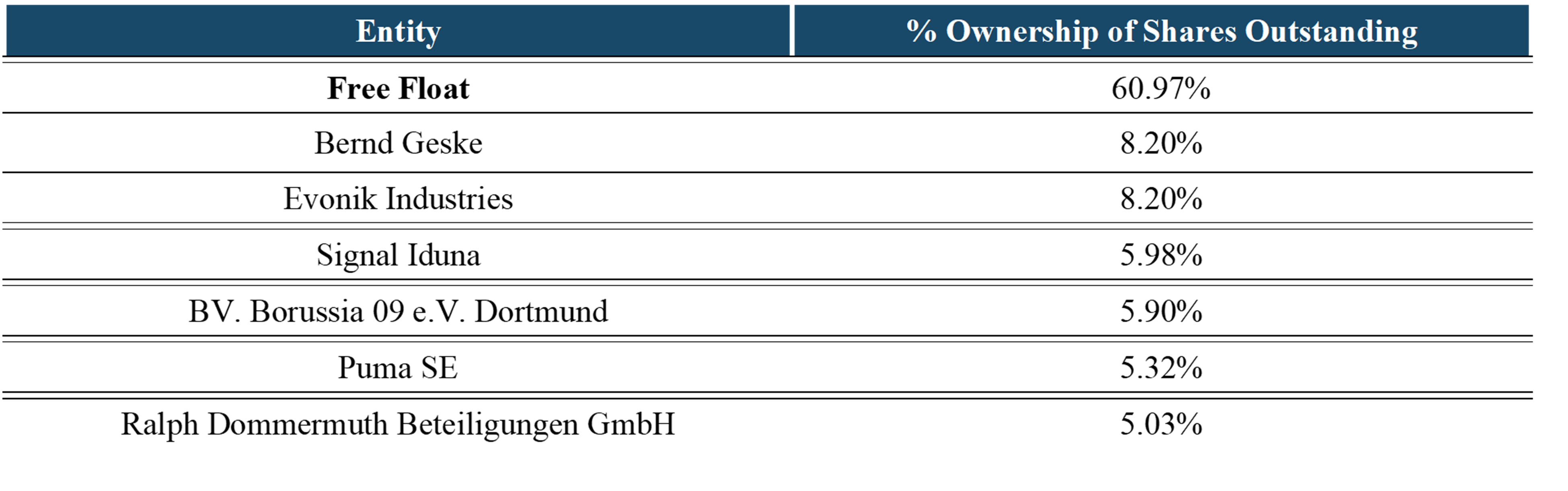
Borussia Dortmund’s shareholder structure is as follows:
Exhibit 12 Borussia Dortmund (BVB-XE) Ownership Structure (2026)
Source: Company Filings, Gabelli Funds
Control & Governance – Germany’s 50+1 Rule:
Borussia Dortmund operates under the German 50+1 rule, a regulatory framework in the Bundesliga that ensures club members retain overall control of professional football entities. The rule requires that a club’s parent association hold majority of voting rights (50% + 1 vote) in any commercial entity that runs its professional team in the Bundesliga or 2. Bundesliga, preventing external investors from obtaining controlling influence.
In Dortmund’s case, while Borussia Dortmund GmbH & Co. KGaA is publicly listed and its capital is widely held, the club’s parent association, Ballspielverein Borussia 09 e.V. Dortmund, retains ultimate governance authority through the 50+1 structure. This framework preserves member control over strategic decisions such as board composition and major corporate governance matters, limiting the ability of external shareholders to acquire majority voting power.
The result is a governance model that balances broad shareholder participation with member-controlled oversight. Dortmund’s supervisory and executive boards include representatives reflecting both the interests of the club association and independent governance standards required of a listed company. This structure promotes financial discipline and long-term alignment with supporter interests while restricting the takeover dynamics common in other European leagues.
249 ROYAL PALM WAY, PALM BEACH, FL 33480 Gabelli Funds TEL (561) 671-2100
This whitepaper was prepared by Alec Boccanfuso. The examples cited herein are based on public information and we make no representations regarding their accuracy or usefulness as precedent. The Research Analyst’s views are subject to change at any time based on market and other conditions. The information in this report represent the opinions of the individual Research Analyst’s as of the date hereof and is not intended to be a forecast of future events, a guarantee of future results, or investments advice. The views expressed may differ from other Research Analyst or of the Firm as a whole.
As of December 31, 2025, affiliates of GAMCO Investors, Inc. beneficially owned less than 1% of all other companies mentioned in this report.
Important Disclosures
- Shares of this ETF are bought and sold at market price (not NAV) and are not individually redeemed from the fund.
- Buying or selling ETF shares may require additional fees such as brokerage commissions, which will reduce returns.
- These additional risks may be even greater in bad or uncertain market conditions.
You should consider the ETFs’ investment objectives, risks, charges and expenses carefully before you invest. The ETF’s’ Prospectus is available from G.distributors, LLC, a registered broker-dealer and FINRA member firm, and contains this and other information about the ETF, and should be read carefully before investing.
Distributed by G.distributors, LLC, a registered broker dealer and member of FINRA.
This whitepaper is not an offer to sell any security nor is it a solicitation of an offer to buy any security.
Investors should consider the investment objectives, risks, sales charges and expense of any fund carefully before investing.
For more information, visit our website at: www.gabelli.com or call: 800-GABELLI
800-422-3554 • 914-921-5000 • Fax 914-921-5098 • info@gabelli.com