Company overview
Manchester United is among the world’s most prominent sports and entertainment brands, with a global reach that extends far beyond soccer. Based in Manchester, England, the club competes in the Premier League, the highest level of English football, and consistently features in major European competitions. Since its founding, the club has captured 67 major trophies, cementing its status as one of the most valuable and widely supported franchises in global sport. Manchester United’s business model is driven by three primary revenue streams:
- Commercial (Sponsorship & Merchandising): Sponsorship agreements, licensing, digital partnerships, and retail commerce. (~50%)
- Broadcasting: Domestic and international media rights from the Premier League, UEFA competitions, and other tournaments. (~26%)
- Matchday: Ticketing, hospitality, and stadium event revenue. (~24%)
Manchester United represents a globally scarce, premium sports asset with vertically integrated revenue streams across media, sponsorship, and fan engagement. Although ownership remains closely held, Manchester United’s global scale, brand durability, and redevelopment potential make it a premier vehicle for exposure to the institutionalization of sports as an asset class.
Manchester United’s heritage extends far beyond the pitch. The club’s home ground, Old Trafford, nicknamed “The Theatre of Dreams” has been its base since 1910 and remains one of the most iconic venues in world sport. The club’s commercial reach includes a vast global supporter network, hundreds of official fan clubs, and one of the largest social media followings of any sports organization. Partnerships with Adidas, Snapdragon, and other global sponsors reinforce its status as both a premier sports institution and a diversified entertainment platform.
Founding and Evolution:
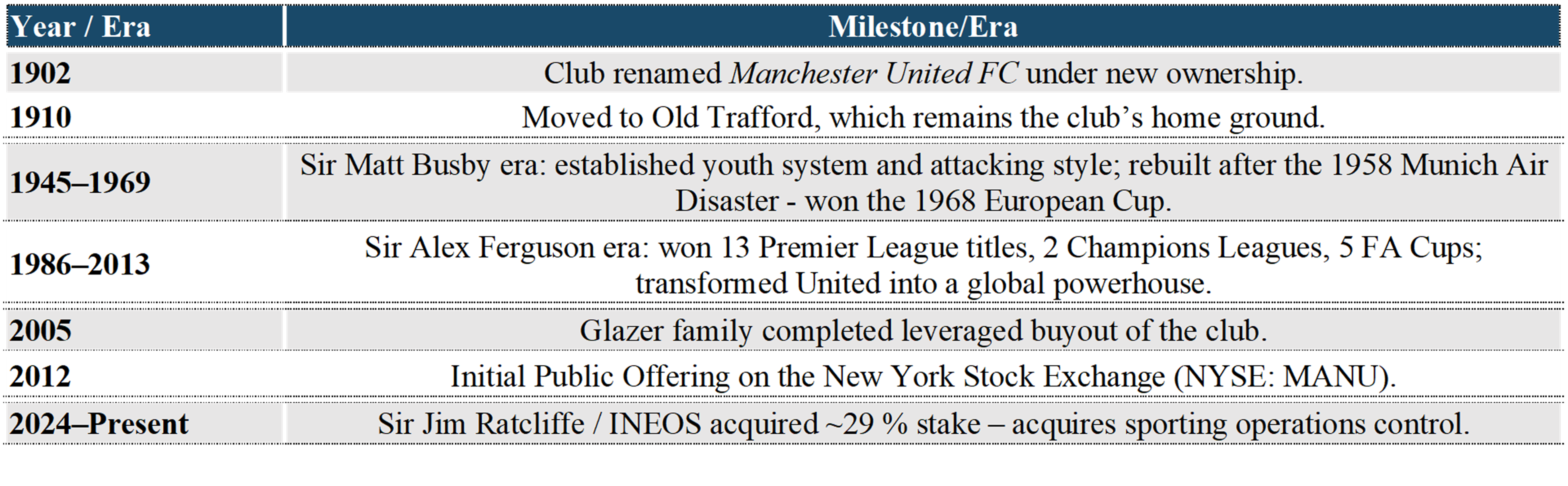
United traces its origins to 1878, when it was founded as Newton Heath L&YR Football Club by railway workers in Manchester. Financial hardship in the early 1900s led to new ownership and a rebranding in 1902 to Manchester United Football Club. From those modest beginnings, the club has evolved into one of the most successful and influential sporting institutions in the world.
Exhibit 1 Key Milestones/Eras
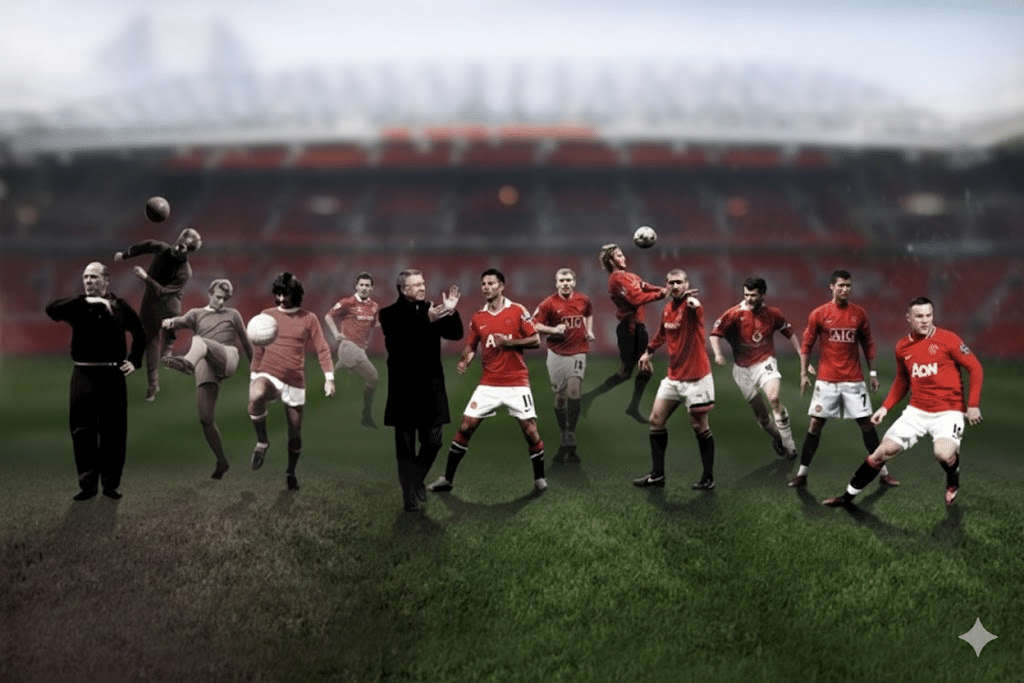
Manchester United is synonymous with ambition, youth development, and the pursuit of excellence – principles championed by Sir Matt Busby and embodied by the Class of ‘92. Generations of players such as George Best, Eric Cantona, David Beckham, and Cristiano Ronaldo have reinforced the club’s status as a global sporting brand.
Old Trafford: The Theatre of Dreams
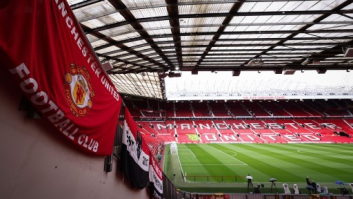
Manchester United has played at Old Trafford since 1910. With a capacity of approximately 74,233, it is the largest club stadium in England and one of the most heavily attended venues in European football. In 2025, United recorded the third-highest average home attendance in Europe, trailing only Borussia Dortmund and Bayern Munich, underscoring the depth and durability of global fan demand.
Old Trafford is owned outright by the club, providing strategic flexibility that few top European peers possess. In 2025, Manchester United formally announced its ambition to pursue a full-scale new-build stadium project on or near the existing site, with estimated costs exceeding £2 billion. The objective is to materially expand capacity, modernize infrastructure, and unlock a higher matchday and non-matchday revenue ceiling through premium hospitality, events, and year-round commercial usage.
Exhibit 2 Old Trafford + 2025 Attendance Stats
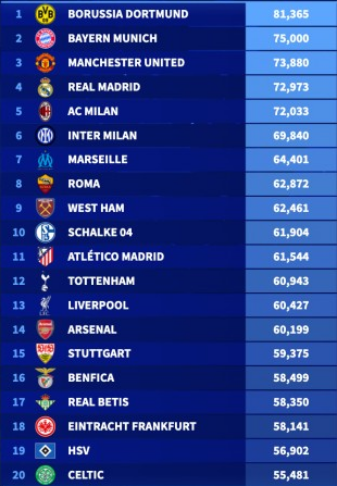
Source: Transfermarkt.com, Arne Museler, Sport Industry Group
Competitive Landscape: United’s Position within Global Soccer
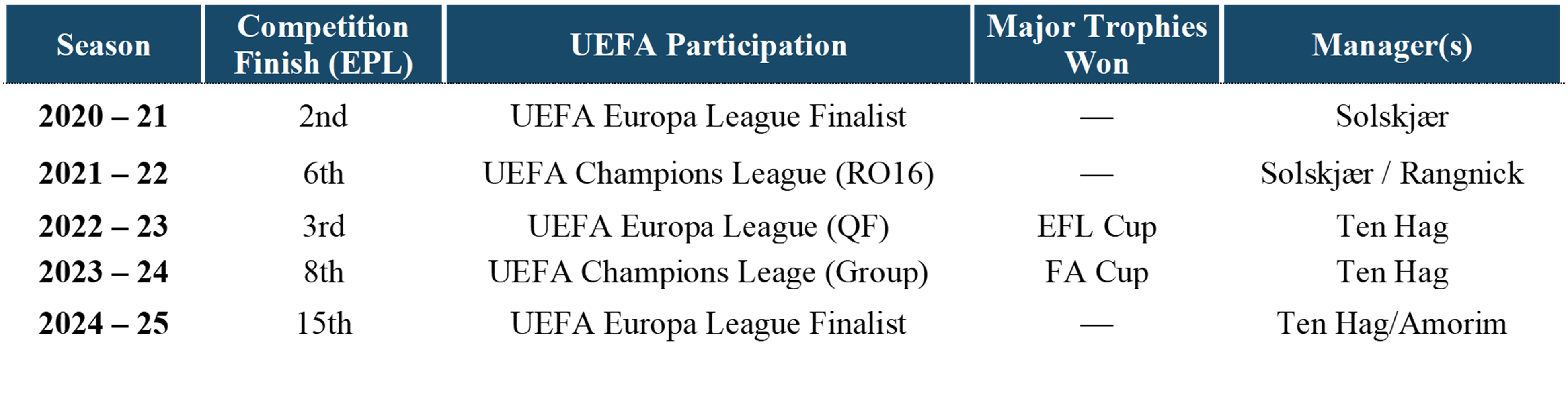
United competes in the English Premier League (EPL), widely regarded as the most commercially successful and globally distributed domestic league. The EPL’s collective broadcasting arrangements, international media rights, and sponsorship reach provides United with a consistent base of high-margin revenue while ensuring global visibility unmatched by most European peers. Despite fluctuating on-field results since Sir Alex Ferguson’s retirement in 2013, the club remains among the top performers in terms of commercial income and digital reach. For context, United endured a disappointing 2024–25 season, finishing 15th in the Premier League, it’s lowest since 1989-‘90. Despite a run to the Europa League Final, where they lost to Tottenham Hotspur, the club’s ongoing managerial turnover contrasts sharply with Manchester City’s sustained dominance under Pep Guardiola.
Exhibit 3 Manchester United Five-Season Lookback
Within the global hierarchy of professional football, United sits alongside Real Madrid, FC Barcelona, Juventus and Bayern Munich as one of the sport’s most valuable and internationally supported clubs.
Table 1 Manchester United Peer Group Analysis
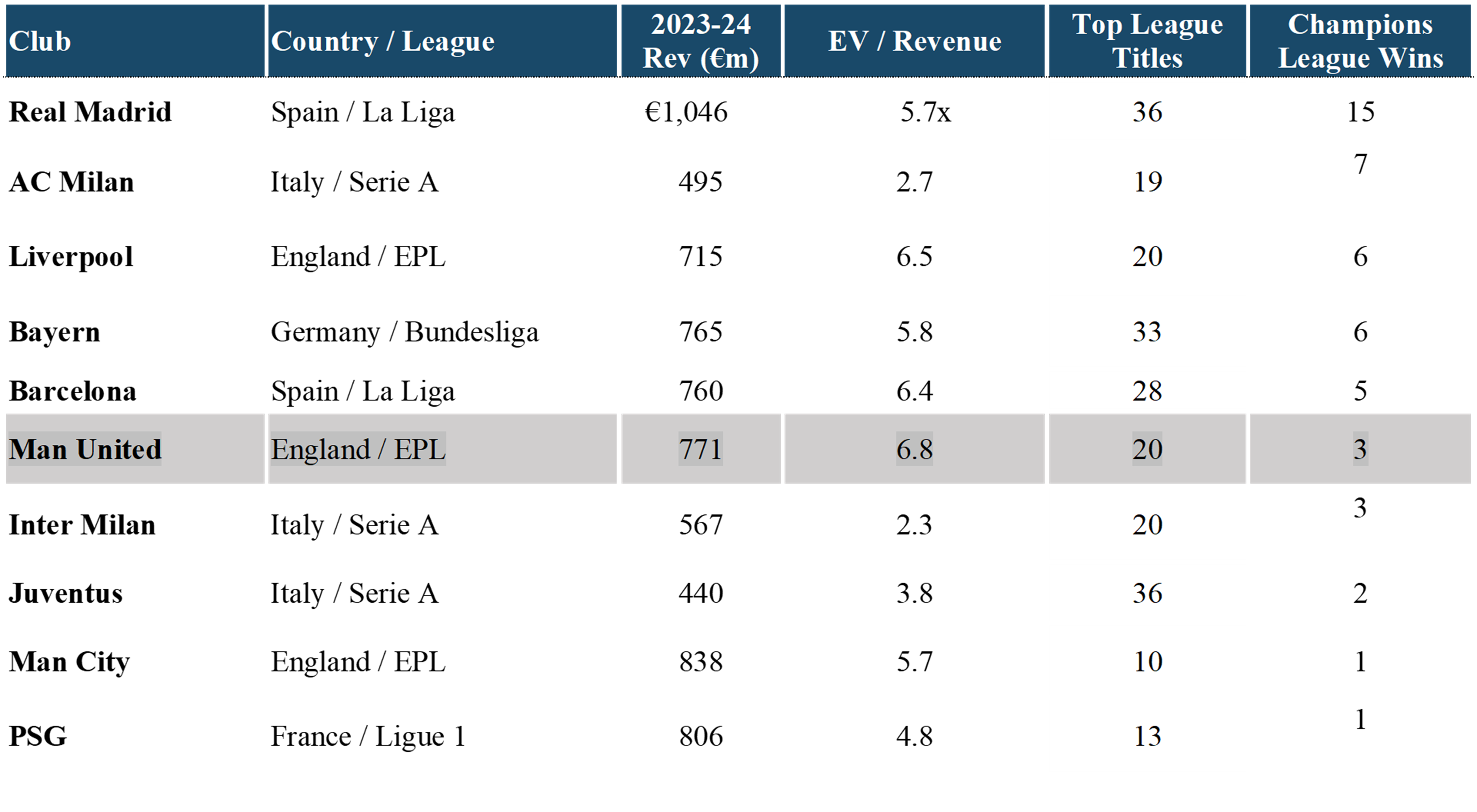
Source: Company Filings, Public Data, Gabelli Funds
Manchester United Financial Overview
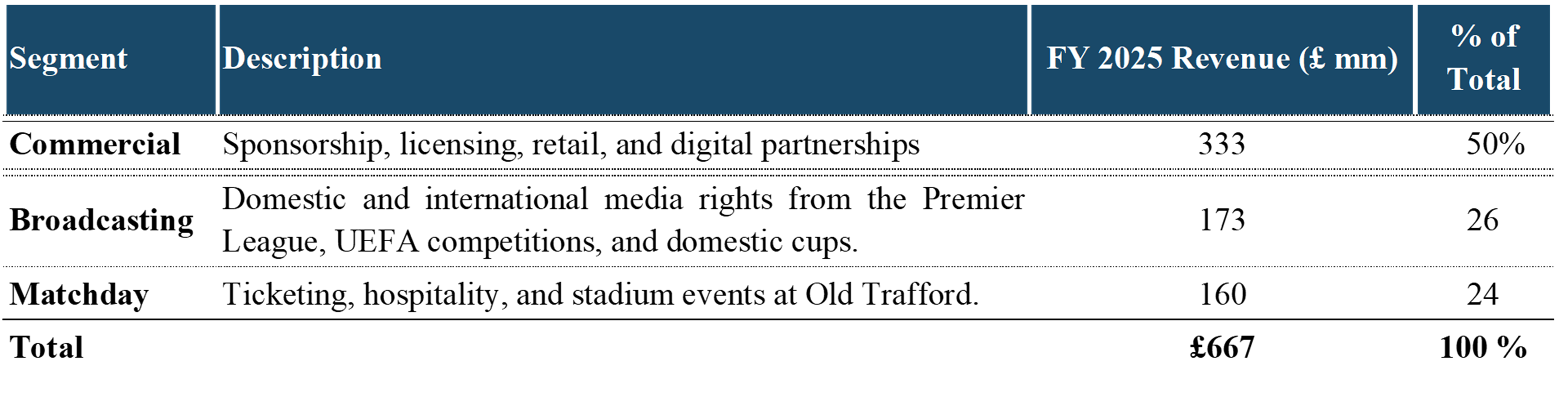
Revenue Composition: Manchester United’s business model relies on three primary revenue streams. Note: Player trading income is excluded from IFRS “Revenue” but remains a key cash and profit driver. United’s net transfer gain of approximately £49 million in FYE (6/30) 2025 reflects disciplined squad management and deferred consideration structure.
Table 2 Manchester United FYE (6/30) 2025 Revenue Breakdown
Source: Company Filings, Gabelli Funds
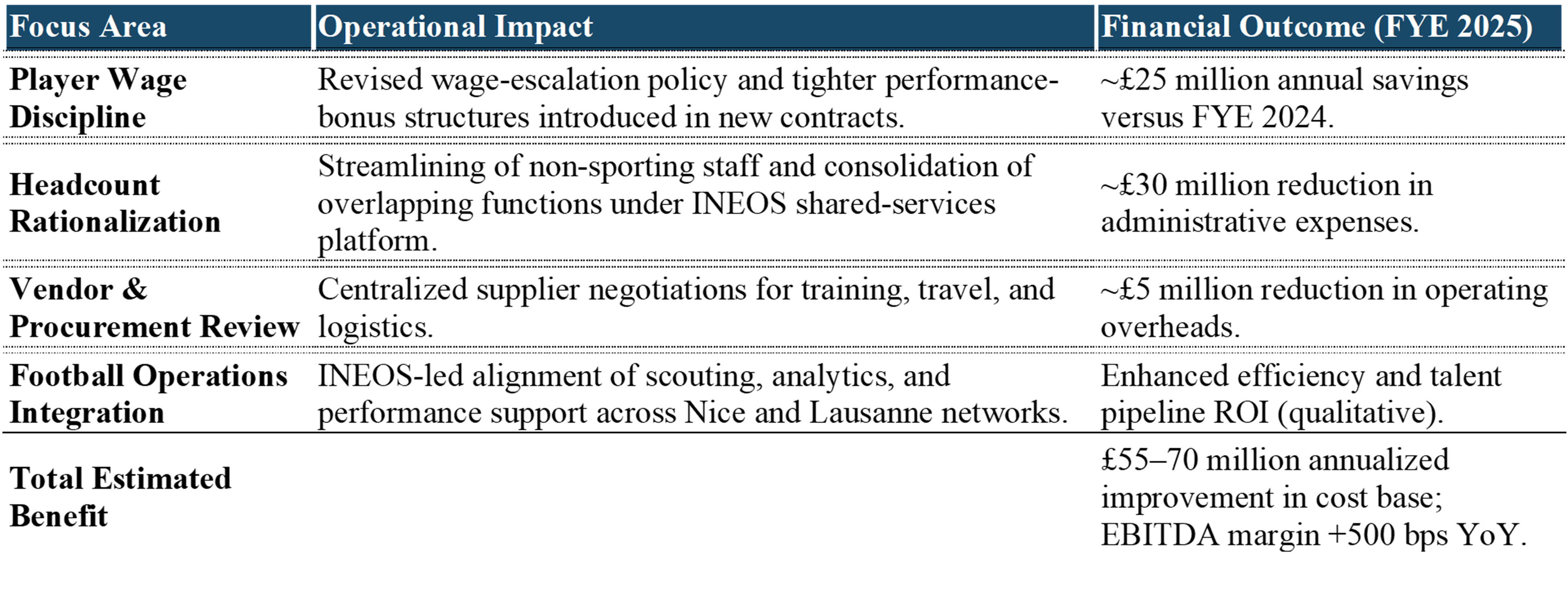
Profitability Trends: Despite the limited top-line growth YoY (+1%), profitability improved materially as the club delivered its most disciplined cost structure in over a decade. Total operating expenses fell 4.5 % to £734 million, led by a 14% reduction in employee benefits and tighter overhead control initiated after Sir Jim Ratcliffe and INEOS assumed sporting oversight. These measures, rationalizing non-football staff headcount, tightening player-wage escalation clauses, and integrating shared services across the INEOS portfolio, produced an estimated £55-£70 million in annualized savings.
Exhibit 4 Cost Efficiency Under INEOS
Growth Drivers (#1 – Matchday & New Stadium Plans)
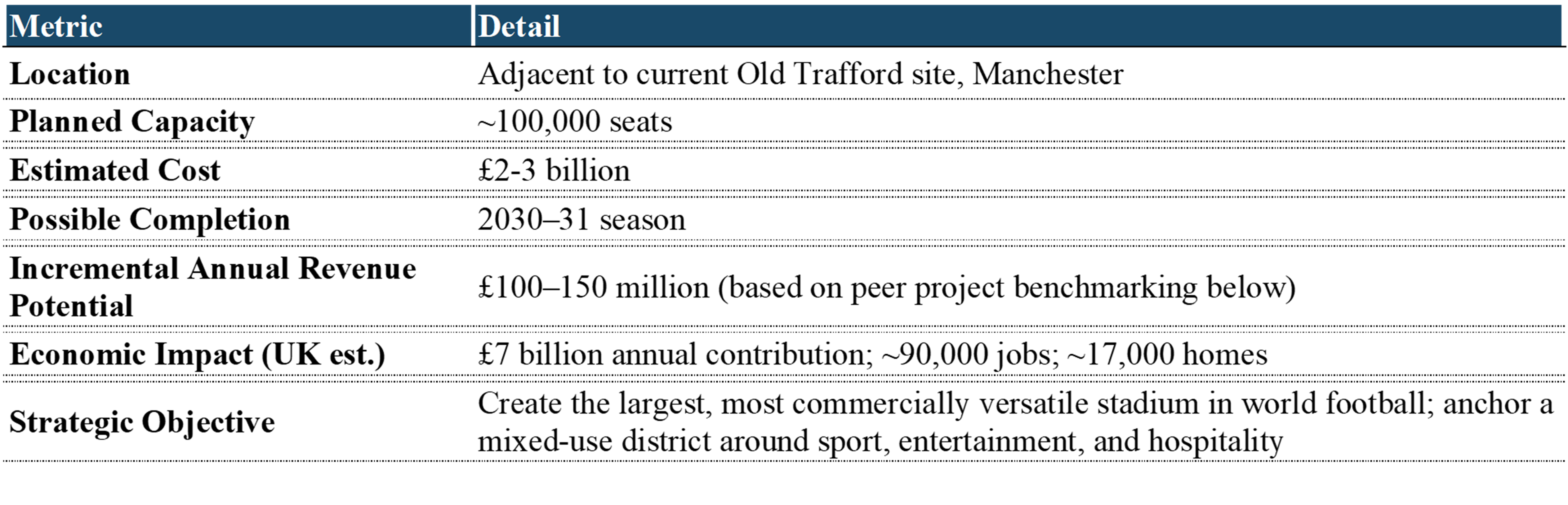
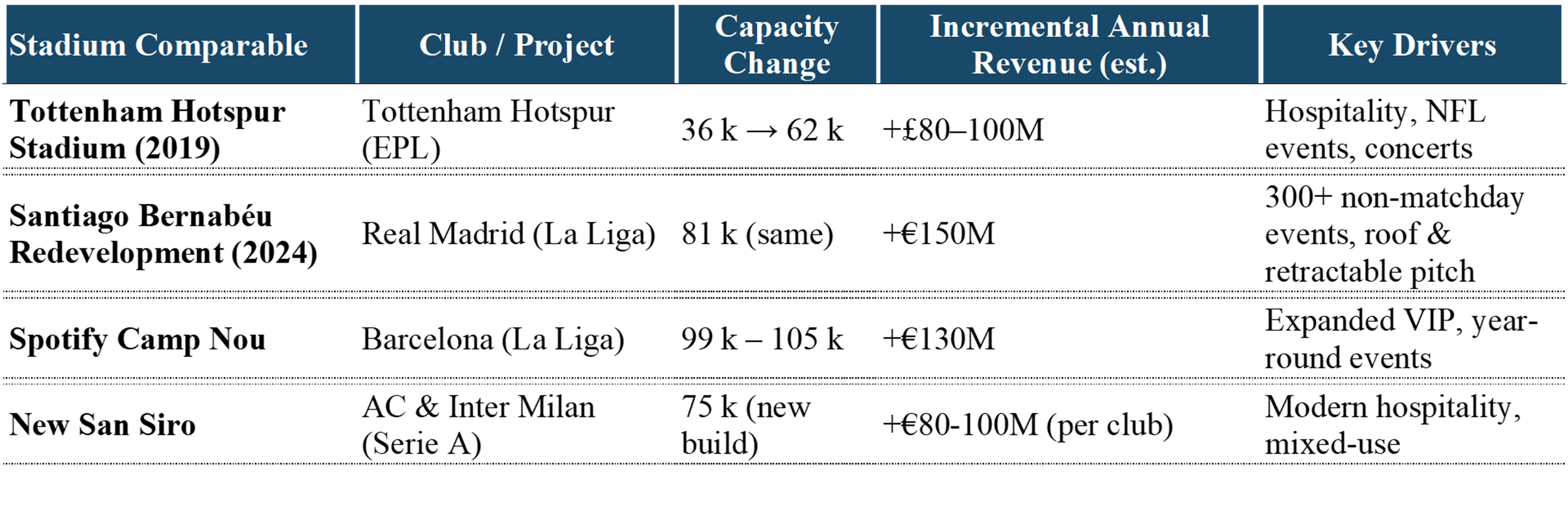
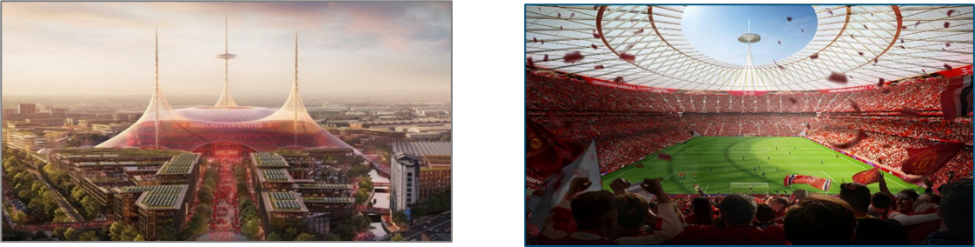
Old Trafford remains one of football’s most iconic and under-monetized venues. With a capacity of 74,233, it drives roughly £160 million of annual matchday income. In March 2025, Manchester United formally announced its ambition to construct a new 100,000-seat stadium adjacent to the current Old Trafford site, which can lead to significant revenue growth post-completion (see Table 3).
Exhibit 5 “New Trafford” Stats & Information
Source: Company Press Releases, Public Statements, Gabelli Funds
Table 3 “New Trafford” Comparable Revenue Lift Analysis
Source: Public Data, Gabelli Funds
Exhibit 6 “New” Trafford Renderings
Source: Manchester United
Growth Drivers (#2 – Commercial & Broadcasting Rights)
Manchester United’s business model blends a multi-channel revenue base with brand driven global monetization. The club converts its sporting, cultural, and media reach into recurring income across sponsorship, broadcasting, retail, and digital ecosystems. The next growth phase, guided by INEOS’s operational discipline, targets a higher-margin, less cyclical earnings mix through digital transformation, data-driven fan engagement, and stadium redevelopment.
Commercial Partnerships:
Manchester United continues to rank among the world’s most commercially successful sports franchises, underpinned by more than 60 active global and regional sponsors.
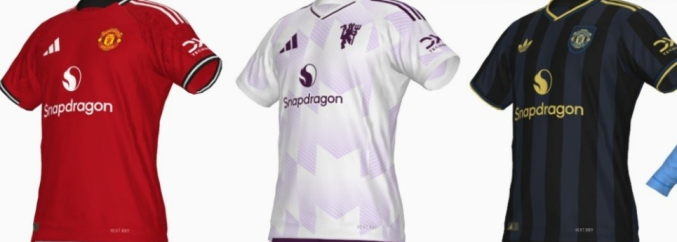
- Adidas (Kit Partner): Renewed ten-year deal through 2035 worth up to £900 million, reflecting record licensing potential. Snapdragon (Front-of-Shirt Sponsor): 5-year agreement beginning in 2024–25 at roughly £60 million per year, replacing TeamViewer.
- DXC Technology & Sokin: Multi-platform partnerships across analytics and payment solutions. Coca-Cola & Visit Malta: Broaden lifestyle and tourism adjacency.
Exhibit 7 MANU 2025/2026 Kits
Media & Broadcast Rights:
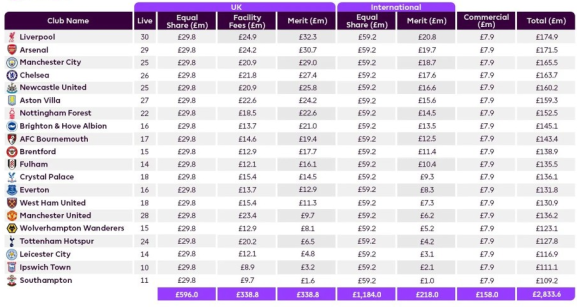
Participation in the Premier League’s centralized broadcast pool ensures stable, high-margin cash flow regardless of individual match ratings.
- FYE 2025 domestic and international distributions exceeded £220 million, supported by the league’s record global rights cycle (2022–2025, ~£10 billion total).
- Incremental upside from the UEFA media cycle 2024–2027, with streaming carve-outs improving global exposure and revenue share.
- The club’s owned-media arm, MUTV & ManUtd.com, continues to scale direct-to-consumer subscriptions and advertising.
Exhibit 8 Season 2024-2025 Broadcasting Payments to Clubs (Premier League)
Growth Drivers (#3 – Player Trading & Squad Efficiency)
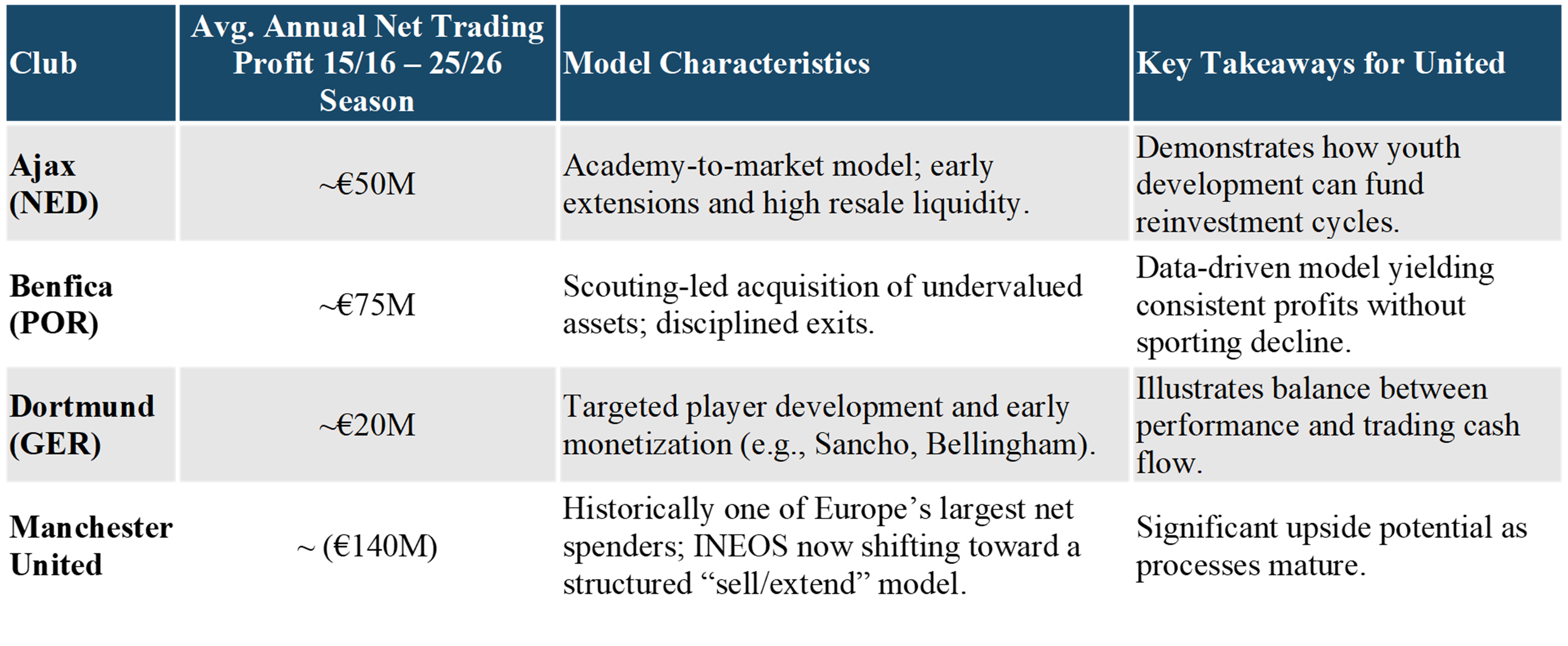
Under INEOS leadership, Manchester United is transforming player trading into a strategic, recurring revenue stream rather than a by-product of squad turnover. The focus is on data-driven recruitment, disciplined contract management, and realizing value from both senior and academy talent. Historically reactive in the market, United is now applying a portfolio-style approach, evaluating players by performance, resale value, and contract horizon. The club’s renowned academy, which has produced over 240 professionals worldwide including Rashford, Mainoo, and Garnacho, provides a strong foundation to emulate the self-sustaining models of Ajax, Benfica, and Dortmund.
Exhibit 9 Comparable Trading Net Trading Profit
Source: Transfermrkt.com Data, Gabelli Funds
Recent Performance & Squad Investment Overview:
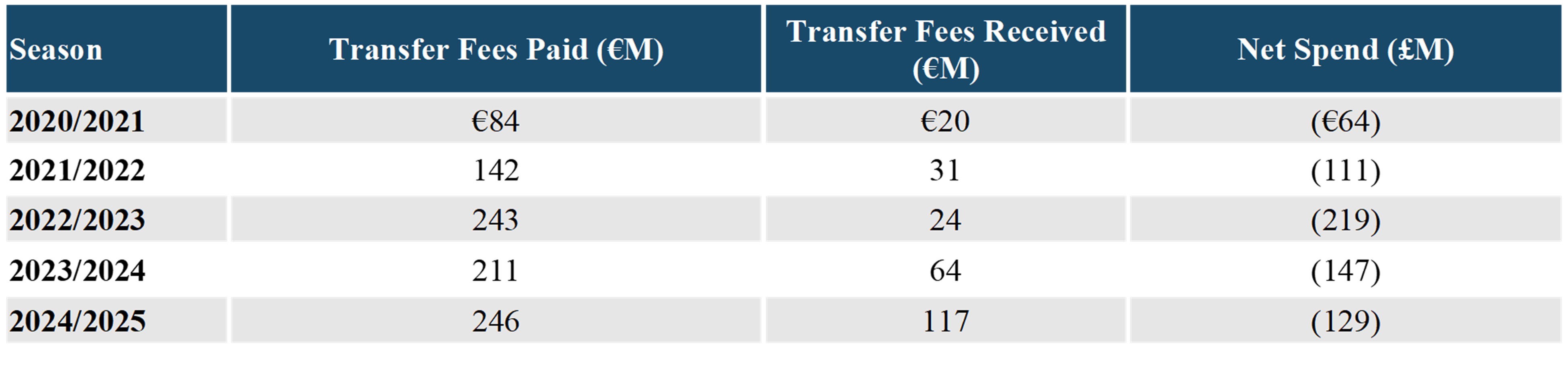
Over the past five seasons, United has consistently deployed significant capital into squad investment, as reflected in the seasonal transfer spend/proceeds shown in Table 4. Although United has remained a net spender on a seasonal basis, the data shows a clear trend toward higher transfer income in recent seasons, particularly in 2023/24 & 2024/25, as the club began executing more deliberate exit decisions. Under INEOS, the focus has shifted toward balancing continued squad investment with improved capital recycling, using earlier sell-or-extend decisions and greater analytical support to moderate net spend over time while maintaining competitiveness.
Table 4 Squad Investment Overview (2020/21 – 2024/25 Seasons)
Source: Transfermrkt.com Data, Gabelli Funds
United’s Current Squad & Valuation
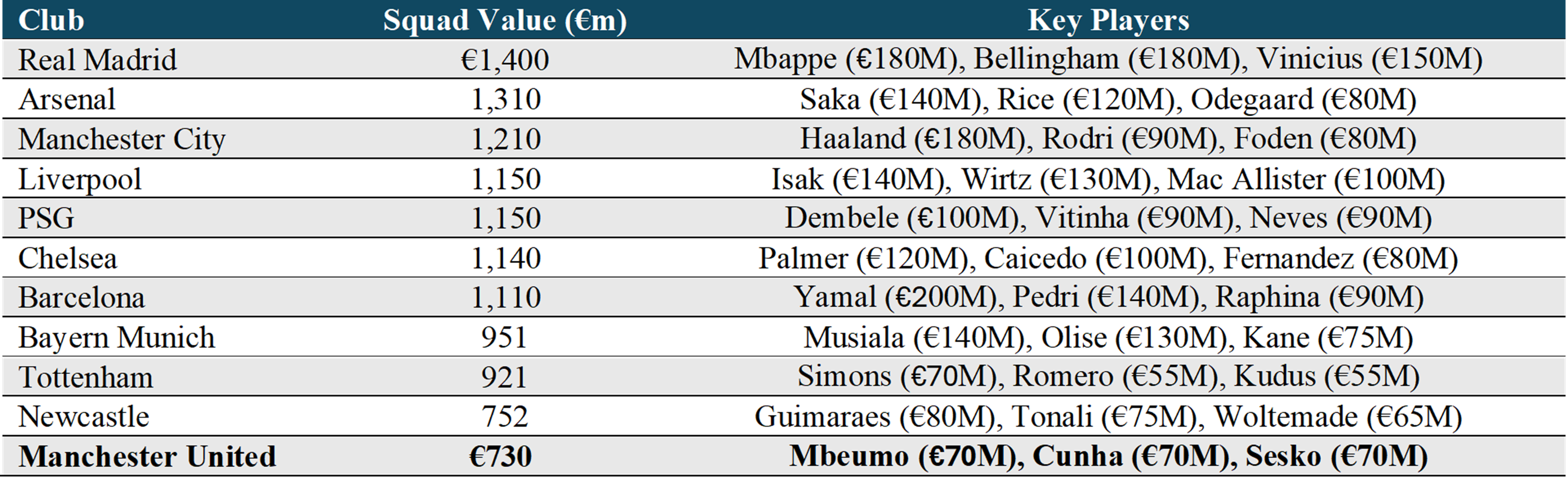
Manchester United began the 25–26 campaign with a substantially reshaped squad, driven by nearly €250 million in summer investment on key additions such as Šeško (€76.5m), Mbeumo (€75m), and Cunha (€74.2m), offset by major departures including Alejandro Garnacho (€46.2m) and Antony (€22m). Transfermarkt currently values Manchester United’s squad at €730 million, ranking the club just outside the world’s top ten.
Table 5 Europe’s Most Valuable Squads (2025-26 Season)
Source: Transfermarkt.com Data, Gabelli Funds
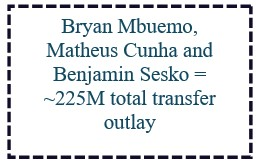
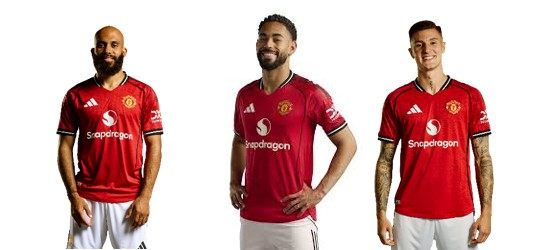
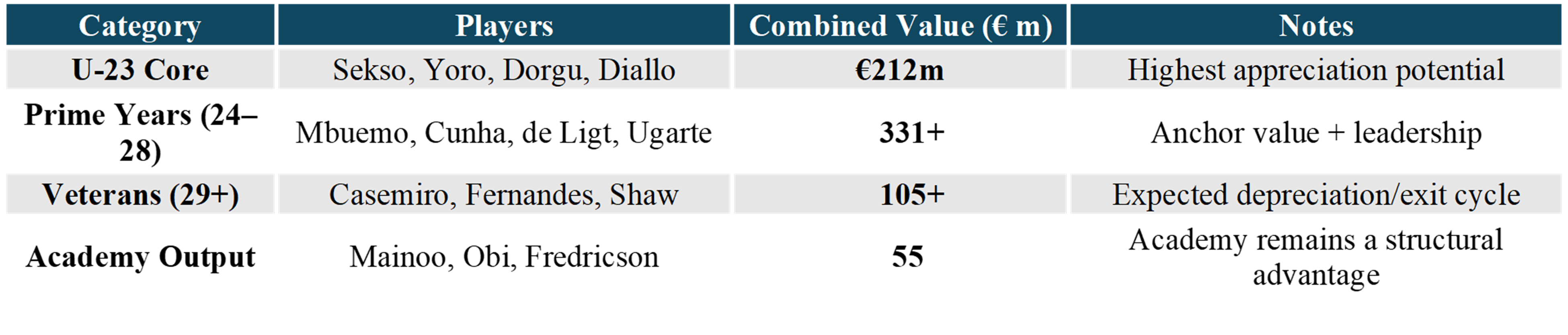
Exhibit 10 Manchester United’s Squad Breakdown by Age Group
Source: Transfermarkt.com Data, Gabelli Funds
Despite inconsistent on-pitch performance in recent seasons, United’s squad valuation remains structurally strong due to the presence of an elite youth core and improved contract discipline under INEOS. The club’s emphasis on high-upside profiles and earlier decision-making on renewals or exits is expected to stabilize amortization costs and boost future player-sale revenue. While the squad still contains depreciating veteran contracts, the valuation base is positioned to appreciate over the next 2–3 seasons.
Investment Risks & Considerations
On-Field Performance Volatility:
- League position and European qualification directly influence broadcasting, prize money, and commercial bonuses.
- Missed Champions League qualification can reduce annual revenue by £55–100 million.
Squad Rebuild Requirements
- High amortization and legacy contracts may delay a full reset.
- Success of player-trading strategy is dependent on execution under the INEOS sporting model.
Stadium Construction & Execution Risk
- The new 100,000+ seat Old Trafford project involves cost escalation, funding structure, land assembly, planning approvals, and construction timing risks.
- Potential disruption during the build phase (2026–2030) may affect matchday revenue.
Governance & Control Structure
- Dual–class share structure limits public shareholder influence. Governance remains concentrated under Glazer family + INEOS, which may introduce strategic or capital-allocation conflict.
Regulatory & Financial Fair Play (FFP) Constraints
- UEFA’s financial sustainability regulations limit spending flexibility.
- EPL’s Profit & Sustainability Rules (PSR) introduce risk of fines or point deductions if losses exceed thresholds.
Competitive Landscape
- Premier League Competition: United faces intense domestic competition from well-resourced clubs such as Manchester City, Liverpool, Arsenal, Chelsea, Tottenham, and Newcastle.
- European Competitive Pressure: Top European clubs such as Real Madrid, Barcelona, Bayern Munich, PSG, and the Milan clubs continue to raise investment levels, pushing the standard needed to compete.
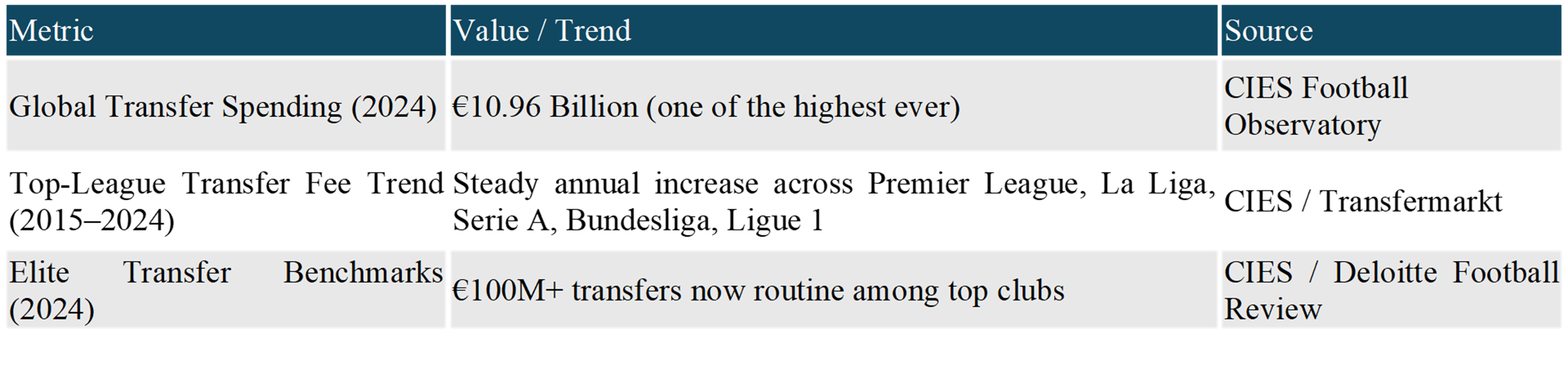
- Transfer Market Inflation: Transfer fees and wages have surged across the last decade, increasing amortization costs and tightening financial flexibility.
Table 6 Transfer Market Inflation Metrics
Appendix (Ownership & Governance)
Ownership Structure:
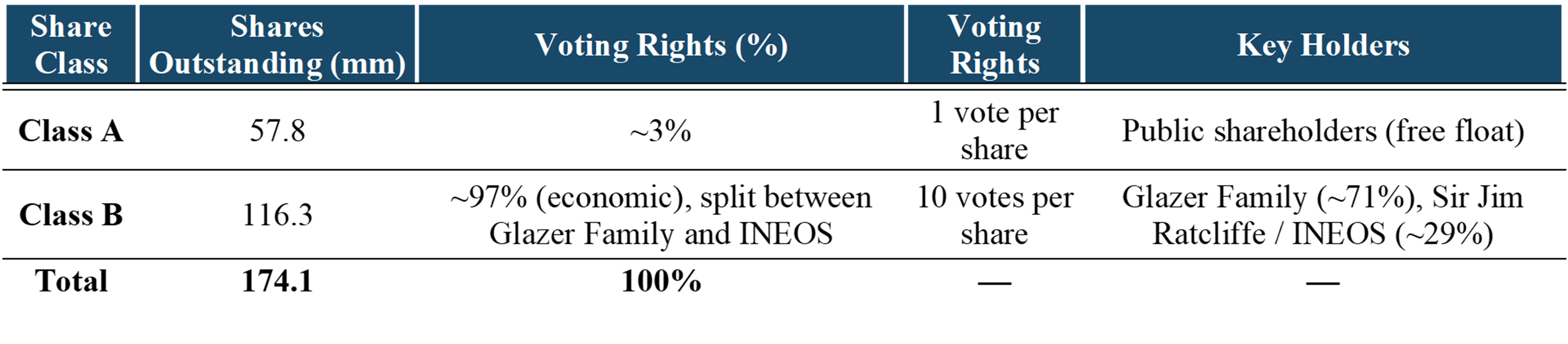
Manchester United operates under a dual-class share structure established during its 2012 NYSE initial public offering. This structure separates economic ownership (Class A and B shares) from voting control, granting disproportionate influence to the club’s long-time owners.
Table 7 Manchester United Ownership Structure (2025)
Source: Company Filings, Gabelli Funds
Control & Governance:
The Glazer family retains effective control of Manchester United through its Class B shares, each carrying ten times the voting power of a Class A share. As a result, the Glazers and INEOS collectively determine board composition and major corporate decisions, including executive appointments, dividend policy, and potential strategic transactions. In early 2024, Sir Jim Ratcliffe finalized the acquisition of a ~25% economic stake (roughly 28 % ownership post further investments) via his INEOS Sports investment arm.
While the dual-class structure ensures continuity and strategic stability, it limits Class A shareholder influence on key matters. This has been a point of contention among some institutional investors, particularly regarding transparency and capital allocation. Nevertheless, the 2024 INEOS transaction introduced greater accountability and professional oversight of football operations, signaling incremental progress toward a more balanced governance framework.
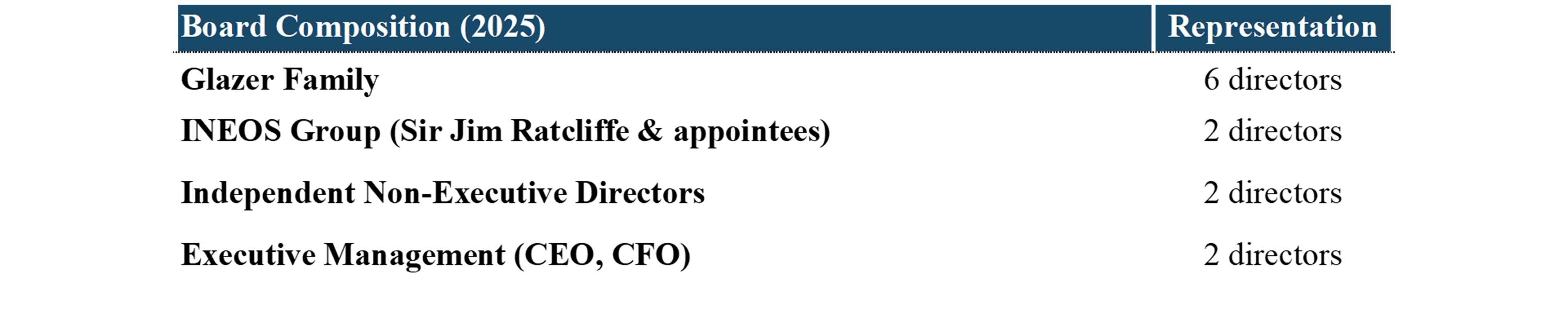
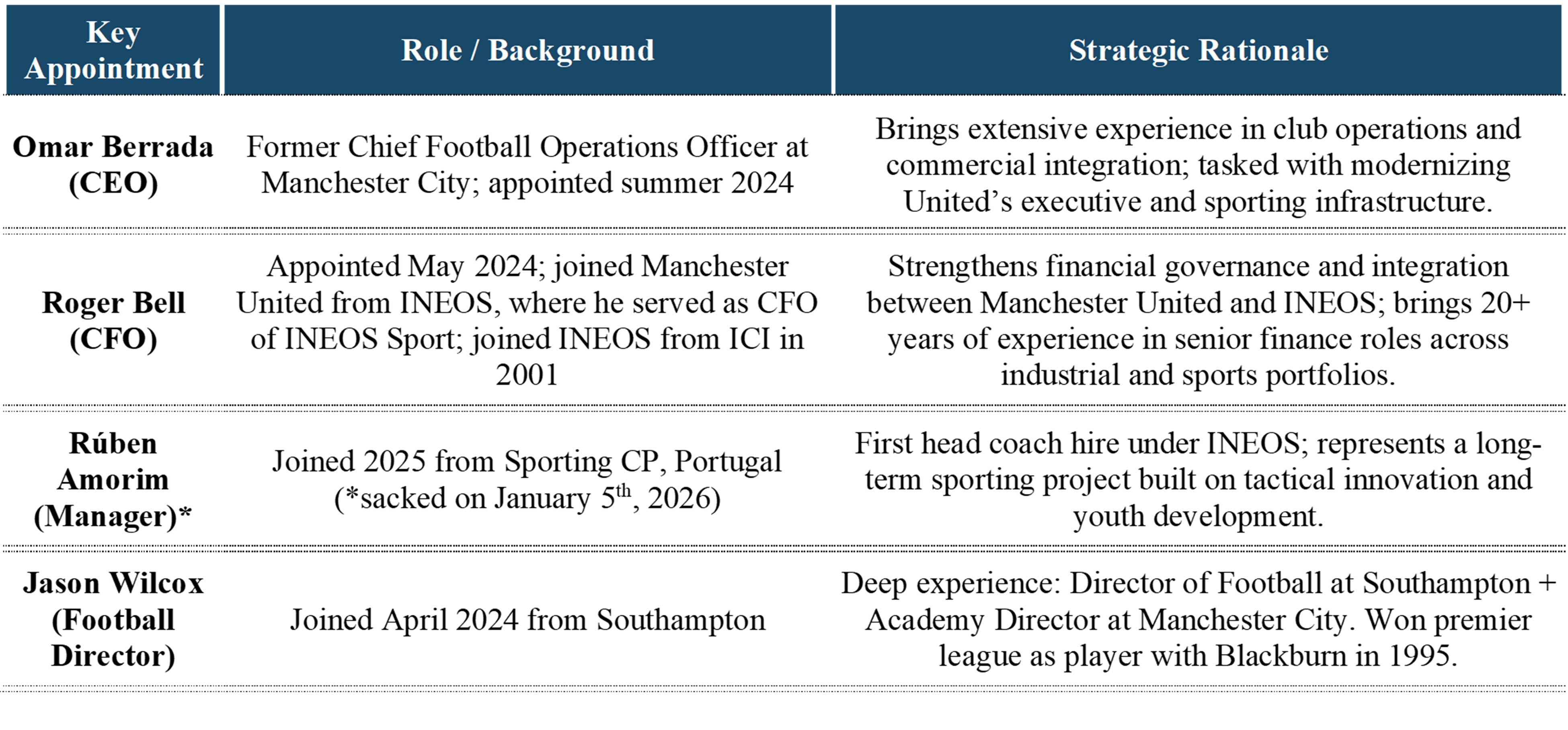
As of 2025, Manchester United’s board includes representatives from both the Glazer family and INEOS, alongside independent non-executive directors. The club’s Chief Executive Officer, Omar Berrada joined from cross-town rivals Manchester City in 2024.
Exhibit 11 Board of Directors Composition
Source: Company Filings, Gabelli Funds
Appendix (INEOS Sporting Control & Leadership Overhaul)
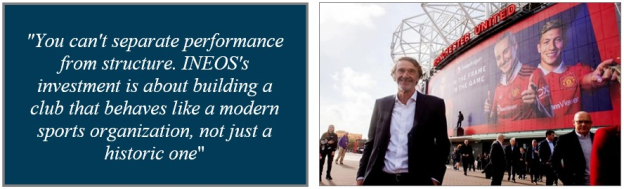
In early 2024, Manchester United entered a transformative phase with the minority stake sale to Sir Jim Ratcliffe and INEOS Sport. The transaction not only brought fresh capital but also established a new governance framework that granted INEOS operational control over the club’s football operations. While the Glazer family retained oversight of commercial, media, and financial activities, INEOS assumed responsibility for all sporting-related decision-making, including player recruitment, academy development, and first-team performance strategy.
The Glazer family retains effective control of Manchester United through its Class B shares, each carrying ten times the voting power of a Class A share. As a result, the Glazers and INEOS collectively determine board composition and major corporate decisions, including executive appointments, dividend policy, and potential strategic transactions. In early 2024, Sir Jim Ratcliffe finalized the acquisition of a ~25% economic stake (roughly 28 % ownership post further investments) via his INEOS Sports investment arm.
Exhibit 12 Manchester United Leadership (2025)
Source: Company Filings, Gabelli Funds
191 MASON STREET GREENWICH, CT 06830 Gabelli Funds TEL (914) 921-5000
This whitepaper was prepared by Alec Boccanfuso. The examples cited herein are based on public information and we make no representations regarding their accuracy or usefulness as precedent. The Research Analyst’s views are subject to change at any time based on market and other conditions. The information in this report represent the opinions of the individual Research Analyst’s as of the date hereof and is not intended to be a forecast of future events, a guarantee of future results, or investments advice. The views expressed may differ from other Research Analyst or of the Firm as a whole.
As of September 30, 2025, affiliates of GAMCO Investors, Inc. beneficially owned 1.36% of Manchester United Class A Shares and less than 1% of all other companies mentioned in this report.
Important Disclosures
- Shares of this ETF are bought and sold at market price (not NAV) and are not individually redeemed from the fund.
- Buying or selling ETF shares may require additional fees such as brokerage commissions, which will reduce returns.
- These additional risks may be even greater in bad or uncertain market conditions.
You should consider the ETFs’ investment objectives, risks, charges and expenses carefully before you invest. The ETF’s’ Prospectus is available from G.distributors, LLC, a registered broker-dealer and FINRA member firm, and contains this and other information about the ETF, and should be read carefully before investing.
Distributed by G.distributors, LLC, a registered broker dealer and member of FINRA.
This whitepaper is not an offer to sell any security nor is it a solicitation of an offer to buy any security.
Investors should consider the investment objectives, risks, sales charges and expense of any fund carefully before investing.
For more information, visit our website at: www.gabelli.com or call: 800-GABELLI
800-422-3554 • 914-921-5000 • Fax 914-921-5098 • info@gabelli.com