
– 2026 Outlook –
Geopolitical tensions are keeping crude prices elevated, while natural gas prices remain volatile due to weather.
The crude market was oversupplied by 2.2 million barrels in 2025. We expect the oversupply to increase to 2.3 million barrels in 2026. Long-cycle offshore projects from Brazil and Guyana began coming online in 2025. This trend will continue in 2026. OPEC+ members are continuing to unwind their voluntary production cuts. While they paused in 1Q’26, they expect to resume in 2Q’26 and to unwind at least another 1.0 million b/d. Finally, President Trump removed Nicolas Maduro as President of Venezuela and wants to increase Venezuela’s supply to generate funds to rebuild the country. Trump is also seeking to broker a peace deal between Russia and Ukraine, which will return sanctioned Russian crude oil to the market.
Demand for crude oil from OECD countries remains lackluster due to tariffs and trade uncertainties. Also, China’s economy remains weaker than expected. It has been actively filling its SPR with discounted, sanctioned supplies from Iran, Russia, and Venezuela, which has offset the lower economic demand.
Absent geopolitical events or supply disruptions, we project Brent crude prices to trade between $60 and $70 and WTI crude prices to range between $55 and $65 in 2025. For Henry Hub, our range is $3.50- $ 4.50/MMBtu.
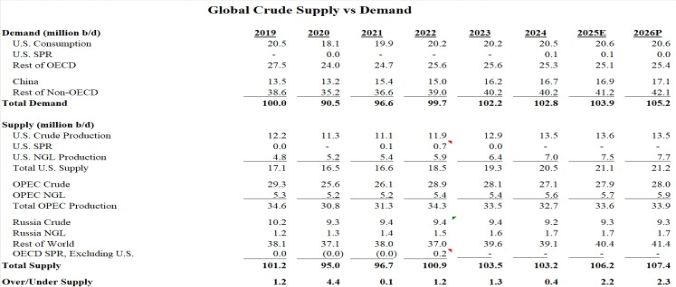
Global Crude Oil Supply vs. Demand
In our base-case scenario, we project global demand in 2026 to grow by ~1.3 million b/d. Demand growth will be driven by higher consumption in emerging markets (mainly India and the Middle East), growth in petrochemicals, increasing demand for distillates and jet fuel, and China continuing to buy crude for storage.
- We estimate U.S. demand will remain unchanged at 20.6 million b/d, as growth in jet fuel, distillates, and petrochemicals offsets l. for transportation fuels (primarily due to increased fuel efficiency). The refilling of the SPR may provide an additional source of demand.
- We expect India’s crude demand to grow by 250,000 b/d to 6.0 million b/d. Increased economic activity and consumer spending are driving higher demand for distillates, jet fuel, and transportation fuels.
- Our forecast for China is growth of 200,000 b/d (to 17.1 million b/d), driven by new refineries, petrochemicals, and the SPR build.
Table 1
Source: U.S. EIA, OPEC, IEA, JODI, and Gabelli Funds estimates
We project global supply growth of ~1.2 million b/d, driven by Guyana, Brazil, Canada, and Argentina.
- We estimate U.S. liquid production of 21.2 million b/d, up ~100,000 b/d vs. 2025, driven primarily by natural gas liquids. We project U.S. crude production of 13.5 million b/d, down 100,000 b/d vs. 2025.
- Guyana is currently producing ~900,000 b/d after ExxonMobil/Chevron bought online its fourth development project, Yellowtail, in late 2025. In 2026, the country’s fifth project, Uaru, will come online, adding another 250,000 b/d.
- Brazil continues to develop its offshore resources. We see at least eight new projects contributing to Brazil’s production growth in 2026 and 2027. For 2026, we estimate a net increase of about 480,000 b/d, followed by another 320,000 b/d increase in 2027.
- We project Canadian production to increase by another ~160,000 b/d driven by the launch of the 600,000 b/d Trans Mountain (TMX) pipeline expansion in 2024.
- Shale production from Argentina increased from ~245,000 b/d in 2022 to over 500,000 b/d in 2025. We estimate Argentina’s production will grow another 130,000 b/d in 2026 as more takeaway capacity comes online, removing the bottlenecks that previously limited growth.
Natural Gas
The outlook for the natural gas market remains favorable, driven by new LNG export facilities and power growth. We expect the domestic market to swing from 1.2 bcf/d oversupply in 2025 to 1.2 bcf/d undersupply this year.
Table 2 Natural Gas Domestic Supply vs. Demand
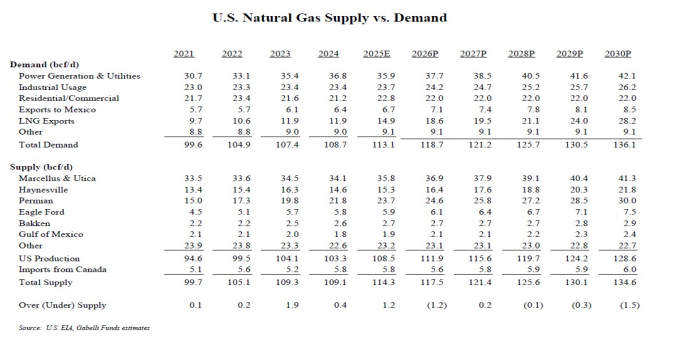
Demand for domestic natural gas is projected to increase from 113.1 bcf/d in 2025 to over 136 bcf/d in 2030.
- Natural gas demand for power is projected to increase ~6.0 bcf/d between 2025 and 2030.
- LNG exports are projected to increase 13.5 bcf/d between 2025 and 2030.
- Supply growth will be driven by the Appalachia, Haynesville, and the Permian basins.
- Haynesville is the swing supplier and is needed to meet the expected demand growth, especially for LNG. However, the natural gas price Haynesville operators need for a new well to breakeven is $3.50.
Global E&P Capex
Our 2025 global E&P capex forecast is $415.8 billion, down 2.1% YoY.
Table 3
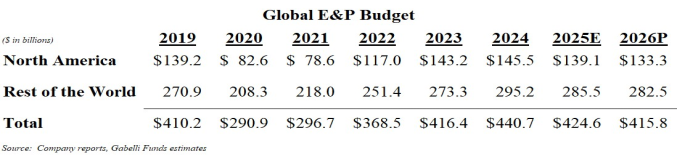
- We project that North American E&P spending will decline by 4.2%. This forecast assumes spending by the majors declines by 7.5% and U.S. independents and privates reduce spending by 3%.
- We estimate international spending will decline by 1.0%, driven by a steep decline in Russia. Excluding Russia, we project international spending to be nearly unchanged YoY. The Middle East is the only region we project will increase capital expenditure. We project spending in the Middle East to increase by 5.0%.
Oversupplied Crude Market
In 2025, global production exceeded demand by 2.2 million b/d. Global supply increased by 3.0 million b/d to 106.2 million b/d, led by growth in production from non-OPEC nations such as Brazil, Guyana, Argentina, Canada, Norway, and the U.S. In 2025, demand increased by 1.1 million b/d, led by growth in India, developing countries, and China purchasing inventory for its SPR.
In 2026, we estimate global supply will grow nearly 1.0 million b/d to 107.5 million b/d. Like 2025, supply growth will be driven by additional offshore projects coming online in Brazil, Guyana, Norway, and the U.S. Gulf of Mexico/America. We do not believe a Russian/Ukrainian peace deal would have a significant impact on supply (almost all of Russia’s crude supply is already on the market, albeit at discounted prices). Further, we do not expect production from Venezuela to materially increase in the near term due to the country’s underinvestment in its oilfields since 1999.
We also project global demand to grow 1.0 million b/d to 105.5 million b/d in 2026. Our demand assumption is based on 2.0% real GDP growth, continued demand from India, and China’s continued purchase of 1.0 million b/d for its SPR.
Therefore, the oversupply balance of 2025 will carry over into 2026, leaving the market oversupplied again and putting pressure on crude prices. While acknowledging the imbalance, we expect WTI crude prices to remain in a range of $55 to $65, driven by U.S. shale operators’ discipline, declining OPEC+ spare capacity, and geopolitical risks. We believe that if WTI prices fall below $55, U.S. shale production will decrease, which may not be politically feasible. The Trump administration wants an ample crude supply on the market to keep oil prices low. We believe that oil prices in the $55 to $65 are just above U.S. shale breakeven (which we estimate to be around $55-60) and is sufficient to maintain or grow production by 1-2%. This crude range also incentivizes sufficient production to help maintain a national average gasoline price of $2.50 to $3.50 per gallon for consumers.
U.S. Strategic Petroleum Reserve (SPR)
The SPR stood at ~413.5 million barrels at the end of 2025, compared to ~640 million barrels at the beginning of the Biden administration. As a reminder, President Biden released 180 million barrels from the SPR in 2022 to help lower consumer gasoline prices. The SPR reached a trough of 346.8 million barrels in July 2023.
President Trump reiterated his desire to refill the Strategic Petroleum Reserve (SPR). However, Congress only approved $171 million to refill the SPR in the One Big Beautiful Bill Act passed in 2025. At current prices, the Department of Energy can only repurchase around 3.0 million barrels.
Nevertheless, in an interview at a brokerage conference in early January, Energy Secretary Chris Wright acknowledged that the pace of SPR replenishment is slower than he would like. The Administration is working on alternative arrangements to refill the SPR with private companies.
Table 4 U.S. Strategic Petroleum Reserve Inventory
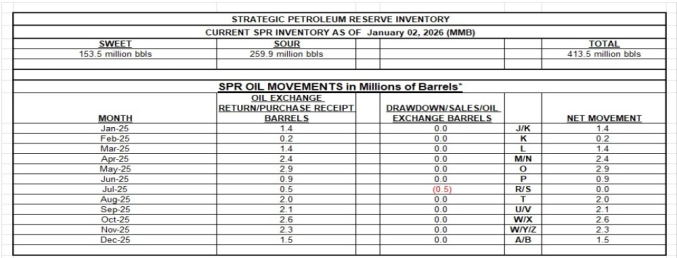
Source: Department of Energy
OPEC+
OPEC+ (consisting of OPEC, Russia and nine other countries) is producing ~42.8 million b/d, which includes 10.1 million b/d from Saudi Arabia and 9.3 million b/d from Russia.
In a surprise move in April, members of the group that had voluntarily withheld production from the market began returning barrels to the market. By December, the group had returned 2.6 million b/d of the ~6.0 million b/d held back from the market. In reality, much of the production that was supposedly returned to the market was already in the market (we estimate ~1.5 million b/d) due to overproduction by some OPEC members (namely Kazakhstan, Russia, the UAE, and Iraq). Therefore, only ~1.0 million b/d of production has been added by the group. The group decided not to unwind further for 1Q’26 and will re-evaluate the unwinding program in March. If Brent crude prices are near $60 per barrel, we believe OPEC will resume voluntary production curtailments in the market beginning in 2Q’26.
However, we believe the more significant news from OPEC+ came out during its December meeting. In that meeting, the group agreed to an annual third-party audit of its maximum sustainable capacity. The audit will certify the number of barrels each member can bring online within 90 days and maintain that level for a year. The audit will help the group set output quotas more closely aligned with each country’s actual capacity, boost the credibility of future production deals, and serve as a reference point for establishing production baselines in 2027. According to Saudi Arabia’s oil minister, the audit will highlight and quantify the group’s spare capacity, provide market assurances, and reward those who invest in production. As a result, group members will need to invest in production capacity to secure large production quotas, benefiting large service and equipment companies such as SLB, Baker Hughes, and Halliburton.
China
Despite a weaker consumer environment and a tepid economic recovery, China’s crude oil consumption rose to 16.9 million b/d in 2025, up from 16.7 million b/d in 2024. China’s crude demand was better than we had projected, driven by purchases for its SPR. These purchases helped absorb the additional production added to the market by OPEC+ members and helped bolster crude prices. We estimate the country bought 100 million barrels of oil for storage in 2025.
Exhibit 1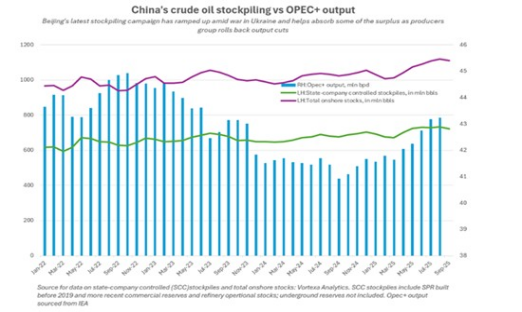
In 2023, the Chinese government issued directives to state-owned firms to acquire 140 million barrels at prices below $80/bbl for strategic reserves, with deliveries to be made through March 2026. The government has targeted reserves equal to six months of net imports. We believe China is stockpiling crude oil because it sees an opportunity and a need to protect against supply shocks and geopolitical risk, to support its own energy security and long-term strategic position, and to take advantage of discounted supplies from Russia, Iran, and Venezuela.
Exhibit 2
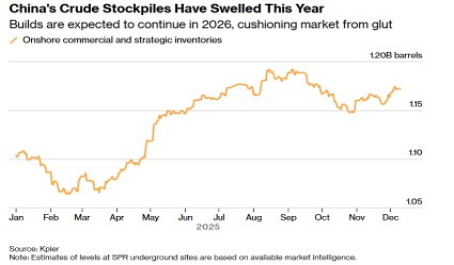
China is accelerating the construction of new SPR facilities with 180 to 190 million barrels of incremental storage capacity. We estimate China will add 1.0 million b/d of crude to its SPR in 2026.
Geopolitical Events and Their Impact on Crude Prices
Geopolitical events kept crude prices elevated in 2025. There are three geopolitical events that may impact supply in 2026.
Venezuela
On the morning of January 3rd, the Trump Administration removed Nicolas Maduro as President of Venezuela. Venezuela holds the world’s largest untapped oil reserves, with 300 billion barrels. To put this in context, Saudi Arabia’s oil reserves are 267 billion barrels, while the U.S.’s are 45 billion.
Table 5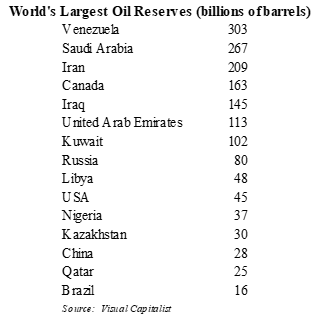
Due to Venezuela’s dilapidated oil industry and infrastructure, it will take time for production to increase meaningfully. However, we expect the naval attack and blockade and eventually sanctions to be lifted, allowing much, if not all, of the Venezuelan oil stuck at sea and in bonded storage to become available to the market. There are about 22 million barrels of Venezuelan oil in floating storage and 72 million barrels on the water (in transit, with nowhere to go due to sanctions and blockade) that may become immediately available for export. Recently, President Trump announced that the U.S. will sell 30-50 million barrels of oil to Venezuela at market prices, with the proceeds to be managed by the U.S. government.
Exhibit 3
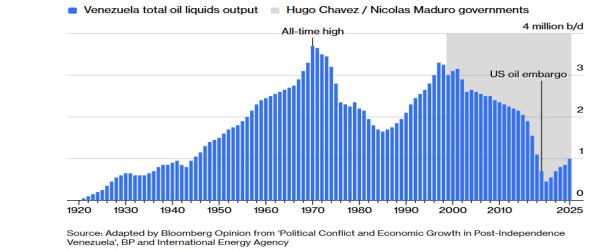
In the short term, we expect Venezuela’s national oil company, Petroleos De Venezuela (PDVSA) to continue operating assets as usual, under U.S. interim governance. Venezuela is currently producing 800-900k b/d. Before Hugo Chavez took over the country in 1999, it produced 3.0 million b/d. The decline in production is due to sanctions (which have limited the country’s ability to procure equipment and services to maintain its fields) and underinvestment. As sanctions are lifted and service providers and expertise return to the country, we believe production can increase by 1.5 million b/d within 3-6 months. Any further increase in production beyond that will require a larger investment and more time.
The initial beneficiaries of the change in regime in Venezuela are the current major producers (Chevron, Repsol and Eni), oil service companies with international operations (SLB, Halliburton, Baker Hughes, and NOV), Gulf Coast refiners (Valero, Marathon Petroleum and Phillip 66), and Guyana. We believe Canadian E&P producers (Suncor Energy, Canadian Natural Resources and Cenovus Energy) and Chinese teapot refineries are losers in the post-Maduro era.
Iran
While the geopolitical risk premium related to Iran decreased in the 2H’25 after the U.S. destroyed its nuclear facilities, Iran remains a hotbed for tensions. Iran produces 5.5 million b/d of total liquids (crude oil, condensate, and NGL), including ~3.5 million b/d of crude oil. The Iranian regime is under unprecedented strain, grappling with internal dissent, economic deterioration, and waning regional influence. Though a complete collapse remains a low-probability event, the rising risk of an uncertain supply outlook is keeping oil prices elevated. Any disruption, through factional conflict, export curbs, or external intervention, could prompt near-term price spikes. During the last revolution, Iranian crude production declined from 5.3 million b/d in 1978 to 1.4 million b/d in 1981.
Exhibit 4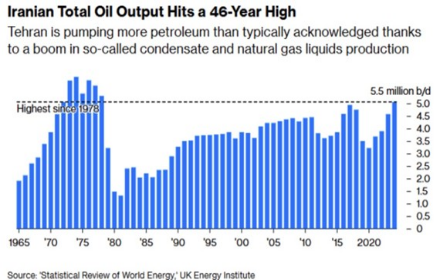
The potential for Iran to disrupt shipping through the Strait of Hormuz is one of the most significant geopolitical risks facing global energy markets. Approximately 20% of global crude and refined crude products and 30% of global LNG supplies transit through the Strait of Hormuz.
Table 6
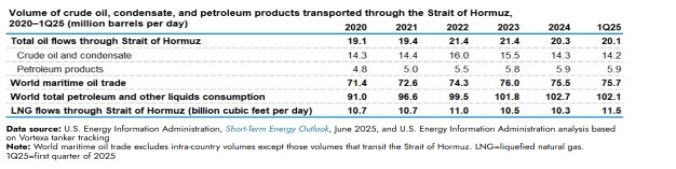
Iran has periodically threatened to interfere with or to even close the Strait of Hormuz. The specter of disruption has been sufficient to move markets in recent months, highlighting how geopolitical tensions can rapidly translate into price volatility and strategic reassessment among producers and consumers alike. We believe the likelihood of a prolonged, complete closure is considered low because Iran would incur substantial self-inflicted economic and diplomatic costs, particularly with key trading partners like China, and because of the deterrent posture of U.S. and allied naval forces in the region. However, even limited disruptions, such as attacks on tankers, mining activities, or selective closures, could elevate freight costs, raise insurance premiums, and inject a geopolitical risk premium into crude and LNG prices. In the event of a more severe disruption, both crude oil and LNG prices could spike significantly.
Russia/Ukraine War
The war between Ukraine and Russia remains ongoing. The price for crude and crude products embeds a geopolitical risk premium to reflect persistent uncertainty, elevated volatility, and heightened sensitivity to supply disruptions. In 2025, Ukraine intensified its drone and long-range strike campaign against Russian oil refineries, pipelines, and related facilities. These attacks are designed to disrupt Russian export capacity and revenue sources that fund the war effort. The campaign has had a noticeable impact on diesel availability and prices, knocking out about 1.0 million b/d of refining throughput and reducing diesel and other refined product production. This reduced output has contributed to higher wholesale and retail diesel prices within Russia. The Russian government implemented export bans and restrictions on diesel to prioritize domestic supply. This has reduced the supply of Russian diesel available to European markets and has contributed to upward pressure on refined product prices. U.S refiners were beneficiaries of the reduction in Russian diesel and gasoline exports.
The European Union phased out imports of Russian seaborne crude oil in December 2022 and refined products in February 2023. However, the European Union still imported approximately 35 billion cubic meters of Russian gas (or ~15% of total EU LNG imports) and 15 million tons of LNG in 2025 (or 15% of total EU pipeline gas imports), down from roughly 45% before 2022, before Russia invaded Ukraine. Last year, EU members reached an agreement to phase out all imports of Russian LNG by the end of 2026 and pipeline natural gas in 2027. EU members, through this agreement, intend not only to reduce dependency on Russia but also to curtail revenue flows that support Russia’s war efforts. Accordingly, EU member states are compelled to accelerate alternative supply arrangements, such as increasing LNG imports from the U.S., Qatar, and other non-Russian sources, and need to bolster domestic sources and storage.
Natural Gas Fundamentals Remain Favorable in the Long Term
Natural gas prices are volatile in the short term due to weather. Henry Hub reached $5 on 1/21/2026 after trading at $3 on 1/18/2026. U.S. weather has fluctuated from a warm November to a cold December to a mild start to January, and most recently, to the onset of bitter cold. The most recent change has caused a significant market shift. Temperatures over the next two weeks are forecast to be more than 30% colder than usual. As a result, we anticipate substantial inventory draws over the next month. Additionally, the cold weather may result in freeze-offs of about 60 bcf across the Appalachian, Bakken, and Permian regions. This weather change could materially shift natural gas inventory balances. At this rate, we project inventory at the end of March 2026 to be near 1.65 Tcf (a 10% deficit to the 5-year average) and inventory at the end of Summer 2026 to be around 3.68 Tcf (a 2% deficit to the 5-year average).
Regardless of weather, the longer-term fundamentals of natural gas remain favorable, and we project significant natural gas demand growth through 2030. Between 2025 and 2030, total natural gas demand is estimated to grow by 29 bcf/d, driven by LNG and pipeline exports to Mexico and by growth in industrial and electric power demand.
Exhibit 5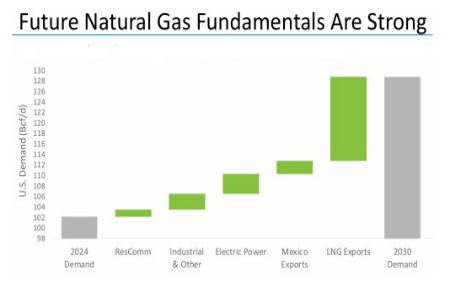
LNG Export Boom
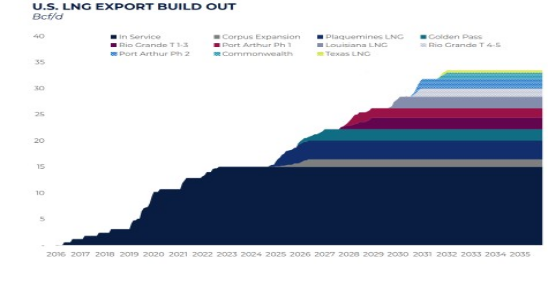
The U.S. had ~17 bcf/d of nameplate LNG in service at the end of 3Q’25, with another 16 bcf/d of additional capacity under construction expected to come online by 2030. In 2026, Exxon/Qatar’s Golden Pass LNG train 1 is expected to begin shipping cargoes in March, train 2 is projected to come online in the summer, and train 3 is targeted to come online by the end of the year. Meanwhile, Venture Global’s Plaquemines LNG phase 2 will come online throughout the year. Finally, Cheniere Energy’s Corpus Christi Stage 3, trains 5, 6, and 7 will also come online throughout the year. In all, about 36 mtpa of LNG supply will be added in 2026.
Exhibit 6 U.S. LNG Export Capacity Build Out
Source: EQT
Power Demand
Following 15 to 20 years of stagnant demand as higher energy efficiency offset load growth from population and economic growth, a new electricity growth cycle has begun. Between 2025 and 2040, electricity demand is projected to increase by more than 30% to around 5,500 TWh, driven by new data centers, generative artificial intelligence, onshoring of manufacturing, and the broader trend of electrification.
Exhibit 7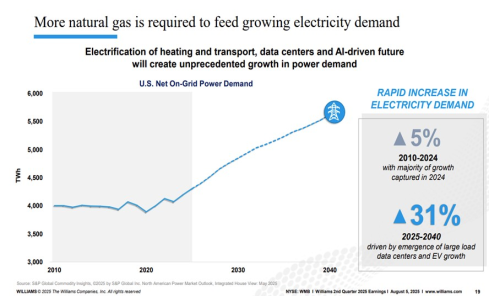
Source: The Williams Companies
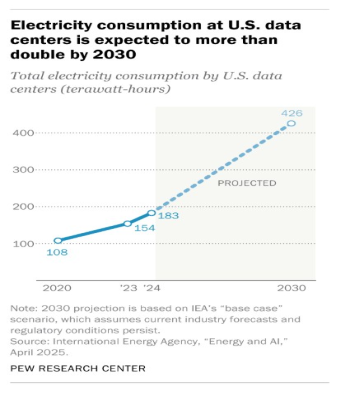
A significant source of power demand growth is the proliferation of data centers for cloud and AI infrastructure. According to the IEA, U.S. data centers consumed ~185 terawatt hours (TWh) of electricity in 2024, or 4% of U.S. total electricity consumption. By 2030, this figure is projected to grow by 133% to 426 TWh.
Exhibit 8
While increased power demand will be met by all fuel types (natural gas, nuclear, solar and wind), natural gas generation accounts for 42% of total power generation and is expected to meet a large share of electricity growth. Natural gas plants can be built in 3-5 years, compared to nuclear, which can take 10 years or more. Solar and wind can supply intermittent power, but not baseload.
Table 7
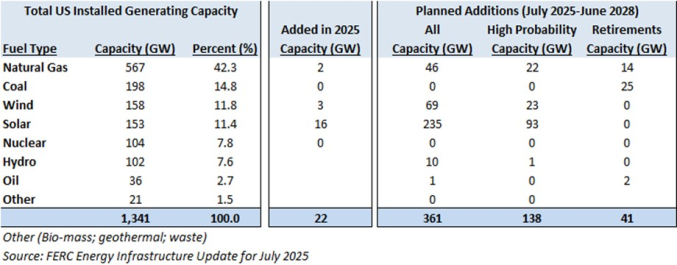
Due to supply chain constraints, there is a backlog of 3 to 5 years for turbine engines. Therefore, only minimal natural gas-related power plants were constructed in 2024. Looking ahead, the EIA projects developers plan to add 46 GW of natural gas capacity by 2028. We estimate a power plant running continuously at 1 GW for 24 hours requires 135-160 mmcf/d. By 2028, the 46 GW of new capacity could require an incremental 10 bcf/d of natural gas.
Accordingly, natural gas demand driven by power growth is projected to increase from 35 bcf/d to over 45 bcf/d by 2030. However, if there is a more aggressive data center build-out, the incremental demand could increase to 18 bcf/d.
Exhibit 9
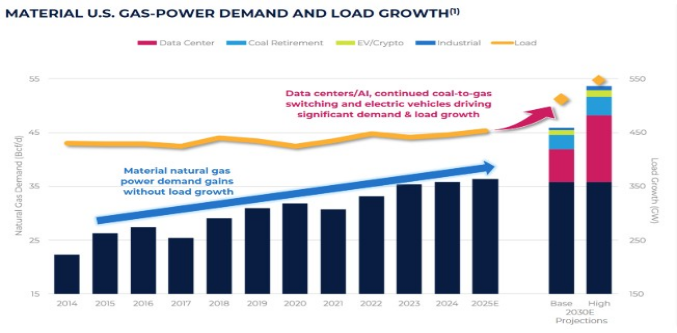
Source: EQT Corporation
Global LNG Supply Glut is Here
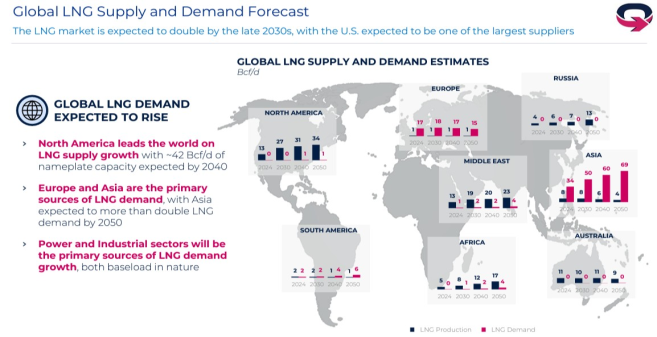
Global LNG demand grew ~5.0% in 2025 to 423 million tons per annum (mtpa). Demand is projected to grow an additional 5% in 2026 to ~444 mtpa. Asia will remain the primary driver of incremental demand. China and India are expanding LNG import infrastructure and distribution networks to support industrial and residential consumption. In Europe, the availability of LNG helped offset declining Russian gas imports and has tempered the region’s natural gas price volatility despite colder weather and lower storage levels.
Global LNG supply increased 6 mtpa in 2025 to 446 mtpa. Between 2026 and 2031, an average of 40 mtpa per year of new capacity will come online each year. Projects coming online in 2026 include Golden Pass, Qatar North Field East, and Corpus Christi Stage 3.
Table 8 Global LNG Projects Coming Online 2026-2031
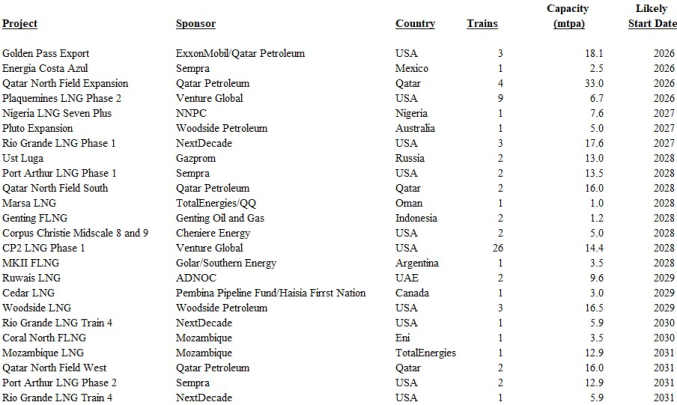
Source: Company reports, Gabelli Funds estimates
Global LNG prices will likely experience downward pressure in 2026 as new export capacity comes online. This structural surplus will likely compress spot and medium-term contract prices, narrowing the premium Asian buyers have historically paid over Henry Hub-linked cargoes. However, lower LNG prices should stimulate incremental demand and support long-term demand growth in Asia by making gas more competitive with coal in power generation and industrial applications, particularly in price-sensitive markets such as India, Pakistan, and Southeast Asia.
For exporters, the oversupply environment will test the economics of higher-cost projects and could delay or defer sanctioning of new capacity until demand growth catches up. In December 2025, Energy Transfer canceled its Lake Charles LNG project.
Longer term, the outlook for LNG remains favorable. Global LNG demand is expected to grow 3% annually through 2050 to ~720 mtpa, driven by economic growth in Asia, gas adoption in heavy industry and transport, and energy transition needs in which gas displaces higher-carbon fuels.
Exhibit 10 Global LNG Supply and Demand
Source: EQT Corporation
Themes for the E&P Sector in 2026
- Continue to favor natural gas operators over oil operators. We maintain a favorable view of the natural gas market. Price must increase to incentivize supply to meet the upcoming demand surge. As natural gas prices rise, many natural gas operators will benefit, generating improved earnings and higher free cash flow. Once this scenario takes hold, we expect natural gas E&P companies to return cash to shareholders by increasing dividends and repurchasing shares. We believe the risk to oil prices is biased to the downside, given President Trump’s focus on affordability.
- The Haynesville Rebound. Given the new LNG export capacities coming online and increased industrial demand, Haynesville’s importance will increase. Midstream companies Kinder Morgan, The Williams Companies, and DT Midstream noted they are seeing a pickup in activity in the basin, which is expected to continue into 2026. Haynesville typically requires a Henry Hub natural gas price of $3.50 to break even, which may provide a floor for natural gas prices. Further, Western Haynesville will be of particular interest, as these wells are more service-intensive, further tightening the oilfield service market.
- Peak well production? E&P operators are drilling more third- and fourth-tier acreages, which are typically less productive and more costly than first-tier acreages. Well productivity is one of the key drivers of E&P capital efficiency. In 2025, well productivity improved in basins with modest activity levels, namely Eagle Ford, Powder River, and Anadarko. However, well productivity in the Permian basin (which accounts for nearly 60% of wells drilled) has been leveling out or declining recently. While E&P operators have referenced several new technological advances that could further improve efficiency and potentially enhance well productivity, such as continuous pumping, ExxonMobil’s patented lightweight proppant, and Chevron’s chemical additive, geological limitations may ultimately offset these advances. We will be monitoring this development in 2026.
- Maintain capital discipline. President Trump wants to lower crude prices to $50 per barrel. However, shale wells need an oil price of $55-60/bbl for a new well to break even. We believe E&P companies will continue to prioritize returns and FCF over production growth. Most recently, Continental Resources, a private operator in the Bakken basin, announced plans to halt drilling for the first time in 30 years due to low prices. In the Permian Basin, Diamondback Energy plans to operate under a “yellow light” scenario at current prices, which is characterized by maintaining production flat while prioritizing capital discipline and shareholder returns.
- Deals, deals, and more deals. Total announced M&A was about $50 billion in 2025, down from $100 billion in 2024. Over the past three years, energy sector M&A totaled approximately $350 billion. The slowdown in M&A in 2025 reflects fewer attractive acquisition targets and uncertain commodity prices. We expect consolidations to continue in 2026 as companies look to boost inventory and scale. Based on company announcements and media reports, we estimate that about $70 billion of U.S. upstream assets are currently on the market for sale. The latest speculation links Coterra Energy with Devon Energy. This combination would have a market capitalization of $45 billion. We view this transaction as likely given their acreage overlap in the Permian. Also, Repsol was reportedly considering strategic options for its upstream unit, including a merger with APA. Over time, we expect consolidation to yield fewer, higher-quality E&P companies. U.S. majors will remain the primary consolidators.
Themes for Oilfield Service and Equipment Sector in 2026
- Opportunity in Venezuela. Oilfield service companies stand to benefit substantially when Venezuela’s beleaguered oil sector reopens and attracts investment. Decades of under-investment and neglected infrastructure have created significant demand for drilling, completion, well maintenance and production optimization services. Estimates indicate that rebuilding Venezuela’s upstream and midstream assets would require $100 billion over the next 10 years, or $10 billion per year. We believe Schlumberger, Halliburton, Baker Hughes, and Weatherford are well-positioned to benefit from increased investment in Venezuela.
- A tighter OFS market. Low capital investment over the past few years, equipment attrition, and increased service intensity may cause a tighter market for oilfield services. Over the past 5 years, service providers have reduced capital expenditure and remained disciplined in adding new equipment. For example, Halliburton and SLB maintained capital expenditure at 5-6% of revenue, down from 10-15% ten years ago. At the same time, older equipment, such as diesel frac spreads, is being retired or has been relocated for international jobs. As U.S. E&P operators increase drilling in tier 3 and 4 acreages, which are more service-intensive, and international unconventional activity picks up, the oilfield service market may be tighter than many expect, allowing service companies to boost prices and enhance margins.
- Shale goes international. International drilling and completion activity will be boosted by international shale. The unconventional opportunity is migrating from the U.S. to international markets, particularly Saudi Arabia, the UAE, and Argentina. Saudi Arabia plans to complete 400-500 wells annually beginning in 2026 and 75,000 frac stages over the next several years. The UAE is partnering with SLB and Patterson-UTI in the Turnwell JV to drill and complete 144 wells in its initial phase, with a focus on speed-to-delivery. Finally, shale oil production in Argentina’s Vaca Muerta basin is hitting a new high. The expansion of the Oldelval pipeline and the advancement of the VMOS project are critical catalysts we believe will sustain service company activity levels. Recently, Continental Resources signed an agreement with Pan American Energy to acquire a non-operated interest in four blocks in the Vaca Muerta.
- Offshore remains favorable. Offshore awards and rig contracting paused in 2025 due to lower oil prices and rising costs. Offshore project FIDs were about $70 billion in 2025 vs. $87 billion in 2024, and subsea tree awards totaled 172 vs. 278 in 2024. Nevertheless, we believe the multi-year upcycle in offshore will remain intact. Rystad Energy, an independent research and business intelligence firm, estimates subsea spending will exceed $35 billion per year from 2026 through 2030. Further, Rystad estimates that 80% and 97% of the spending during this period is economically viable at oil prices between $40 and $60. In 2026, we expect increases in offshore project FID to $107 billion and subsea tree awards to 260.
- Recovery in Saudi Arabia activity. Since Aramco announced in January 2024 that it would maintain maximum sustainable capacity at 12.0 million b/d rather than boosting it to 13.0 million b/d, it has suspended 80 land rigs and 30 jackups, resulting in a meaningful decline in oilfield activity. With OPEC+ unwinding voluntary production cuts and Saudi Arabia’s plans to boost natural gas production capacity to almost 15 bcf/d (from 9.2 at the end of 2021), there are indications that oilfield activity in Saudi Arabia may resume. In November, Aramco notified Nabors (NBR) to return two suspended land rigs to service in 1H’26. Additionally, Helmerich and Payne (HP) was also notified not only to return 7 of its 26 suspended land rigs to service in 1H’26, but that incremental capacity may be needed in 2026. Also, Aramco awarded a phase 3 Jaffaruh contract to National Energy Service Reunited (NESR) in November. Combined with continued oil production capacity expansion in the UAE, Kuwait, and Iraq, equipment capacity could tighten quickly in the region, leading to higher pricing. Service companies well-positioned to benefit from higher activity in Saudi Arabia include SLB, Halliburton, Baker Hughes, Weatherford, and NOV.
- Power generation provides a new avenue for growth. Data centers are a key driver of electricity growth. The rapid expansion of hyperscale data centers, combined with growing concerns over grid reliability, the electrification of industrial demand, and the need to build power infrastructure on a timely basis, is driving increased demand for modular, off-grid, and hybrid power solutions. However, power operators cannot build the electricity needed to power these data centers fast enough (speed-to-power) as large industrial turbines (300 MW+) are sold out through 2030. Through acquisitions and organic growth, several oil service companies have entered the power generation market to capitalize on these significant growth opportunities. OFS companies can deploy medium-sized turbines and reciprocating engines in a fraction of the time, leading them to partner with data centers. For example, VoltaGrid announced a long-term agreement with Oracle, and Solaris entered into a 15-year JV agreement with xAI. These efforts have generally led to sharp share-price outperformance in 2025, as distributed power generation offers a differentiated earnings stream and margin uplift potential amid moderating upstream capex. We expect this trend to continue in 2026. Primary beneficiaries of this trend include: Liberty Energy, Solaris Infrastructure, ProPetro, Halliburton (via its 20% investment in Voltagrid), and Atlas Energy.
191 MASON STREET, GREENWICH, CT 06830 Gabelli Funds TEL (914) 921-5100
This whitepaper was prepared by Simon T. Wong, CFA. The examples cited herein are based on public information and we make no representations regarding their accuracy or usefulness as precedent. The Research Analyst’s views are subject to change at any time based on market and other conditions. The information in this report represent the opinions of the individual Research Analyst’s as of the date hereof and is not intended to be a forecast of future events, a guarantee of future results, or investments advice. The views expressed may differ from other Research Analyst or of the Firm as a whole.
As of September 30, 2025, affiliates of GAMCO Investors, Inc. beneficially owned less than 1% of all companies mentioned.
This whitepaper is not an offer to sell any security nor is it a solicitation of an offer to buy any security.
Investors should consider the investment objectives, risks, sales charges, and expense of the fund carefully before investing.
For more information, visit our website at: www.gabelli.com or call: 800-GABELLI
800-422-3554 • 914-921-5000 • Fax 914-921-5098 • info@gabelli.com