Overview
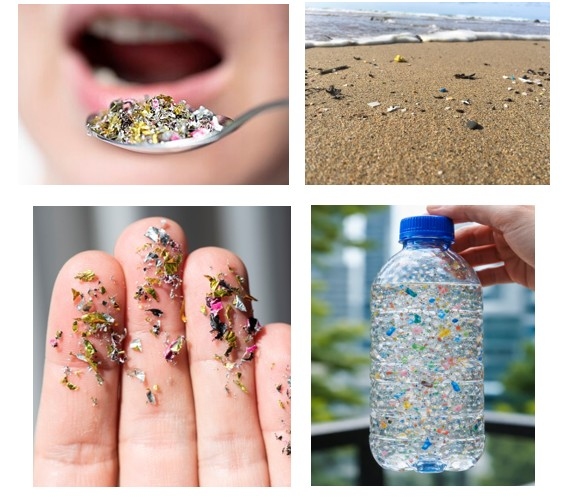
Microplastics are small plastic particles that range in size from 5 millimeters to 1 nanometer. Products and services designed to measure and manage these particles are in demand to manage the implications of microplastics pollution. Microplastics are emerging as a growing investment theme as governments and policymakers, utilities, and consumers are driving demand for filtration, testing, and alternative materials to mitigate microplastic pollution and potential health impacts.
From a regulatory perspective, restrictions on intentionally added microplastics in products in the U.S. are imminent and already enacted in the EU. In addition, emerging requirements to measure and monitor microplastics in water and wastewater are developing. Monitoring mandates create recurring demand, such as sampling, lab testing, sensors, and quality assurance and quality control to ensure accuracy. Treatment requirements drive longer-term CAPEX (membranes, plant upgrades for filtration) and OPEX (media replacement, energy usage, testing supplies).
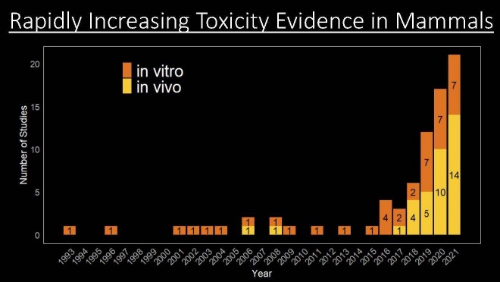
While rulemaking around microplastics is evolving, the health effects consensus remains steady on one topic: exposure is widespread. Research is still ongoing regarding causal links between exposure and health outcomes. A 2019 WHO report characterized risks as low, however in recent years, numerous high-impact studies have reported microplastics and nanoplastics in human blood, lungs, and placental tissue.
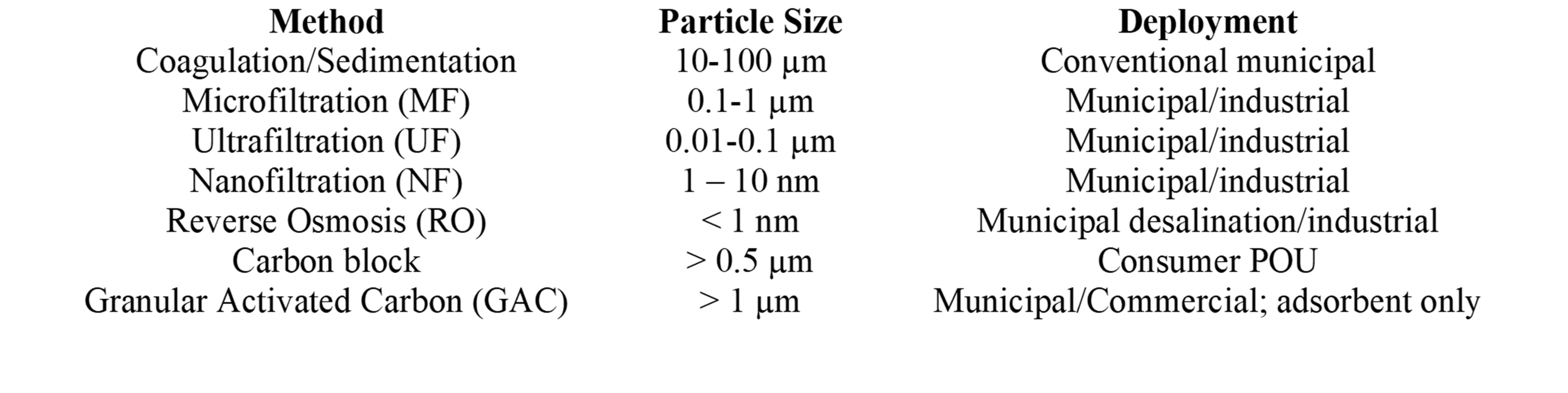
Removal of microplastics from water varies depending on the size of the particle. Conventional water treatment via filtration can remove the vast majority of larger microplastics. Smaller particles, such as sub-micron and nanoparticles require tighter membranes via nanofiltration or reverse osmosis for effective removal.
Companies specializing in membrane filtration, point-of-use water treatment, water quality instrumentation, water testing, and ultrapure water systems are well positioned to benefit from future efforts to remove microplastics from our drinking water. In addition, companies that focus on converting plastic waste to renewable energy as well as those generating biodegradable plastics may benefit from addressing the problem at its source.
Microplastics Market Overview
Microplastics can be both intentionally and unintentionally produced. Intentional production involves manufacturing of small particles such as microbeads for commercial and industrial applications, including personal care products, polymer powders for coatings, and plastic pellets used for plastic manufacturing. Many synthetic microplastic production avenues are being phased out, particularly in the EU. Unintentional production arises from fragmentation of larger plastic products. Some of the leading methods of unintentional microplastic generation include automobile tire wear, synthetic textile degradation, paint degradation, abrasion of plastic waste, artificial turf dispersion, road surface abrasion, marine gear degradation, and leakage of pellets during industrial plastic production (Table 1).
Table 1 Top 5 Microplastics Sources by Estimated Global Volume

Source: Horiba, 2026
Investing areas involved in microplastics center on measurement and removal. Municipal drinking water and wastewater utilities create substantial demand for microplastics removal. For drinking water, method standardization with optimization of membranes, filtration, and advanced treatment at high-risk sources are of high priority. Wastewater systems require microplastics removal before discharge, and sludge management creates new avenues for measurement and remediation.
Products that generate drinking water, both industrially via filtration and bottled water, as well as drinking water generation on the consumer point-of-use side, comprise another niche that is adapting to new microplastics policies and consumer preference demands. Bottled water companies have recently been under pressure following a 2024 study that showed microplastics and nanoplastics in concentrations of about 240,000 particles per liter, which contributed to consumer concern around their own exposure to microplastics.
Supplies for these microplastics monitoring and removal niches include engineered media (membrane filters, ion exchange resins, coagulants); systems (skids, municipal retrofits, reverse osmosis/nanofiltration/ultrafiltration trains, and POU devices); measurement tools (sampling, lab prep, spectroscopy, software); and services (testing labs, regulated reporting, O&M contracts).
The global microplastics market size can be estimated based on the various industrial arenas proximal to the topic. The global membrane filtration and applications market size may grow from $19 billion in 2025 to $34 billion in 2033 (Markets and Markets). Point-of-use water treatment systems are estimated to grow in market size from $32 billion in 2025 and are expected to grow to $54 billion in 2030 (Fortune Business Insights). Microplastics analysis, although a small global market, is expected to grow from $266 million in 2025 to $383 million in 2030 (Markets and Markets).
Health Effects
Research into the precise health effects is ongoing and causality is difficult to nail down. However, there are some well-established health facts surrounding microplastics. At the most basic level, it is indisputable that human exposure is widespread. A 2022 biomonitoring study reported plastics in human blood. A 2021 study reported detection in human placenta, which is especially significant given this organ’s essential role in human fetal development. The New England Journal of Medicine published a 2024 study on detection of microplastics in atherosclerotic plaques and association with negative heart outcomes including stroke and death. A 2025 paper in Nature Medicine detected microplastics in human brains, with greater accumulation in those with dementia. Despite these recent reports, efforts are needed to establish causality with health outcomes.
Exhibit 1
Source: Coffin et al., 2022
Regulatory Landscape
Although this environmental topic has been brought to the forefront only in recent years, some regulatory progress has already been made. The EU recently sent a strong regulatory signal worldwide with its restriction on microplastics (termed “synthetic polymer microparticles”) that are intentionally added into products. This regulation was implemented in October 2023 as entry 78 into Annex XII of REACH, and reporting obligations began in October 2025. The EU has also built a measurement backbone for microplastics using the Joint Research Centre methodology under the Drinking Water Directive. The region also has the recast Urban Waste Water Treatment Directive that includes a multi-year runway for microplastics testing, sampling, and filtration.
U.S. federal action lags the EU, however policy steps are progressing through research and method development efforts at the EPA level and the Unregulated Contaminant Monitoring Rule (UCMR) cycle as the first step for national monitoring. State-level regulations, such as in California, have already created microplastics drinking water programs and standardized methods for monitoring. Product-specific national rules are implemented, such as the Microbead-Free Waters Act, which prohibits manufacturing of rinse-off cosmetics with plastic microbeads. China also enacted a microbead ban in certain consumer products.
Measurement
Given the new nature of this environmental and human health problem, measurement and monitoring of microplastics is still developing. Standard methods do not yet exist in Europe or the U.S., and debates are ongoing as to which analysis technique is preferable (microscopy, spectroscopy, pyrolysis with GC/MS). The International Organization for Standardization’s ISO 24187:2023 establishes standardized methods for microplastics analysis, focusing on spectroscopy approaches and GC/MS. The EPA has stated that identifying standard methods is a high priority.
Removal
Conventional drinking water treatment can remove larger microplastics using sedimentation and filtration. However, these methods are effective on larger microplastics (10-100 microns). Smaller microplastic particle removal requires refined techniques such as nanofiltration (NF) and reverse osmosis (RO) (Table 2).
Table 2 Leading Microplastics Removal Technologies
Public Companies
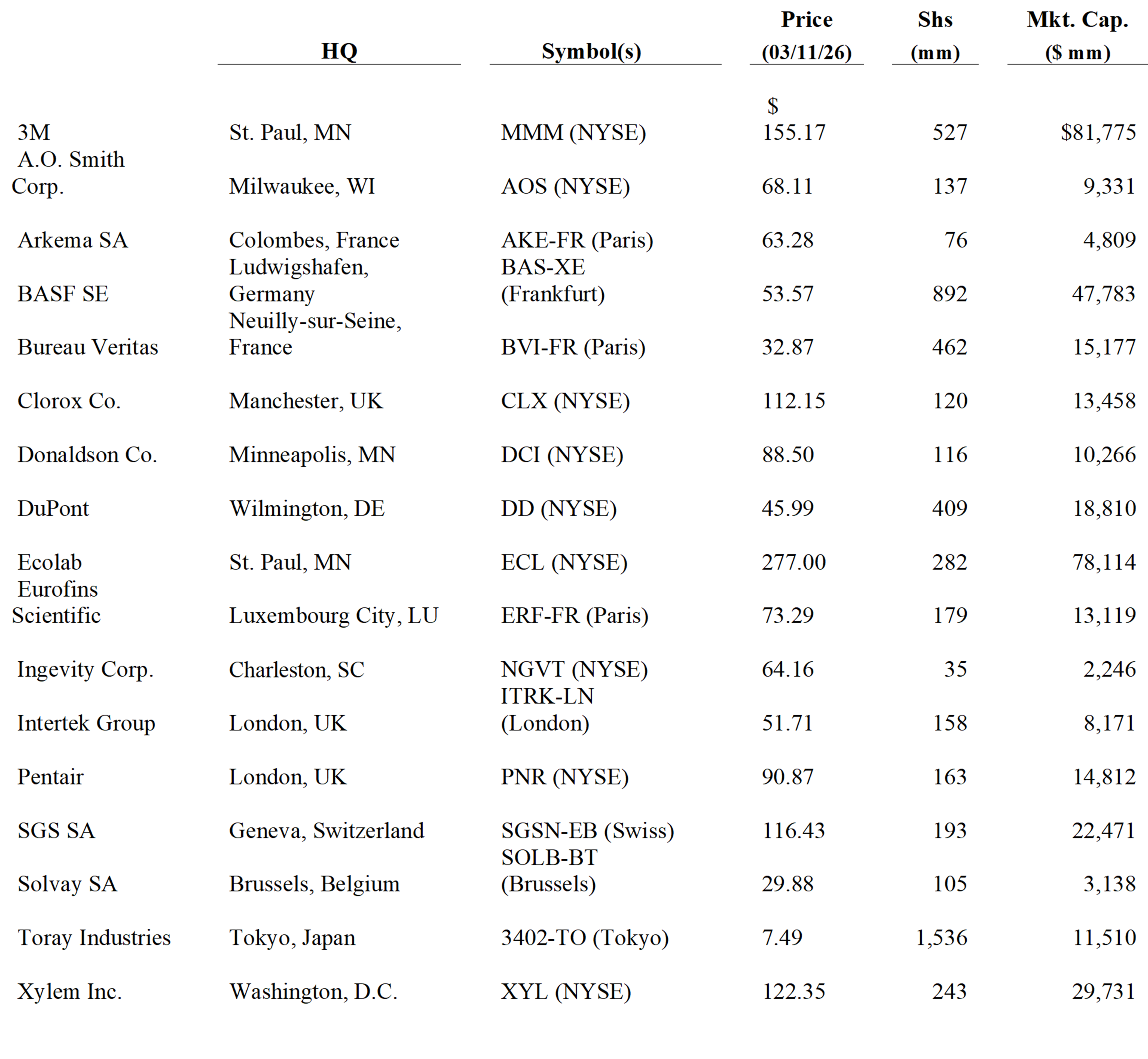
Several public companies are involved in microplastics sampling, measurement, and removal, as well as microplastics-adjacent industries.
A.O. Smith Corp (NYSE: AOS) produces whole-home filtration and reverse osmosis (RO) drinking water systems worldwide. The company manufactures household point-of-use (POU) systems that can remove fine particulates.
Clorox Company (NYSE: CLX) offers the Brita brand that produces water filtration for consumers; consumer awareness around water contaminants that has been growing recently, for contaminants including polyfluorinated alkyl substances (PFAS) and microplastics, among others, which could drive increased demand in CLX home filtration solutions.
DuPont (NYSE: DD) develops advanced filtration membranes and associated materials in its Water Solutions division. Products include the FilmTec reverse osmosis and ultrafiltration (UF) membranes that are used in treatment plants for drinking water and wastewater. Membrane filtration, and particularly UF, are among the most effective methods for removal of microplastics.
Ecolab (NYSE: ECL) is a global water and industrial water services company that supplies water management and treatment solutions to industrial and municipal customers. Some of its key products include Nalco Water filtration and separation technologies. With a broad product base, Ecolab provides industrial water purification and filtration to manufacturing facilities that could benefit as regulation around wastewater discharge tightens globally.
Eurofins Scientific (Euronext Paris: ERF) offers laboratory testing and analytics services including microplastics measurement, monitoring, and analysis in numerous different environmental compartments including water, soil and food. These services may see increased use as governments implement measurement requirements. Other companies that also deliver testing and certification services for microplastics contamination include SGS SA (SIX Swiss Exchange: SGSN), Bureau Veritas SA (Euronext Paris: BVI), and Intertek Group plc (LSE: ITRK).
Ingevity Corporation (NYSE: NGVT) manufactures specialty chemicals and carbon materials including activated carbon filtration and environmental remediation. Although not a primary method of removal for microplastics, activated carbon technologies are a complement to many of the physical removal methods for microplastics and widely used in drinking water and industrial processing.
Pentair (NYSE: PNR) is a water solutions business that provides water treatment via POU/POE technologies, filtration, and activated carbon products. Its Pentair X-Flow ultrafiltration membranes are used in municipal water and industrial water treatment plants. Retail and commercial filtration, especially high-performance membrane filtration, demand is expected to grow as narratives and regulations around microplastics rise.
Toray Industries (TSE: 3402) is a PLA-based polymer manufacturer with products that break down more readily than conventional plastics and are used in packaging and industrial materials.
Xylem Inc (NYSE: XYL) is a global water technology company that produces pumps, treatment systems, and filtration systems. Some of its key offerings include the Wedeco and Leopold filtration systems for municipal treatment, which are attractive to government agencies adapting to pressure and new policies regarding microplastics concentrations in municipal water.
Membrane filters are comprised of specialized polymers, such as PVDF, PES, PSU, TFC, PP, PE, and ceramics, that are designed to be strong enough to withstand water pressure during the filtration process while maintaining a small pore size. Several companies manufacture the materials used to produce membrane filters for water treatment. These include Dupont, Toray Industries, 3M Company (NYSE: MMM), Donaldson Company (NYSE: DCI), Solvay SA (Euronext Brussels: SOLB), Arkema SA (Euronext Paris: AKE), and BASF SE (Frankfurt Stock Exchange: BAS).
Conclusion
Microplastics are emerging as the next global environmental priority. With rapid advancements in scientific data and policy responses, progress toward eradicating these contaminants will likely accelerate in the coming decade. While the health implications for microplastics exposure remain debated, the combination of regulatory momentum and consumer preferences are driving opportunities for investors in the areas of water filtration, testing, advanced material manufacturing, and waste management. Microplastics represent a long-term problem that – due to the permanent nature of these particles – is going to persist and only companies that provide filtration and analytical services, as well as alternative materials, can solve for it.
191 MASON STREET GREENWICH, CT 06830 Gabelli Funds TEL (914) 921-5100
This whitepaper was prepared by Rebecca Stern, PhD. The examples cited herein are based on public information and we make no representations regarding their accuracy or usefulness as precedent. The Research Analyst’s views are subject to change at any time based on market and other conditions. The information in this report represents the opinions of the individual Research Analyst as of the date hereof and is not intended to be a forecast of future events, a guarantee of future results, or investment advice. The views expressed may differ from other Research Analysts or the Firm as a whole.
As of December 31, 2025, affiliates of GAMCO Investors, Inc. beneficially owned less than 1% of all companies mentioned.
This whitepaper is not an offer to sell any security nor is it a solicitation of an offer to buy any security.
Investors should consider the investment objectives, risks, sales charges and expense of the fund carefully before investing.
For more information, visit our website at: www.gabelli.com or call: 800-GABELLI
800-422-2554 14-921-5000 • Fax 914-921-5098 • info@gabelli.com
Cover images:
https://commons.wikimedia.org/wiki/File:Microplastics_-_P061337-98078.jpg
https://image.ifremer.fr/data/00618/73039
https://openverse.org/image/ffc49dcf-5758-4ae8-8273-dcc3ed7b74fd?q=microplastic&p=17
References:
Coffin, S. et al. 2022. “Risk characterization of microplastics in San Francisco Bay, California.” Microplastics and Nanoplastics 2 (1):19. doi: 10.1186/s43591-022-00037-z.
Marfella R, et al. 2024. Microplastics and Nanoplastics in Atheromas and Cardiovascular Events. N Engl J Med. 390(10):900-910. doi: 10.1056/NEJMoa2309822. PMID: 38446676; PMCID: PMC1100
Nihart, A.J., Garcia, M.A., El Hayek, E. et al. 2025. Bioaccumulation of microplastics in decedent human brains. Nat Med 31, 1114–1119. https://doi.org/10.1038/s41591-024-03453-1