
4Q25 Commentary
Despite some drama along the way, “the show went on” during the fourth quarter. US stocks capped off a third consecutive year of double-digit returns as market leadership broadened, muddling through the longest federal government shutdown on record and some mixed economic data. The last US penny for general circulation was minted in Philadelphia, quietly ending a 238-year run. Across the Atlantic, thieves in Paris made off from the Louvre with eight pieces of French Crown Jewels valued at ~$100mm, prompting the museum’s first unscheduled closure since the pandemic. And in sports, baseball’s World Series returned to Canada for the first time in 32 years, though the Toronto Blue Jays came up just short in front of their home crowd against the Los Angeles Dodgers.
The Economy
The first US Federal Government shutdown since 2019 commenced on October 1st and lasted 43 days. The shutdown resulted in the furlough of 750k government workers with an additional ~1.3mm required to work without pay, and closed operations across large parts of the government. Analysts at Morgan Stanley estimate the shutdown weighed on US GDP by ~10bps per week, implying a cumulative drag of ~45bps during the quarter before catch-up effects. Beyond the direct hits to employment and consumption, work stoppages across many government agencies also resulted in an economic “data desert” in 4Q. Key releases of government data measuring employment, inflation, trade, housing and economic output were delayed or suspended, removing many real-time tools used by analysts, economists and investors to assess the health of the US economy. While data releases have now largely resumed, market participants are operating with a less comprehensive and less timely picture than usual of the way the economy evolved over the past several months.
Starting with the labor market, incoming data continued to point to a “low hires, low fires” equilibrium in the fourth quarter. The Bureau of Labor Statistics’ (BLS) Household Survey, which counts employed persons rather than total payrolls, suggests the US workforce has not grown for two years. Private sector measures of job growth also remain tepid, exemplified by payroll services firm ADP’s estimate that US employment declined in aggregate over the three-month period through November, an unusual outcome outside of clear downturns. HR specialist firm Challenger, Gray & Christmas believes that soft labor market fundamentals are being driven both by slow hiring and rising layoffs. Specifically, during 2025 the company measured the lowest level of planned hiring in the US since 2010 alongside the largest volume of job cuts since 2009. Consistent with these signals, the Conference Board’s Labor Differential, historically a reliable forward indicator of hiring momentum, suggests soft hiring trends may continue. In December, the spread between survey respondents reporting jobs as “plentiful” vs. jobs as “hard to get” declined to the lowest level in nearly nine years (excluding the early COVID shock).
Curiously, despite sluggish job growth, unemployment remains low in the US by historical standards, reflecting a market constrained evenly across both supply and demand. Many economists attribute lower labor supply to demographic headwinds (aging population), tighter immigration policies, and unusually low labor turnover. Policymakers and investors are closely monitoring the unemployment rate which, while low, has ticked higher in recent months to a four-year high in November at 4.6%. While not concerning in isolation, the steady upward drift in unemployment from a cycle low of 3.4% in mid-2023 is notable. Unemployment typically rises after hiring and turnover have already weakened, which could suggest some of the “hidden” slack in the labor market that has been emerging over the last several months is beginning to surface in unemployment readings.
Supported by a stable, if uninspiring, labor market, consumer spending has held up in recent months. Retail sales data published by the US Census Bureau measured month-over-month growth in nine of 12 major spending categories (excluding autos) in October, suggesting the government shutdown had a limited near-term impact. Black Friday / Cyber Monday results published intra-quarter by the likes of Mastercard, Shopify, Adobe, Adyen, Stripe and others similarly indicate a successful start to the holiday shopping season, particularly across discretionary and online channels.
However, beneath resilient aggregate spending figures evidence of a “k-shaped” consumer economy continues to build, with strength among higher-income cohorts contrasting against stress at the lower end of the income distribution. This divergence is increasingly visible in credit data. The New York Fed’s 3Q Debt & Credit Report shows 90-day delinquent credit card loan balances rose to 15-year highs, alongside an acceleration in balances rolling into early-stage (30-day) delinquencies. Student loans are also emerging as a renewed pressure point, with 30-day delinquent balances climbing to all-time highs in the quarter roughly one year after normal payment reporting resumed following the expiration of the COVID-era student loan repayment moratorium.
A similar bifurcation is evident across capital goods sectors and other production indicators. On one hand, the Institute for Supply Management’s Manufacturing PMI has registered a reading below 50, a level historically associated with contraction in manufacturing activity, for ten consecutive months. In contrast, the Bureau of Economic Analysis 3Q GDP report showed meaningful acceleration to 8.2% nominal growth, the strongest pace in more than three years, led by fixed investment and a narrowing trade gap. This strength was echoed by company fundamentals reported over the latest earnings cycle, where ten of eleven S&P 500 sectors beat consensus earnings expectations en route to 15% year-over-year index-level earnings per share growth. Importantly, the US has never entered a recession with corporate profits still growing, suggesting that while pockets of weakness warrant monitoring, aggregate growth conditions remain firmly intact.
Federal Reserve Governor Chris Waller captured many of these crosscurrents succinctly in October, noting, “Something’s gotta give. Either economic growth softens to match a soft labor market, or the labor market rebounds to match stronger economic output.” This tension, between resilient growth and soft labor market fundamentals, remains central to the policy debate among central bank officials who reduced the Federal Funds rate twice more during the fourth quarter to a target range of 3.5%-3.75%. The policy rate is now 175bps below the cycle peak reached just 15 months ago, and futures markets are pricing roughly two additional cuts in 2026.
Encouragingly, inflation has continued to progress towards the Fed’s stated 2% target despite the combination of strong growth and relatively low unemployment. The November CPI report from the BLS was particularly constructive, with headline inflation of 2.7% reaching its lowest level since early 2021 at a year-over-year growth rate which has been cut in half over the last two years. While this dataset could contain more noise than usual given the government shutdown, the longer-term path of disinflation is intact, giving policymakers greater latitude to manage emerging labor market slack without reigniting inflationary pressures.
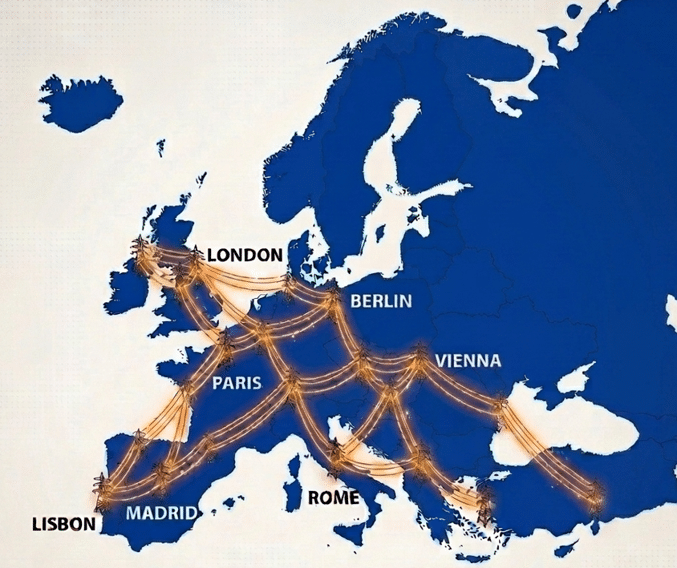
In Europe, economic fundamentals are sluggish though stabilizing, with uneven outlooks across countries. Germany remains bogged down by a weak manufacturing sector and soft external demand (China in particular), though industrial policy has recently shifted in a more growth-friendly manner. France, on the other hand, remains a point of concern amidst political crisis, prompting government bond yields to widen through comparable spreads on Greek and Italian paper. Bloomberg columnist John Authers recently surmised that, “If there’s a new sick man of Europe, his home is in Paris.” In the UK, sticky services inflation has finally started on a more encouraging path, opening the door to additional monetary easing ahead. In aggregate, Eurozone GDP growth appears to have bottomed with prospects for modest reacceleration hinging on fiscal stimulus, a US trade framework, and lagged effects of recent monetary easing cycles by both the European Central Bank and the Bank of England.
In Japan, the central bank continues to edge forward with a gradual tightening cycle which has seen the policy rate increased to 0.75%, the highest level in three decades. The domestic growth outlook remains weak overall, though corporate profits and business confidence have shown resilience across export-driven sectors of the economy. Prime Minister Takaichi’s new government announced a new $135bn stimulus package in November, much of which targets strategic sectors across technology, manufacturing and defense. While pro-growth, Takaichi’s fiscal agenda threatens to add to existing inflationary pressures and further weaken the currency.
Financial Markets
As mentioned, the bull market in US stocks continued to broaden during the fourth quarter. Market breadth improved in 4Q, with more than 80% of S&P 500 stocks closing the year above their 200-day moving averages, up from 60% entering the quarter. Relatedly, value stocks modestly outperformed growth, and sector leadership shifted to Healthcare, Financials, and Transports in the US. Internationally, most developed-market stock indices recorded low-to-mid single digit returns in the fourth quarter leading to full-year performance which, for the first time since 2022, exceeded the US market.
The S&P 500 posted a 2.7% total return in 4Q, capping a stunning 39% advance off the post-Liberation Day low set on April 8th. Strong returns in 2025 and the broadening out of market performance observed during the second half of the year reflect investor expectations for accelerating growth in 2026 as tariff headwinds lap and fiscal stimulus associated with the One Big Beautiful Bill Act (OBBBA) kicks in. A backdrop of easing monetary policy and the ongoing AI capital investment cycle have also remained tailwinds for US stocks.
Outside of equities, yield curve steepened though the benchmark ten-year US treasury yield ended 4Q virtually unchanged since the start of the quarter at 4.16%. High-yield corporate credit spreads continued to tighten and now sit near multi-decade lows, while investment grade spreads were little changed in the quarter and similarly remain tight by historical standards. Gold continued its historic advance, gaining 12% in 4Q and finishing the year up 65% – the metal’s best year since 1979. Cryptocurrencies on the other hand experienced a sharp selloff with Bitcoin declining 25% and Ether declining 31% in the fourth quarter.
Artificial Intelligence
The outlook for AI capital expenditures communicated by company management teams again surprised to the upside over the latest earnings cycle. Analyst expectations for 2026 capex aggregated across the five largest cloud computing platforms now exceed half a trillion dollars, and these estimates have been revised 80% higher in total over the last year. Both the scale of investment plans and the magnitude of estimate revisions associated with this cycle are unprecedented.
Use cases for AI technology across digital media, e-commerce, infrastructure software and knowledge work are now well-established, and adoption is increasingly spreading into new, labor-intensive sectors. During the fourth quarter, Walmart disclosed plans to hold total company headcount flat over the next three years despite a constructive growth outlook, citing companywide AI productivity initiatives. Similarly, third-party logistics leader C.H. Robinson unexpectedly raised its 2026 operating income target even as freight markets softened, enabled by a reported 40% productivity lift from AI agents automating order processing, shipment tracking, dynamic pricing, and route optimization. In healthcare, a recent report published by Menlo Ventures found that nearly 30% of US healthcare systems have deployed AI tools to mine patient records, draft insurer appeals, and transcribe visit notes. Importantly, AI tools have spread beyond large enterprises. According to a fall survey from the US Chamber of Commerce, 60% of US small businesses now use AI for functions such as shift scheduling, quote management and financial analysis.
AI is no longer theoretical or unproven, and policymakers and central bankers are increasingly focused on its macroeconomic risks and opportunities. During December’s Federal Open Market Committee (FOMC) press conference, Chair Powell struck a notably bullish tone on the topic, arguing that the divergence between growth (resilient) and labor (softening) “implies, obviously, higher productivity.” He went on to acknowledge that, “Some of that (productivity) may be AI.” If productivity is now a primary driver of growth, and to the extent that AI is an emerging driver of productivity, then today’s early stage of AI adoption raises the prospect of sustained, above-trend growth without a commensurate rise in inflation moving forward.
Looking Forward
2025 marked another strong year for stock markets. Looking ahead, the global economy appears positioned for continued growth, with pockets of acceleration across certain regions and sectors emerging. That said, fundamentals are beginning to cool in parts of the economy, and equity valuations embed a healthy degree of optimism. Against this backdrop, we continue to employ a measured approach to risk and remain focused on a selective portfolio of companies with high-quality management teams, innovative products and business models, and differentiated products as we enter the new year.
191 MASON STREET, GREENWICH, CT 06830 Gabelli Funds TEL (914) 921-5100
This whitepaper was prepared by John T. Belton, CFA and Howard F. Ward, CFA.. The examples cited herein are based on public information and we make no representations regarding their accuracy or usefulness as precedent. The Portfolio Managers’ views are subject to change at any time based on market and other conditions. The information in this report represent the opinions of the individual Portfolio Managers as of the date hereof and is not intended to be a forecast of future events, a guarantee of future results, or investments advice. The views expressed may differ from other Portfolio Managers or of the Firm as a whole.
As of September 30, 2025, affiliates of GAMCO Investors, Inc. beneficially owned less than 1% of all companies mentioned.
Investors should carefully consider the investment objectives, risks, charges and expenses of the Fund before investing. The prospectus, which contains more complete information about this and other matters, should be read carefully before investing. To obtain a prospectus, please call 800 GABELLI or visit www.gabelli.com
Distributed by G.distributors, LLC., a registered broker dealer and member of FINRA.
This whitepaper is not an offer to sell any security nor is it a solicitation of an offer to buy any security.
For more information, visit our website at: www.gabelli.com or call: 800-GABELLI
914-921-5000 • Fax 914-921-5098 • info@gabelli.com
Gabelli Funds, LLC is a registered investment adviser with the Securities and Exchange Commission and is a wholly owned subsidiary of GAMCO Investors, Inc. (OTCQX: GAMI).